King’s Speech 2026: Digital ID, Queen Camilla and the State Opening Explained
A ceremonial day with a political edge
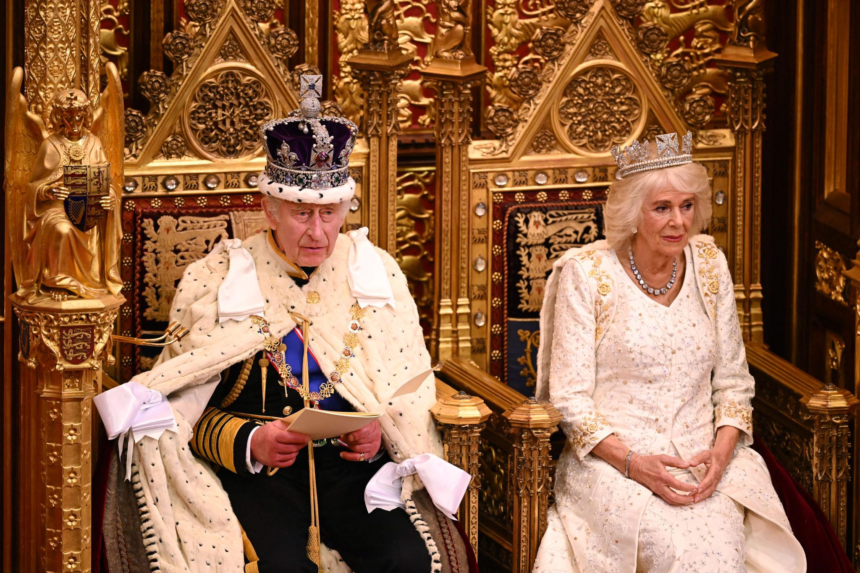
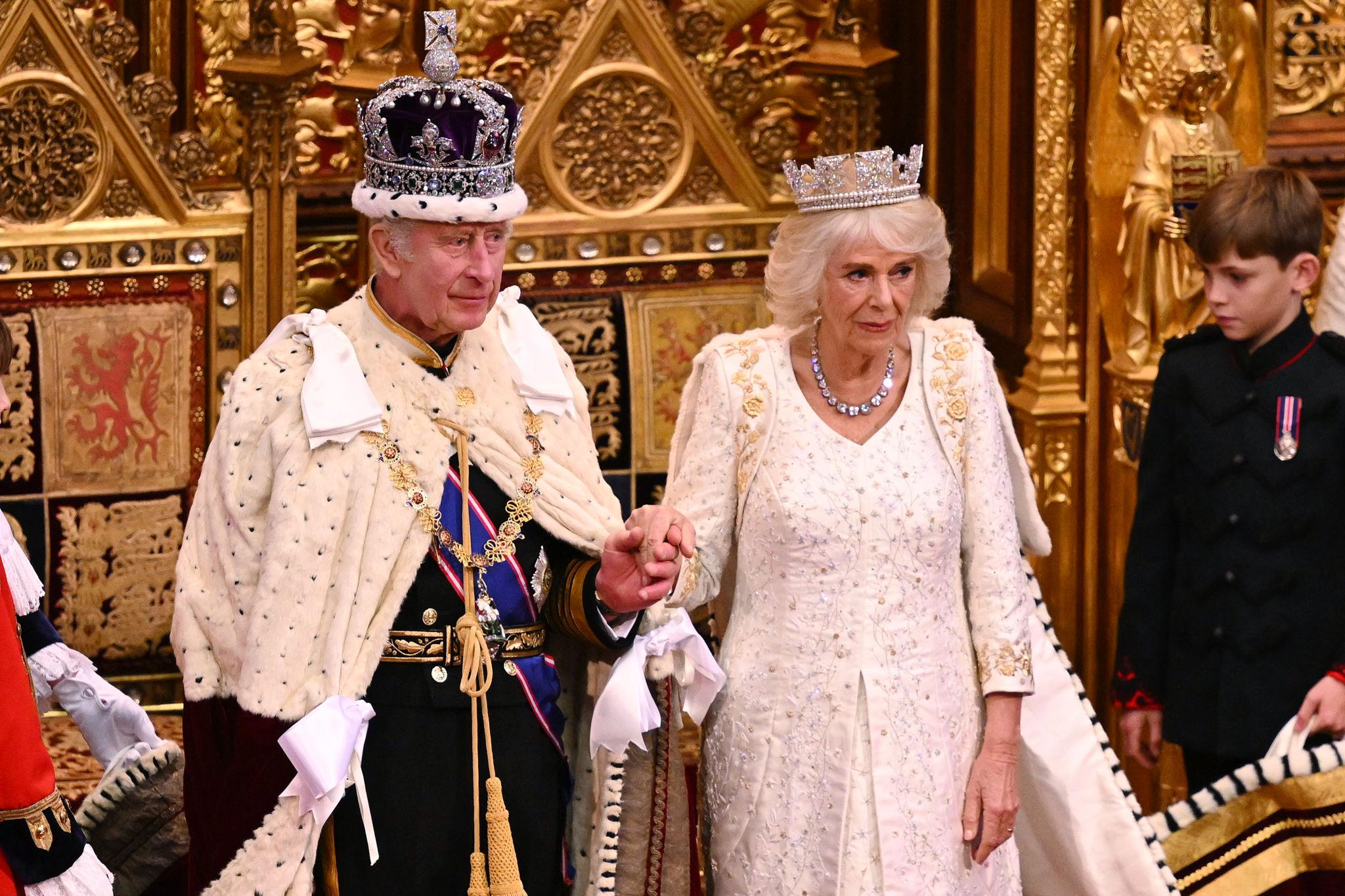
The King’s Speech 2026 placed Britain’s old constitutional theatre beside some of the country’s most modern policy debates. In the House of Lords, King Charles III set out the government’s legislative agenda while Queen Camilla sat beside him in full ceremonial dress, wearing one of the most historically recognisable jewels in the royal collection.
- A ceremonial day with a political edge
- What is the State Opening of Parliament?
- What time was the King’s Speech today?
- Queen Camilla’s role: continuity, symbolism and royal image
- Digital ID: one of the most searched issues in the King’s Speech
- Why digital ID matters beyond immigration
- A wider legislative agenda: rail, steel, NHS and energy
- Police, cyber security and national security reforms
- Housing, leasehold reform and tourism tax
- Starmer’s political challenge
- Why Theresa May appears in searches around the King’s Speech
- What happens after the King’s Speech?
- Conclusion: tradition meets the digital state
For many readers searching “what time is the King’s Speech today” or “what is the State Opening of Parliament,” the answer begins with ceremony. But the significance of this year’s speech lies in policy: digital ID, rail investment, NHS data reform, police restructuring, cyber security, energy infrastructure and constitutional questions about the direction of Sir Keir Starmer’s government.
The 2026 State Opening took place on Wednesday, May 13. The ceremony was expected to begin around 11.30am, with the wider State Opening programme starting earlier in the morning, including the traditional search of the Palace of Westminster cellars by the Yeomen of the Guard.


What is the State Opening of Parliament?
The State Opening of Parliament marks the formal start of a new parliamentary session. It is the main ceremonial event in the parliamentary calendar and brings together the monarch, the House of Lords and the House of Commons in a single constitutional moment.
The King’s Speech is delivered by the monarch from the throne in the House of Lords, but it is not personally written by the King. It is written by the government and outlines its proposed laws and policy priorities for the next parliamentary session.


That distinction matters. The pageantry belongs to the Crown; the political responsibility belongs to ministers.
What time was the King’s Speech today?
The State Opening of Parliament 2026 took place on Wednesday, May 13, with the King’s Speech delivered in the House of Lords at around 11.30am. UK Parliament guidance said the day began at 9.30am with the Yeomen of the Guard’s ceremonial search of the cellars, followed by the formal proceedings and later debate in the House of Commons from 2.30pm.
For viewers, the key point was simple: the main King’s Speech moment came late in the morning, while parliamentary debate continued later in the day.
Queen Camilla’s role: continuity, symbolism and royal image
Queen Camilla’s presence was central to the visual language of the day. At the State Opening, she wore a regal white gown and the George IV State Diadem, also known as the Diamond Diadem, a historic piece associated closely with Queen Elizabeth II and earlier queens. The diadem dates back to 1820 and contains 1,333 diamonds.


The diadem carries deep symbolic meaning. It was commissioned by King George IV and later passed through royal history, becoming part of the image of Queen Victoria, Queen Alexandra, Queen Mary, Queen Elizabeth the Queen Mother and Queen Elizabeth II. Camilla wearing it at the State Opening visually connected the present reign to the long ceremonial memory of the monarchy.
The Queen’s recent use of royal heirlooms has become a recurring feature of public appearances. At a Buckingham Palace garden party on May 12, Queen Camilla wore an 88-year-old Cartier palm brooch, also known as the paisley brooch, originally crafted for the Queen Mother in 1938. The brooch is made from 203 diamonds and was later inherited by Queen Elizabeth before being passed down to Camilla.
That pattern matters because royal jewellery often functions as more than ornament. It signals continuity, family memory and institutional stability—especially on days when politics looks unsettled.
Digital ID: one of the most searched issues in the King’s Speech
Among the most closely watched policy announcements was digital ID. The government’s plan, as described in the King’s Speech coverage, would introduce digital ID as a way for employers to check the credentials of new hires. It was presented as non-compulsory and potentially useful for people who do not have traditional identity documents such as a passport or driving licence.
The proposal sits at the intersection of immigration enforcement, employment checks, public service access and digital government. Supporters see digital ID as a way to make identity verification easier and reduce friction in everyday transactions. Critics are likely to focus on privacy, data security, exclusion risks and whether a “non-compulsory” system could become functionally necessary over time.
The policy also has political history. Digital identity schemes in Britain have repeatedly generated controversy, stretching back to national ID card debates under former prime minister Tony Blair. In 2026, the issue returned in a more digital form, framed less as a universal physical card and more as an optional tool for verification and service access.
Why digital ID matters beyond immigration
The digital ID proposal was initially discussed in relation to illegal immigration and right-to-work checks, but its implications are broader. If implemented carefully, it could make it easier for people to prove who they are when applying for jobs, accessing public services or completing major financial transactions.
However, the policy will need public trust. The public reception so far has been described as “distinctly lukewarm,” and that scepticism could become a major obstacle.
Digital ID debates usually turn on four questions:
- Who controls the data?
- Which services will require it?
- How will people without smartphones or digital access be protected?
- What safeguards will prevent mission creep?
The King’s Speech may have placed the proposal on the legislative agenda, but the political battle will be fought in the details.
A wider legislative agenda: rail, steel, NHS and energy
The King’s Speech 2026 included more than digital ID. It set out a broad programme covering infrastructure, health, housing, policing, cyber security and national security.
One major proposal was the Northern Powerhouse rail bill, promising £45bn for improvements to rail services between key cities in northern England. The plan includes electrification and route improvements, a new high-speed route between Liverpool and Manchester via Warrington and Manchester Airport, and better cross-Pennine links. Construction, however, is not expected to start until after 2030.
The government also proposed emergency legislation to nationalise British Steel, based in Scunthorpe and employing 2,700 people. The move followed earlier government operating control of the business, with current supervision reportedly costing nearly £400m and an earlier 2019 intervention costing taxpayers £600m.
On health, the NHS Modernisation Bill included a plan for a single patient record, designed to combine health and social care information into one record accessible by clinicians and patients. Supporters argue this could improve communication across the NHS, while critics are expected to raise data security concerns.
The Energy Independence Bill pointed toward faster green energy infrastructure, including measures to speed up grid connections and planning for renewable energy projects. The speech also reaffirmed commitments to ban new oil and gas exploration licences.
Police, cyber security and national security reforms
The King’s Speech also pointed to major policing reform. The government referred to “significant reforms to the police,” including plans for a National Police Service and fewer, larger police forces in England and Wales. The proposed national structure would bring together Counter Terrorism Policing, the National Crime Agency, the College of Policing and regional organised crime capabilities.
Cyber security also featured prominently. The Cyber Security and Resilience Bill would bring more companies under regulatory scrutiny, including firms involved in electric vehicle charging points, home heating appliances and data centres. Fines for non-compliance would be tougher and based on turnover.
National security proposals included a Tackling State Threats Bill, giving the home secretary power to ban organisations that are part of other countries’ state apparatus. Another bill would create a new offence of preparing a “mass casualty attack” and make it illegal to share “the most harmful violent material” online.
Housing, leasehold reform and tourism tax
For homeowners and renters, leasehold reform was one of the most practical areas of the speech. The government said commonhold is “expected to be available in 2029,” allowing flat owners to purchase their home along with the building and land beneath it, rather than living under a freeholder structure. A £250 cap on ground rents is expected in 2028.
The speech also included changes to Right to Buy. Under the proposed changes, a tenant would not be able to buy a home until living in it for 10 years, while newly built social housing would be exempt for 35 years.
Another notable proposal was an Overnight Visitor Levy, effectively a tourist tax for stays in England. The measure would bring England closer to Scotland and Wales, where local authorities can already raise a tourist tax if they choose.
Starmer’s political challenge
The King’s Speech came during a difficult political moment for Sir Keir Starmer. Reports described pressure on his leadership, resignations by ministers and parliamentary aides, and speculation around possible rivals including Wes Streeting. Sky News reported that more than 80 Labour MPs had called for Starmer to go after Labour lost almost 1,500 council seats in England in local elections.
That context shaped how the speech was received. A King’s Speech is normally a forward-looking statement of government purpose. In 2026, it also became a test of whether Starmer could demonstrate authority and direction.
The government’s supporters framed the legislative programme as evidence that ministers were focused on governing. Critics argued that the agenda lacked conviction and reflected a government boxed in by earlier political caution. One editorial assessment described the programme as “fatally limited by the timidity of an election manifesto that shied away from hard arguments.”
Why Theresa May appears in searches around the King’s Speech
The phrase “Theresa May King Speech” likely reflects public interest in how previous prime ministers have used the monarch’s speech during moments of political instability. In 2017, Theresa May’s Queen’s Speech came after a snap election that cost the Conservatives their majority and forced negotiations with the Democratic Unionist Party. The State Opening was delayed to June 21, 2017, amid those talks.
The comparison is useful because both moments show how the State Opening can expose political weakness as much as legislative ambition. The monarch reads the words, but the speech is a test of whether the government can command Parliament and turn a programme into law.
What happens after the King’s Speech?
After the King delivers the speech, Parliament begins days of debate. MPs and peers examine the government’s legislative agenda, opposition parties respond, and the government begins the process of introducing bills.
The ceremony may last only a short time, but the political consequences unfold over months. Every major proposal—digital ID, British Steel nationalisation, NHS records, police reform, leasehold changes, cyber security rules and energy infrastructure—must survive scrutiny, amendment and political pressure.
A King’s Speech is therefore not the end of a process. It is the opening move.
Conclusion: tradition meets the digital state
The King’s Speech 2026 stood out because it joined two very different images of Britain: Queen Camilla in the George IV State Diadem, surrounded by centuries of constitutional ritual, and a government proposing digital ID, single patient records, cyber resilience and infrastructure reform.
That contrast is the story. The State Opening of Parliament remains one of the most traditional events in British public life, but the laws announced within it point toward a more digital, data-driven and security-conscious state.
For King Charles and Queen Camilla, the day was about continuity. For Sir Keir Starmer’s government, it was about survival and delivery. For the public, the questions are practical: how will these proposals affect work, identity, healthcare, housing, travel, security and daily life?
The answers will come not from the ceremony, but from the legislation that follows.