

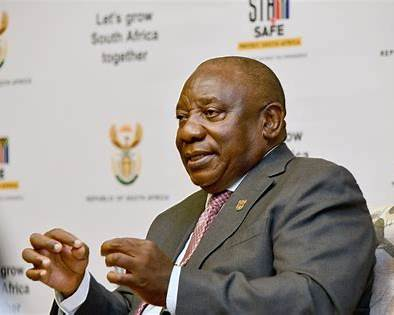
Constitutional Court Rulings Put ANC and Ramaphosa Under Intense Pressure
South Africa’s Constitutional Court has once again moved to the center of the country’s political and legal landscape, delivering judgments and directives that are reshaping both governance and immigration policy while placing renewed pressure on President Cyril Ramaphosa and the African National Congress (ANC).
In recent days, the apex court issued a major ruling backing the Department of Home Affairs in its crackdown on repeat asylum applications, while a separate Constitutional Court decision reignited the politically explosive Phala Phala saga by ordering Parliament to revisit impeachment processes linked to the scandal.
Together, these developments have intensified scrutiny on the ANC’s National Executive Committee (NEC), Parliament, and the presidency, raising fresh questions about accountability, constitutional governance, and the future of political stability in South Africa.
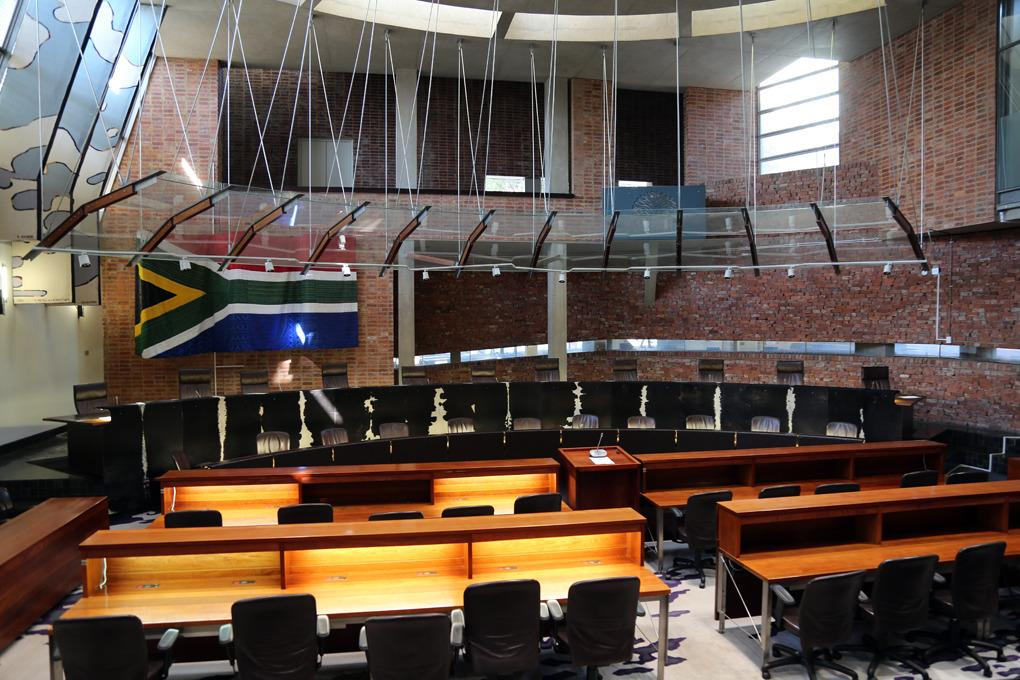
Constitutional Court Backs Home Affairs on Asylum Applications
One of the most significant rulings came in the case of Director-General, Department of Home Affairs and Others v Irankunda and Another, where the Constitutional Court ruled in favor of the Department of Home Affairs.
The majority judgment overturned an earlier Supreme Court of Appeal ruling and confirmed that asylum seekers whose original applications have been conclusively rejected cannot continue filing repeat applications on the same grounds.
The Department of Home Affairs described the judgment as a decisive victory against abuse of South Africa’s asylum system.
According to government officials, repeat applications had become a major administrative burden, contributing to severe backlogs and straining refugee management systems. Authorities argued that the loophole enabled some applicants to indefinitely delay deportation or legal closure of their cases.
The ruling now reinforces the principle of finality in asylum decisions.
Government Pushes Broader Immigration Reform
The court’s judgment comes shortly after Cabinet approved the Revised White Paper on Citizenship, Immigration and Refugee Protection.
A central feature of the revised framework is the “first-safe-country” principle, which seeks to prevent what authorities describe as “asylum shopping” — the practice where asylum seekers move across several countries before selecting South Africa as their preferred destination.
Home Affairs Minister Dr Leon Schreiber framed the Constitutional Court decision as part of a broader effort to restore order and strengthen the rule of law within migration governance.
“This judgment from the highest court in the land is an affirmation of the unprecedented progress we are making in restoring the rule of law and clamping down on abuse in migration and asylum systems,” Schreiber said.
He added that reforms were “anchored in our Constitution” and intended to rebuild systems that had long struggled with inefficiency and abuse.
The department believes the ruling will improve the processing of legitimate asylum claims while reducing exploitation of the legal system.
Phala Phala Returns to the National Spotlight
While the immigration ruling drew major legal attention, the Constitutional Court simultaneously reignited another politically explosive issue — the Phala Phala scandal involving President Cyril Ramaphosa.
The Constitutional Court ruled that Parliament had erred when it previously failed to establish an impeachment committee to investigate the matter. The judgment effectively reopened the Section 89 process linked to allegations surrounding the theft of foreign currency from Ramaphosa’s Phala Phala farm in 2020.
The ruling has placed Parliament under pressure to proceed with impeachment-related processes and has triggered urgent political consultations within the ANC.
According to reports, the ANC scheduled a special National Executive Committee meeting following the Constitutional Court ruling. The NEC, the party’s highest decision-making structure between conferences, is expected to discuss both the legal implications and the political fallout facing the president.
The Constitutional Court ordered Parliament to establish a committee to consider whether Ramaphosa should face impeachment proceedings. A 2022 independent panel report had previously found that the president “had a case to answer” regarding his conduct after the theft.
Ramaphosa Refuses to Step Down
Despite mounting political pressure, President Ramaphosa has rejected calls for his resignation.
The president is preparing to challenge the advisory panel’s findings through a legal review, arguing that the report relied on hearsay and failed to provide evidence of wrongdoing. He has consistently denied any misconduct connected to the Phala Phala incident.
Reports indicate that Ramaphosa’s legal strategy could delay impeachment proceedings while the courts determine whether the panel’s conclusions remain valid.
At the same time, National Assembly Speaker Nosiviwe Mapisa-Nqakula has indicated that Parliament intends to proceed with establishing the impeachment committee required by the Constitutional Court.
Political analysts believe the situation could become one of the defining constitutional and political tests of Ramaphosa’s presidency.
ANC National Executive Committee Faces Difficult Choices
The ANC NEC now finds itself navigating one of the party’s most delicate political moments since the formation of the Government of National Unity (GNU).
Following the ANC’s loss of its parliamentary majority in the 2024 elections, Ramaphosa helped form a coalition government with centrist partners. Investors and political observers have largely viewed the GNU as a stabilizing force capable of advancing long-delayed economic reforms.
However, the renewed Phala Phala controversy threatens to destabilize both the ANC and the coalition arrangement.
Some analysts warn that a weakened Ramaphosa could embolden factions within the ANC aligned with more radical economic policies or strengthen opposition groups such as the Economic Freedom Fighters (EFF) and former President Jacob Zuma’s uMkhonto weSizwe party (MKP).
Yet others argue the GNU structure itself may survive regardless of Ramaphosa’s political future.
“The GNU is making good progress, thus supporting the rand,” said Devon Pearman, head of Africa at TP ICAP Group Plc in Johannesburg. “Even if the head changes, the structure remains, providing a degree of stability.”
Markets Show Surprising Calm
Despite the political drama, financial markets have remained relatively steady.
According to financial reporting, the South African rand has shown resilience even after the Constitutional Court ruling revived impeachment discussions. Investors appear more focused on broader economic reforms and global geopolitical developments than on immediate political uncertainty.
Analysts suggest that confidence in institutional stability, particularly the judiciary and coalition governance structures, has helped reduce fears of a broader crisis.
The Constitutional Court’s interventions, while politically disruptive, have also reinforced perceptions that South Africa’s democratic institutions remain active and independent.
Constitutional Court at the Center of South African Democracy
The recent rulings highlight the increasingly central role played by the Constitutional Court in shaping South Africa’s political direction.
Whether addressing immigration policy, parliamentary accountability, or presidential oversight, the court continues to act as one of the country’s most influential constitutional guardians.
For supporters of the court’s activism, these rulings demonstrate institutional strength and adherence to constitutional principles. Critics, however, argue that judicial decisions are increasingly driving political outcomes traditionally managed within Parliament or party structures.
Nonetheless, the latest developments show how deeply interconnected South Africa’s legal, political, and governance systems have become.
What Happens Next?
Several major developments are now expected in the coming weeks:
- Parliament is likely to begin formal impeachment committee processes linked to the Phala Phala matter.
- President Ramaphosa’s legal review challenge could trigger additional court proceedings.
- The ANC NEC may determine the party’s broader political strategy regarding Ramaphosa’s leadership.
- Home Affairs is expected to accelerate immigration system reforms following the Constitutional Court victory.
- Opposition parties may intensify pressure for political accountability ahead of future elections.
For South Africans, the coming months could prove pivotal not only for the presidency but also for the future direction of constitutional governance and institutional reform.
The Constitutional Court’s latest interventions have reinforced one unmistakable reality: in modern South Africa, the judiciary remains one of the country’s most powerful arbiters of political and constitutional conflict.


