
Queen Camilla News: Historic Diamond Diadem Returns to the Spotlight at King’s Speech
Queen Camilla stepped into one of Britain’s most ceremonial public moments wearing a crown jewel loaded with royal history, political symbolism and more than a thousand diamonds.
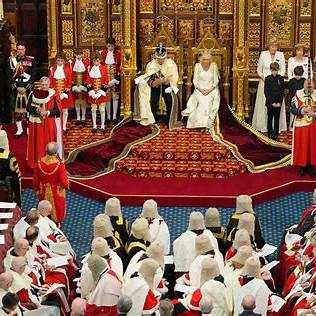
At the State Opening of Parliament on Wednesday, 13 May 2026, Queen Camilla accompanied King Charles III as he delivered the King’s Speech in the House of Lords. Her appearance drew attention not only because of the grandeur of the occasion, but because she wore the George IV State Diadem — also known as the Diamond Diadem or State Diadem — a historic royal headpiece commissioned in 1820 and long associated with queens regnant and queen consorts.
A Royal Appearance Framed by Ceremony
The State Opening of Parliament is one of the most visually powerful events in Britain’s constitutional calendar. It brings together the Crown, the House of Lords and the House of Commons, marking the formal start of a new parliamentary session. The speech itself is delivered by the monarch, but its contents are written by the government and set out the legislative programme for the year ahead.
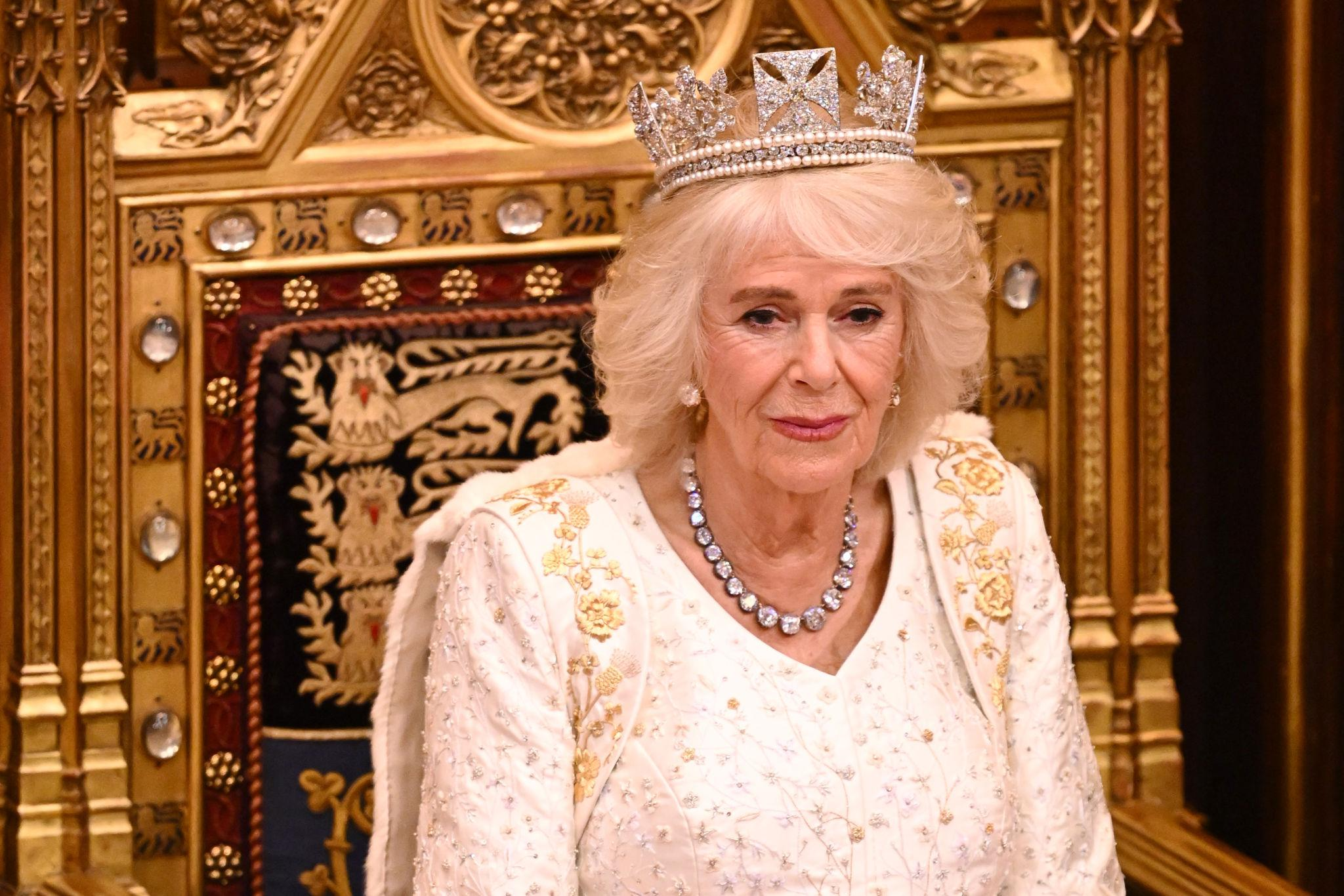
King Charles and Queen Camilla travelled from Buckingham Palace to Parliament in a ceremonial procession, accompanied by military bands and royal pageantry. Inside the House of Lords, the King wore the Imperial State Crown and the Robe of State, while Queen Camilla chose a white dress designed by Fiona Clare and the George IV State Diadem.
The ceremony included familiar constitutional rituals, including Black Rod being sent to summon MPs from the House of Commons. The Commons door is traditionally shut before Black Rod is admitted, a symbolic reminder of the elected chamber’s independence from the Crown.
Why Queen Camilla’s Diadem Matters
Queen Camilla’s choice of the George IV State Diadem was more than a fashion moment. The jewel has become a visible marker of royal continuity under King Charles III’s reign.
The diadem was commissioned from Rundell & Bridge in 1820 and completed in May of that year at a cost of £8,216, described in the provided material as equivalent to roughly $1.1 million today. Its design is attributed to Philip Liebart, Rundell’s chief designer, and was inspired by plans originally considered for George IV’s Imperial State Crown.
The piece is set with 1,333 diamonds, including a four-carat pale yellow brilliant at the center of the front cross. It also features a narrow band fitted with pearls, four crosses-pattée and four sprays representing the national emblems of England, Scotland and Ireland: roses, thistles and shamrocks.
For royal watchers, the symbolism is clear. The diadem links Camilla to a long line of royal women who have worn it before her, including Queen Adelaide, Queen Victoria, Queen Alexandra, Queen Mary, Queen Elizabeth the Queen Mother and Queen Elizabeth II.
The Third Time Camilla Has Worn the State Diadem
Camilla has now worn the State Diadem three times: at the State Openings of Parliament in 2023, 2024 and 2026. There was no State Opening in the UK in 2025 because the parliamentary session continued from the 2024 opening.
That repetition matters. In the early years of King Charles’s reign, royal symbolism has been closely watched as the monarchy settles into a post-Elizabethan era. Camilla’s repeated use of the diadem positions her within the traditions of the Crown while establishing a visual pattern of her own.
The late Queen Elizabeth II also had a strong connection to the piece. The crown had previously been worn by Queen Elizabeth II on the journey to her coronation, making Camilla’s appearance another moment in which royal objects carry memories across generations.
King Charles and the Weight of Tradition
While Camilla’s diadem attracted attention, King Charles’s own regalia carried deep historical weight. He wore the Imperial State Crown, a crown associated with coronations and State Openings of Parliament. It dates to the 1937 coronation of King George VI and is made of gold set with 2,868 diamonds, 17 sapphires, 11 emeralds, 269 pearls and four rubies.
The late Queen Elizabeth II famously spoke about the physical challenge of wearing such heavy ceremonial headpieces. In the documentary The Coronation, she said: “You can’t look down to read the speech, you have to take the speech up. Because if you did, your neck would break — it would fall off. So there are some disadvantages to crowns, but otherwise, they’re quite important things.”
That quote captures the paradox of the day: crowns are beautiful, but they are also burdensome. They represent continuity, duty and the visible performance of constitutional monarchy.
What the King’s Speech Signalled
Beyond the jewels and pageantry, the State Opening had a political purpose. The King’s Speech provided the government’s official platform to outline its agenda for the parliamentary session. The provided information states that the speech contained over 35 bills and draft bills, addressing areas including environmental policy, economic affairs and healthcare.
After the ceremony, MPs were expected to debate the government’s proposals in the Commons, giving Parliament the opportunity to scrutinize the legislative programme and question the prime minister following recent elections.
This is why the State Opening continues to matter. It is not merely spectacle. It is a constitutional bridge between monarchy and elected government, with the sovereign delivering words drafted by ministers while Parliament prepares to debate the policies behind them.
Why This Moment Resonates With the Public
Queen Camilla news often sits at the intersection of royal tradition, public image and national identity. Her appearance at the 2026 State Opening captured all three.
For supporters of the monarchy, the image of Camilla wearing the George IV State Diadem alongside King Charles in full ceremonial regalia reinforces stability and continuity. For constitutional observers, the ceremony shows how Britain’s unwritten constitution uses ritual to define the relationship between monarch, government and Parliament. For fashion and jewelry enthusiasts, the diadem is a rare historic object whose craftsmanship and symbolism make it one of the most important pieces in the royal collection.
The moment also reflects Camilla’s evolving role. Once viewed primarily through the lens of royal family drama, she is now repeatedly appearing in the central ceremonial spaces of monarchy: coronation, state visits, diplomatic events and the State Opening of Parliament. Her use of historic jewels has become part of that public transition.
A Crown Jewel With a Modern Role
The George IV State Diadem may have been commissioned more than two centuries ago, but its relevance has not faded. Every time it appears, it draws a line between past and present: George IV’s coronation procession, Queen Elizabeth II’s coronation journey, and now Queen Camilla’s role beside King Charles III.
At the 2026 King’s Speech, the diadem did more than sparkle. It helped frame a constitutional moment in familiar royal imagery, reminding the public that British monarchy relies heavily on objects, rituals and inherited symbols to communicate authority.
Conclusion: Queen Camilla’s Diadem Moment Was About More Than Diamonds
Queen Camilla’s latest appearance in the George IV State Diadem was a striking royal image, but it was also a carefully layered moment of continuity. The diadem’s 1,333 diamonds, its 1820 origins and its long association with British queens made it an ideal symbol for the State Opening of Parliament.
As King Charles delivered a government-written speech setting out more than 35 bills and draft bills, Camilla’s presence beside him reinforced the ceremony’s broader meaning: the fusion of monarchy, Parliament, history and political renewal. In a modern media environment where royal appearances are instantly analyzed, her choice of headpiece ensured that this year’s State Opening would be remembered not only for policy, but for the enduring power of royal symbolism.


