


Eileen Wang News: How a California Mayor Became the Center of a Foreign Influence Scandal
The resignation of Arcadia Mayor Eileen Wang has quickly become one of the most closely watched political and national security stories in California. Federal prosecutors allege that Wang acted as an unregistered agent for the Chinese government, helping distribute pro-Beijing propaganda in the United States while operating a Chinese-language media platform.
The case has sparked intense debate over foreign influence in American politics, the role of local officials in international propaganda campaigns, and the growing concerns inside Washington about Chinese espionage and political operations within the United States.
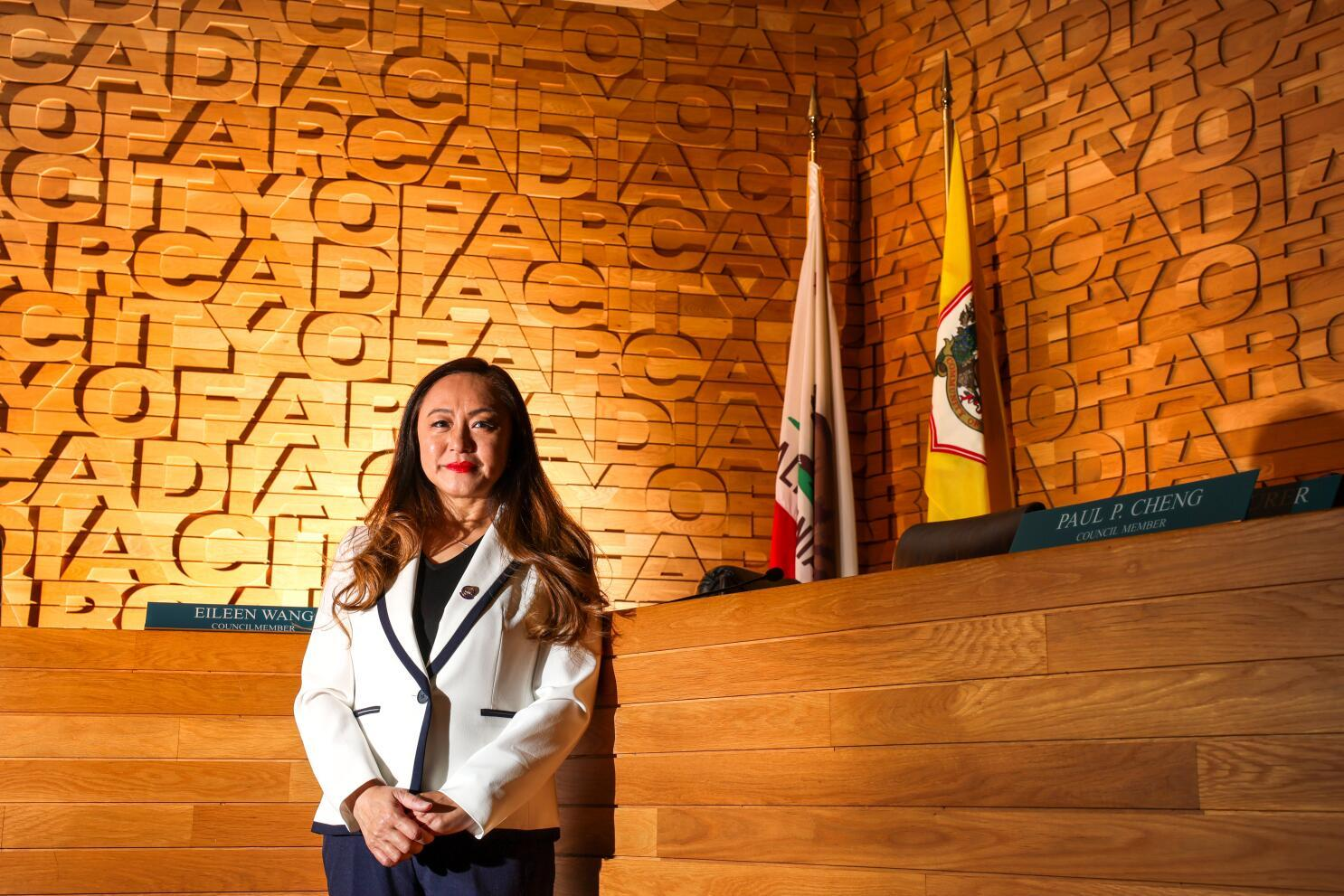
Wang, 58, resigned from her leadership role in Arcadia after federal officials announced she had agreed to plead guilty to acting as an illegal agent of the People’s Republic of China. Prosecutors say the activities occurred between 2020 and 2022, before she formally took office as a city official.
The Charges Against Eileen Wang
Federal prosecutors accuse Wang of secretly coordinating with Chinese government officials to spread propaganda through a website called U.S. News Center, a platform aimed at Chinese-American audiences. According to court filings, Wang and her associate Yaoning “Mike” Sun allegedly received instructions from Chinese officials regarding what content should be published.
Authorities say Wang failed to notify the U.S. Attorney General that she was acting on behalf of a foreign government, which is required under American law.
The charge carries a maximum prison sentence of 10 years. Wang is expected to formally plead guilty in federal court in the coming weeks.
Federal officials described the case as part of a broader effort to combat covert foreign influence operations inside the United States.
FBI Director Kash Patel stated:
“Mayor Wang admitted to acting as a foreign agent from at least 2020 through 2022 – promoting PRC propaganda in the U.S. and acting at PRC’s direction to promote their interests.”
What Prosecutors Say Happened
Court documents outline a coordinated effort involving Wang and Sun, who is already serving a four-year federal prison sentence after pleading guilty to similar charges. Prosecutors allege the pair operated U.S. News Center as a vehicle for disseminating content approved or requested by Chinese government officials.
One of the most significant examples cited in the plea agreement involved China’s controversial treatment of Uyghurs in Xinjiang province.
According to prosecutors, a Chinese government official sent Wang a pre-written article via WeChat that denied allegations of forced labor and persecution in Xinjiang. Minutes later, Wang allegedly reposted the material on her website and later provided screenshots showing the article’s audience reach.
The plea documents reportedly include exchanges in which Wang thanked Chinese officials after receiving praise for the article’s performance online.
Authorities also allege Wang coordinated with John Chen, another man convicted of acting as an illegal Chinese agent in the United States. Chen had previously pleaded guilty in a separate federal case involving bribery and foreign influence activities.
The Arcadia Connection
Arcadia, located northeast of Los Angeles, has a population of more than 50,000 residents and a large Asian-American community. Reports indicate that more than 42% of the city’s residents are ethnically Chinese.
Wang was elected to the Arcadia City Council in November 2022. In the city’s rotating system of governance, council members take turns serving as mayor. She became mayor earlier this year before abruptly resigning following the public release of the federal plea agreement.
City officials attempted to reassure residents that municipal operations were not compromised.
Arcadia City Manager Dominic Lazzaretto stated:
“The allegations at the center of this case, that a foreign government sought to exert influence over a local elected official, are deeply troubling.”
He added that an internal review found no evidence that city finances, staff, or decision-making processes were affected by Wang’s activities.
Wang’s Personal and Political Background
Before entering politics, Wang was known in Arcadia for running an after-school educational program called Little Stanford Academy. According to earlier interviews, she immigrated from China roughly three decades ago and built a life in Southern California.
Her personal relationship with Yaoning “Mike” Sun has become a major part of the federal investigation. Sun reportedly served as Wang’s campaign adviser and treasurer during her 2022 election campaign. The two were formerly engaged, though Wang has stated their relationship ended in spring 2024.
Her attorneys argued that the misconduct stemmed from personal mistakes rather than her official duties as an elected leader.
In a statement, Wang’s lawyers said:
“She apologizes and is sorry for the mistakes she has made in her personal life.”
Why the Case Matters Nationally
The Wang investigation arrives at a time when U.S. officials are increasingly warning about foreign influence campaigns tied to China.
American intelligence agencies have repeatedly accused the Chinese government of attempting to shape public opinion, influence political systems, monitor dissidents abroad, and obtain sensitive economic and technological information.
Congressional investigations and FBI reports have pointed to a broad range of alleged Chinese operations in the United States, including:
- information campaigns
- political influence efforts
- intellectual property theft
- covert overseas “police stations”
- surveillance of dissidents
- economic espionage
A 2025 report from the House Committee on Homeland Security identified more than 60 cases of alleged Chinese espionage or repression activities in the United States since 2021.
The Wang case is particularly notable because it involves a local elected official rather than a federal employee or business executive. Analysts say the allegations highlight concerns that foreign governments may seek influence not only in Washington but also within municipal and community-level politics.
Media, Propaganda, and the Digital Battlefield
The allegations surrounding U.S. News Center also illustrate how modern influence campaigns increasingly rely on community-focused digital media.
Rather than targeting mainstream national outlets, prosecutors say the website specifically catered to Chinese-American readers. By presenting itself as a local news source, authorities argue the platform could spread messaging favorable to Beijing while appearing independent.
This approach reflects a wider global trend in information operations, where governments attempt to shape narratives through social media, niche online publications, encrypted messaging apps, and diaspora-focused media networks.
The use of WeChat in the case is also significant. The platform remains widely used among Chinese-speaking communities worldwide and has frequently been cited by researchers studying state-linked information distribution.
Legal and Political Fallout
Wang’s resignation leaves Arcadia officials facing both political uncertainty and reputational damage.
The city council must now appoint or select a replacement mayor while trying to reassure residents that local governance remains stable. Meanwhile, federal prosecutors are likely to continue using the case as an example of their broader campaign against foreign influence networks.
The investigation could also increase political pressure for tougher enforcement of foreign agent registration laws and closer scrutiny of local officials with international political connections.
At the same time, the case may intensify tensions between the United States and China, whose relationship has already been strained by disputes over trade, technology, cybersecurity, Taiwan, and military influence in the Indo-Pacific region.
China has consistently denied accusations of espionage and political interference abroad.
A Case That Extends Beyond One City
While the legal proceedings against Eileen Wang center on one California suburb, the broader implications reach far beyond Arcadia.
The case touches on some of the defining geopolitical and security concerns of the modern era: foreign influence campaigns, digital propaganda, community-level political infiltration, and the vulnerability of democratic institutions to covert operations.
For many observers, the story represents a warning about how global geopolitical competition increasingly unfolds not only through military power or diplomacy, but also through local politics, online media, and information control.
As Wang prepares to enter her guilty plea, the investigation is likely to remain a major flashpoint in ongoing debates over national security, immigration communities, political transparency, and U.S.-China relations.


