Trump and China: Inside the High-Stakes Summit Reshaping Global Power
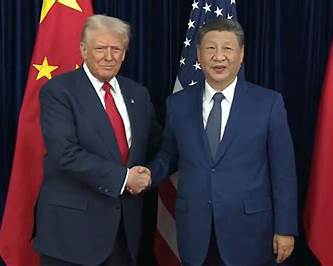
President Donald Trump’s arrival in Beijing for a highly anticipated summit with Chinese President Xi Jinping marks one of the most consequential geopolitical meetings of 2026. The talks come at a moment of mounting global instability, with trade tensions, the Iran conflict, artificial intelligence competition, Taiwan, and critical mineral supply chains all converging into a single diplomatic test.
While both Washington and Beijing publicly describe the relationship as “stable,” the reality behind the summit is far more complex. The United States and China remain locked in an intense struggle for economic influence, technological dominance, and strategic leverage. Yet both sides also recognize that a complete breakdown in relations could trigger severe consequences for the global economy.
Trump’s visit to China is therefore not simply a diplomatic photo opportunity. It is an attempt to stabilize the world’s most important bilateral relationship while navigating crises that stretch from the Taiwan Strait to the Strait of Hormuz.
A Summit Overshadowed by Global Conflict
The Beijing summit was originally scheduled for March but was postponed because of the ongoing Iran war. That conflict continues to dominate international politics and has added urgency to the Trump-Xi meeting.
The war has disrupted global energy markets and contributed to rising inflation worldwide. Oil prices surged after tensions around the Strait of Hormuz intensified, creating fears of prolonged supply disruptions. U.S. inflation climbed to 3.8% in April 2026, the highest level since 2023, with energy costs accounting for much of the increase.
Before departing for Beijing, Trump insisted that the United States had Iran “very much under control,” although negotiations aimed at ending the conflict appear stalled. China, meanwhile, has maintained close economic ties with Tehran while avoiding direct involvement in the conflict.
Trump told reporters he expected to discuss Iran with Xi, saying:
“I think number one, we’re going to have a long talk about it. I think he’s been relatively good, to be honest with you.”
Beijing’s position is delicate. China purchases significant amounts of Iranian oil and has been accused by U.S. officials of indirectly supporting Tehran through energy purchases. Treasury Secretary Scott Bessent recently urged China to pressure Iran into reopening the Strait of Hormuz.
Despite these tensions, analysts say China has little interest in taking responsibility for resolving a conflict largely driven by U.S.-Israeli military actions.
Trade Returns to the Center of U.S.-China Relations
Although Iran dominates headlines, trade remains the central issue of the summit.
Trump has spent months attempting to secure agreements that would increase Chinese purchases of American goods, including soybeans, beef, aircraft, and technology-related products. The White House also hopes to establish a new “Board of Trade” with China aimed at preventing future economic escalation.
The talks follow years of trade disputes that intensified during Trump’s first term. Tariffs imposed by the United States triggered retaliatory actions from Beijing, including restrictions on rare earth exports — minerals essential for electronics, electric vehicles, and defense technologies.
The economic confrontation nearly spiraled into a prolonged trade war before both sides agreed to a temporary truce last year. Under that agreement, China committed to buying more American agricultural products while the United States reduced certain tariffs.
Yet experts warn that the truce remains fragile.
China has continued tightening export controls on rare earth minerals, giving Beijing enormous leverage over global supply chains. Meanwhile, Washington has maintained pressure on Chinese technology firms and restricted access to advanced semiconductor technologies.
As one analyst described it, the summit may produce “a truce, not a resolution.”
Technology and AI Become a Strategic Battlefield
Artificial intelligence and semiconductor technology are now at the heart of U.S.-China competition.
One of the most closely watched aspects of Trump’s delegation is the presence of major American business leaders, including Nvidia CEO Jensen Huang, Tesla and SpaceX CEO Elon Musk, Apple CEO Tim Cook, and Mastercard CEO Michael Miebach.
Huang’s inclusion attracted particular attention because Nvidia has spent months lobbying both governments to allow the sale of AI chips to China. The company’s advanced processors are considered critical to the global AI race.
According to reports, Trump personally invited Huang onto Air Force One at the last minute before the trip to Beijing.
The semiconductor issue highlights a broader strategic struggle. The United States has imposed extensive restrictions on exports of advanced chips and chipmaking equipment to China, arguing that the technology could strengthen Beijing’s military and surveillance capabilities.
China, however, appears increasingly determined to develop its own domestic chip industry instead of relying on U.S. suppliers. Analysts say Beijing now views technological self-sufficiency as a national security priority.
The summit could therefore shape the future of AI competition, global supply chains, and the next phase of technological globalization.
Taiwan Remains the Most Dangerous Flashpoint
No issue in U.S.-China relations carries more strategic risk than Taiwan.
China considers Taiwan part of its territory and has repeatedly warned that reunification remains a national objective. Taiwan, meanwhile, operates as a self-governing democracy with strong unofficial ties to the United States.
Ahead of the summit, China’s state media described Taiwan as “the first red line that cannot be crossed in China-U.S. relations.”
Trump recently acknowledged that he planned to discuss an $11 billion weapons package for Taiwan that was approved last year but not yet delivered. The package represents the largest arms sale ever authorized for the island.
At the same time, Trump has occasionally sent mixed signals regarding America’s commitment to Taiwan, leading to speculation that Washington could consider a softer approach in exchange for reduced Chinese military activity near the island.
Some analysts have floated the possibility of “reciprocal restraint,” where the U.S. reduces arms sales while China scales back military exercises.
Still, few observers expect any major breakthrough on Taiwan. The issue remains deeply rooted in decades of political mistrust and military rivalry.
Marco Rubio’s Unusual China Visit
Another remarkable subplot surrounding the summit involves Secretary of State Marco Rubio.
Rubio, long one of China’s fiercest critics in Washington, previously faced sanctions from Beijing over his support for Uyghur human rights legislation and criticism of China’s policies in Hong Kong and Taiwan.
Yet Rubio is now traveling to China alongside Trump. Reports suggest Beijing may have found a diplomatic workaround by subtly altering the Chinese transliteration of Rubio’s name to avoid technically violating its own sanctions rules.
The episode illustrates how both governments are willing to maneuver around political obstacles when larger strategic interests are at stake.
China Appears Increasingly Confident
While Trump has projected optimism ahead of the summit, some analysts believe China enters the meeting from a position of growing strength.
Beijing successfully leveraged its dominance in rare earth minerals during earlier trade disputes, forcing Washington to reconsider aggressive tariff strategies. Chinese exports have also remained resilient despite years of economic pressure.
Meanwhile, the United States faces domestic challenges including inflation, energy costs, and political pressure linked to the Iran war.
According to several geopolitical analysts, China’s main objective may simply be to preserve stability while waiting for more favorable conditions in the future. If the summit avoids major confrontation, Beijing could emerge stronger regardless of whether formal agreements are signed.
The Symbolism Behind the Visit
The summit carries enormous symbolic significance beyond policy negotiations.
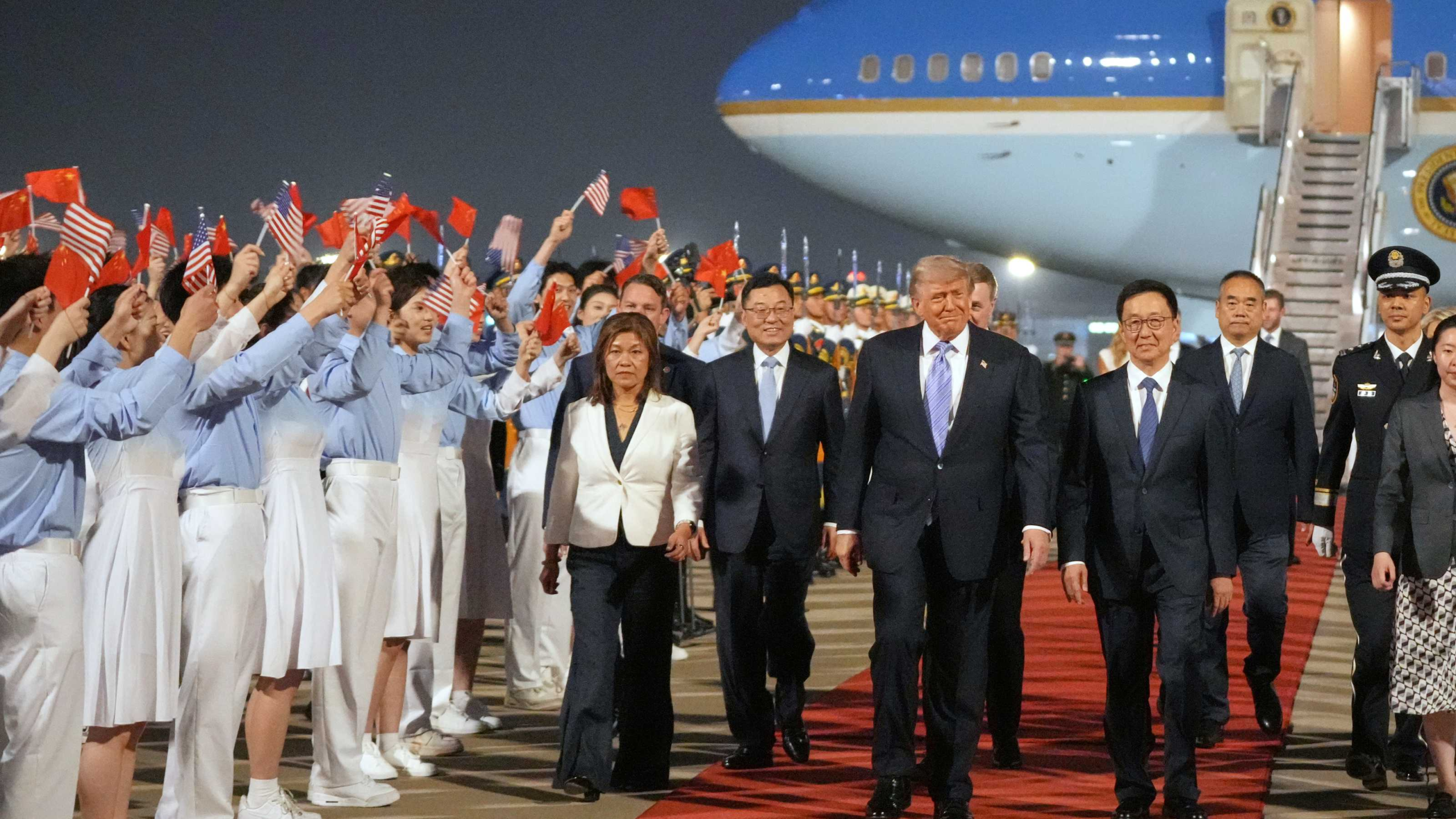
Trump’s arrival in Beijing featured a carefully orchestrated ceremony with military honors, youth groups waving American and Chinese flags, and red carpet welcomes led by senior Chinese officials.
The leaders are expected to tour the Temple of Heaven, attend a formal banquet, and engage in extensive bilateral meetings. Such ceremonies are designed to project stability and mutual respect despite underlying tensions.
Trump has already spoken positively about the long-term relationship between the two countries, declaring:
“We’re going to have a great relationship for many, many decades to come.”
Whether that optimism survives the realities of trade competition, military rivalry, and technological conflict remains uncertain.
What Happens Next?
The summit is unlikely to resolve the deep structural disagreements between the United States and China. The rivalry now extends across economics, defense, artificial intelligence, energy security, and global diplomacy.
However, the meetings could determine whether the two superpowers manage their competition through negotiation or drift toward deeper confrontation.
Key outcomes analysts will watch include:
- Potential extension of the trade truce
- New agreements on agricultural and industrial purchases
- Any softening of technology export restrictions
- Changes in rhetoric surrounding Taiwan
- Coordination regarding Iran and global energy security
- Movement toward broader strategic dialogue mechanisms
For global markets, businesses, and governments, even modest stability between Washington and Beijing could reduce uncertainty at a time when geopolitical tensions are already straining the international system.
The Trump-Xi summit therefore represents more than a diplomatic visit. It is a test of whether the world’s two largest powers can coexist in an era increasingly defined by rivalry, economic fragmentation, and strategic competition.