

Tigres UANL vs Seattle Sounders: A Quarterfinal Defined by Fine Margins
A Night of Drama in Seattle
The Concacaf Champions Cup quarterfinal between Tigres UANL and Seattle Sounders FC delivered a compelling two-legged narrative—one shaped by intensity, tactical discipline, and ultimately, a single decisive moment.
On April 15, 2026, at Lumen Field, Seattle produced a spirited 3-1 victory in the second leg. Yet, despite dominating large portions of the match, they fell short of progression. The aggregate score finished 3-3, with Tigres advancing to the semifinals on the away-goal rule.
This was not merely a match—it was a demonstration of how knockout football rewards efficiency over dominance.
The Stakes: Experience vs Urgency
Coming into the second leg, Tigres held a 2-0 advantage from the first meeting in Monterrey. Seattle’s objective was straightforward but demanding: overturn a two-goal deficit against one of the region’s most consistent tournament performers.
Tigres, for their part, entered the tie with notable pedigree. The club has now reached the Champions Cup semifinals in seven of their last nine appearances, reinforcing their status as a continental powerhouse.
Seattle, meanwhile, carried the urgency of a team with nothing to lose—pushing forward aggressively from the opening whistle.
Match Narrative: Momentum Swings and Tactical Control
Early Breakthrough Fuels Hope
Seattle began with intensity and purpose. Their early pressure paid off in the 11th minute when Albert Rusnak opened the scoring, converting from a Cristian Roldan assist. The goal injected belief into the home side and set the tone for a potential comeback.
Joaquim’s Goal Changes Everything
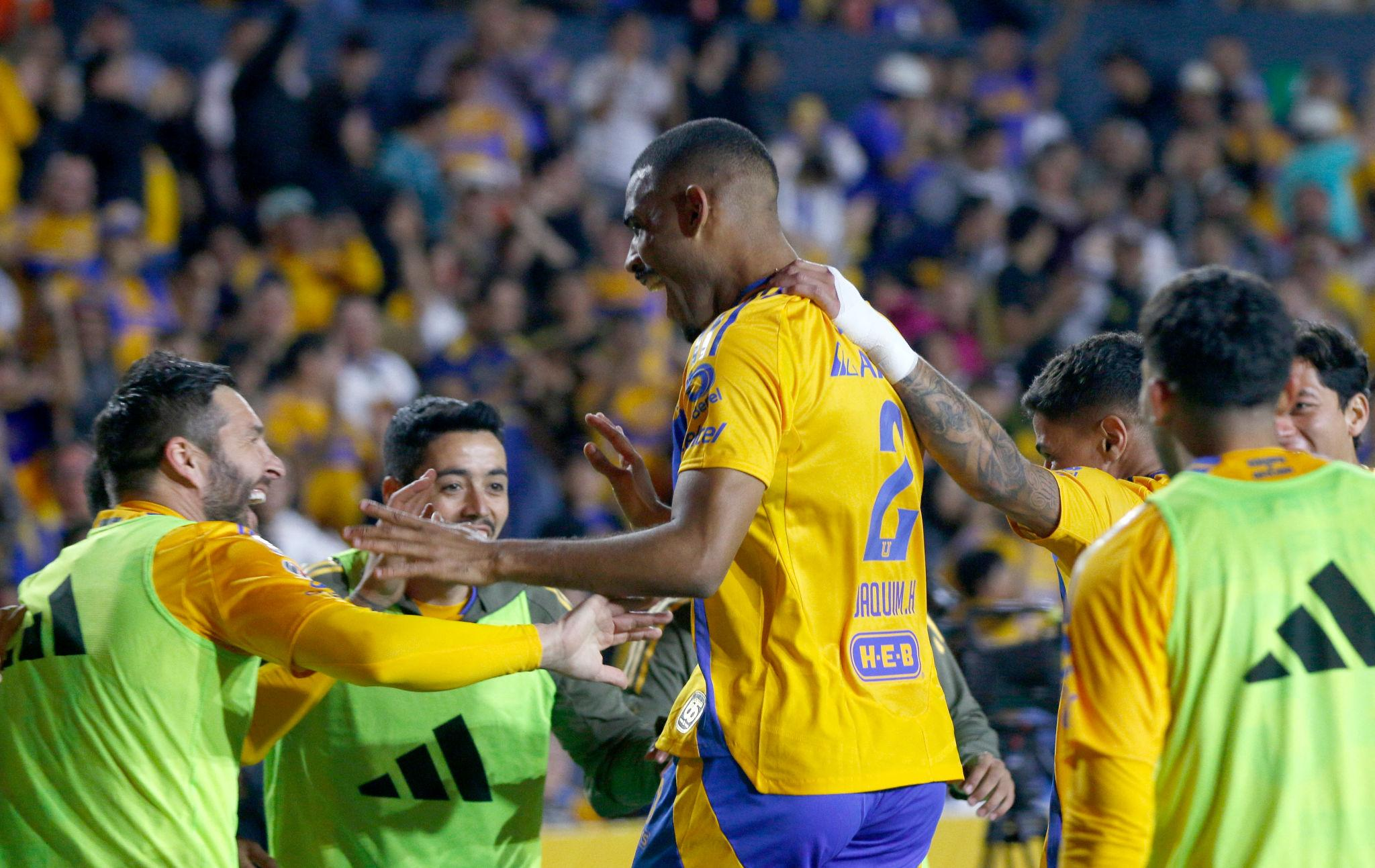
The turning point arrived in the 31st minute. A corner delivered by Juan Brunetta found Tigres defender Joaquim Pereira, who powered a header past Stefan Frei.
That goal altered the entire dynamic of the tie. Suddenly, Seattle’s task became significantly more difficult—they now required three additional goals to advance.
Second-Half Pressure Intensifies
Seattle resumed with renewed urgency after halftime. The introduction of Danny Musovski proved effective, as he scored shortly after the restart, restoring Seattle’s lead on the night.
The Sounders maintained control, dominating possession with 69% and registering 20 shots compared to Tigres’ 10. Their attacking structure was clear: stretch Tigres’ defensive lines, increase tempo, and force openings.
Rusnak later added his second goal, bringing the score to 3-1 and leveling the aggregate. Yet, despite the statistical dominance, Seattle could not find the decisive fourth goal.
Late chances—including a blocked Rusnak effort and a missed header by Musovski—summed up their frustration.
Tactical Analysis: Efficiency vs Dominance
Seattle’s Approach
Seattle adopted a high-pressing, possession-heavy strategy. Their game plan relied on:
- Sustained attacking pressure
- Quick transitions into the final third
- Overloading wide areas to stretch Tigres’ defense
This approach produced clear chances and territorial control. However, the inability to capitalize in the first leg—and the concession of an away goal in the second—proved decisive.
Tigres’ Strategy
Tigres operated with a contrasting philosophy:
- Compact defensive organization
- Strategic patience after scoring
- Selective counter-attacks
Once they secured the away goal, Tigres shifted into game management mode. Rather than chasing additional goals, they focused on preserving the aggregate advantage.
Their discipline under pressure was the defining factor.
Key Performers
Albert Rusnak (Seattle Sounders)
Rusnak was central to Seattle’s attacking output. His two goals highlighted both technical precision and composure under pressure.
Danny Musovski (Seattle Sounders)
Musovski’s impact off the bench kept Seattle competitive and sustained the momentum of the comeback effort.
Joaquim Pereira (Tigres UANL)
Joaquim’s header was the decisive moment of the tie. It fundamentally altered the aggregate equation and ultimately secured Tigres’ progression.
Aggregate Reality: Where the Tie Was Won
Despite Seattle’s strong second-leg performance, the outcome was shaped by two critical factors:
- Tigres’ 2-0 first-leg victory
- The away goal scored in Seattle
Seattle achieved the attacking output required on the night, but not across both legs. Tigres, in contrast, executed the tie with greater efficiency.
This is the structural reality of knockout football—performance is measured over 180 minutes, not 90.
What Happens Next
Tigres now advance to face Nashville SC in the semifinals, following Nashville’s elimination of Club América.
The Mexican side continues its pursuit of another Champions Cup title, having last won the competition in 2020.
Seattle, meanwhile, exits the tournament with a sense of unfinished business. Their performance demonstrated quality and competitiveness, but also highlighted the margins that separate success from elimination.
Broader Implications for the Competition
This quarterfinal underscores a recurring theme in the Concacaf Champions Cup:
- Liga MX clubs continue to leverage experience and tactical discipline
- MLS teams are increasingly competitive but must convert dominance into results
The semifinal lineup, featuring both leagues, reflects a growing competitive balance in the region—yet also reinforces the importance of strategic execution in two-legged ties.
Conclusion: A Tie Defined by Precision
The Tigres UANL vs Seattle Sounders quarterfinal will be remembered as a case study in efficiency.
Seattle delivered one of their strongest performances of the campaign, controlling the match and creating opportunities. However, Tigres demonstrated the qualities that define successful tournament teams: composure, timing, and clinical execution.
In the end, one goal—Joaquim’s header—proved enough to separate the two sides.


