

From Garden Curiosity to Conservation Asset: The Unusual Journey of a Crocodile
A Story That Defies Expectations
For years, it lived far from what experts would consider an appropriate habitat—confined to a private allotment garden alongside snakes and other exotic animals. Today, that same crocodile has become part of a carefully managed conservation effort in one of Europe’s most respected zoological institutions.
This is not simply a relocation story. It is a case study in animal welfare, regulatory intervention, and the evolving role of zoos in preserving species once pushed to the brink of extinction.
The Discovery: A Private Collection Gone Too Far
Authorities first intervened after concerns were raised about the conditions in which several exotic animals were being kept. The situation involved not only a crocodile but also constrictor snakes and venomous species housed in a private garden setting.
Despite prior requests for improved conditions, the owner failed to meet required standards. As a result, veterinary and environmental authorities moved in to confiscate the animals.
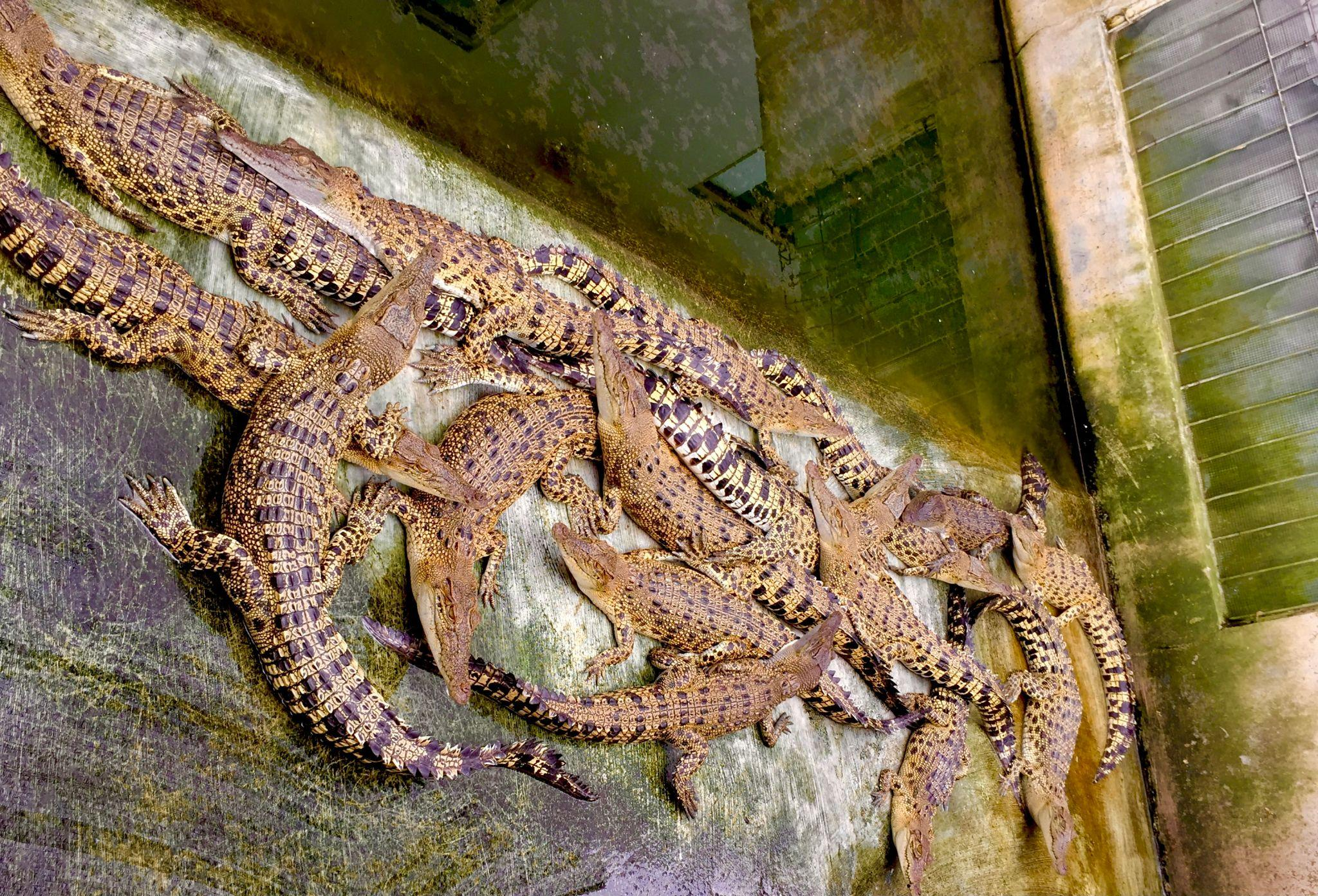
Among them was a male humpback crocodile—approximately 30 years old, over 2.3 meters long, and equipped with nearly 70 sharp teeth.
The animal had spent nearly a decade in this unconventional environment.
Transitional Care: Rehabilitation in Munich
Following its confiscation, the crocodile was transferred to a reptile rescue center in Munich. Facilities like this play a critical intermediary role, taking in thousands of animals annually, providing medical care, and arranging long-term placements.
During its stay, the crocodile’s health and weight were closely monitored. At one point described as overweight, it underwent gradual improvements under professional care.
The transition period was not without challenges. Housing such a large reptile is expensive—reportedly costing around 70 euros per day—and long-term solutions are often difficult to secure.
There were even moments when authorities considered euthanasia due to the logistical and financial burden.
A New Home: Vienna Zoo Steps In
A breakthrough came when the Schönbrunn Zoo in Vienna agreed to take the crocodile.
The move was not incidental—it was strategic.
The zoo had recently lost a male crocodile, leaving a female without a partner. Introducing a new male created the opportunity to form a breeding pair, which is particularly significant for this species.
“Beulenkrokodile are only found in a few zoological gardens… this pair is genetically particularly valuable for the survival of the zoo population.”
The relocation itself was carefully managed. The crocodile was transported in a specialized crate by zoo personnel and initially housed separately to allow gradual acclimatization.
Behavioral Integration: From Isolation to Pair Bonding
The introduction process followed standard zoological protocols. Initially, the male and female were kept apart but allowed to see, smell, and communicate with each other.
The results were immediate and notable.
“They immediately dove together, even made their first mating attempts, and since then have liked to lie close together both on land and in the water.”
This rapid compatibility is significant. Crocodiles are not inherently social animals, and successful pairing is not guaranteed—especially after long periods of isolation.
Conservation Context: Why This Matters
At first glance, this may appear to be a localized animal welfare case. In reality, it connects to broader conservation dynamics.
Humpback crocodiles were once nearly wiped out due to demand for their leather. Approximately 40 years ago, populations in southern Mexico, Guatemala, and Belize declined sharply.
Recovery efforts—largely driven by zoos and breeding programs—helped stabilize the species. Today, they are no longer classified as endangered.
However, maintaining genetic diversity within captive populations remains a priority. This is where individual animals like this one become important.
Zoos are no longer just exhibition spaces. They function as genetic reservoirs, supporting long-term species survival.
Ethical Dimensions: Private Ownership vs. Public Responsibility
This case also highlights a recurring issue: the private ownership of exotic animals.
While enthusiasts often claim expertise, the reality frequently falls short of the complex requirements these species demand. Large reptiles require controlled environments, specialized diets, and veterinary oversight that are difficult to replicate in private settings.
The intervention by authorities underscores a broader regulatory trend—tightening restrictions on exotic animal ownership to prevent welfare violations.
A Shift in Narrative
What makes this story compelling is its transformation arc:
- From an inadequately housed private specimen
- To a rehabilitated animal under expert care
- To a contributor in a structured conservation program
The crocodile, once at risk of euthanasia, is now part of a breeding pair that could support the long-term stability of its species in captivity.
What Comes Next
The immediate focus will be on monitoring the pair’s compatibility and potential reproduction. Early mating attempts suggest favorable conditions, but successful breeding depends on multiple variables, including environmental stability and health.
If reproduction occurs, it would reinforce the role of coordinated zoo networks in maintaining viable populations.
More broadly, cases like this may influence future policy decisions regarding exotic animal ownership, as well as public awareness of the responsibilities involved.
Conclusion
The journey of this crocodile illustrates a convergence of animal welfare enforcement, scientific management, and conservation strategy.
It is not merely a rescue story—it is a demonstration of how intervention, when properly executed, can redirect an animal’s trajectory from neglect toward ecological significance.
The outcome also reinforces a central principle: in modern conservation, even a single animal can carry disproportionate importance when placed within the right system.


