

Alycia Parks: Power, Personality, and the Pursuit of a Breakthrough Season
A Rising Force on the WTA Tour
In a sport defined by precision and composure, Alycia Parks has built her identity on raw power and unapologetic ambition. The American player, known for her explosive serve and fearless shot-making, continues to carve out her place on the global stage—most recently at the Porsche Tennis Grand Prix in Stuttgart.
Her 2026 campaign reflects a player in transition: not yet at the top tier, but increasingly difficult to ignore. Parks’ performances in Stuttgart highlight both her strengths and the areas that still define her journey—moments of brilliance, tempered by inconsistency against elite competition.
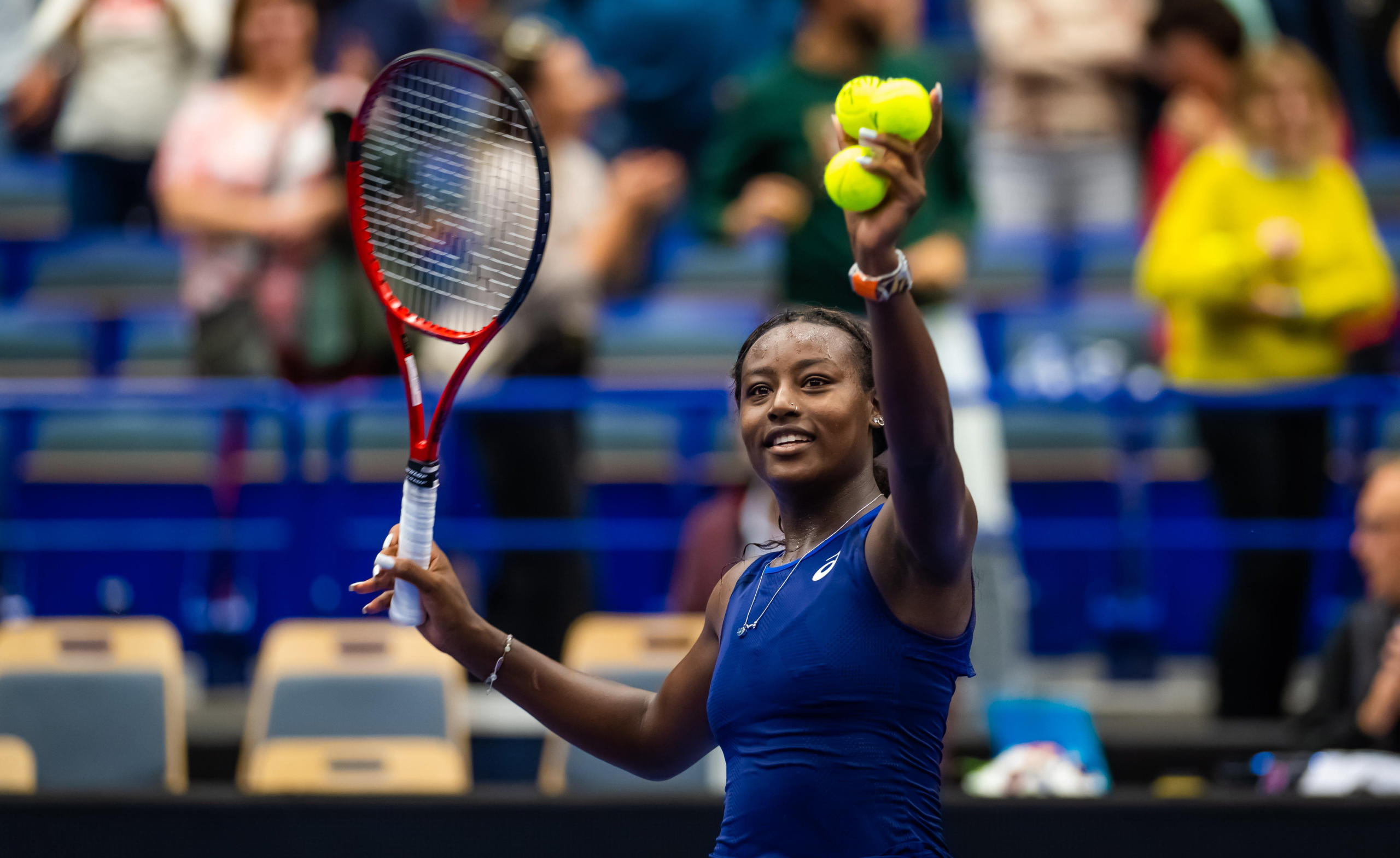
Stuttgart 2026: A Statement Win—and a Reality Check
Parks arrived in Stuttgart as a qualifier, facing local wildcard Noma Noha Akugue in the first round. The result was decisive. She secured a straight-sets victory, 6–4, 6–2, demonstrating her trademark aggressive baseline play and powerful serving.
Beyond the scoreline, the match reinforced what makes Parks dangerous: she can dictate rallies and overwhelm opponents when her timing clicks. Her ability to control points with pace and depth was evident throughout the contest.
Off the court, she revealed a lighter side that has increasingly become part of her public persona. Asked about chasing the fastest serve record at the tournament, Parks responded with humor:
“I mean… that’s not really my goal. My goal is to leave with the Porsche…”
That remark reflects both the unique culture of Stuttgart—where the champion traditionally wins a Porsche—and Parks’ grounded, self-aware personality. It also hints at her broader mindset: focused on tangible success rather than statistical milestones.
The Andreeva Test: Margins at the Top Level
The second round presented a significant step up. Parks faced Mirra Andreeva, one of the most in-form players on tour. The match ultimately ended in a straight-sets defeat, 7–6(3), 6–3.
Despite the loss, the contest offered a detailed look at Parks’ competitive ceiling—and the gap she is working to close.
- She forced a tiebreak in the opening set after trailing 5–3
- Saved multiple set points with creative shot-making
- Produced 21 winners, showcasing her offensive capability
- But also committed 41 unforced errors, highlighting inconsistency
The contrast with Andreeva was stark. While Parks relied on high-risk aggression, her opponent maintained composure and efficiency, finishing with far fewer errors.
This pattern is not unusual for developing power players. Parks has the tools to challenge top opponents, but sustained control—particularly under pressure—remains a work in progress.
A Playing Style Built on Power
Parks’ game is built around one of the most formidable serves on the WTA Tour. Her ability to generate pace allows her to dominate service games and shorten rallies, a crucial advantage in modern tennis.
Key characteristics of her playing style include:
- High-velocity serve capable of producing aces and weak returns
- Aggressive baseline hitting, especially off the forehand side
- Willingness to attack early, often taking time away from opponents
- Risk-heavy approach, which can lead to both winners and errors
This identity places her among a group of players who can disrupt even the most consistent opponents—when execution aligns.
Context Within the Tournament Landscape
The Stuttgart event itself adds another layer to Parks’ narrative. As a WTA 500 tournament, it attracts elite competition, including players like Iga Swiatek, a two-time Stuttgart champion and one of the dominant forces in women’s tennis.
The tournament’s structure—combining high stakes, indoor clay conditions, and strong draws—makes it a valuable benchmark for players outside the top tier. Parks’ ability to win her opening match and compete against a rising star like Andreeva suggests progress, even if results remain mixed.
Her presence also influenced the broader draw dynamics. Matches involving Parks were directly tied to potential quarterfinal scenarios, including possible clashes involving top seeds like Swiatek.
Personality and Marketability
Beyond her on-court attributes, Parks is beginning to establish a recognizable personality within the sport. Her Stuttgart comments—light, candid, and slightly irreverent—offer a contrast to the often reserved tone of professional tennis.
This matters in a modern sports landscape where visibility and relatability play a growing role. Players who combine performance with personality tend to attract broader audiences, sponsorship opportunities, and media attention.
Parks’ approach suggests she understands this dynamic, even if her primary focus remains competitive progress.
What Comes Next: Development vs. Breakthrough
The trajectory for Alycia Parks is not linear. Her results—alternating between strong wins and early exits—reflect a player still refining her game against top-level opposition.
Key areas that will define her next phase include:
- Reducing unforced errors without sacrificing aggression
- Improving rally tolerance in extended exchanges
- Maintaining composure in high-pressure moments
- Adapting tactics against defensive and counterpunching players
If she can balance her power with greater consistency, Parks has the tools to move beyond the fringes of the top 100 and establish herself as a regular contender in later rounds of major tournaments.
A Career Still Taking Shape
Alycia Parks’ Stuttgart campaign captures the essence of her current career stage: promising, unpredictable, and evolving. She can dominate one match and struggle the next, produce highlight-reel winners while battling unforced errors.
Yet within that volatility lies genuine potential.
Her ability to challenge high-level opponents, combined with a distinct playing style and growing confidence, positions her as a player to watch closely in the coming seasons.
The question is not whether Parks has the talent—it is whether she can harness it consistently enough to turn moments into momentum, and momentum into sustained success.
Conclusion
Alycia Parks’ journey through the 2026 Porsche Tennis Grand Prix offers a concise snapshot of a rising athlete navigating the demands of elite tennis. Her first-round victory showcased her power and confidence, while her second-round defeat underlined the precision required at the highest level.
What stands out is not just her performance, but her presence—on and off the court. With a combination of athletic strength, evolving maturity, and a clear sense of self, Parks is building more than results; she is shaping an identity within the sport.
If her development continues on its current path, the ambition she joked about in Stuttgart—“to leave with the Porsche”—may eventually become less of a punchline and more of a realistic goal.


