
Coco Gauff: Confidence, Controversy, and a Defining Clay Season
A Rising Star Entering a Critical Phase
At just 22 years old, Coco Gauff has already established herself as one of the most compelling figures in modern tennis. As the 2026 clay season begins, her trajectory appears both promising and demanding—a blend of high expectations, proven excellence, and new challenges shaping her next chapter.
Arriving in Stuttgart for the prestigious Porsche Tennis Grand Prix, Gauff carries momentum from a strong early-season run. She reached the final of the Miami Open and enters the European clay swing with a 16–6 record in 2026, positioning herself among the elite contenders on the WTA Tour.
Yet, beyond rankings and results, Gauff’s current moment reflects something deeper: a player balancing performance, public scrutiny, and influence within the sport.
Stuttgart Opportunity Opens After Sabalenka Withdrawal
The competitive landscape in Stuttgart shifted significantly when Aryna Sabalenka withdrew from the tournament. This development elevated Gauff to the No. 2 seed, strengthening her position in a draw that still includes top-tier players such as Iga Świątek.
Despite the change, Gauff’s mindset has remained consistent and measured.
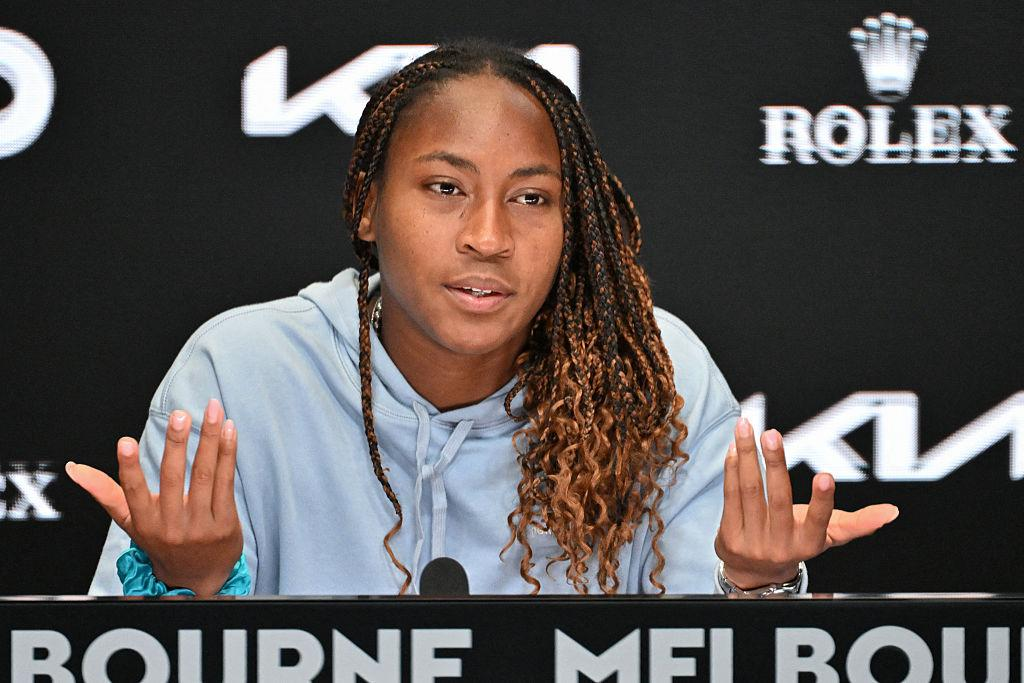
“I mean, yeah, always have a chance, regardless of who’s in the draw,” she said ahead of the tournament. “Always have a good chance to do well at any tournament.”
Rather than framing Stuttgart as a must-win event, Gauff emphasized process over outcome:
“It’s the first clay tournament of the year for me… I’m not treating this as trying to win; I think it is just more so for the process to do well over the next coming weeks.”
This approach reflects a mature competitive philosophy—particularly significant given that she is defending more ranking points than any other player on tour this clay season.
Clay-Court Dominance: A Proven Advantage
If Stuttgart represents a fresh start, Gauff’s recent clay-court history suggests she is uniquely equipped for success on the surface.
Her 2025 campaign on clay was exceptional:
- Finals appearances in Madrid and Rome
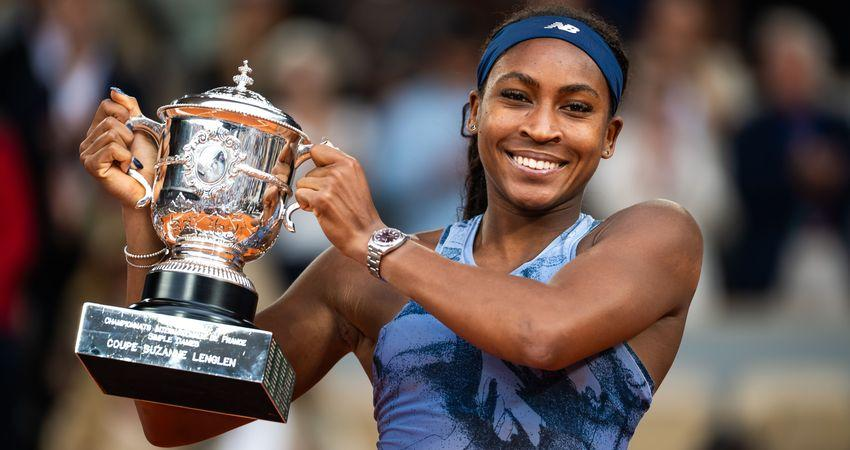
- Back-to-back titles in Rome and French Open
- Victory over Sabalenka in the Roland Garros final
This 18–3 record on clay in 2025 established her as one of the most effective players on the surface.
Technically, her strengths translate well to clay:
- Elite lateral movement and defensive coverage
- Improved serve placement under pressure
- Ability to extend rallies and transition from defense to attack
These attributes make her particularly dangerous in long matches, where physical endurance and tactical discipline become decisive.
However, Stuttgart presents a unique challenge. Unlike traditional outdoor clay courts, its indoor conditions favor faster play—reducing some of the advantages that typically benefit Gauff’s style.
A Complicated Relationship with Stuttgart
Despite her broader clay success, Gauff’s record in Stuttgart remains inconsistent.
- Four appearances
- No progression beyond the quarterfinals
- Overall record: 3–4
Last year, she was eliminated at the quarterfinal stage by Jasmine Paolini, highlighting a pattern of underperformance at this specific event.
Her 2026 campaign begins against Liudmila Samsonova in the Round of 16, following a first-round bye. Notably, Gauff holds a 3–0 head-to-head advantage over Samsonova, including a previous clay-court victory.
This matchup offers an opportunity not just to advance, but to reset her narrative in Stuttgart.
Beyond the Court: A Voice in Tennis Governance
While her on-court ambitions remain central, Gauff has also emerged as a prominent voice in broader tennis discussions—particularly around player privacy.
Following an incident at the 2026 Australian Open, where she was filmed in a private corridor after a loss, Gauff openly challenged the extent of media access in tournaments.
“We already don’t have much privacy in tournaments, and I think this is too much,” she said.
Her proposed solution is straightforward:
“Signs. The main thing, signs… controlling what’s shown and what is not shown.”
She also highlighted specific concerns, including cameras capturing personal moments and even zooming in on players’ phones.
“I definitely think it’s gone too far… we don’t need to compromise everything we do off the court.”
This stance aligns with comments from Carlos Alcaraz, indicating a growing consensus among players about boundaries in the modern, media-driven era of tennis.
Financial Growth and Career Trajectory
Gauff’s success has translated into substantial financial achievements.
- Career prize money: $31,687,551
- Ranking: 11th on the all-time WTA earnings list
- 2025 French Open champion prize: €2,550,000
Looking ahead, the 2026 French Open will feature a total prize pool of €61,723,000—a 9.53% increase from the previous year. This raises the stakes further for players like Gauff, who are positioned to compete for both titles and record earnings.
The Road Ahead: Pressure and Possibility
Gauff’s projected path in Stuttgart outlines the level of competition she faces:
- Round of 16: Samsonova
- Quarterfinals: Karolina Muchova
- Semifinals: Elina Svitolina
- Final: Elena Rybakina
This sequence underscores the density of talent in the current WTA field, where even top seeds must navigate consistently high-level opposition.
At the same time, the broader clay season—including Madrid, Rome, and Roland Garros—will test her ability to defend ranking points and maintain consistency across multiple tournaments.
Conclusion: A Defining Stretch for a Modern Champion
Coco Gauff enters the 2026 clay season at a pivotal intersection of performance, influence, and expectation.
On one side, she is a proven Grand Slam champion with elite capabilities on clay and a strong competitive mindset. On the other, she faces mounting pressure—both from the depth of the women’s tour and from the demands of sustaining top-level success.
Equally significant is her evolving role off the court. By addressing issues such as player privacy, Gauff is positioning herself not just as a competitor, but as a stakeholder in the future direction of tennis.
The coming weeks will determine more than just titles or rankings. They will shape how Coco Gauff’s career is defined: as a dominant champion, a consistent contender, or a transformative figure in the sport’s modern era.


