

Feroz Khan and Ebrahim Kadwa Bail: What the R20,000 Court Decision Means for SAPS, the Hawks and Public Trust
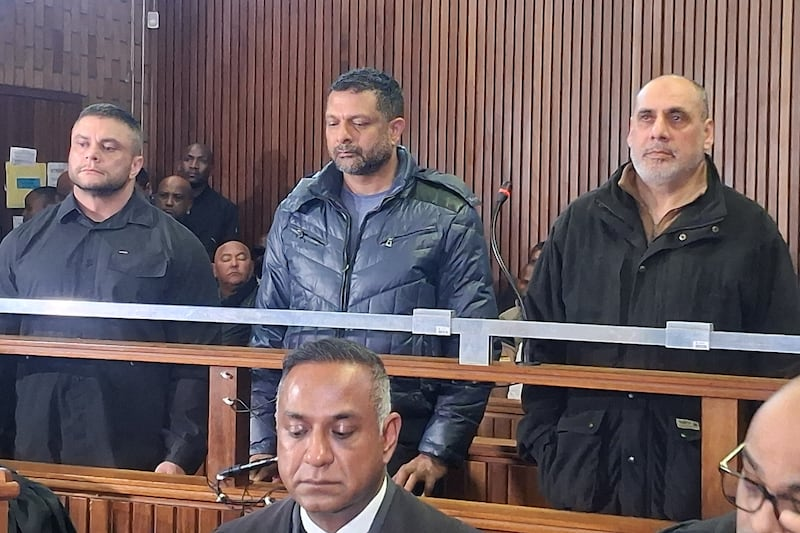
The bail granted to Major-General Feroz Khan and Major-General Ebrahim Kadwa has placed South Africa’s law-enforcement leadership under intense public scrutiny. The case involves two senior police figures: Khan, identified as a senior Crime Intelligence official and head of crime-counter intelligence, and Kadwa, the Gauteng Hawks head. They appeared in the Kempton Park Magistrate’s Court alongside Durban businessman Tariq Downes, with all three released on R20,000 bail each.
The matter is not only a courtroom story. It is also a test of institutional credibility inside the South African Police Service, particularly because the allegations touch on precious metals, alleged interference, and claims of an undercover operation that prosecutors say was not authorised.
The Bail Ruling: What the Court Decided
On Monday, 11 May 2026, Khan, Kadwa and Downes appeared in the Kempton Park Magistrate’s Court. They were granted bail of R20,000 each. The State did not oppose bail, with one report noting that this was because the offence is Schedule 1.
The bail conditions are significant. The accused may not interfere with investigations or contact witnesses. They are also required to hand in their passports to the investigating officer on or before 12 May. In addition, the trio must alert the investigating officer within 72 hours if they intend to travel.
The case was postponed to 14 July for further investigations.
The Charges at the Centre of the Case
The three face charges connected to the contravention of the Precious Metals Act and defeating or obstructing the course of justice. The allegations stem from an incident on 05 May 2021, when Downes was allegedly found at OR Tambo International Airport in possession of 75.9 grams of unwrought gold, valued at approximately R62,836.
According to the details provided, Downes allegedly claimed during questioning that the metal was a brass bar and that he was acting as an undercover agent linked to senior SAPS officials.
The National Prosecuting Authority’s position, as provided in the source material, is that investigators allegedly found no authorised undercover operation involving precious metals at the time.
The official wording is central to understanding the seriousness of the case:
“Investigations allegedly established that no authorised undercover operation involving precious metals existed at the time. The state further alleges that Khan and Kadwa instructed officers to release Downes despite there being no supporting documentation for such an operation.”
That allegation shifts the matter beyond possession of precious metals. It raises questions about whether senior officials improperly used their authority, whether an alleged intelligence explanation was legitimate, and whether officers on the ground were influenced by higher-ranking figures.
How the Arrests Unfolded
Khan was arrested on Sunday following what was described as a high-profile raid at his Houghton apartment. The raid formed part of a broader operation targeting an alleged illicit precious metals syndicate.
Kadwa and Khan were arrested over the weekend, with reports stating that the matter is linked to the earlier OR Tambo International Airport incident involving Downes. The businessman, identified as Durban-based Tariq Downes, appeared alongside the two senior police officials.
The court appearance brought the matter into public view, not only because of the charges but because of the stature of the accused inside the policing system. Senior officials appearing in a criminal matter involving precious metals and alleged obstruction inevitably intensifies scrutiny of SAPS and the Hawks.
SAPS Response: “No One Is Above the Law”
Speaking outside court, SAPS spokesperson Athlenda Mathe said the appearance of senior officers was disappointing, but framed the matter as evidence that the organisation is willing to act internally.
Her statement was clear:
“But it shows that as an organisation we are committed to integrity, transparency and rooting out wrongdoing and corruption within our ranks. We always maintain that no one is above the law.”
The quote is important because it signals the line SAPS is attempting to draw: the allegations are damaging, but the institution wants the public to see the arrests and court process as proof of accountability rather than evidence of total institutional failure.
That distinction will matter as the case proceeds. Public trust in law enforcement depends not only on whether wrongdoing exists, but on whether institutions respond decisively, transparently and without preferential treatment.
Political Pressure: Calls for Suspension During Proceedings
The Democratic Alliance responded by urging SAPS to ensure that Khan and Kadwa remain removed from operational duties while the criminal proceedings continue.
The DA, through Lisa Schickerling MP, said the charges were serious and that SAPS must prevent any possibility of the two officials returning to positions where they could influence investigations, access sensitive information, or interfere with the administration of justice.
The party’s concern is rooted in the seniority of the accused. If officials facing serious allegations retain operational influence, even indirectly, public confidence may suffer further.
The DA’s statement warned:
“Public confidence in law enforcement is already under severe strain. Any perception that senior officials accused of serious crimes can continue to wield influence would further erode trust in the integrity of SAPS and the Hawks.”
The party also said it would closely monitor the matter to ensure due process is followed and that there is no undue interference in the investigation or prosecution.
Why This Case Matters Beyond Bail
Bail does not determine guilt or innocence. It allows an accused person to remain out of custody while the legal process continues, subject to conditions imposed by the court. In this case, the bail ruling means Khan, Kadwa and Downes are free pending further investigation, but their movements and conduct are restricted.
The broader importance lies in the nature of the accused and the institutions involved. The Hawks are responsible for investigating priority crimes. Crime Intelligence deals with sensitive policing information. When senior figures from such units face charges involving alleged precious metals offences and obstruction, the credibility stakes are especially high.
The public will be watching for three things.
First, whether the investigation proceeds independently and without internal pressure.
Second, whether SAPS takes meaningful administrative action while the criminal case unfolds.
Third, whether prosecutors can substantiate the allegation that no authorised undercover operation existed and that officers were allegedly instructed to release Downes without proper supporting documentation.
The 2021 Incident: A Key Point in the Timeline
The case’s roots go back five years before the bail decision. The alleged 05 May 2021 airport incident is crucial because it provides the factual basis for the current charges.
The allegation is that Downes was found with 75.9 grams of unwrought gold at OR Tambo International Airport. The value was placed at approximately R62,836. He allegedly claimed it was a brass bar and that he was acting as an undercover agent connected to senior SAPS officials.
The central question now is whether that explanation was legitimate. If there was no authorised operation, as the State alleges, then the question becomes why the matter was allegedly handled in the way prosecutors describe.
That is why the July postponement matters. Investigators will have more time to gather documentation, interview witnesses, and test the claims around authorisation, command structure and alleged interference.
What Happens Next
The case has been postponed to 14 July for further investigations. Until then, the bail conditions remain central. Khan, Kadwa and Downes must avoid interfering with witnesses or the investigation, surrender their passports by the required deadline, and notify the investigating officer within 72 hours if they intend to travel.
For SAPS, the immediate challenge is administrative and reputational. The organisation must show that seniority does not shield officials from ordinary legal processes. For prosecutors, the challenge is evidentiary: they must connect the alleged 2021 incident, the precious metals charge, and the alleged obstruction into a coherent case that can stand in court.
For the public, the case is another moment of reckoning over trust in policing. The allegations remain to be tested in court, but the institutional implications are already visible.
Conclusion: A Bail Decision With Larger Consequences
The granting of R20,000 bail to Feroz Khan, Ebrahim Kadwa and Tariq Downes is only an early step in a case that could have significant implications for SAPS and the Hawks. The allegations involve precious metals, an alleged unauthorised undercover explanation, and claims that senior officials instructed officers to release a businessman without proper documentation.
The court has not determined guilt. But the case has already raised serious questions about accountability, operational integrity and the ability of law-enforcement institutions to police their own leadership.
The next major date is 14 July. By then, investigators and prosecutors will be expected to move the matter forward. Until then, the focus will remain on whether the accused comply with bail conditions, whether SAPS keeps them away from operational influence, and whether public confidence can withstand yet another high-profile test.


