

Tariq Downes Durban: Inside the Court Case Linking a Businessman, Two Police Generals and an Alleged Gold Bust
Durban businessman Tariq Downes has moved from the margins of a 2021 airport incident into the centre of a high-profile corruption case involving two senior South African Police Service officials. His name is now tied to allegations of unlawful possession of precious metals, corruption, and defeating the ends of justice — charges he strongly denies.
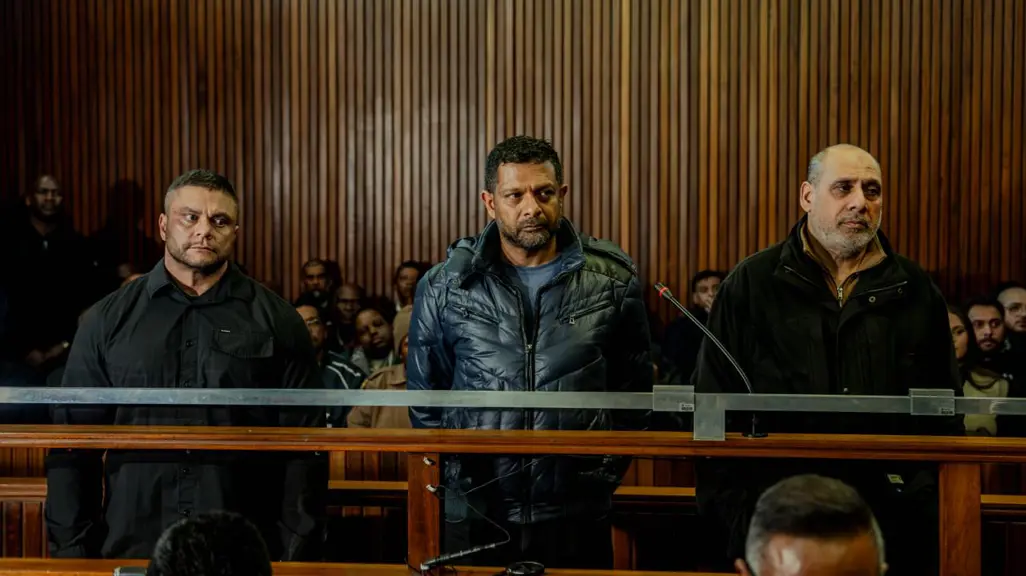
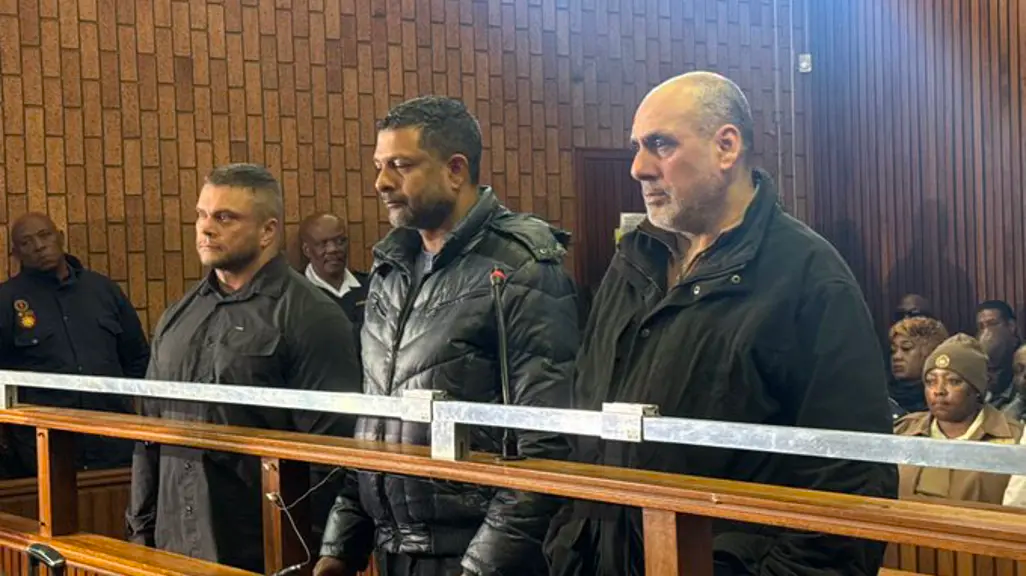
Downes appeared in the Kempton Park Magistrate’s Court on Monday, 11 May 2026, alongside Major-General Feroz Khan and Major-General Ebrahim Kadwa. All three were granted bail of R20,000 each, with conditions barring them from interfering with the investigation or contacting witnesses. They were also required to surrender their passports to the investigating officer on or before 12 May.
The case has drawn national attention because it does not involve an ordinary accused list. Khan is a senior Crime Intelligence figure, while Kadwa has been identified as the Gauteng Hawks head. Their appearance with Downes has sharpened public concern about corruption claims inside law enforcement structures that are supposed to investigate organised crime.
A Durban Businessman in a National Police Scandal
At the heart of the case is an incident said to have taken place at OR Tambo International Airport in May 2021. According to the charge details provided, Downes was allegedly found in possession of 75.9 grams of unwrought gold, valued at approximately R62,836.
The State alleges that this discovery set off a chain of events involving senior police officers who allegedly helped Downes avoid the ordinary consequences of arrest and prosecution.
Downes has maintained his innocence. After being released on bail, he told journalists: “There is no case against me. They sent the Political Killings Task Team for me, but I have never even voted in my life.”
That remark quickly drew public reaction, but the legal issue is far more serious than the viral moment around his words. Prosecutors allege the matter involves not only the possession of precious metal, but also a false claim that Downes was involved in an undercover police operation.
The Alleged Gold Bar and the Undercover Claim
The State’s case, as outlined in the supplied charge-sheet details, is that Downes allegedly told police he was working as an undercover agent. He reportedly claimed the metal was “just brass bar” and said he was operating with Khan and another officer.
The charge sheet states that when Khan was contacted, he allegedly confirmed knowing Downes and said Downes was “indeed an undercover agent in terms of the Criminal Procedure Act 51 of 1977 (CPA).” Khan allegedly instructed officers to release Downes immediately.
The State alleges that no such undercover operation existed.
That allegation is central because it transforms the case from a possession-of-precious-metals matter into a broader question about whether senior officers used their authority to obstruct a criminal process.
According to the supplied details, the officer leading the interview did not simply follow Khan’s alleged instruction. Instead, he sought confirmation from Kadwa because there were no supporting documents proving the existence of a section 252A undercover operation.
The charge sheet further alleges that Kadwa ordered Downes’ release and directed that an enquiry, rather than a police docket, be opened. Police nevertheless proceeded with charges.
What the Three Accused Are Facing
Downes, Khan and Kadwa face charges that include unlawful dealing in precious metals, defeating the ends of justice, corruption, and contravention of legislation regulating precious metals in South Africa.
The charges are linked to the Precious Metals Act 37 of 2005, which regulates the acquisition, possession, and disposal of precious metals. The State alleges that the accused acted without the required licences, certificates or authorisation.
Under the defeating-the-ends-of-justice count, prosecutors allege that the accused unlawfully and intentionally obstructed the course of justice by falsely telling officers that Downes was part of an undercover operation.
The matter is therefore not only about the alleged gold itself. It is also about whether police power was invoked to shield a civilian from accountability.
Bail Granted, But Conditions Imposed
The prosecution did not oppose bail. The three accused were released on R20,000 bail each after their brief court appearance.
Their bail conditions include not interfering with the investigation, not contacting State witnesses, and handing over passports. The case was postponed to 14 July for further investigation.
During proceedings, defence attorneys also requested the immediate return of the accused’s electronic devices. Prosecutor Nceba Ntelwa opposed the application, saying the trio had allegedly refused to provide passwords. The State is expected to seek access to the devices.
Why the Case Has Wider Significance
The case has landed at a sensitive time for South Africa’s criminal justice system. Public trust in policing is repeatedly tested by allegations that some officials may be compromised by the very networks they are meant to investigate.
That is why the presence of two major-generals in the dock matters. Khan and Kadwa are not junior officers accused of a routine procedural failure. They are senior figures whose positions carry public authority, institutional credibility, and operational influence.
National police spokesperson Athlenda Mathe described the alleged involvement of officers in defeating the ends of justice as “deeply disturbing,” while also saying the arrests showed the SAPS’ commitment to accountability. “But it shows that as an organisation we are committed to transparency, integrity and rooting out wrongdoing and corruption in our ranks,” Mathe said.
That statement captures the tension now surrounding the case. On one hand, the arrests may be presented as evidence that no one is above the law. On the other, the allegations raise uncomfortable questions about how far internal corruption may reach.
The Shadow Around Feroz Khan
Khan’s name has already appeared in other controversies. The supplied information notes that he was previously accused of political interference and corruption, and that KwaZulu-Natal Police Commissioner Lt-Gen. Nhlanhla Mkhwanazi described him during testimony before the Madlanga Commission and Parliament’s Ad Hoc Committee as a “political fixer” who allegedly received protection from senior politicians.
Mkhwanazi also claimed former police minister Bheki Cele pressured him in 2021 to shield Khan during investigations linked to a major drug bust.
These are allegations, not convictions. But they explain why the latest case has attracted such intense scrutiny. It is being viewed not merely as a court matter involving three accused individuals, but as part of a broader debate about political influence, organised crime, and accountability inside policing structures.
Downes’ Defence Posture: No Case, No Guilt
Downes’ public position is clear: he says he is innocent and argues that the State has no strong case against him. eNCA’s supplied account stated that the Durban businessman “maintains he is innocent, arguing that the state has no strong case against him.”
At this stage, that remains a defence posture, not a court finding. The accused are presumed innocent unless proven guilty.
The next phase of the case will depend on the evidence prosecutors place before court, including documentation around the alleged gold, communications between the accused, device evidence if accessed, and whether there is any proof that a lawful undercover operation existed.
What Happens Next
The case has been postponed for further investigation. That gives investigators time to strengthen the docket, pursue electronic evidence, confirm documentary trails, and test the State’s allegation that the undercover-agent claim was false.
For Downes, the coming months will determine whether the matter remains a high-profile allegation or develops into a fully contested criminal trial. For Khan and Kadwa, the stakes extend beyond personal legal exposure. The case also puts pressure on SAPS leadership to show that seniority does not create immunity.
Conclusion: A Case Bigger Than One Businessman
The “Tariq Downes Durban” case has become a national story because it combines several powerful elements: a Durban businessman, alleged unwrought gold, two senior police generals, and claims that official authority was used to derail justice.
Downes says there is no case against him. The State says the case reaches back to a 2021 incident involving 75.9 grams of unwrought gold and an allegedly false undercover-operation claim.
Until the court tests the evidence, the matter remains unresolved. But its significance is already clear: it will be watched not only for what it says about one businessman, but for what it reveals about accountability inside South Africa’s policing and crime-intelligence structures.


