

Mackenzie Shirilla: The Crash, the Trial and the Case That Returned to Public Attention
Mackenzie Shirilla’s name became nationally known after a devastating crash in Strongsville, Ohio, killed two young men and later led a judge to conclude that the collision was not an accident, but murder. The case has returned to public attention with Netflix’s documentary The Crash, which revisits the July 31, 2022 collision that killed Dominic Russo, 20, and Davion Flanagan, 19, and placed Shirilla at the center of one of the most closely watched true-crime cases involving a teenage defendant.
At the heart of the case is a question that has divided viewers, families and legal observers: was the crash a sudden medical emergency, as Shirilla has maintained, or an intentional act carried out after a volatile relationship had reached a breaking point? A judge answered that question in court. The new documentary has reopened it in public.
A Summer Morning That Changed Three Families Forever
The crash happened in the early hours of July 31, 2022. Shirilla, then 17, was driving a Toyota Camry in Strongsville with her boyfriend Dominic Russo in the passenger seat and their mutual friend Davion Flanagan in the back. The three had reportedly been at gatherings earlier that night before leaving in the morning hours.
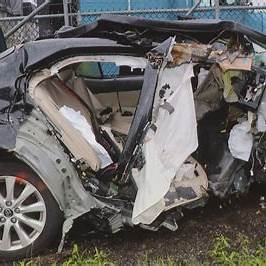
Around 5:30 a.m., the Camry struck a brick building at nearly 100 mph. Russo and Flanagan died at the scene. Shirilla survived but suffered serious injuries. Responding officers later described the destruction as extreme, with one account noting that officers said the car “split in two” and called it the “worst” crash they had seen.
What initially appeared to be a horrific crash soon became something more complicated. Investigators examined the vehicle, the road, the car’s event data and the relationships among the people inside. That evidence would eventually transform the case from a fatal traffic investigation into a murder prosecution.
The Evidence That Shifted the Case
The strongest evidence presented against Shirilla involved the car’s data recorder. Investigators said the accelerator was pressed fully before impact and the brakes were not applied. Source material also states that the car’s event data showed Shirilla’s right foot pressed to the accelerator’s full extent and no braking before the crash.
That detail became central to the prosecution’s argument. Prosecutors said the crash was deliberate, not the result of panic, confusion or mechanical failure. They argued that the speed, the lack of braking and the path into the building showed intent.
The case also included claims about Shirilla and Russo’s relationship. According to the provided material, witnesses and relatives described the relationship as volatile. One friend reportedly told investigators that, during a fight two weeks before the crash, Shirilla said, “I will crash this car right now.”
The defense took a sharply different view. Shirilla’s team argued that she had Postural Orthostatic Tachycardia Syndrome, or POTS, and that the condition could have caused her to black out behind the wheel. Shirilla has continued to maintain that she has no memory of the moments before impact.
From Accident Theory to Murder Trial
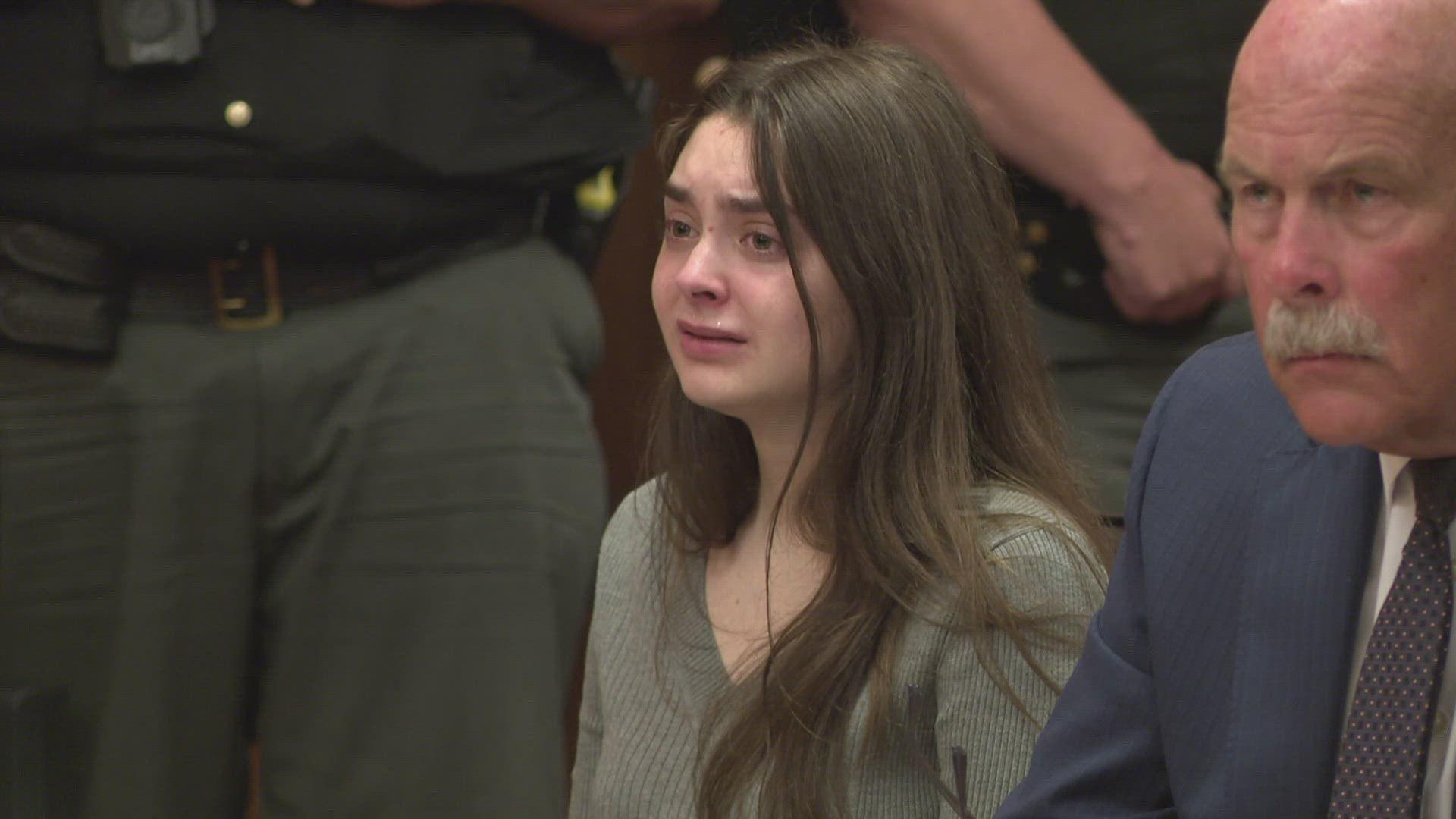
Shirilla was arrested on Nov. 4, 2022, months after the crash. Her case was initially handled in juvenile court before being moved to adult court. She chose a bench trial, meaning a judge, not a jury, would decide the verdict.
On Aug. 14, 2023, Shirilla was found guilty of multiple charges, including four counts of murder, four counts of felonious assault, two counts of aggravated vehicular homicide, one count of drug possession and one count of possessing criminal tools. The ruling marked the legal system’s formal rejection of the claim that the crash was merely tragic or accidental.
Judge Nancy Margaret Russo, who is not related to Dominic Russo, described Shirilla’s actions as intentional and referred to her as “hell on wheels.” The phrase became one of the defining public descriptions of the case.
Sentencing and the Families Left Behind
In August 2023, Shirilla was sentenced to life in prison with the possibility of parole after 15 years. She received two life sentences for the deaths of Russo and Flanagan, to be served concurrently. Her driver’s license was also permanently suspended.
For the victims’ families, the sentence did not undo the loss. Dominic Russo and Davion Flanagan were young men with futures ahead of them. Flanagan’s family later created the Davion Flanagan Memorial Scholarship to support “aspiring barbers,” honoring his own plans and aspirations.
The emotional gravity of the case has remained inseparable from the legal record. Two families lost sons. Another family saw a daughter convicted of murder and sent to prison. The legal conclusion was clear, but the personal devastation continues across all sides.
The Netflix Documentary and Shirilla’s First Public Interview
Netflix’s The Crash brought the case back into the spotlight in May 2026. According to the supplied material, the documentary marked the first time Shirilla had spoken publicly about the crash. The interview was reportedly limited to one hour, with her lawyer present throughout.
In the documentary coverage, Shirilla maintained that she did not intentionally cause the crash. She said: “The most logical speculation seems to be a medical emergency.” She also referred to her 2017 diagnosis of POTS, which she says can cause her to “black out.”
Another account of the documentary quotes her saying, “I’m not a murderer,” and “There was no intent whatsoever.” She also said she has “excessive amounts of remorse” for the families of Dominic and Davion.
Those statements contrast directly with the prosecution’s position and the court’s finding. That tension is one reason the documentary has attracted major attention: it does not simply retell a solved case, but places Shirilla’s current claims beside the evidence that led to her conviction.
The Medical Claim: What POTS Means in the Case
POTS, or postural tachycardia syndrome, is described in the supplied material as a condition in which a person’s heart rate increases very quickly after getting up from sitting or lying down, often causing dizziness or lightheadedness. Symptoms can include fainting or nearly fainting, heart palpitations, chest pain, shortness of breath, fatigue, brain fog and other issues.
The defense’s argument was that Shirilla’s condition could explain a blackout before the crash. Prosecutors rejected that explanation. The trial court ultimately did not accept the medical-emergency theory as sufficient to overcome the evidence of intent.
The renewed attention around POTS shows how true-crime documentaries can push medical claims into public conversation. But in this case, the medical issue was not considered in isolation. It was weighed against vehicle data, witness statements, relationship history and the totality of the evidence presented at trial.
Appeals and Where Shirilla Is Now
After her conviction, Shirilla’s legal team appealed. One appeal was rejected by the Eighth District Court of Appeals, and the Ohio Supreme Court declined to hear arguments on that appeal, leaving the conviction and sentence intact. A second post-conviction appeal was rejected in March 2026 after judges determined the filing was one day late.
Shirilla is currently housed at the Ohio Reformatory for Women in Marysville. Source material states that she is serving life in prison with parole eligibility after 15 years; one account lists her first parole eligibility as 2037, while another states 2038.
Her family has continued to maintain her innocence, while the families of Russo and Flanagan continue to live with the outcome of the crash and the court’s conclusion that the deaths were intentional.
Why the Mackenzie Shirilla Case Still Draws Attention
The case stands out for several reasons. It involved a teenage driver, two young victims, a high-speed collision, disputed intent, social media evidence, a medical defense and a bench-trial murder conviction. It also sits at the intersection of true crime, youth culture and the legal question of how courts interpret intent in fatal vehicle cases.
The documentary has amplified public interest because it gives Shirilla a platform after years of silence. Yet the facts that drove the conviction remain serious and specific: the speed, the lack of braking, the crash location and prior statements attributed to Shirilla.
For many viewers, the case is disturbing because it challenges familiar assumptions about car crashes. A vehicle is often seen as a means of transportation; in this case, prosecutors argued it became a weapon. The court agreed.
Conclusion: A Case Defined by Grief, Evidence and Disputed Memory
Mackenzie Shirilla’s story is not only about a crash. It is about the legal meaning of intent, the weight of forensic evidence and the human cost of a single violent impact. Dominic Russo and Davion Flanagan lost their lives in seconds. Shirilla survived, was convicted of murder and continues to insist that the crash was not intentional.
The renewed attention surrounding The Crash may bring more public debate, but it does not erase the court’s ruling. For the families of Russo and Flanagan, the case remains a permanent loss. For Shirilla and her family, it remains a conviction they continue to challenge. For the wider public, it is a grim reminder that the truth of a tragedy is often fought over long after the wreckage is cleared.


