The Arrests That Shook South African Law Enforcement
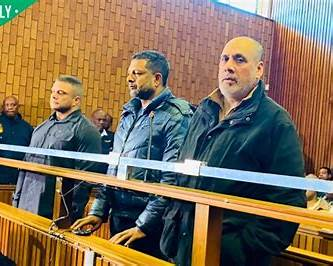
The arrest and court appearance of two senior South African police generals alongside Durban businessman Tariq Downes has intensified scrutiny over corruption allegations within the country’s law enforcement and intelligence structures.
Major-General Feroz Khan and Major-General Ebrahim Kadwa appeared in the Kempton Park Magistrate’s Court on Monday after being linked to an alleged illicit precious metals syndicate. The pair, together with Downes, face charges relating to the contravention of the Precious Metals Act and defeating the ends of justice.
All three accused were granted bail of R20,000 each under strict conditions that prohibit interference with investigations or contact with witnesses. They were also ordered to surrender their passports and notify investigators of any intended travel plans. The matter was postponed to 14 July 2026 for further investigations.
While the legal proceedings are only beginning, the case has already triggered a broader national conversation about corruption, accountability, and the apparent erosion of oversight within South Africa’s Crime Intelligence division.
A Five-Year-Old Gold Seizure Returns to Haunt Senior Officials
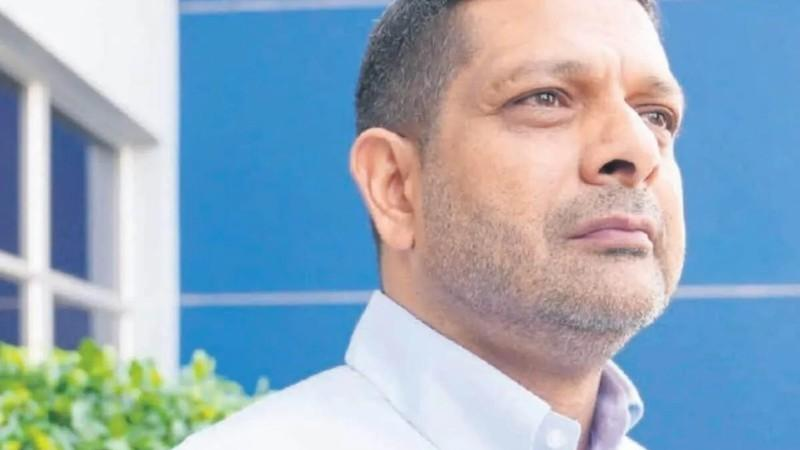
At the center of the case is an incident dating back to May 2021 involving unwrought gold allegedly found in the possession of Durban businessman Tariq Downes.
According to court documents, the gold weighed 75.9 grams and carried an estimated street value of R62,836. During questioning, Downes allegedly claimed that the metal was merely “brass bar” and insisted he was operating as part of an undercover law enforcement operation.
Investigators reportedly contacted officers whom Downes claimed to be working with. One officer denied knowing him or any undercover operation linked to the case. But matters escalated dramatically when Major-General Feroz Khan was contacted.
The charge sheet alleges that Khan confirmed knowing Downes and instructed officers to release him immediately, allegedly claiming Downes was operating as an undercover agent under Section 252A of the Criminal Procedure Act.
According to prosecutors, no such undercover operation existed.
The officer conducting the interview reportedly became suspicious because there was no documentation supporting the existence of the alleged covert operation. The matter was escalated to Major-General Ebrahim Kadwa, who allegedly instructed that Downes be released and that only an inquiry — rather than a formal police docket — be opened.
Police investigators nevertheless proceeded with criminal charges, setting the stage for the arrests executed this past weekend through J50 warrants.
Charges Against the Trio
The State alleges that Khan, Kadwa, and Downes unlawfully possessed or acquired unwrought precious metals without the necessary authorization required under South Africa’s Precious Metals Act 37 of 2005.
Prosecutors further argue that the accused lacked the required certificates and licenses permitting the acquisition or disposal of unwrought precious metals.
Under South African law, such metals may only be legally possessed under tightly regulated circumstances, including scientific research, jewelry manufacturing, or beneficiation activities — all of which require official permits.
The second charge relates to allegedly defeating or obstructing the administration of justice. Prosecutors claim the accused falsely informed officers that Downes was part of a legitimate undercover operation in order to secure his release.
The State maintains that the undercover operation never existed.
Bail Conditions and the Fight Over Electronic Devices
Although the State did not oppose bail, prosecutors imposed strict conditions designed to protect the integrity of the investigation.
The accused must:
- avoid contact with State witnesses
- refrain from interfering with investigations
- hand over their passports
- notify investigators of intended travel within specified timeframes
The prosecution also revealed a potentially significant development involving electronic devices seized during the arrests.
During court proceedings, prosecutor Nceba Ntelwa opposed requests by defense attorneys to have the devices returned immediately, stating that the accused had allegedly refused to provide passwords to investigators.
Authorities are now expected to pursue legal mechanisms to access the contents of those devices, which could become central to the investigation.
Feroz Khan’s Controversial History
The allegations surrounding Feroz Khan have attracted particular attention because of his prominent role within Crime Intelligence over several years.
Khan previously headed Counter and Security Intelligence before being reassigned. His name has surfaced repeatedly in politically sensitive and controversial investigations, including matters linked to a R200-million cocaine consignment intercepted in Johannesburg in 2021.
His arrest during a high-profile raid at his Houghton apartment marked a dramatic moment in a case already drawing national attention.
The operation reportedly formed part of a wider investigation into an alleged illicit precious metals syndicate operating around OR Tambo International Airport and other strategic areas.
Ebrahim Kadwa’s Previous Public Stance on Illegal Gold Networks
The charges against Major-General Ebrahim Kadwa have also sparked intense public debate because of his previous comments regarding illegal mining and precious metals smuggling.
Last year, following the arrest of suspects allegedly found with unwrought gold valued at R16 million, Kadwa publicly declared:
“The Hawks remain steadfast in their mission to dismantle illegal mining and smuggling networks. Criminals must understand that no one is beyond the reach of the law.”
That statement is now being revisited widely in South African media as Kadwa himself faces related criminal allegations.
Growing Fears Over Corruption Inside Crime Intelligence
The arrests have reignited longstanding fears about corruption and internal instability within South Africa’s Crime Intelligence structures.
KwaZulu-Natal violence monitor Mary de Haas described the allegations as deeply concerning and warned that oversight mechanisms had effectively collapsed.
“What worries me most about this is that there’s no oversight of what these people are doing at the moment,” De Haas said.
She further argued that Crime Intelligence suffers from systemic dysfunction, alleging that sections of the unit had effectively been “captured basically by crooks.”
Her comments reflect a broader crisis of confidence in South African law enforcement institutions, which have faced repeated accusations involving corruption, political interference, and criminal infiltration.
De Haas also criticized the weakening of oversight structures and questioned the suspension of the Inspector-General of Intelligence, arguing that accountability systems were being dismantled rather than strengthened.
SAPS Responds to the Arrests
South African Police Service spokesperson Athlenda Mathe acknowledged the seriousness of the situation, calling it disappointing to see senior officers facing criminal allegations.
“But it shows that as an organisation we are committed to integrity, transparency and rooting out wrongdoing and corruption within our ranks. We always maintain that no one is above the law,” Mathe said outside court.
National Prosecuting Authority spokesperson Kaizer Kganyago also defended the State’s decision not to oppose bail, emphasizing that prosecutors believed the accused would comply with court conditions.
Why the Case Matters Beyond the Courtroom
The significance of the case extends well beyond the fate of the three accused individuals.
South Africa’s illegal mining and precious metals smuggling networks have become increasingly sophisticated and lucrative over the past decade. Authorities have repeatedly warned that organized criminal syndicates exploit weaknesses inside law enforcement and border control systems to move gold and other precious metals through domestic and international markets.
If the allegations against senior police officials are proven in court, the case could reinforce fears that criminal networks have penetrated some of the country’s most sensitive investigative structures.
Public trust in policing institutions has already been under strain due to repeated corruption scandals, allegations of political manipulation, and failures to combat organized crime effectively.
The arrests of two major-generals therefore represent more than a criminal prosecution — they symbolize a deeper struggle over institutional integrity and accountability inside South Africa’s security apparatus.
What Happens Next
The investigation is expected to intensify ahead of the next court appearance scheduled for 14 July 2026.
Investigators are likely to focus on:
- the authenticity of the alleged undercover operation
- communications between the accused
- evidence contained on seized electronic devices
- possible links to broader precious metals syndicates
- whether additional officials may be implicated
The outcome of the case could have far-reaching implications for SAPS leadership, Crime Intelligence reform efforts, and public confidence in South Africa’s criminal justice system.
For now, the case stands as one of the most politically sensitive and institutionally damaging corruption investigations currently facing South African law enforcement.