


Why Did Mackenzie Shirilla Crash the Car? Inside the Case, the Evidence, and the Question of Intent
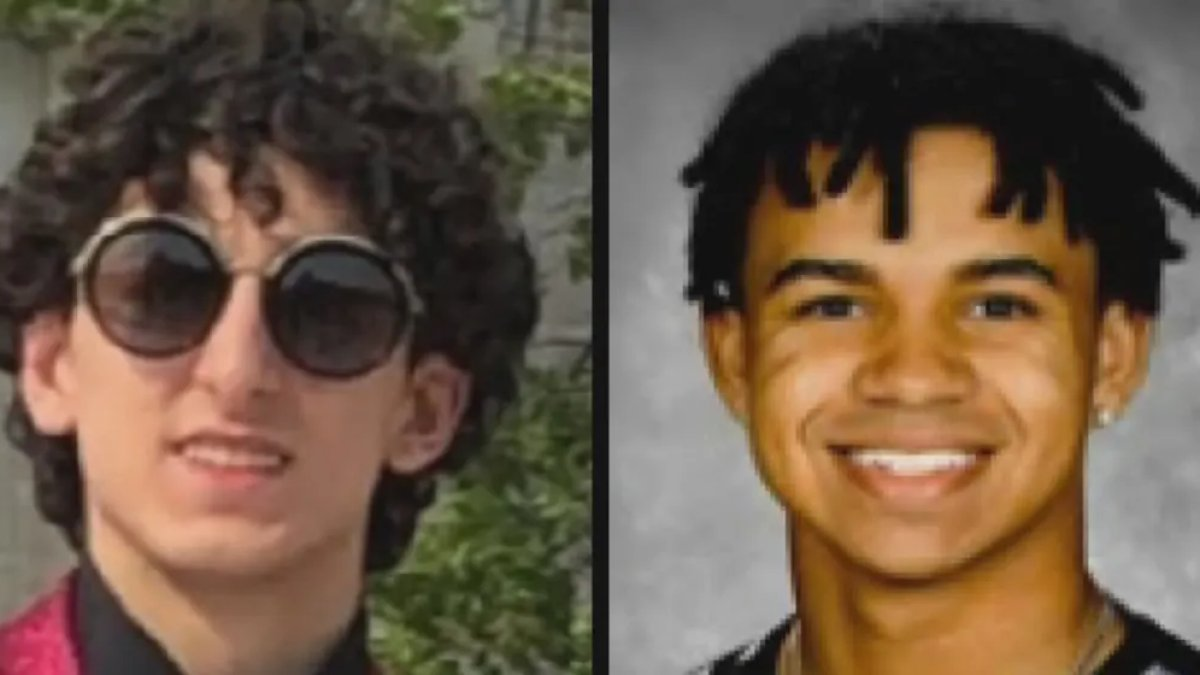
Mackenzie Shirilla’s deadly 2022 crash in Strongsville, Ohio, began as what many people around the victims first believed was a devastating accident. A teenage driver survived. Two young passengers — her boyfriend Dominic Russo and their friend Davion Flanagan — did not. But the case soon moved far beyond questions of speeding, intoxication, or youthful recklessness.
At the center of the case is one question that still drives public interest: why did Mackenzie Shirilla crash the car?
Legally, the answer has already been decided. A judge found that Shirilla intentionally drove her 2018 Toyota Camry into a brick building at nearly 100 mph, killing Russo and Flanagan. Prosecutors argued that the crash was not a sudden loss of control but a deliberate act tied to a volatile relationship, prior threats, and vehicle data showing acceleration without braking. Shirilla, however, has continued to deny that she meant to kill anyone, saying in the Netflix documentary The Crash: “I’m not a monster.” She also said, “I’m not saying I’m innocent. I was a driver of a tragedy, but I’m not a murderer.”
A Morning Drive That Became a Murder Case
The crash happened shortly after 5 a.m. on July 31, 2022. Shirilla, then 17, was driving Russo, 20, and Flanagan, 19, after the group had been at a friend’s house. At 5:36 a.m., her Toyota Camry slammed into a brick wall in Strongsville.
Russo and Flanagan died almost instantly. Shirilla survived with serious injuries.
At first, the tragedy appeared to fit a familiar pattern: young people out late, a high-speed crash, and the possibility of drugs, alcohol, fatigue, or a medical emergency. Some members of Dominic Russo’s family initially believed it was a terrible accident. But investigators began finding details that did not align with that explanation.
The car’s data, surveillance footage, and the couple’s relationship history became central to the prosecution’s case. Video evidence showed the Camry driving normally before rapidly accelerating. Vehicle data showed the accelerator was pressed all the way down in the final seconds and that Shirilla did not brake before impact. Investigators also found no mechanical failure that would explain the crash.
The Court’s Answer: Intent, Not Accident
The prosecution’s argument was direct: Shirilla crashed the car because she intended to kill Dominic Russo and Davion Flanagan.
That conclusion was based on several key claims. Prosecutors pointed to the couple’s troubled relationship, text messages in which Shirilla allegedly threatened Russo, previous episodes of dangerous driving, and the final seconds of the crash itself. In court, Cuyahoga County Common Pleas Judge Nancy Margaret Russo rejected the idea that this was simply reckless driving.
“This was not reckless driving. This was murder,” the judge said.
She also called Shirilla “literal hell on wheels,” a phrase that became one of the most widely repeated descriptions of the case.
Shirilla was tried as an adult in August 2023 and convicted of two counts of murder, along with other charges including aggravated vehicular homicide, drug possession, and possessing criminal tools. She received two concurrent sentences of 15 years to life in prison, with credit for time served, and her driver’s license was permanently suspended.
The Relationship at the Heart of the Case
To understand why prosecutors believed the crash was intentional, the relationship between Shirilla and Russo became a major focus.
The two began dating when Shirilla was a freshman in high school. Friends and relatives described them as inseparable, and Shirilla moved in with Russo after graduating high school, even though she was still 17. Some people close to the couple believed they might eventually marry.
But the relationship was also described as volatile. According to the source material, a friend said Russo had cheated on Shirilla, creating trust issues between them. Police interviewed friends after the crash, including one who described Shirilla as “disrespectful” and said she often threatened to break up with Russo.
Dominic’s brother Angelo told detectives that Russo had tried to end the relationship multiple times. He also said he had seen Russo call Shirilla’s parents to pick her up because she would not leave his home. Investigators were also given footage of Shirilla trying to break into Russo’s house after he refused to let her inside.
In The Crash, Shirilla attributed their fights to Dominic’s “poor communication skills.” But prosecutors viewed the relationship history differently: as evidence of escalating conflict before the fatal crash.
The Alleged Threats Before the Crash
One of the most important parts of the case involved what allegedly happened in the weeks before Russo and Flanagan died.
Assistant prosecutor Tim Troup said there were numerous text messages in which Shirilla threatened Russo during their relationship. Two weeks before the crash, Russo reportedly told his mother, Christine Russo, that after he tried to break up with Shirilla, she began “driving erratically and dangerously.” He said he needed help and feared for his safety.
Christine Russo sent Christopher “Hench” Martin to pick Dominic up. Martin later told police that he overheard Shirilla threatening to crash the car and saw her “swinging at” Dominic.
Shirilla gave a different account. She accused Dominic of trying to grab the steering wheel while she was driving. In the documentary, her mother Natalie showed text messages between Shirilla and Christine Russo in which Shirilla said Dominic was trying to “spin out” her car and harm her.
That conflict — whether Shirilla was the aggressor, whether Russo was trying to stop her, or whether both were involved in a dangerous dispute — became part of the broader debate over intent.
What the Car Data Showed
The vehicle evidence was among the strongest elements of the prosecution’s case.
The Camry’s data showed that in the five seconds before impact, the accelerator was fully pressed and there was no braking. About three seconds before impact, there was steering movement, and the gear shifted into neutral before returning to drive.
Prosecutors interpreted those final movements as possible evidence that Russo and Flanagan, neither of whom was wearing a seatbelt, may have tried to stop the crash by grabbing the steering wheel or gear shift. They argued that the passengers may have realized what was happening but could not prevent it in time.
A Prada slipper found near the accelerator also became part of the investigation. Some wondered whether it had become stuck and caused the crash. But forensic auto investigators determined that there was no malfunction and that the slipper was stuck to the floorboard because of the impact, not because it caused the acceleration.
This evidence mattered because it undercut the possibility that the crash resulted from a mechanical problem or a trapped pedal. For prosecutors, the data told a clear story: the car accelerated into the building, and the driver did not attempt to stop.
Drugs, Alcohol, and the Medical Emergency Claim
Shirilla’s defense and family have continued to argue that the crash was not intentional. One major explanation they raised was the possibility of a medical emergency.
Her mother, Natalie Shirilla, said Mackenzie had been diagnosed with POTS — postural orthostatic tachycardia syndrome — in 2017 and may have blacked out behind the wheel. POTS can be associated with symptoms such as dizziness, fainting, brain fog, sweating, chest pain, shortness of breath, headaches, nausea, and disrupted sleep.
But prosecutors argued that the defense did not provide evidence from a medical professional showing that a medical emergency occurred before the crash. Later appeal efforts included claims about possible seizure or loss of consciousness, but the court found some of that medical argument speculative in the context of the postconviction filing.
Drug use was also examined. Shirilla openly used marijuana and psilocybin mushrooms, according to the source information. First responders found a small amount of marijuana in her purse, a digital scale, and eight grams of psilocybin mushrooms concealed in her clothing. However, testing found no alcohol or psilocybin in her system. Troup said she had THC in her system but argued that she was likely accustomed to driving while high because she did so frequently.
That left the court to weigh whether substances, a medical issue, or intent best explained the crash. The judge ultimately accepted the prosecution’s theory of intentional murder.
Shirilla’s Own Explanation: “There Was No Intent”
Shirilla has insisted that she does not remember the crash and did not mean to kill anyone.
In The Crash, she says: “I have no recollection of that morning, but I know nothing about it was intentional, because that’s not in my character.” She also says: “I just wanna make sure that I’m big on the ‘no intent,’” and adds, “There was no intent whatsoever there. I have excessive amounts of remorse for Dominic, for Davion, both of their families. This was not intentional, and I will do everything I can to prove that to the world and the families.”
At sentencing, she said: “To the families of Dom and Davion, I am so deeply sorry. I hope one day you can see how I’d never let this happen or do it on purpose. I wish I could remember what happened.”
Those statements are central to why the case remains emotionally charged. Shirilla acknowledges that she was driving and that her actions led to the deaths, but she rejects the label of murderer. The court, however, concluded that the evidence proved intent beyond a reasonable doubt.
Why the Case Still Draws Attention
The case continues to attract public interest because it sits at the intersection of several difficult questions: teenage relationships, domestic conflict, vehicle forensics, social media behavior, criminal intent, and the limits of memory-loss claims.
Shirilla’s social media activity after the crash also came under scrutiny. Prosecutors argued that some posts showed a lack of remorse, including a TikTok set to “Bubblegum Bitch” by MARINA with the lyric “I’m the girl you die for.” However, the video had been posted in 2021, a year before the crash. Prosecutors also referenced videos of Shirilla and a friend in Halloween costumes shortly before her arrest, arguing they mocked the deaths. Her friend Graham said the costumes were meant to portray Playboi Carti.
The public debate is sharpened by the contrast between Shirilla’s grief-facing public statements and the prosecution’s claim that she had planned or knowingly caused the crash. Russo’s family reportedly supported her at first, believing the crash was accidental. But after viewing evidence, including footage related to Shirilla trying to enter Russo’s home, they became convinced she murdered him.
Appeals and the Fight to Reframe the Crash
Shirilla and her family have continued trying to overturn the conviction. They have argued that important evidence was not presented at trial, including medical evidence and text messages they believe support her version of events.
Her first appeal was denied after missing the deadline, and a court found proposed medical testimony speculative. In April 2025, a second appeal cited “ineffective counsel,” arguing that her prior attorney did not retain a medical expert and failed to submit evidence of her POTS diagnosis and text messages. More recent court activity has continued to leave the conviction standing.
As of the latest information, Shirilla is incarcerated at the Ohio Reformatory for Women in Marysville, Ohio, and may be eligible for parole in 2037.
So, Why Did Mackenzie Shirilla Crash the Car?
The most accurate answer depends on whether the question is being asked legally, personally, or from the perspective of Shirilla’s defense.
Legally, Mackenzie Shirilla crashed the car because a court found that she intentionally drove into a brick building to kill Dominic Russo and Davion Flanagan. That finding was based on evidence including prior threats, a troubled relationship, vehicle data showing full acceleration and no braking, and surveillance footage showing the car’s final approach.
From Shirilla’s perspective, she says the crash was not intentional. She claims she has no memory of the morning and has emphasized that she is “big on the ‘no intent.’” Her family has suggested a possible medical emergency connected to POTS or another loss-of-consciousness event.
From the prosecution’s perspective, the crash was the final act in a volatile relationship that had already included threats and dangerous driving. The car’s data, in their view, showed not confusion or malfunction, but deliberate acceleration into a fixed object.
That divide is why the case continues to resonate. It is not just about a crash. It is about how courts determine intent when the defendant survives, the victims cannot speak, and the final seconds are reconstructed through data, video, relationship history, and competing narratives.
Conclusion: A Crash That Became a Test of Intent
The deaths of Dominic Russo and Davion Flanagan transformed a quiet Ohio morning into a case that continues to provoke grief, anger, and debate. For the court, the reason Mackenzie Shirilla crashed the car was clear: it was an intentional act of murder, not an accident. For Shirilla and her family, the case remains a fight to prove that the crash was a tragedy without intent.
The enduring significance of the case lies in that collision of narratives. Vehicle data and courtroom findings point one way. Shirilla’s statements and appeal efforts point another. But the legal outcome remains unchanged: two young men are dead, Shirilla is serving a life sentence with parole eligibility years away, and the question of why the car crashed continues to define one of Ohio’s most closely watched true-crime cases.


