
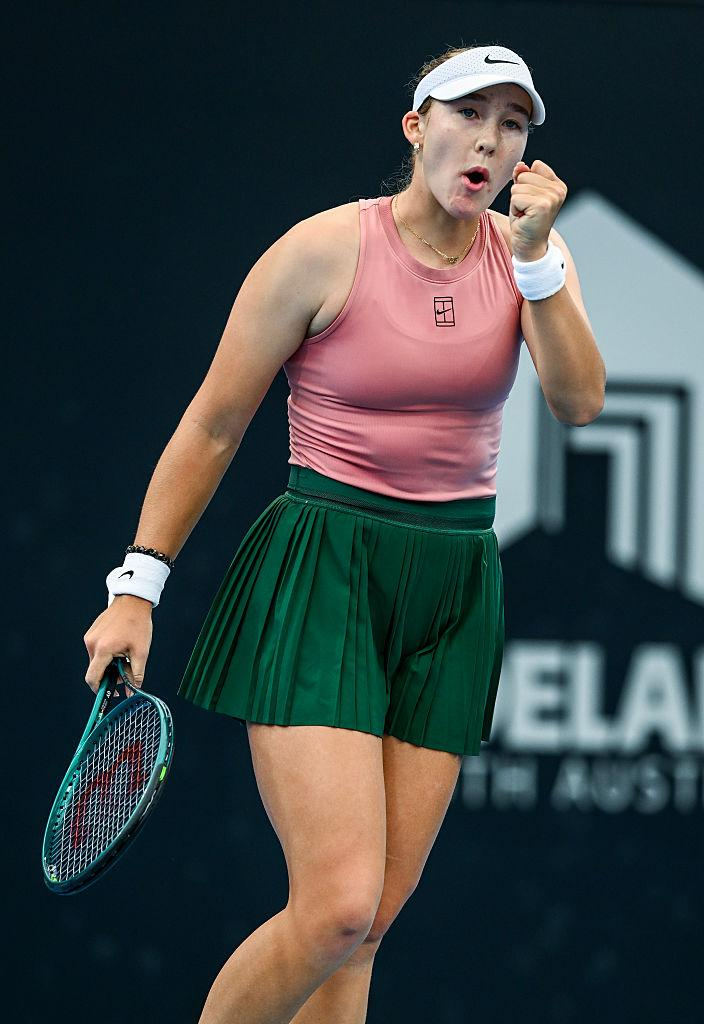
Mirra Andreeva’s 2026 Surge: A Teenage Star Redefining the WTA Landscape
A Defining Moment on Clay
At just 18 years old, Mirra Andreeva is shaping one of the most compelling narratives in women’s tennis. Her latest performance at the Porsche Tennis Grand Prix in Stuttgart offers a clear snapshot of a player transitioning from prodigy to genuine title contender.
In a tightly contested second-round clash, Andreeva defeated Alycia Parks 7-6(3), 6-3, extending her winning streak to six matches and securing a place in the quarterfinals. The result was not simply another victory—it was a test of composure, adaptability, and tactical intelligence under pressure.
The win sets up a high-profile encounter with Iga Swiatek, a former world No. 1, in what will be their first meeting on clay—a surface that increasingly appears to suit Andreeva’s evolving game.
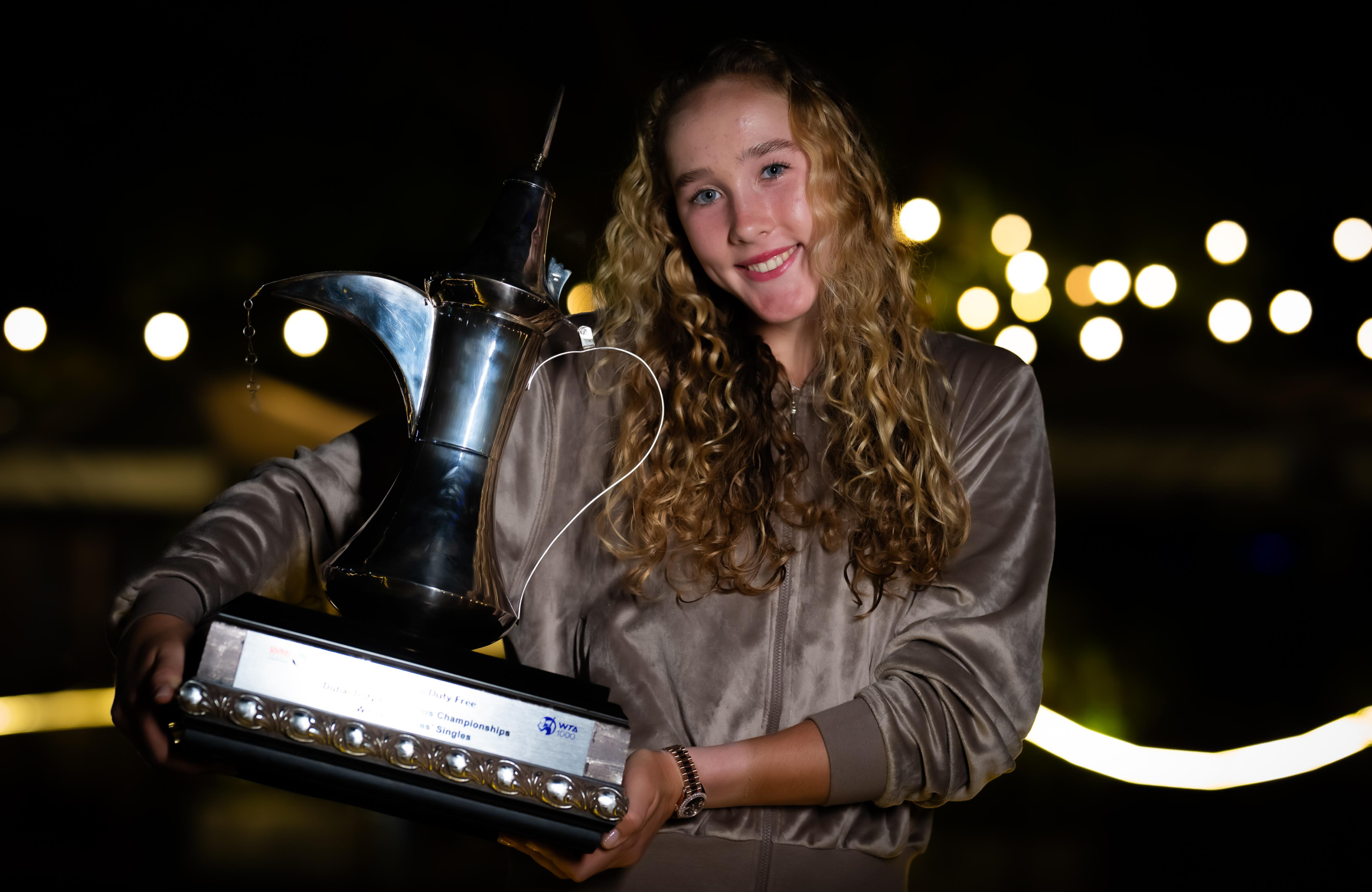
Breaking Down the Stuttgart Victory
A Match Defined by Resilience
The opening set illustrated the complexity of Andreeva’s challenge. Despite taking a break lead three separate times, she was repeatedly pulled back by Parks, who saved multiple set points and forced a tiebreak.
Rather than allowing frustration to dictate her play, Andreeva recalibrated. She surged to a 6-1 lead in the tiebreak by winning five consecutive points, eventually closing out the set on her fifth opportunity.
The second set followed a similar pattern early on, with exchanged breaks. However, Andreeva’s decisive move came in the sixth game, where she secured a critical break and, crucially, held serve thereafter—something she had failed to do consistently in the opening set.
This shift highlights a defining trait of her current form: the ability to identify and correct match dynamics in real time.
Momentum Built on Consistency and Titles
From Linz to Stuttgart: A Rising Trajectory
Andreeva’s Stuttgart performance cannot be isolated from her broader 2026 campaign. Just days earlier, she captured the Linz Open title, defeating Anastasia Potapova in a three-set final (1–6, 6–4, 6–3).
That victory marked her fifth WTA career title and her second of the 2026 season, placing her among the most successful players on tour this year.
Her recent run also includes wins over established competitors such as Jelena Ostapenko and Sorana Cirstea, reinforcing her ability to compete—and win—against experienced opponents.
Statistically, her form is difficult to ignore:
- Six consecutive match wins
- Undefeated run on clay in early 2026
- Multiple tournament victories in the same season
- Consistent quarterfinal appearances
This level of consistency is uncommon for players at her stage of development.
Tactical Evolution: More Than Raw Talent
Defense, Adaptability, and Composure
Andreeva’s progression is not solely the result of aggressive shot-making. Her game has matured into a more complete tactical system.
During her comeback win against Ostapenko in Stuttgart’s opening round, she demonstrated defensive resilience and mental discipline, overturning a one-set deficit to win 5-7, 6-2, 6-4.
Reflecting on that match, she stated:
“I actually didn’t think I’d be able to come back in the third set, but the last tournament I played in Linz showed me that I can actually win from any score.”
That perspective is significant. It suggests a shift from reactive play to belief-driven execution—a psychological threshold many young players struggle to cross.
Her strengths now include:
- Baseline consistency and defensive coverage
- Strategic patience in long rallies
- Improved match management in high-pressure moments
- Confidence built from recent title runs
The Swiatek Test: A Benchmark Moment
A Rivalry in the Making
The upcoming quarterfinal against Iga Swiatek represents more than a routine next round—it is a benchmark for Andreeva’s standing among the elite.
Their head-to-head record is evenly balanced across recent encounters. Swiatek won their first meeting in Cincinnati (2024), while Andreeva claimed victories in Dubai and Indian Wells in 2025.
However, this will be their first meeting on clay—a surface historically dominated by Swiatek. The match therefore offers a critical data point:
- Can Andreeva’s improved clay-court game withstand elite-level pressure?
- Will her defensive adaptability neutralize Swiatek’s aggressive patterns?
- Is she ready to transition from contender to consistent title favorite?
The answers will likely shape perceptions of the 2026 WTA season.
The Broader Impact: A New Generation Taking Control
A Shift in Women’s Tennis Dynamics
Andreeva’s rise is part of a wider generational transition within the WTA. Younger players are not only entering the top rankings earlier—they are sustaining performance levels traditionally associated with seasoned professionals.
Her current trajectory suggests:
- Earlier peak performance ages
- Greater emphasis on all-court versatility
- Increased competitive depth across tournaments
For fans and analysts, this signals a more unpredictable and dynamic tour structure, where emerging players can challenge established names on a consistent basis.
What Comes Next
Andreeva’s immediate focus remains Stuttgart, but the implications extend further. With the French Open approaching, her form on clay positions her as a legitimate contender rather than an outsider.
If her current trajectory continues, several outcomes appear plausible:
- Deep runs in Grand Slam tournaments
- Further upward movement in world rankings
- Expansion of her rivalry portfolio with top-tier players
Her ability to sustain this level—physically, technically, and mentally—will determine whether 2026 becomes a breakthrough year or the foundation for something larger.
Conclusion: From Prospect to Contender
Mirra Andreeva’s 2026 campaign is no longer a story about potential. It is a case study in rapid progression, competitive maturity, and strategic development.
Her victory over Alycia Parks in Stuttgart encapsulates this transformation: a match that demanded resilience, tactical clarity, and mental strength—and delivered all three.
As she prepares to face Iga Swiatek, the broader narrative becomes clear. Andreeva is not simply participating in the next phase of women’s tennis—she is actively shaping it.


