Ramaphosa Faces His Phala Phala Moment: Why South Africa’s President Says He Will Not Resign
South Africa has entered another tense political chapter as President Cyril Ramaphosa confronts renewed pressure over the Phala Phala scandal, a long-running controversy involving the theft of foreign currency from his private game farm and questions about how the matter was handled.
- A Presidency Under Pressure
- The Court Ruling That Revived the Impeachment Threat
- Ramaphosa’s Defence: Legal Review, Not Resignation
- Why Phala Phala Still Matters
- Parliament’s Next Test
- The No-Confidence Route
- The ANC’s Dilemma
- Coalition Politics and the Future of the Presidency
- What Happens Next?
- A Defining Test for Ramaphosa’s Legacy
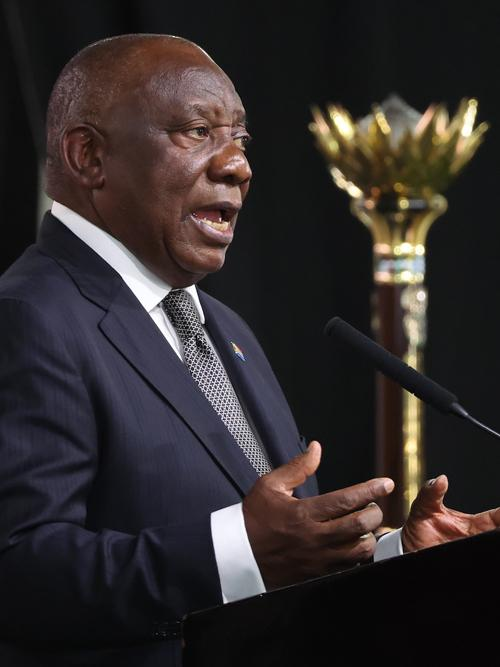
In a televised national address on Monday, Ramaphosa sought to end speculation about his future with a direct declaration: “I remain here and am not resigning.” He also said, “I therefore respectfully want to make it clear that I will not resign,” insisting that stepping down would pre-empt a constitutional process that has not yet run its course.
The statement came after South Africa’s Constitutional Court ruled that Parliament acted unconstitutionally when it voted in 2022 against establishing an impeachment inquiry related to the Phala Phala report. The ruling has reopened one of the most politically damaging episodes of Ramaphosa’s presidency and placed Parliament, opposition parties, the African National Congress, and coalition partners back at the centre of a high-stakes constitutional battle.


A Presidency Under Pressure
Cyril Ramaphosa has served as South Africa’s president since 2018, initially presenting himself as a reformist figure committed to rebuilding state institutions and fighting corruption after years of political turbulence. That public image is now being tested again by the Phala Phala matter.
The controversy stems from the theft of large sums of cash from furniture at his Phala Phala game farm in Limpopo. According to the information provided, the case dates back to 2020, when thieves stole hundreds of thousands of dollars from the property. Ramaphosa has denied wrongdoing and said the funds came from the legitimate sale of buffalo linked to his farming business.


The political problem for Ramaphosa is not only the theft itself, but the questions it raised: why so much foreign currency was kept at the farm, whether it was properly declared, and whether the president handled the incident in a manner consistent with the obligations of his office.
An independent panel previously found there was prima facie evidence that Ramaphosa may have committed serious misconduct in his handling of the matter. Ramaphosa disputes that conclusion and argues that the report relied on hearsay evidence.
The Court Ruling That Revived the Impeachment Threat
The Constitutional Court’s ruling has given the Phala Phala case renewed force.
The court found that the National Assembly’s December 2022 vote to block a Section 89 impeachment inquiry was unconstitutional and invalid. The judgment requires Parliament to amend its impeachment rules and refer the independent panel’s report to an impeachment committee for further proceedings.


That decision does not remove Ramaphosa from office. It also does not automatically mean he will be impeached. But it does reopen a constitutional pathway that Parliament had previously shut down.
For Ramaphosa’s opponents, the ruling is a chance to renew calls for accountability. For Ramaphosa, it is a legal and political battle over whether the independent panel’s report should stand at all.
Ramaphosa’s Defence: Legal Review, Not Resignation
Ramaphosa’s central argument is that the Constitutional Court judgment does not compel him to resign. Instead, he says he will challenge the report through the courts.
He has indicated that he intends to ask the courts to review and set aside the report, arguing that its findings are flawed. In another official formulation included in the provided material, he said: “I do so not out of disrespect for parliament or its processes but to affirm the need for such findings to be correct in law and in fact.”
His message was both legal and political. He said he respects the judiciary, but believes the matter should be reconsidered through the proper legal channels. He also presented resignation as a concession to political opponents rather than an act of accountability.
“To resign now would be to give in to those who seek to reverse the renewal of our society, the rebuilding of our institutions and the prosecution of corruption. I fully intend to continue serving the people of South Africa and to advance their interests. There is still much work to be done.”
That language reflects the broader argument Ramaphosa has made since the scandal first damaged his presidency: that leaving office would undermine reform efforts and destabilize governance at a sensitive moment.
Why Phala Phala Still Matters
The Phala Phala scandal has endured because it sits at the intersection of law, politics, public trust, and the credibility of South Africa’s anti-corruption agenda.
Ramaphosa came to office promising clean governance. The idea that large amounts of foreign currency were hidden in furniture at his private farm created a damaging contrast between his reformist image and the unresolved questions surrounding his personal business affairs.
The provided information states that Ramaphosa said thieves stole $580,000 from a sofa at his Phala Phala game farm in 2020, while a former intelligence official alleged the amount was at least $4 million. A separate account says the case involved more than $500,000, or over R8 million at the time.
Ramaphosa has consistently denied that he stole public money, committed a crime, or violated his oath of office. He maintains that the money came from the sale of game. The central bank investigation referenced in the provided material found that he had not contravened exchange control regulations.
Even so, the political damage remains significant because the matter continues to raise questions about transparency, presidential ethics, and whether Parliament handled the first impeachment attempt lawfully.
Parliament’s Next Test
The renewed process now shifts attention back to Parliament.
If the impeachment process proceeds, the independent panel’s report would become the foundation for further examination by an impeachment committee. That committee could assess whether the allegations justify moving toward a full impeachment vote.
Under Section 89 of South Africa’s Constitution, removing a president through impeachment requires a two-thirds majority in the National Assembly. Analysts cited in the provided material argue that Ramaphosa would probably survive such a vote, especially because the African National Congress still holds a large bloc of seats even after losing its parliamentary majority in the 2024 election.
However, surviving a vote is not the same as escaping political damage. A formal impeachment hearing could keep the scandal alive for months, test coalition discipline, and further weaken Ramaphosa’s public standing.
Political analyst Professor Richard Calland said Ramaphosa would likely survive a parliamentary vote, but suggested that the legal challenge may be aimed at avoiding a damaging impeachment hearing altogether — one that could harm his reputation and legacy.
The No-Confidence Route
Opposition parties may also pursue a different route: a motion of no confidence.
Unlike impeachment, which requires a two-thirds majority, a no-confidence motion requires a simple majority. That makes it procedurally easier, although still politically difficult.
According to the provided information, former president Jacob Zuma’s uMkhonto weSizwe Party wrote to the National Assembly speaker asking for a no-confidence vote in Ramaphosa. The speaker had not yet publicly responded.
Analysts cited in the source material said such a motion would also be unlikely to succeed if Ramaphosa retains the support of most ANC lawmakers and key coalition partners, including the Democratic Alliance.
That means Ramaphosa’s immediate survival may depend less on the opposition than on whether the ANC and its governing partners continue to view him as the most stable option.
The ANC’s Dilemma
The ruling comes at a difficult moment for the African National Congress.
The party has already faced electoral decline, public frustration over governance failures, and pressure from both opposition parties and coalition partners. The Phala Phala issue gives Ramaphosa’s critics a powerful symbol to use against him and the ANC.
One political analysis included in the provided material noted that the timing “couldn’t really be worse” from an ANC perspective, especially ahead of municipal elections in November.
The ANC’s challenge is strategic as much as moral. If it defends Ramaphosa too aggressively, it risks appearing indifferent to accountability. If it abandons him, it could trigger a leadership vacuum and destabilize the governing arrangement.
Ramaphosa remains one of the ANC’s most recognizable national figures. For a party trying to hold support in a more fragmented political environment, replacing him would carry major risks.
Coalition Politics and the Future of the Presidency
South Africa’s post-2024 political environment makes the Phala Phala crisis more complex than it was in 2022.
The ANC no longer governs with the same level of parliamentary dominance it once enjoyed. Ramaphosa’s ability to withstand pressure may depend on coalition partners who may be reluctant to support a political upheaval that could threaten the current governing arrangement.
The Democratic Alliance, according to the provided material, said it respects Ramaphosa’s decision to seek a judicial review, but wants the process handled “with due haste and on an expedited basis.” It also said its decisions would be guided by “the constitution, the rule of law, and the legal position before parliament.”
That position leaves room for political caution. Coalition partners may not want to be seen as shielding Ramaphosa indefinitely, but they may also prefer the courts and Parliament to complete their processes before taking a more drastic stance.
What Happens Next?
The immediate future depends on three linked processes.
First, Ramaphosa’s legal review could determine whether the independent panel’s report remains the basis for impeachment proceedings. If the courts set aside the report, the impeachment threat could weaken significantly.
Second, Parliament must respond to the Constitutional Court ruling by correcting its rules and moving the report into the appropriate process. That could lead to committee hearings, renewed political confrontation, and fresh evidence or arguments.
Third, opposition parties may continue to press for resignation, impeachment, or a no-confidence motion, keeping the issue at the centre of national politics.
The result is a prolonged political test rather than a single decisive moment.
A Defining Test for Ramaphosa’s Legacy
Ramaphosa’s refusal to resign does not end the Phala Phala matter. It moves the battle into a new phase.
For his supporters, his decision reflects constitutional patience: the president is entitled to challenge a report he believes is flawed and to remain in office unless Parliament or the courts determine otherwise.
For his critics, the refusal deepens concerns about accountability and political protection. They argue that a president who campaigned on clean governance should face the same scrutiny he demanded of others.
The stakes go beyond Ramaphosa personally. The case will test South Africa’s impeachment rules, Parliament’s independence, coalition discipline, and public confidence in constitutional accountability.
For now, Ramaphosa’s message is unmistakable: he will fight the report, resist resignation calls, and attempt to serve out his mandate. But the Phala Phala scandal remains a live political force — and its final impact on his presidency is still unresolved.