

South African Army Foundation Scandal Deepens as Regulators Crack Down
The South African Army Foundation, a long-standing institution linked to military welfare benefits, is facing one of the biggest financial scandals in its history after regulators uncovered what authorities described as years of unlawful financial conduct involving millions of rand intended for soldiers’ benefits.
The controversy escalated after the Financial Sector Conduct Authority (FSCA) officially withdrew the Foundation’s financial services provider licence and imposed heavy penalties on two of its senior executives. The case has sparked outrage among military unions, raised questions about oversight within the Department of Defence, and renewed concerns about the protection of soldiers’ financial contributions.
The scandal now stands as a major governance crisis affecting an organization that for decades handled insurance, funeral, pension, and welfare-related financial products for members of the South African National Defence Force (SANDF).
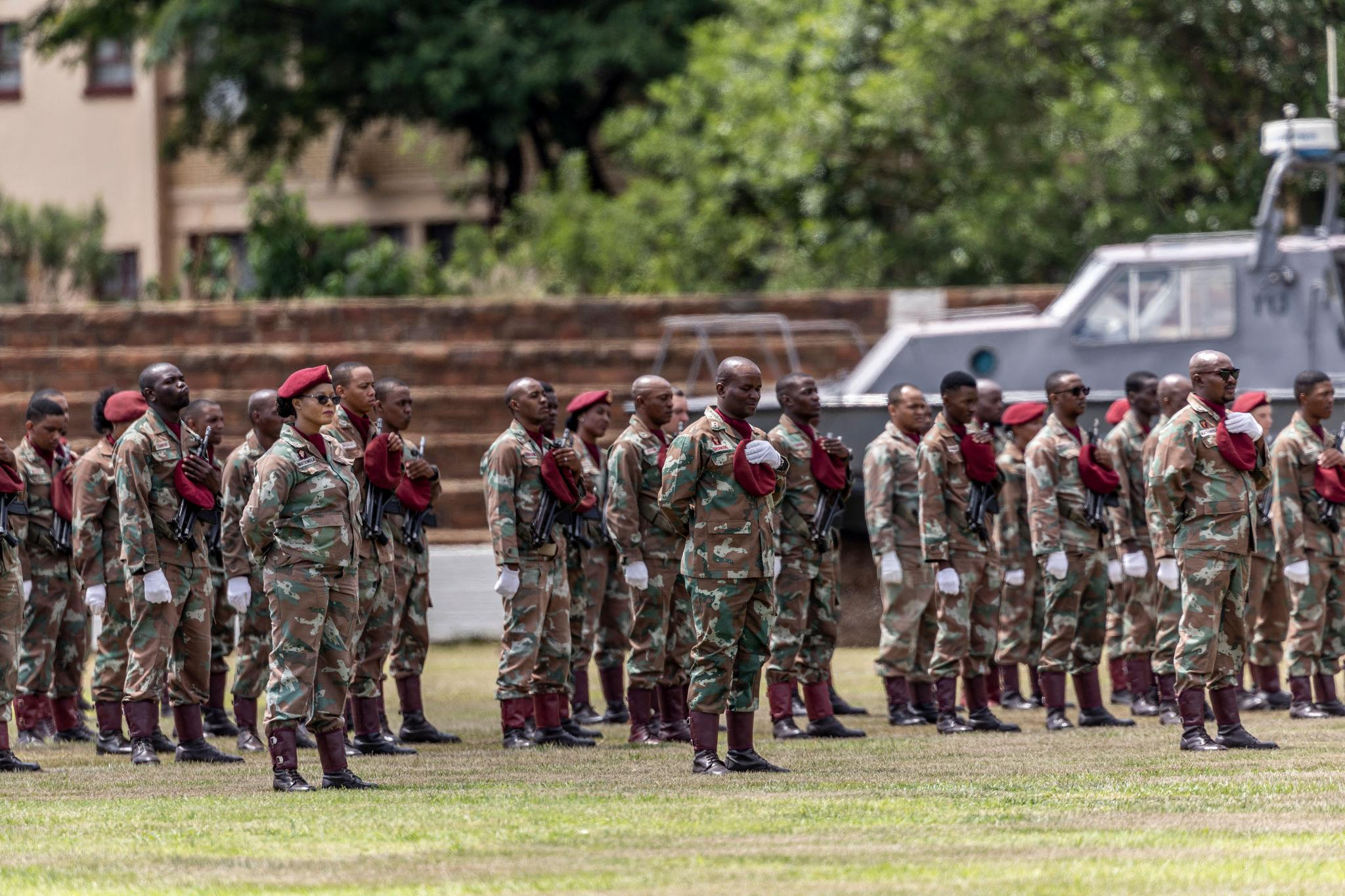
A 70-Year-Old Institution Under Intense Scrutiny
The South African Army Foundation has historically operated as a support structure for military personnel, funded through discretionary deductions directly from soldiers’ salaries. These contributions were meant to provide various financial protections and services, including:
- Funeral cover
- Insurance products
- Housing assistance
- Short-term loans
- Pension-related support
According to union representatives, many SANDF members relied on these deductions as part of their long-term financial planning and family protection.
However, investigations by financial regulators revealed that large sums of money linked to soldiers’ contributions were allegedly diverted through unauthorized transactions over several years.
How the Investigation Began
The scandal reportedly came to light after the Foundation’s bank detected unusually large transfers flowing into personal accounts. Those suspicious transactions triggered further scrutiny and eventually led to an FSCA investigation following a referral by the National Prosecuting Authority.
Authorities later alleged that approximately R50 million linked to monthly soldier contributions had been improperly handled.
The FSCA investigation focused on financial activities between February 2016 and March 2022. During that period, regulators say the Foundation’s leadership engaged in a series of unlawful practices involving client funds and regulatory reporting.
Senior Executives Accused of Serious Financial Misconduct
At the center of the scandal are two senior officials:
- Angel Ramphele, the Foundation’s managing director
- Maria Rosa Barros
According to the FSCA, the pair engaged in several forms of misconduct, including:
- Commingling client funds
- Submitting misleading regulatory reports
- Failing to properly safeguard funds
- Making significant unauthorized payments to themselves
Regulators alleged that substantial amounts were transferred from the bank account of the SANDF Group Life Insurance Scheme (GLIS) into personal accounts.
The FSCA stated that around R40 million was linked directly to the Foundation’s two senior executives during the investigation period.
The penalties imposed were severe:
- Angel Ramphele was fined R24 million
- Maria Rosa Barros was fined R20.7 million
Combined, the administrative penalties totaled approximately R44.7 million.
In addition, both officials were debarred from rendering financial services for 30 years — one of the strongest sanctions available under South Africa’s financial regulatory framework.
FSCA Says Soldiers’ Core Insurance Premiums Were Protected
Despite the scale of the alleged misconduct, the FSCA said there was no evidence that insurance premiums themselves failed to reach underwriters contracted by the Foundation.
FSCA Commissioner Unathi Kamlana explained that the irregular payments largely involved additional fees charged alongside soldiers’ deductions rather than the core insurance premiums.
“Our investigation confirmed there were no instances where the premiums were not paid to the underwriters the Foundation is contracted to. The payment to personal bank accounts was mainly from the additional fees that were charged from the soldiers and deducted with the premiums,” said Kamlana.
That distinction may provide some relief to affected soldiers whose insurance and funeral benefits remained operational, but it has done little to calm public anger over the abuse of military-linked funds.
Military Union Demands Accountability
The South African National Defence Union (SANDU) reacted strongly to the revelations, calling on the Department of Defence to take responsibility for what it described as a failure of oversight.
Advocate Pikkie Greef, the union’s national secretary, said the scandal exposed deep weaknesses in how soldiers’ payroll deductions were monitored.
“If the relevant entities are not checking whether these funds comply with the regulations, which are the law, then ultimately the Department of Defence should take full accountability,” said Greef.
Greef also questioned how deductions from soldiers’ salaries could continue without sufficient safeguards in place.
“It’s unfortunate that since this news broke, there has been nothing, as far as we know, from the department to say what steps it is going to take.
“This fund is voluntary, but it comes directly from soldiers’ payroll, so the next pay run is already programmed and the next deduction is already coming,” he said.
The union’s remarks have intensified pressure on Defence Minister Angie Motshekga and senior defence officials to explain how the alleged misconduct went undetected for years.
Wider Concerns About Governance in Military Structures
The Army Foundation controversy arrives at a sensitive moment for South Africa’s defence sector, which has already faced mounting criticism over infrastructure failures, theft at military facilities, and budget constraints.
Observers say the scandal raises broader concerns about:
- Financial governance within military-affiliated institutions
- Oversight of payroll deduction systems
- Protection of members’ financial contributions
- Transparency in insurance and benefit schemes
Because the deductions were processed directly through soldiers’ payroll systems, critics argue that multiple layers of oversight should have identified irregularities much earlier.
The case may now prompt calls for stricter auditing mechanisms across all military-linked financial entities.
The Significance of the Licence Withdrawal
The FSCA’s decision to withdraw the Foundation’s licence represents more than a symbolic reprimand. Without authorization as a financial services provider, the organization faces major operational limitations.
The move signals that regulators viewed the misconduct allegations as sufficiently serious to undermine confidence in the institution’s ability to manage public funds responsibly.
Financial experts note that licence withdrawals are relatively rare and usually reserved for severe compliance failures or systemic misconduct.
The 30-year debarment orders against the two executives further underline the gravity of the findings.
What Happens Next?
Several key questions remain unresolved:
Will criminal charges follow?
While the FSCA imposed administrative sanctions, the involvement of the National Prosecuting Authority suggests the matter could still lead to criminal proceedings depending on the outcome of ongoing investigations.
What happens to soldiers’ deductions?
Military personnel and unions are now demanding clarity on whether deductions will continue, how funds will be safeguarded, and whether any reimbursement mechanisms will be introduced.
Could broader investigations follow?
The scandal may encourage regulators to examine similar military and government-linked financial schemes to ensure compliance with financial regulations.
Will governance reforms be introduced?
Pressure is mounting on defence authorities to implement stronger oversight systems for payroll-linked deductions and employee benefit structures.
A Defining Test for Public Trust
For many South Africans, the scandal represents more than financial misconduct — it touches on trust in institutions responsible for serving military personnel and their families.
Soldiers contribute to these schemes believing their money will protect loved ones during hardship, injury, or death. Allegations that funds connected to those contributions were diverted for personal enrichment have therefore triggered strong emotional and political reactions.
The fallout from the Army Foundation scandal is likely to continue well beyond the regulatory penalties already announced. Investigations, political pressure, and demands for accountability could shape discussions around military governance and financial oversight for years to come.
As regulators, unions, and government departments respond to the crisis, the central issue remains clear: ensuring that the financial welfare of military personnel is protected from abuse and managed with transparency, accountability, and integrity.


