
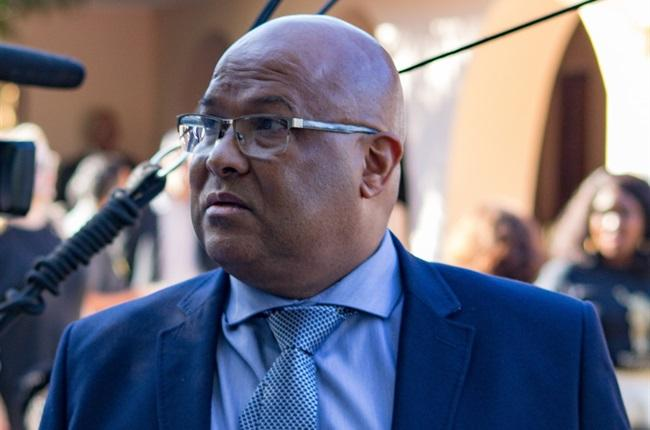
Arthur Fraser and the Phala Phala Storm: Why His Latest Claims Matter
Arthur Fraser has returned to the centre of South Africa’s political conversation with a fresh set of explosive allegations tied to the Phala Phala scandal, the controversy that has shadowed President Cyril Ramaphosa since 2022.
The former spy boss, who first opened the criminal complaint that pushed the matter into the national spotlight, now claims he was offered more than R50-million, along with government positions, to withdraw the case shortly after lodging it. He has also alleged that Ramaphosa personally asked him to resign because of political pressure and because Fraser had become a problem for the African National Congress, the government and the president himself.
The claims arrive at a sensitive moment. The Constitutional Court has ruled that Parliament acted unlawfully when it stopped impeachment proceedings against Ramaphosa in 2022, meaning the issue is again moving toward parliamentary scrutiny. The renewed attention has turned Fraser from a controversial intelligence figure into one of the key actors in a case that could again test South Africa’s institutions, political loyalties and appetite for accountability.
The Man Behind the Complaint
Arthur Fraser is not a newcomer to South Africa’s security and political establishment. He previously served as director-general of the State Security Agency and later as correctional services commissioner. His career has long been associated with intelligence, political controversy and high-stakes institutional battles.
That background is central to how Fraser explains his role in the Phala Phala matter. In a lengthy interview with Mzilikazi wa Afrika on the Unpopular Opinion podcast, Fraser said he was no longer at the State Security Agency when information about the February 2020 burglary at Ramaphosa’s Limpopo game farm came to him. He said he left the agency in April 2018 and insisted he did not rely on privileged information from his former position.
“I wasn’t at the farm,” Fraser said, referring to the clandestine term used for the State Security Agency. He said people came to him because of his history and intelligence background: “You see, because of my history, I think people came to me – not one person.”
According to Fraser, those individuals believed the matter involved conduct serious enough to require exposure. He recalled being told: “Do you know the president is involved in this thing? And this is bad.” He further said one person asked him to “pull the trigger” because “we should not have a president who is involved in the type of activities that they were involved in.”
How Phala Phala Became a National Scandal
The Phala Phala controversy became public in June 2022, when Fraser opened a criminal complaint accusing Ramaphosa of concealing the theft of foreign currency from his farm and using state resources to pursue suspects.
Ramaphosa has repeatedly denied wrongdoing and has maintained that the money came from the legitimate sale of game animals. But Fraser has insisted that the information he received pointed to something more serious than a simple robbery.
“I think the [state] resources were used,” Fraser said. “And it’s telling because it was not open. The people crossed the borders there. So all of these things happened.”
Fraser also said he did not act immediately. He claimed he spent months gathering and testing the information because he feared the matter could backfire.
“When I got this information, I really collected it over a period of time,” he said. “And I tested it because I didn’t want to do something that would actually backfire at me.”
He said he consulted lawyers before proceeding and was advised to ensure that his intervention was tied to a criminal offence rather than a political dispute. “The counsel’s advice was to make sure that what you do is related to a criminal offence,” he said. “That’s why we chose Phala Phala.”
The R50-Million Allegation
The most politically charged part of Fraser’s latest account is his claim that he was offered more than R50-million to make the case disappear.
Fraser said the offer came about 14 days after he reported the matter to police in 2022. One account states that he opened the case at the Rosebank police station on June 2, 2022, and that the alleged offer was made on June 15, 2022.
“I was offered R50-million to make this matter disappear,” Fraser said.
In another reported version of his remarks, Fraser said: “I was offered R50 million plus to make this matter go away and collapse this case. I was also told that I could choose to withdraw the case. It was R50 million, and there was additional money, and that happened on the 15th of June 2022. In fact, it was a blank script where I was told, ‘You must put any number’.”
Fraser also claimed the alleged offer extended beyond money. He said he was promised a powerful government position and could choose a department of his preference.
“Apart from the R50 million, he indicated that I could choose any department I wanted in government, and they’ll give it to me,” Fraser said.
These allegations remain claims by Fraser. The material provided does not include proof that the alleged offer was made, nor does it include a response from the person or people he says were involved. That distinction matters because the political consequences are significant, but so too is the evidentiary burden.
Ramaphosa, Resignation Pressure and the ANC
Fraser’s allegations go beyond Phala Phala itself. He also claimed that Ramaphosa asked him to resign because of pressure from the Democratic Alliance.
According to Fraser, Ramaphosa told him he had become a liability to the ANC, the government and to the president personally. Fraser also alleged that Ramaphosa accused him of having supported Nkosazana Dlamini-Zuma during the ANC’s 2017 Nasrec elective conference.
“So he says, you know, I’m under pressure, I need you to resign, and that’s what I’m here to ask you to do’. He then states to me that, ‘You know, I’m getting pressure from the DA. I said I understand that political noise, Mr President, and you are a liability to the ANC Commissioner,” Fraser stated on the podcast.
The claim frames the dispute not only as a legal matter, but also as part of a longer internal ANC power struggle. The reference to the 2017 leadership contest is important because that period shaped the balance of power inside the ruling party and continues to influence factional politics years later.
The Money Question
One of the unresolved issues in the Phala Phala scandal remains the amount of foreign currency stolen from the farm.
The supplied material contains different figures. One account says the stolen money was more than R4-million in American dollars. Fraser, however, disputed versions suggesting the amount was smaller and said people familiar with the matter told him the stolen cash exceeded $2-million.
“Well, apart from the people that told me this, there was the evidence,” Fraser said. “They said nobody could put a finger on it. They knew it was in excess of $2-million.”
Fraser also referred to a recording allegedly involving one of the accused suspects, Immanuela David.
“When you listen to when they interviewed David, there’s a recording,” Fraser claimed. “In that recording, he says, ‘No, we only took $800 000 because the woman told him you can’t take everything. You must leave something so that the president doesn’t see you’ve taken the money.’”
For investigators and lawmakers, the exact amount matters because it connects to wider questions: how much foreign currency was kept at the farm, why it was allegedly hidden, whether it was declared, and what happened after the theft.
Cross-Border Claims and Covid-19 Restrictions
Fraser has also alleged that Ramaphosa approved the tracing of Namibian citizens linked to the farm theft during the Covid-19 lockdown.
“People crossed the border right in the middle of COVID-19, and a multitude of crimes were committed. The people who were party to this thing said it was with the knowledge and the consent of the President,” Fraser said.
In another part of the interview, he argued that the movement of people and money raised broader criminal questions.
“You know, in this second investigation, people crossed the border during Covid,” he said. “A multitude of crimes were committed.”
He also alleged that payments made after the theft were in rands rather than dollars, suggesting there were wider financial flows that required investigation.
“Remember, the bribery, when they paid these people, was not in dollars; it was in rands,” he said. “But the amount that was stolen was in dollars.” He added: “So there’s more money laundering taking place here. You mustn’t be narrow on this thing.”
The Constitutional Court Ruling Changes the Stakes
Fraser’s latest interview would have been politically significant at any time. But it carries added weight because it comes after a Constitutional Court ruling revived scrutiny of Parliament’s handling of the Phala Phala matter.
The court ruled that Parliament acted unlawfully when it stopped impeachment proceedings against Ramaphosa in 2022. Parliament must now set up an impeachment committee under National Assembly rules. That committee will investigate whether Ramaphosa violated the Constitution, committed serious misconduct, or can no longer perform his duties as president.
The committee is expected to gather evidence, question witnesses and test claims linked to the scandal. Ramaphosa could also be called to answer questions. Once the committee completes its work, it will present a report to the National Assembly for debate.
If the committee recommends removal, Members of Parliament will vote. At least two thirds of the 400 Members of Parliament must support the move for the president to be removed from office.
That threshold is high. But the process itself could bring new evidence, renewed public scrutiny and intensified political pressure.
Presidency Response and Due Process
According to the provided information, attempts to get comment from the president through his spokesperson, Vincent Magwenya, and from ANC national spokesperson Mahlengi Bhengu-Motsiri were unsuccessful at the time of publication.
Following the Constitutional Court judgment, Ramaphosa’s office stated that the president “reaffirms his commitment to the Constitution, the independence of the Judiciary and the rule of law”. It also said he had been “consistent in providing his full assistance” to all enquiries into the matter.
“President Ramaphosa maintains that no person is above the law and that any allegations should be subjected to due process without fear, favour or prejudice,” his office said.
That statement captures the institutional tension at the heart of the matter. Fraser’s allegations are serious, but they must still be tested. Ramaphosa denies wrongdoing, but the parliamentary process now has to examine whether the unanswered questions are politically and constitutionally significant enough to warrant further consequences.
Public Reaction: Suspicion, Support and Fatigue
The latest claims have triggered strong public reactions. Some commentators appear convinced that Fraser’s allegations deepen the case against Ramaphosa. Others are sceptical, questioning why Fraser did not disclose the alleged R50-million offer earlier or why he has not publicly named everyone involved.
One social media user reacted: “Why was he quiet all along?We need the proof or a recording of the offer.” Another wrote: “But he is not saying who offered him R50M, he is probably just saying this to add more spice.”
The divided reaction reflects a broader national mood. For some South Africans, Phala Phala is a test of whether powerful people are held accountable. For others, it is also entangled with factional politics, distrust of Fraser and fatigue over scandals that produce more allegations than final answers.
Why Arthur Fraser Still Matters
Arthur Fraser remains a polarising figure. The supplied material notes that he is controversial because of allegations involving intelligence structures, the Principal Agent Network and his role in granting medical parole to former president Jacob Zuma, a decision later declared unlawful by the courts.
That history shapes how his claims are received. Supporters may see him as the person who exposed a scandal involving the most powerful office in the country. Critics may view him as a politically motivated actor with his own history of controversy.
But whatever one thinks of Fraser, the Phala Phala matter has outgrown him. It now involves Parliament, the Constitutional Court, the presidency, law enforcement, questions about foreign currency, possible abuse of state resources and the credibility of South Africa’s accountability systems.
What Happens Next
The next phase depends on Parliament’s impeachment process and the evidence brought before the committee. Key questions are likely to include:
Why was the Phala Phala theft not immediately reported to the South African Police Service? Why was foreign currency allegedly kept in furniture? Was the money declared to the South African Reserve Bank? Were state resources used to track suspects? How much money was stolen? Who knew what, and when?
Fraser’s latest claims add another layer: was there an attempt to persuade him to withdraw the case through money or promised government positions?
Until those claims are tested, they remain allegations. But they have already succeeded in doing one thing: pushing Phala Phala back to the centre of national debate.
Conclusion: A Scandal That Refuses to Fade
Arthur Fraser’s latest allegations have revived one of the most consequential political controversies of Cyril Ramaphosa’s presidency. The claim that Fraser was offered more than R50-million to drop the Phala Phala case is dramatic, but the deeper issue is institutional: whether South Africa’s democratic systems can fully examine allegations involving the head of state without fear, favour or political shielding.
For Ramaphosa, the revived impeachment process presents a renewed test of credibility. For Fraser, it is another moment in a career defined by secrecy, controversy and political consequence. For the public, the question remains simple but urgent: will the Phala Phala scandal finally be answered through evidence, accountability and due process?


