

Howitzer Warfare Is Evolving as North Korea Expands Its Military Reach
The word “howitzer” has long been associated with heavy battlefield artillery, but in 2026 the weapon is once again drawing international attention for strategic reasons far beyond traditional warfare. North Korea’s latest military developments have pushed modern howitzers back into the center of global security discussions, highlighting how artillery systems remain a critical part of military power in the 21st century.
Recent inspections by North Korean leader Kim Jong Un revealed the country’s efforts to modernize both its naval fleet and long-range artillery capabilities. Among the most closely watched developments was the unveiling of a new 155-mm self-propelled gun-howitzer reportedly capable of striking targets up to 37 miles (60 kilometers) away. The weapon is expected to be deployed near the border with South Korea later this year, significantly expanding Pyongyang’s operational reach toward Seoul and surrounding regions.
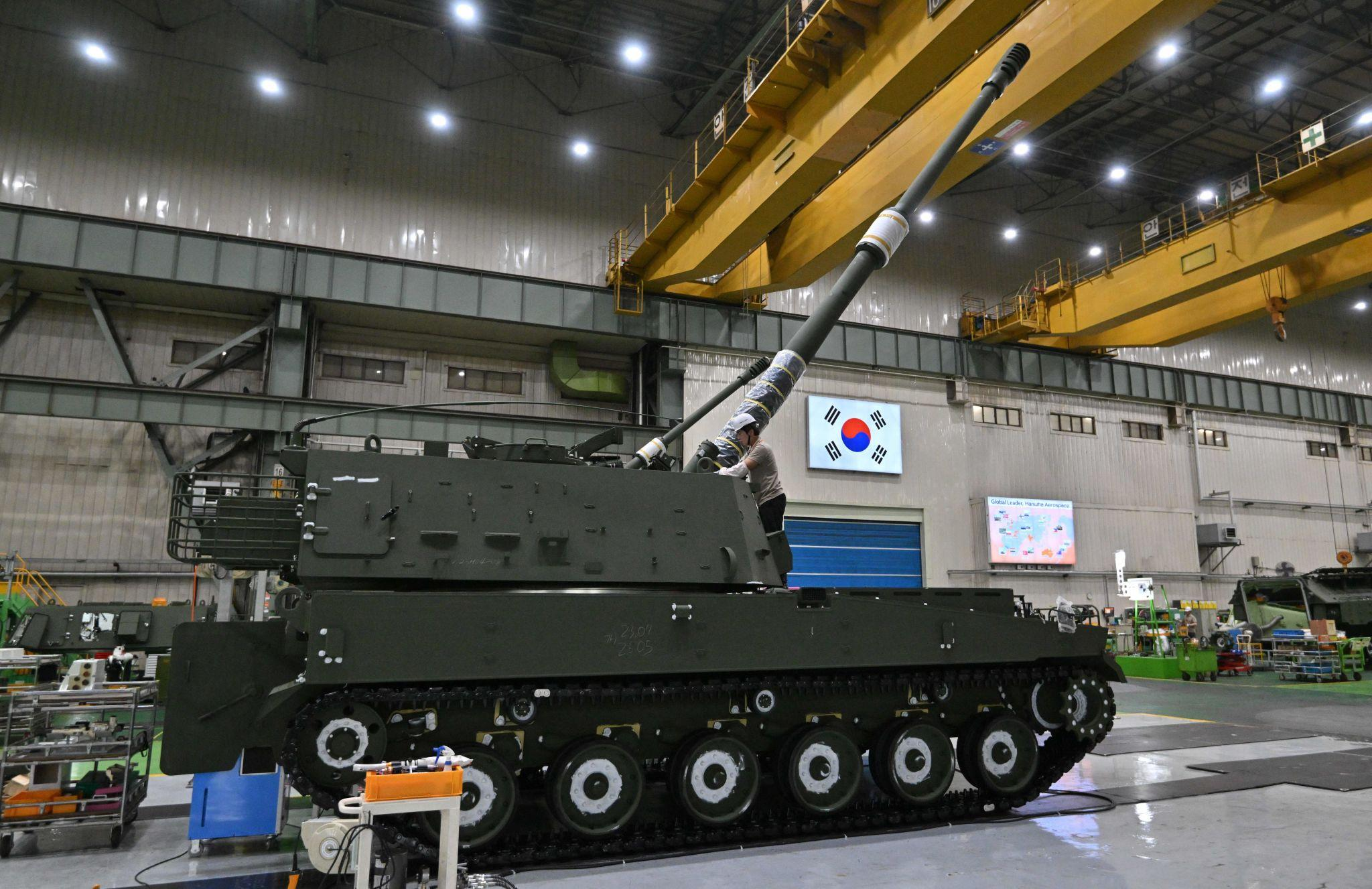
What Is a Howitzer?
A howitzer is a type of artillery weapon designed to fire shells at high trajectories over long distances. Unlike direct-fire weapons such as tanks, howitzers are built to strike targets hidden behind obstacles, defensive lines, or terrain features.
Modern howitzers are used by militaries around the world for:
- Long-range bombardment
- Defensive operations
- Counter-artillery strikes
- Precision attacks
- Battlefield support for infantry and armored units
Historically, howitzers evolved from shorter-barreled cannons used in Europe centuries ago. Over time, advances in engineering transformed them into highly sophisticated weapons capable of firing guided munitions with extreme accuracy.
Today’s self-propelled howitzers are mounted on armored vehicles, allowing rapid mobility and faster deployment during combat.
North Korea’s New 155-mm Self-Propelled Howitzer
North Korea’s latest artillery project has generated concern among military analysts because of its combination of mobility, range, and deployment location.
According to reports released through the Korean Central News Agency (KCNA), Kim Jong Un personally inspected the production of the new artillery system during a visit to a munitions factory. The weapon reportedly features a firing range exceeding 60 kilometers, enough to threaten areas deep within South Korea, including the outskirts of Seoul.
KCNA quoted Kim as saying the system would provide:
“a rapid extension of striking range and remarkable improvement of striking capability”.
The howitzers are expected to be stationed near the heavily fortified border separating North and South Korea.
This matters because Seoul, a metropolitan region with roughly 10 million residents, lies only about 25 to 30 miles from parts of the border. Existing North Korean artillery already threatens the city, but longer-range systems increase flexibility and survivability for North Korean forces.
Why Artillery Still Matters in Modern Warfare
In an era dominated by drones, cyberwarfare, stealth aircraft, and ballistic missiles, artillery might appear outdated. Yet recent conflicts — particularly the war in Ukraine — have demonstrated that heavy artillery remains indispensable.
Modern howitzers provide several military advantages:
Sustained Firepower
Unlike expensive missile systems, artillery can fire repeatedly at lower operational cost. This makes howitzers effective in prolonged engagements.
Mobility and Survivability
Self-propelled systems can “shoot and scoot,” rapidly changing position after firing to avoid enemy counterattacks.
Precision Capabilities
Advanced artillery systems now use GPS-guided shells and digital targeting systems that dramatically improve accuracy.
Psychological Impact
Heavy artillery bombardments can disrupt supply chains, damage infrastructure, and lower troop morale.
North Korea’s military modernization suggests Pyongyang recognizes these realities and sees artillery as a practical tool alongside its nuclear and missile programs.
The Broader Military Context
Kim Jong Un’s artillery inspection came during a period of intensified military activity.
On the same week, the North Korean leader also inspected one of the country’s newest destroyers, the Choe Hyon, which is described as North Korea’s first nuclear-capable warship. Images released by state media showed Kim aboard the vessel alongside his daughter during naval inspections and crew visits.
The ship is part of a broader naval modernization initiative aimed at expanding North Korea’s military presence beyond land-based deterrence.
Kim reportedly ordered two additional destroyers after observing missile tests from the Choe Hyon at the western port city of Nampo.
These developments signal a coordinated effort to modernize multiple branches of the military simultaneously:
- Long-range artillery
- Naval warfare capabilities
- Missile systems
- Conventional strike platforms
- Strategic deterrence assets
Lessons From the War in Ukraine
Military experts believe North Korea’s cooperation with Russia may also be shaping its artillery strategy.
Reports from South Korean officials and defense analysts suggest that North Korea’s supply of missiles and artillery to Russia during the war in Ukraine has provided Pyongyang with valuable battlefield data.
This feedback could help North Korea improve:
- Shell reliability
- Targeting accuracy
- Range performance
- Reload efficiency
- Battlefield survivability
The conflict in Ukraine has underscored how decisive artillery remains in high-intensity warfare. Both Russia and Ukraine have relied heavily on howitzers for frontline operations, territorial defense, and strategic bombardment.
North Korea appears to be absorbing those lessons rapidly.
The Strategic Threat to South Korea
The placement of long-range howitzers near the Korean border carries enormous strategic implications.
Unlike ballistic missile launches, which often receive immediate international attention and are restricted under United Nations resolutions, artillery deployments can occur more quietly while still presenting major risks.
South Korea has long maintained advanced missile defense systems, but defending against massive artillery barrages presents a different challenge entirely.
Large-scale artillery attacks can:
- Overwhelm defenses
- Strike civilian infrastructure
- Disrupt transportation networks
- Damage military command centers
- Create widespread panic
Because artillery shells travel quickly and can be fired in large numbers, response times are limited.
The expanding range of North Korea’s artillery systems effectively increases the pressure on South Korean military planners.
Political Tensions Are Also Rising
The military developments come amid deteriorating relations between North and South Korea.
This week, South Korea reported that North Korea’s revised constitution no longer contains commitments to peaceful reunification. The change reflects Kim Jong Un’s increasingly confrontational stance toward Seoul.
In January 2024, Kim ordered constitutional revisions removing references to shared statehood and peaceful unification — a major departure from previous North Korean policy.
At the same time, diplomatic engagement between Pyongyang and Washington has largely stalled since Kim’s high-profile meetings with Donald Trump in 2018 and 2019.
The collapse of sustained diplomacy has coincided with renewed military expansion across the Korean Peninsula.
Howitzers in the Future of Warfare
The renewed global attention on artillery demonstrates that traditional battlefield weapons are evolving rather than disappearing.
Future howitzer systems are expected to feature:
Artificial Intelligence Integration
AI-assisted targeting and battlefield coordination could improve firing efficiency and reduce response times.
Longer Precision Ranges
Modern artillery systems are increasingly capable of hitting targets at ranges once reserved for missiles.
Networked Battlefield Systems
Howitzers may become fully integrated into real-time digital combat networks involving drones, satellites, and reconnaissance systems.
Autonomous Operation
Some next-generation artillery concepts involve semi-autonomous loading and targeting mechanisms.
Countries worldwide are investing heavily in artillery modernization programs because large-scale conventional warfare remains a real possibility.
Why the World Is Watching Closely
North Korea’s artillery expansion is not simply about one weapon system. It reflects a broader shift in military posture, strategic messaging, and regional security calculations.
The introduction of a longer-range self-propelled howitzer near one of the world’s most militarized borders adds another layer of tension to an already volatile region.
For military strategists, the developments reinforce a key lesson of modern warfare: despite advances in missiles and cyber technologies, artillery still shapes the battlefield.
And for civilians living within range of those weapons, the implications are immediate and deeply consequential.


