Barack Obama’s Expanding Legacy: From Global Statesman to Cultural and Civic Influencer
Nearly a decade after leaving the White House, former U.S. president Barack Obama remains one of the most recognizable and influential political figures in the world. In 2026, Obama’s public profile continues to evolve beyond politics alone, spanning global policy discussions, civic engagement, entertainment, education, and historical preservation.
- Obama Returns to Canada for Major Toronto Address
- The Obama Presidential Center Nears Completion
- Honoring Family, History, and Civil Rights
- From Politics to Entertainment
- Obama’s Continuing Political Influence
- Chicago Remains Central to Obama’s Identity
- The Evolution of a Modern Former President
- Looking Ahead
This year has highlighted how Obama’s influence still resonates across North America and beyond. From delivering a keynote speech in Toronto to preparing for the long-awaited opening of the Obama Presidential Center in Chicago, the 44th president is shaping a post-presidential legacy rooted in public dialogue, democratic participation, and cultural storytelling.
His continued presence on the international stage demonstrates that while his presidency officially ended in 2017, his role in public life is far from over.


Obama Returns to Canada for Major Toronto Address
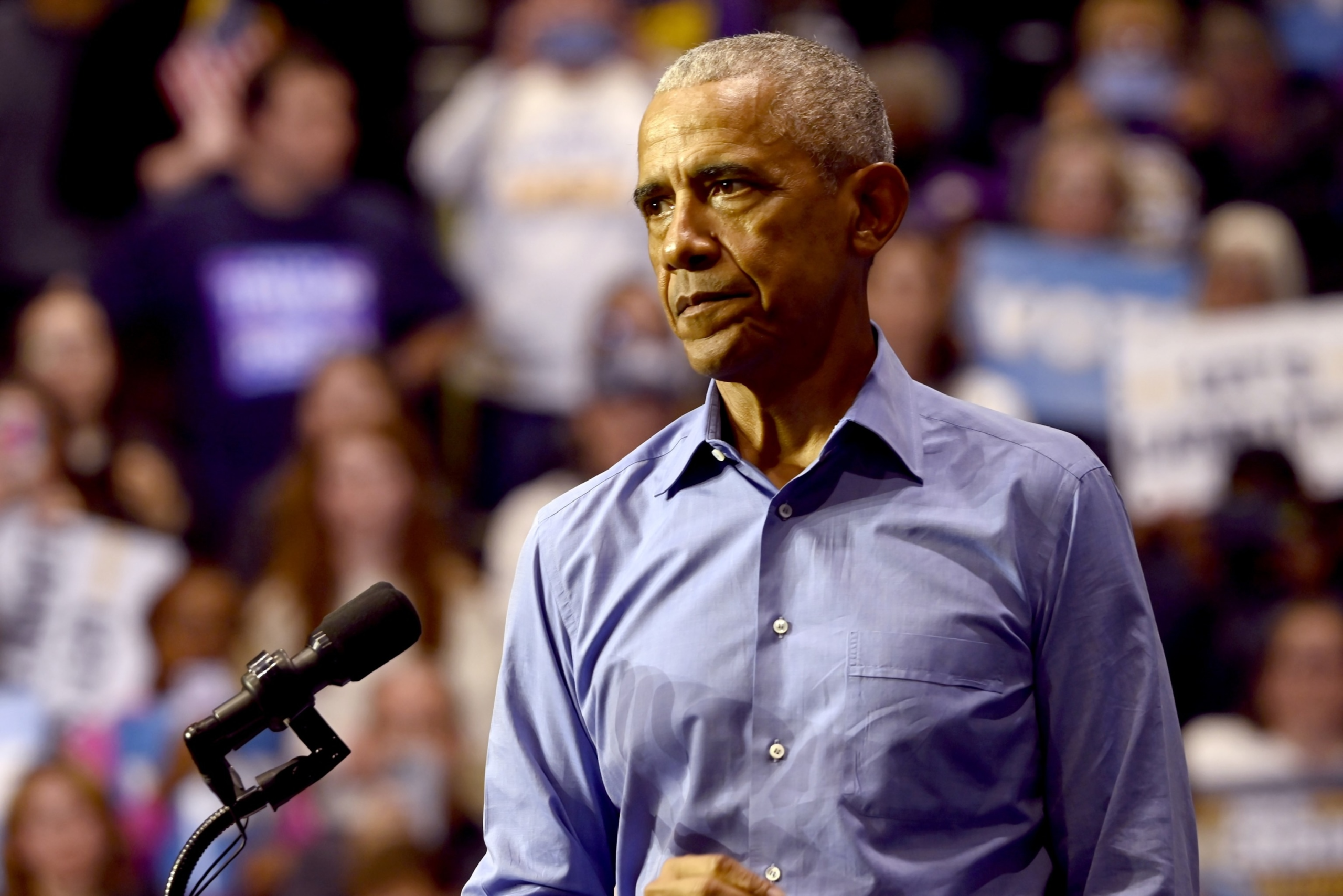
One of Obama’s latest high-profile appearances took place in Toronto, where he delivered a keynote speech for Canada 2020’s anniversary gala at the historic Fairmont Royal York Hotel.
The event marked another chapter in Obama’s long-standing relationship with Canada. During his presidency, he made several official visits to the country, including meetings with former Canadian prime minister Stephen Harper and participation in G8, G20, and North American Leaders’ Summit gatherings.


Canada 2020 described the event as an opportunity to reflect on “shared purpose and conviction” between Canada and the United States during a period of global uncertainty. The think tank, founded in 2006, says its mission is to advance policy ideas that create a “more just, inclusive and forward-thinking Canada.”
Obama’s appearance drew significant attention because it came at a time when geopolitical tensions, economic instability, and political polarization continue to shape international discourse. His speeches in recent years have increasingly focused on democracy, civic responsibility, leadership, and global cooperation.
The Toronto gala was closed to media coverage, underscoring the exclusivity and significance of the gathering.
The Obama Presidential Center Nears Completion
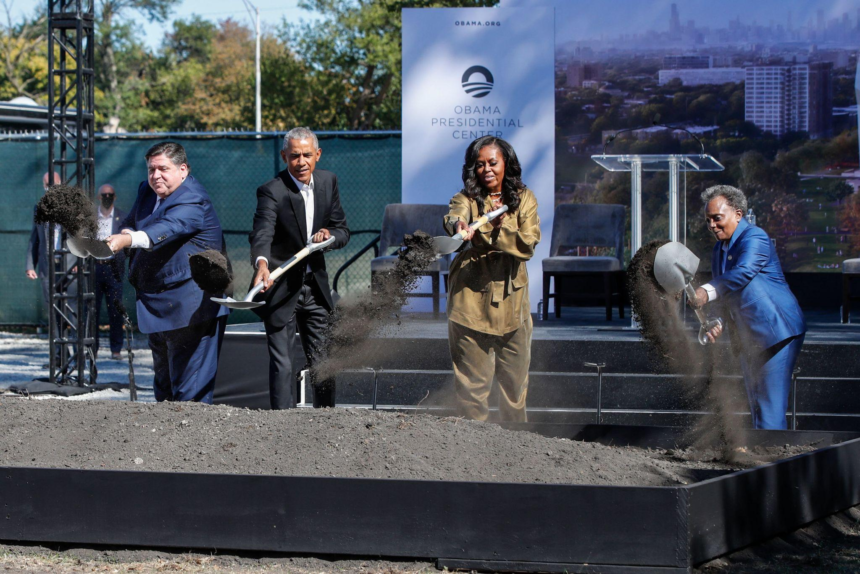
While Obama continues to appear at global speaking engagements, much of the public focus in 2026 centers on the opening of the Barack Obama Presidential Center in Chicago.


The project, years in development, is scheduled to open to the public on June 19, 2026 — a date chosen to coincide with Juneteenth, the U.S. holiday commemorating the end of slavery.
Located in Jackson Park on Chicago’s South Side, the center spans 19.3 acres and represents far more than a traditional presidential library. According to the Obama Foundation, the site was designed as a civic campus dedicated to culture, education, public discussion, and community engagement.
Obama described his vision for the center in a public statement:
“My hope is that this will be a place where people can come together to meet, learn, and work with each other to create change in their communities.”
The center includes:
- A museum dedicated to Obama’s presidency
- Public gathering spaces
- Gardens and outdoor plazas
- Walking and biking trails
- Community-focused programming areas
- A Chicago Public Library branch
- Accessible recreational facilities
Environmental sustainability is also central to the project. The Obama Foundation says the facility will operate using 100% renewable electricity, rainwater recycling systems, and geothermal heating and cooling technology.
The center reflects many of the values associated with Obama’s presidency, including environmental stewardship, civic participation, and social inclusion.
Honoring Family, History, and Civil Rights
The presidential center also serves as a deeply personal tribute to the people and ideals that shaped Obama’s life.
Several spaces are named after major historical and civil rights figures, including:
- John Lewis, the late civil rights icon and congressman
- Eleanor Roosevelt, former first lady and human rights advocate
- Maya Lin, designer of the Vietnam Veterans Memorial
- Ann Dunham, Obama’s mother
NBC Chicago recently highlighted how Obama is honoring his mother through a dedicated terrace and artistic installation within the center.
The broader design philosophy emphasizes storytelling through public space rather than traditional presidential monument-building. Instead of centering solely on Obama himself, the project aims to encourage visitors to consider their own role in shaping society.
From Politics to Entertainment
Obama’s influence increasingly extends into popular culture as well.
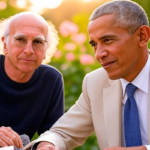
In 2026, he partnered with comedian Larry David on HBO’s satirical sketch series Life, Larry, and the Pursuit of Unhappiness.
The comedy project was created to mark the 250th anniversary of the founding of the United States. The series combines historical satire with commentary on American politics and culture.
In a teaser for the program, Obama joked:
“I have sat across the table from some of the world’s most difficult leaders and wrestled with some of the globe’s most intractable problems. Nothing has prepared me for working with Larry David.”
The series is executive produced by Barack Obama and Michelle Obama through their production company, Higher Ground.
Since leaving office, Higher Ground has become a significant force in media and storytelling, producing documentaries, podcasts, and entertainment projects focused on social issues, democracy, history, and culture.
The partnership with HBO demonstrates how Obama has successfully transitioned into a broader role that combines politics, media influence, and cultural engagement.
Obama’s Continuing Political Influence
Although Obama has largely avoided returning to day-to-day partisan politics, he remains a powerful voice within the Democratic Party and American civic life.
Recent reporting suggests Obama continues mentoring younger political leaders, participating in leadership development programs, and engaging in discussions about democracy, inequality, and the future of American institutions.
He has also maintained strong public positions on key social and political issues. In early 2026, Obama publicly criticized controversial immigration enforcement actions in Minneapolis, calling some federal tactics “unprecedented.”
His comments reflected a broader pattern seen throughout his post-presidency: selective but impactful interventions on issues he views as central to democratic values and civil rights.
Obama’s speeches today often emphasize themes such as:
- Civic responsibility
- Protection of democratic institutions
- Climate change
- Social inclusion
- Leadership development
- Political participation
- Public service
These themes also form the foundation of the Obama Foundation’s global initiatives.
Chicago Remains Central to Obama’s Identity
Despite his global stature, Chicago remains at the center of Obama’s public identity.
Before entering national politics, Obama worked as a community organizer on Chicago’s South Side, later serving as a civil rights attorney, law professor, and Illinois state senator.
The decision to locate the presidential center in Jackson Park reflects Obama’s longstanding connection to the city and its communities.
The project is also expected to have significant economic and cultural impacts on Chicago through tourism, infrastructure investment, educational programming, and job creation.
Construction of the center has become one of the city’s most visible modern civic developments.
The Evolution of a Modern Former President
Obama’s post-presidential life illustrates how the role of former presidents has changed in the modern media era.
Rather than retreating into quiet retirement, Obama has become:
- A global speaker
- A media producer
- A civic advocate
- A mentor to younger leaders
- A cultural figure
- A philanthropic leader
His activities now span politics, education, entertainment, and public engagement simultaneously.
That multidimensional role has allowed Obama to maintain significant influence long after leaving elected office.
Looking Ahead
As the Obama Presidential Center prepares to open and Obama continues appearing on global stages, 2026 appears to represent a new phase in his public legacy.
The opening of the center is likely to become one of the defining milestones of his post-presidential years. It represents not only a historical archive of his administration, but also an attempt to create a living institution focused on activism, dialogue, and community-building.
At the same time, Obama’s ongoing appearances — from Toronto policy forums to television collaborations — show that his voice continues to shape conversations about leadership, democracy, and culture.
For supporters and critics alike, Barack Obama remains one of the most consequential public figures of the 21st century.
And nearly ten years after leaving the White House, his influence continues to evolve rather than fade.