


Vincent Magwenya: The Voice Defending South Africa on the Global Stage
In South Africa’s fast-moving political environment, few public officials have become as visible in recent years as Vincent Magwenya. As President Cyril Ramaphosa’s spokesperson, Magwenya occupies one of the most demanding communication roles in government — serving as the public face of the Presidency during moments of political controversy, diplomatic tension, and national debate.
Over the past several years, he has emerged as a central figure in explaining government policy, managing presidential messaging, and responding to both domestic and international criticism. From migration tensions and accusations of xenophobia to sensitive diplomatic disputes involving the United States and neighboring African countries, Magwenya has increasingly become one of the key communicators shaping South Africa’s political narrative.
His latest media engagements in May 2026 once again placed him at the center of major national discussions, particularly around migration, regional cooperation, and South Africa’s international image.
From Journalist to Presidential Spokesperson
Vincent Magwenya’s professional journey spans journalism, public relations, stakeholder management, and government communication. Before becoming the spokesperson for President Cyril Ramaphosa, he built a reputation as an experienced media strategist with deep roots in broadcasting and corporate communications.
Magwenya previously worked as spokesperson to former South African President Jacob Zuma between 2009 and 2010, giving him direct experience inside the highest levels of government communication. He also held senior communication roles in the private sector, including positions linked to Standard Bank and the communications industry.
President Ramaphosa appointed Magwenya as presidential spokesperson effective from 1 June 2022, describing him as an experienced communicator whose expertise would strengthen the Presidency’s communication efforts.
His appointment came during a politically sensitive period for South Africa, with the Presidency facing increasing pressure to communicate clearly on issues ranging from economic reform and governance to international diplomacy and social tensions.
The Public Face of the Presidency
As spokesperson to President Ramaphosa, Magwenya’s role extends far beyond routine press briefings. He is tasked with translating presidential policy into public messaging, responding to criticism, coordinating media relations, and clarifying government positions during crises.
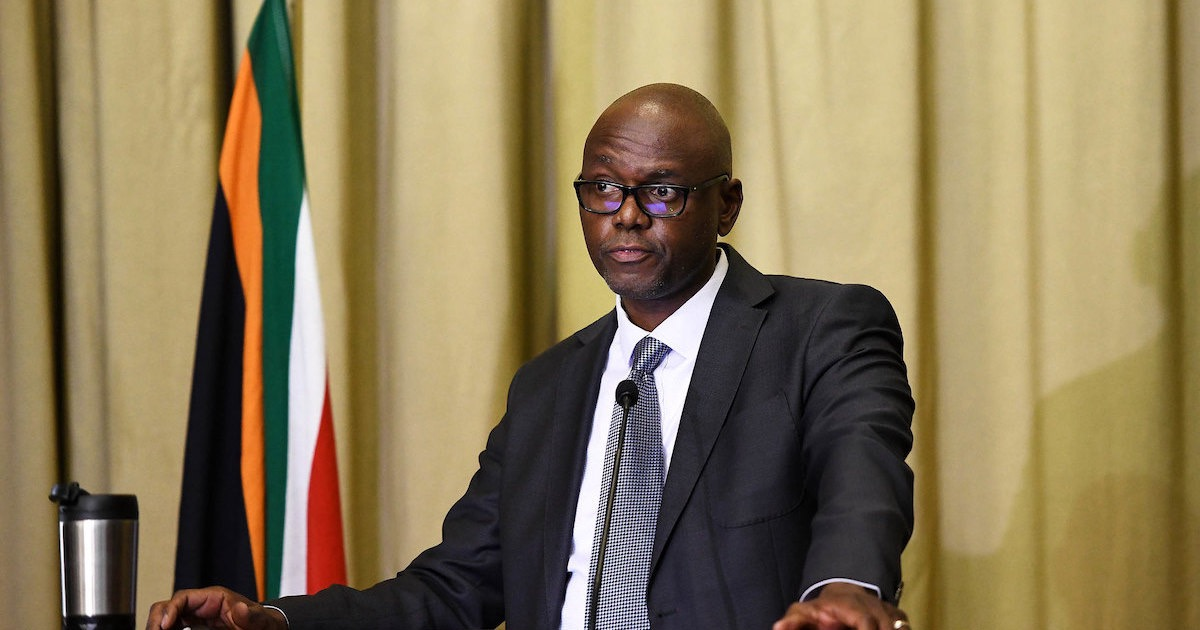
On 6 May 2026, Magwenya hosted a media briefing at the Imbizo Media Centre in Parliament, Cape Town, where he updated the public on the President’s programme and addressed topical political developments. The Presidency announced that the briefing would focus on “the President’s programme and address topical issues of interest.”
The briefing quickly became dominated by questions surrounding anti-migrant protests taking place across South Africa.
At the center of the controversy were demonstrations targeting undocumented migrants and foreign-owned businesses in several parts of the country, including Durban. The protests sparked concern from other African governments, particularly Nigeria and Ghana, which raised alarms about alleged xenophobic incidents involving foreign nationals living in South Africa.
“South Africans Are Not Xenophobic”
One of Magwenya’s most widely discussed statements came during that May 2026 media briefing when he firmly rejected accusations that South Africans are inherently xenophobic.
“South Africans are not xenophobic,” Magwenya told reporters. “What you have is pockets of protest, which is permissible within our constitutional framework.”
The statement reflected the Presidency’s attempt to separate public frustration over undocumented migration from broader accusations of anti-foreigner hostility.
Magwenya argued that migration pressures affecting South Africa cannot be understood in isolation. Instead, he urged African governments to address the deeper structural issues pushing people to leave their home countries.
According to Magwenya, these drivers include:
- regional conflicts
- political instability
- economic collapse
- poor governance
- insecurity in parts of the continent
He emphasized that African nations needed to engage constructively on the root causes of migration rather than simply condemning South Africa over accusations of xenophobia.
His remarks followed discussions between President Cyril Ramaphosa and Mozambique President Daniel Chapo, where both leaders reportedly agreed that African countries must work together to address migration pressures across the continent.
Managing a Difficult National Debate
The migration debate remains one of South Africa’s most politically sensitive issues.
South Africa continues to attract migrants from across Africa due to its comparatively advanced economy and employment opportunities. However, rising unemployment, economic inequality, and pressure on public services have fueled tensions in many communities.
Recent protests targeted undocumented migrants operating businesses such as small retail shops, while some demonstrations attempted to prevent undocumented foreigners from accessing clinics and hospitals.
Magwenya’s communication strategy appears aimed at balancing two competing realities:
- acknowledging public frustration over illegal immigration
- defending South Africa’s international reputation against accusations of widespread xenophobia
During media engagements, he stressed that protests themselves are constitutionally protected but warned against oversimplifying the situation by labeling all South Africans as xenophobic.
He described such interpretations as a “lazy” analysis that risks “unfairly maligning” South Africa.
Diplomatic Pressure From Nigeria and Ghana
The controversy gained additional international attention after Nigeria announced emergency repatriation flights for its citizens living in South Africa.
Nigerian authorities argued that Pretoria was not doing enough to prevent anti-immigrant threats and harassment. Ghana also summoned South Africa’s envoy following several reported xenophobic incidents.
These developments placed Magwenya in a difficult diplomatic position.
As presidential spokesperson, he had to reassure neighboring African states while simultaneously defending South Africa’s constitutional framework and addressing domestic political concerns around undocumented migration.
His messaging consistently emphasized cooperation between African nations rather than confrontation.
“There should be a willingness to constructively engage on what these issues and factors are behind people seeking to leave their countries of birth and seeking refuge elsewhere,” Magwenya said.
A Key Figure in South Africa’s Foreign Messaging
Beyond migration issues, Magwenya has become increasingly prominent in explaining South Africa’s diplomatic positions on the international stage.
In recent months, he has commented on strained relations between South Africa and the United States, particularly following tensions linked to allegations surrounding racial discrimination and geopolitical disagreements.
Magwenya also confirmed the appointment of veteran negotiator Roelf Meyer as South Africa’s ambassador to the United States during a period of difficult relations between Pretoria and Washington.
His role increasingly involves navigating highly sensitive geopolitical narratives while protecting South Africa’s image internationally.
That responsibility requires balancing domestic political realities with international diplomatic messaging — a challenge that has become more complex amid global scrutiny of South Africa’s policies and political direction.
Communication in the Digital Age
Magwenya’s visibility also reflects how political communication has evolved in modern South Africa.
Today’s presidential spokesperson is no longer simply a press officer issuing written statements. The role now requires:
- real-time media engagement
- live television appearances
- social media communication
- rapid crisis response
- international diplomacy messaging
- narrative management across digital platforms
Magwenya frequently appears at live-streamed briefings and media conferences, often fielding difficult questions on controversial political developments.
His communication style is generally measured, direct, and institutional, reflecting the Presidency’s effort to project stability during politically turbulent moments.
Why Vincent Magwenya Matters in South African Politics
While presidential spokespersons often operate in the background, Magwenya has become unusually prominent because of the political climate in which he serves.
South Africa faces simultaneous pressures involving:
- migration tensions
- economic hardship
- diplomatic disputes
- coalition politics
- governance challenges
- regional instability
In this environment, public communication has become central to political leadership.
Every statement from the Presidency can influence public sentiment, international relations, investor confidence, and diplomatic negotiations. That places enormous responsibility on the spokesperson’s office.
Magwenya’s role therefore extends beyond media management — he effectively acts as one of the primary interpreters of the South African Presidency to both domestic and global audiences.
The Continuing Spotlight
As South Africa approaches future political and economic milestones, Vincent Magwenya is likely to remain one of the country’s most recognizable political communicators.
Whether addressing migration controversies, defending government policy, clarifying diplomatic disputes, or outlining President Ramaphosa’s public programme, his voice continues to shape how South Africa explains itself to the world.
Recent developments surrounding migration protests and diplomatic tensions have only reinforced how central his role has become within the Presidency’s broader communication strategy.
For supporters, Magwenya represents a disciplined and experienced communicator defending South Africa’s constitutional values and international standing. Critics, however, often view his role as defending controversial government positions during difficult political moments.
Either way, Vincent Magwenya has firmly established himself as one of the most influential communication figures in contemporary South African politics.


