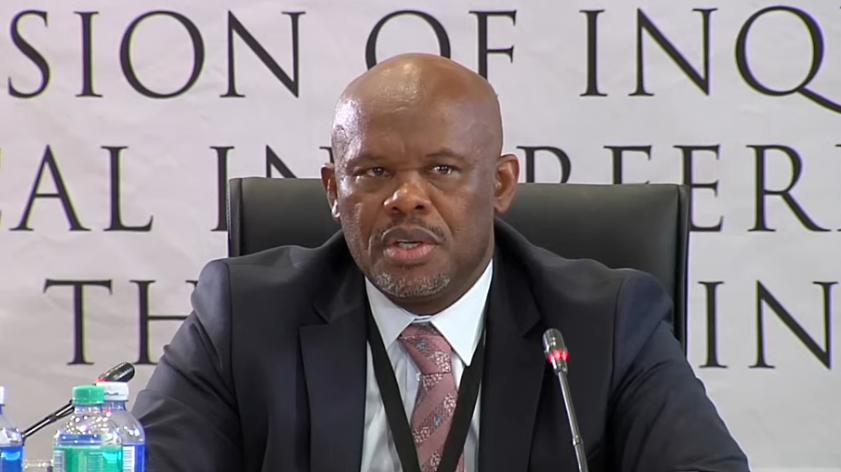
South Africa’s Madlanga Commission of Inquiry has once again turned national attention toward serious allegations of corruption, operational failures, and possible criminal infiltration inside the country’s law enforcement system. Recent testimony by senior Hawks officials has revealed alarming details surrounding the disappearance of 541 kilograms of cocaine — valued at roughly R200 million — from a Hawks facility in Port Shepstone, KwaZulu-Natal.

541kg of Cocaine Vanished From a Hawks Facility
At the centre of the commission’s hearings is one of the most embarrassing security failures in recent South African policing history.
The cocaine shipment had originally been seized during a law enforcement operation at an Isipingo depot near Durban in June 2021. Instead of being transferred to a more secure forensic storage facility, the drugs remained stored at Hawks offices in Port Shepstone for several months before disappearing during a break-in in November 2021.
According to testimony before the commission, the drugs were stolen after suspects allegedly entered the premises through windows and gained access to the exhibit storage area. The theft has since become a major focus of the Judicial Commission of Inquiry into Criminality, Political Interference, and Corruption in the Criminal Justice System, widely known as the Madlanga Commission.
Despite the enormous value of the stolen cocaine and the national significance of the case, no arrests have been made nearly five years later. Investigators have described the case as still being at a “sensitive stage.”
Hendrik Flynn’s Explosive Testimony
Much of the recent public attention has focused on testimony delivered by Hawks Major-General Hendrik Flynn, head of the Serious Organised Crime Investigation unit.
Flynn painted a deeply troubling picture of systemic negligence, inadequate security infrastructure, and possible internal involvement in the theft.
During testimony before the commission, Flynn disclosed that the Port Shepstone premises had suffered multiple break-ins before the cocaine disappeared. Evidence presented showed the building lacked several basic security protections expected at a law enforcement facility storing high-value drug exhibits.
The commission heard that the premises had:
- No CCTV cameras
- No functioning alarm system
- No exterior beam sensors
- No 24-hour security personnel
- Weak perimeter security
Flynn stated that relying only on a strong room to protect cocaine worth R200 million was dangerously inadequate.
“You need additional layers of security measures to obviously make it difficult or impossible for individuals to breach that premises first and foremost, then to get access to the building, and then to execute successfully the bridging of the vault and the removing of the [cocaine],” Flynn testified.
He further described the decision to store the drugs there as “extremely reckless and irresponsible.”
Seven Break-Ins Before the Theft
One of the most shocking revelations was that the Hawks building had reportedly already been targeted repeatedly over the years before the cocaine vanished.
Flynn referenced a previously confidential police report documenting multiple break-ins at the Port Shepstone facility over roughly a decade.
The reported incidents occurred on:
- 27 December 2011
- 8 June 2014
- 8 December 2018
- 20 January 2020
- 15 March 2020
- 15 January 2021
- 11 October 2021
The cocaine theft then occurred during another burglary in November 2021.
The repeated security breaches have raised serious questions about why such a large narcotics consignment remained at the facility despite its known vulnerabilities.
Flynn testified that even an ordinary police station with officers present around the clock would likely have provided better security than the Port Shepstone offices.
Claims of an “Inside Job”
The commission has also heard suggestions that the theft may not have been a random burglary.
Flynn indicated he believed the operation showed signs of being coordinated internally, while KwaZulu-Natal Hawks head Major-General Lesetja Senona had earlier testified that someone familiar with the premises was likely involved.
The possibility of internal collusion has intensified scrutiny on senior Hawks officials and the broader integrity of specialised crime-fighting units.
The commission is specifically examining allegations that organised criminal networks may have infiltrated sections of South Africa’s criminal justice system, law enforcement agencies, and political structures.
Flynn warned during testimony that organised crime cannot function effectively without corruption.
He explained that criminal syndicates often exploit weaknesses within both public institutions and private systems to sustain trafficking operations.
Senona’s Testimony Delayed
Another major development in the hearings involves the postponement of testimony by suspended KwaZulu-Natal Hawks head Major-General Lesetja Senona.
Senona had initially been scheduled to testify before the commission on 8 May 2026. However, his appearance was postponed to 1 June following an application by his legal team.
According to evidence leader advocate Mahlape Sello, Senona’s lawyers argued that he needed more time to access records and prepare adequately for testimony.
“General Senona had been issued with a subpoena to appear on the 8th of May, which is Friday. On Monday we received a request from his attorneys for a postponement of his appearance from the 8th of May to a later date,” Sello told the commission.
His legal team also raised concerns regarding alleged procedural irregularities, including claims that the summons was not preceded by a Rule 3 notice and supporting documentation.
Justice Mbuyiseli Madlanga ultimately granted the postponement after considering the circumstances.
The delay comes at a sensitive moment for the inquiry, particularly after Flynn linked Senona to events surrounding the Port Shepstone cocaine theft.
“A National Embarrassment”
Perhaps the most politically damaging testimony came from internal police documents read into the record during proceedings.
One document associated with former Hawks leadership reportedly described the theft as an embarrassment not only for the Hawks but for South Africa itself.
The document stated that the cocaine theft:
“embarrassed” the Hawks “and the country in general and left a huge blow on the trust that the public have towards the elite crime fighting unit”.
The document reportedly recommended stronger security measures at the Port Shepstone building, including infrared sensors, improved perimeter lighting, and the use of an armed response company.
The revelations have fueled growing public concern about whether South Africa’s elite anti-corruption and organised crime units can effectively police transnational drug trafficking while facing allegations of internal corruption.
Broader Concerns About Organised Crime
The Madlanga Commission was established to investigate allegations of criminal infiltration and political interference across South Africa’s law enforcement and justice institutions.
The Port Shepstone cocaine theft has become one of its most symbolic cases because it combines several major national concerns:
- Organised crime
- Drug trafficking
- Police corruption
- Failures in evidence management
- Institutional security weaknesses
- Public distrust in law enforcement
Flynn told commissioners that failures in crime scene management severely damaged the investigation.
“In my opinion, the cocaine seized in 2021 should never have been stored in Port Shepstone. The crime scene management’s failure compromised the integrity of the investigation and the subsequent theft of the cocaine severely compromised our ability to find the traffickers.”
The testimony has reinforced fears that transnational drug syndicates may possess sophisticated networks capable of exploiting internal weaknesses within policing agencies.
New Drug Seizures Show Ongoing Threat
While the commission hearings continue, South African authorities are still intercepting large narcotics shipments linked to international trafficking networks.
During Flynn’s testimony, police reportedly discovered cocaine worth approximately R13 million concealed inside the air conditioning system of a bus shipped from South America to Durban Harbour.
No arrests were immediately made in that case either.
The seizure highlighted the continued scale of drug trafficking operations entering South Africa and reinforced concerns raised during the commission about organised criminal activity operating across borders.
What Happens Next?
The Madlanga Commission is expected to continue hearing testimony from additional witnesses connected to the Port Shepstone cocaine theft and wider allegations involving organised crime infiltration within state institutions.
Senona’s postponed appearance on 1 June is likely to attract major public attention, particularly given the serious implications raised during earlier testimony.
The commission’s findings could eventually influence:
- Police reform efforts
- Evidence handling procedures
- Security protocols at law enforcement facilities
- Anti-corruption investigations
- Organised crime enforcement strategies
For now, however, the unanswered question remains deeply troubling: how could 541 kilograms of cocaine disappear from a Hawks facility without a single arrest years later?
The answer may determine not only the credibility of the Hawks, but also public trust in South Africa’s broader criminal justice system.