
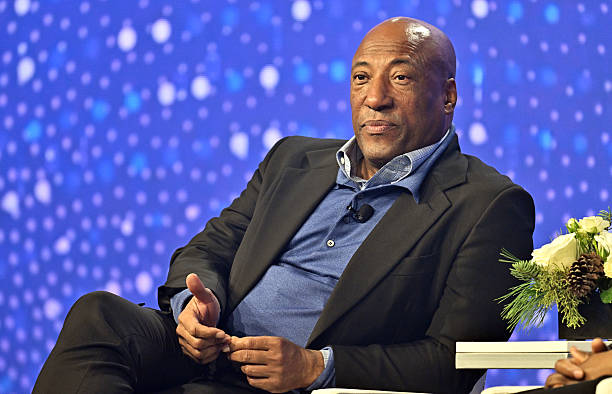
Byron Allen, Stephen Colbert and the CBS Late-Night Reset: Why Comics Unleashed Is Replacing The Late Show
CBS’ decision to replace The Late Show with Stephen Colbert with Byron Allen’s Comics Unleashed is more than a routine scheduling change. It marks a major recalibration of network late-night television, where legacy prestige, production costs, advertising pressure and changing audience behavior are colliding in public view.
Stephen Colbert, who is now in the final stretch of his CBS run, has responded to the transition with a mix of grace, humor and professional distance. After learning that Allen’s comedy panel show would take over the 11:35 p.m. slot, Colbert said he reached out to Allen with congratulations. “God bless him,” Colbert said. “I know Byron. We got to know each other last year, actually. He’s fascinating. You know his history with Carson?”
That remark points to one of the most interesting dimensions of the story: Byron Allen is not a random replacement parachuted into late night. He is a veteran comedian, entrepreneur and media executive whose relationship with television comedy stretches back decades. But the economics behind his CBS deal reveal why this change is being watched so closely across the entertainment industry.

A Landmark Late-Night Exit
The Late Show with Stephen Colbert is scheduled to end with its final episode on May 21, 2026. Colbert took over the franchise in 2015, following David Letterman’s long tenure, and became one of broadcast television’s most prominent late-night voices. The broader Late Show franchise traces back to 1993, making its conclusion a symbolic end to a major chapter in CBS history.
CBS canceled The Late Show with Stephen Colbert in July 2025, describing the move as a “financial decision against a challenging backdrop in late night.” The network later confirmed that Comics Unleashed with Byron Allen would fill Colbert’s 11:35 p.m. time slot immediately after the finale.
For viewers, the change means that CBS is not replacing Colbert with another traditional desk-and-monologue late-night host. Instead, it is moving toward a lower-cost comedy format built around rotating performers and panel-style conversations.
When asked how he felt about The Late Show not being replaced by a traditional late-night program, Colbert answered plainly: “It’s none of my business.”
Byron Allen’s Unusual Path to the 11:35 p.m. Slot
Byron Allen’s arrival in the CBS late-night slot brings a long entertainment résumé with him. Allen first became widely known as a stand-up comedian and made history as the youngest comic to perform on The Tonight Show Starring Johnny Carson when he was 18. Colbert referenced that milestone while discussing Allen’s new opportunity, even joking that Allen should “drop Mr. Carson a note.”
Allen later built a large media business through Allen Media Group, expanding beyond comedy into television production, syndicated programming, cable networks and other media assets. His career has made him one of the most powerful independent figures in American television.
Comics Unleashed, which began in 2006, features a rotating group of comedians performing material and interacting in a panel format. The show had already been airing on CBS after The Late Show, giving the network a tested property before the move into the earlier slot.
The Business Logic Behind the Replacement
The most important factor in the CBS decision appears to be cost.
Traditional late-night programs are expensive. They require large staffs, writing teams, production crews, booking operations, studio infrastructure and constant topical preparation. In an era when younger viewers often consume late-night content as clips online rather than full episodes on television, the economic model has become harder for networks to defend.
Allen’s arrangement offers CBS a very different financial structure. CBS is leasing the time slot to Allen, and Allen has said the economics are attractive because he covers the production costs. “It’s not cheaper,” he told the Los Angeles Times. “It’s zero.”
That line explains why the move matters beyond Colbert and Allen personally. It suggests that CBS is testing whether a major late-night slot can become profitable not by chasing a new superstar host, but by radically reducing network exposure.
Paramount TV Media chair George Cheeks said the one-year deal with Allen allows CBS “to go into immediate profitability in that slot,” according to the provided reporting.
A Shift From Prestige Programming to Financial Discipline
For decades, late-night television functioned as both entertainment and institutional identity. Shows such as The Tonight Show, Late Show, Late Night and Jimmy Kimmel Live! helped define network brands, shaped political conversation, elevated comedians and created viral cultural moments.
But the value proposition has changed. A late-night show can still generate headlines, social media clips and cultural relevance, but the television audience is more fragmented. Advertising revenue has become less predictable, and networks are under more pressure to make every time slot financially accountable.
That is why the Colbert replacement feels so significant. CBS is not merely swapping one host for another. It is moving from a prestige-heavy format to a cost-contained programming block.
Allen’s Comics Unleashed represents a format with several advantages for a network under pressure: a recognizable host, a steady supply of comedians, a repeatable structure and production economics that are far leaner than a traditional nightly talk show.
Colbert’s Response: Professional, Witty and Restrained
Colbert’s public reaction has been notable because he avoided bitterness. Instead, he acknowledged Allen’s career, congratulated him and kept his criticism away from the replacement itself.
“Hey, congrats. I heard you got the time. Good for you. Wouldn’t it be lovely if you could drop Mr. Carson a note?” Colbert said he wrote to Allen. The joke worked on two levels: it recognized Allen’s connection to Johnny Carson while also acknowledging the long lineage of late-night television that CBS is now reworking.
His three-word response — “It’s none of my business” — may become the headline quote, but the broader reaction shows a host who understands the corporate nature of the decision and is choosing not to turn the replacement into a public feud.
What Viewers Can Expect From Comics Unleashed
Comics Unleashed with Byron Allen is not expected to mirror The Late Show. Instead of a nightly opening monologue, celebrity interviews and topical desk segments, the program centers on comedians and their material.
The format features rotating stand-up performers in a talk-show setting. That gives CBS a comedy-first late-night product, but one that is less dependent on a single host’s nightly political perspective or an expensive topical writing machine.
CBS’ late-night block is also expected to include Allen-produced programming beyond Comics Unleashed. Reports indicate that Allen’s comedy game show Funny You Should Ask will follow in the lineup after Comics Unleashed.
This creates a broader Byron Allen comedy block rather than a one-for-one replacement of Colbert’s show.
The Late-Night Industry Is Watching Closely
The move comes during a period of uncertainty for late-night television. CBS has framed the cancellation as financial, while industry observers have debated whether broader corporate and political pressures may also have shaped the environment around the decision. Some speculation has focused on Paramount, CBS’ parent company, and its business climate, but the official explanation provided was financial pressure in late night.
That distinction matters. The confirmed programming decision is clear: The Late Show is ending, Comics Unleashed is taking the slot, and CBS is prioritizing a model that immediately improves the economics of the hour.
What remains uncertain is whether this is a temporary bridge or a blueprint for the future. CBS executives have indicated that Allen’s arrangement gives the network room to explore other late-night ideas, but the performance of Comics Unleashed could influence what happens next.
Colbert’s Next Chapter Includes Middle-earth
Colbert is not leaving public life entirely. In his interview, he discussed one major post-Late Show project: writing a new film in the Lord of the Rings series. He is working on the script with his screenwriter son and Philippa Boyens, who co-wrote entries in both the Lord of the Rings and Hobbit trilogies.
Some franchise fans have questioned whether Colbert was chosen because of his celebrity and well-known fandom. Colbert responded by focusing on the work itself.
“There’s no value in me addressing that because all you can do as — I’ll use a loaded term here — an artist is follow your heart and the craft that you have learned to try to turn this into something that is not fandom but drama,” he said. “And luckily, I don’t have to do this alone. I have a great Sherpa in Philippa Boyens, who cares about it in the same way I do. And I will just say that every moment has been a joy so far.”
That project gives Colbert a high-profile creative lane after late night, even as his final CBS episodes remain the immediate focus.
A Final Run Built for Television History
Colbert’s final stretch has carried the tone of a major farewell. His recent guests have included Oprah Winfrey and former President Barack Obama, while additional late-night figures and major entertainers are expected to appear as the finale approaches.
The Ed Sullivan Theater has long been associated with television history, from variety programming to Letterman and Colbert. The end of The Late Show therefore carries a cultural weight that goes beyond one host’s departure.
CBS’ choice not to continue the franchise in traditional form makes the moment even sharper. It suggests that the network sees the future of late night less as an heirloom to preserve and more as a business category to restructure.
Why the Byron Allen-Colbert Replacement Story Matters
The phrase “Byron Allen Stephen Colbert replacement” may sound like a simple search query, but it captures a larger entertainment industry story. It is about how legacy television adapts when prestige no longer guarantees profitability. It is about how established formats are being challenged by cheaper, more flexible programming models. And it is about how even culturally important shows can be reshaped by financial pressure.
Colbert’s exit closes a defining chapter for CBS late night. Allen’s arrival opens a different kind of experiment: a comedy block built around leaner economics, established syndicated formats and the belief that viewers will still show up for stand-up-driven entertainment.
Whether Comics Unleashed becomes a long-term answer or a transitional solution, the replacement marks a turning point. CBS is signaling that the late-night future may not look like the late-night past — and the industry will be watching closely to see whether that gamble works.


