


Cooking with Love: How Pamela Anderson Turns Food, Memory and Care Into a New Kind of Comfort Television
Cooking has always been more than a way to prepare a meal. At its best, it is a gesture of care, a ritual of memory, and a language that can be understood without translation. That idea sits at the heart of “Cooking with Love,” a phrase that has taken on renewed visibility through Pamela Anderson’s culinary television series, “Pamela’s Cooking With Love.”
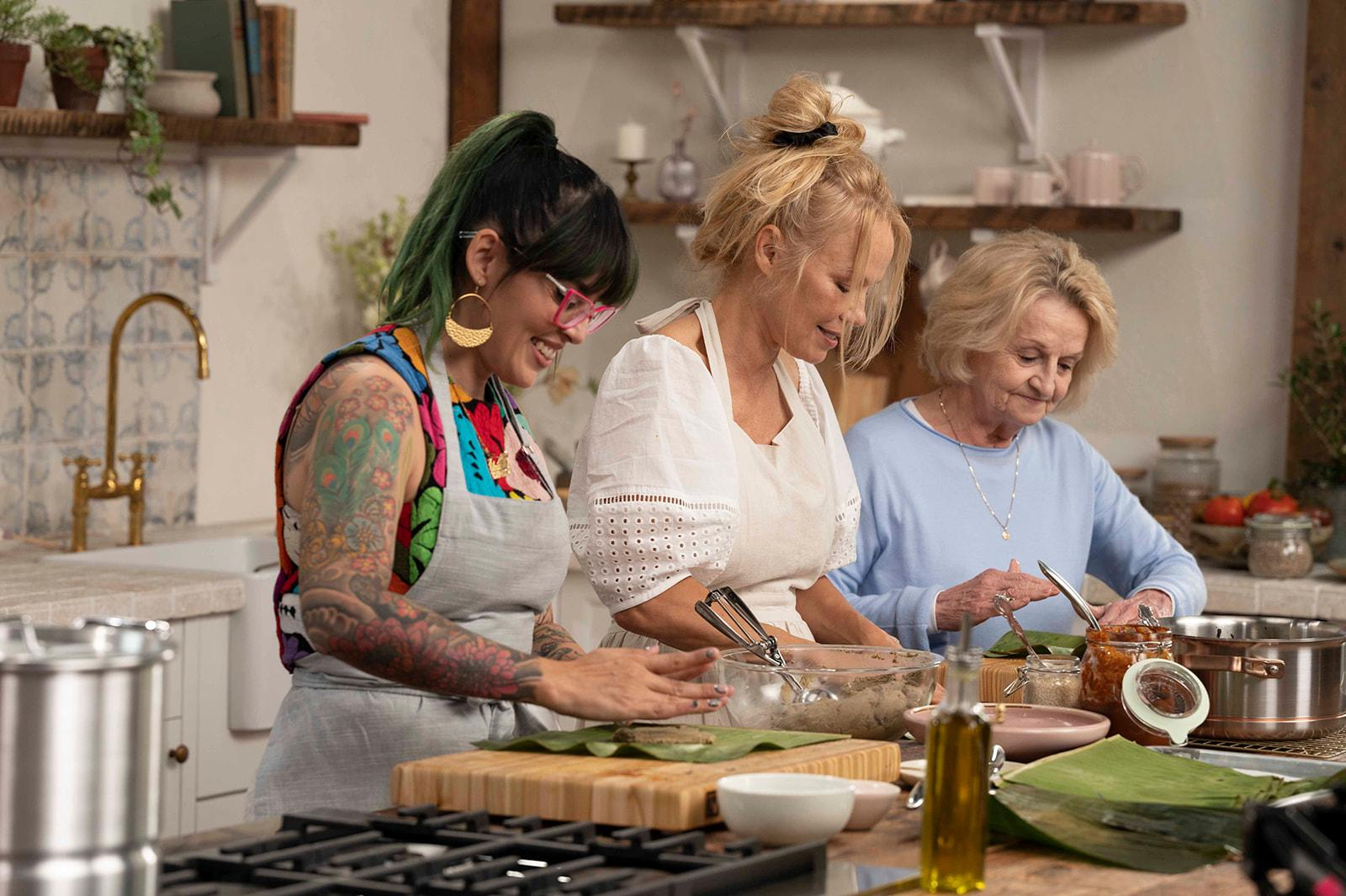
The show places Anderson in a warm, intimate kitchen setting, where cooking is not presented as competition or spectacle, but as connection. In one featured segment, chef Gabe Kennedy joins Anderson to make sweet potato fries, a humble comfort-food dish that fits the wider spirit of the series: approachable, nourishing and built around the joy of sharing food. Another segment highlights Anderson making tortillas with Claudette Zepeda, again reinforcing the show’s emphasis on simple foods elevated through skill, attention and hospitality.
At a time when food media often leans into speed, perfection and performance, “Cooking with Love” offers something quieter: the belief that what happens around the stove matters as much as what ends up on the plate.
A Softer Culinary Format Built Around Hospitality
“Pamela’s Cooking With Love” is positioned as a culinary TV series connected to Anderson’s broader lifestyle storytelling, including her gardening show, “Pamela’s Garden of Eden.” Together, the two projects frame food as part of a larger ecosystem: growing, preparing, serving and gathering.
The provided material describes Anderson discussing the show in the same context as other recent career moments, including praise from fellow actors, a Screen Actors’ Guild Award nomination for “The Last Showgirl,” and her work with Liam Neeson on “The Naked Gun.” That combination is significant. Anderson is not only returning to the screen as an actress; she is also reshaping her public image around creativity, domesticity, reinvention and personal authenticity.
The cooking series becomes part of that reinvention. It shows Anderson not as a celebrity simply lending her name to a lifestyle brand, but as a host building a mood: relaxed, generous and grounded. The kitchen becomes a place where guests are welcomed, stories can unfold naturally, and food becomes a bridge between personalities.
Sweet Potato Fries and the Power of Comfort Food
The segment with Gabe Kennedy centers on sweet potato fries, a dish that may seem modest compared with elaborate restaurant cooking. Yet that is exactly why it works.
Sweet potato fries carry the emotional appeal of comfort food while also fitting modern tastes for plant-forward, colorful and accessible meals. They are familiar enough for home cooks, flexible enough for chefs, and visually appealing enough for television. In Anderson’s kitchen, the dish becomes less about culinary difficulty and more about atmosphere.
A recipe like sweet potato fries invites participation. It does not intimidate viewers. It suggests that cooking with love does not require rare ingredients, advanced equipment or professional credentials. It requires attention: cutting, seasoning, roasting, tasting and serving with care.
That message is central to the appeal of the series. Food television can often make audiences feel like spectators. “Cooking with Love” makes the viewer feel invited.
Tortillas, Collaboration and the Role of Guest Chefs
The provided source information also references Anderson making tortillas with Claudette Zepeda, another example of how the series uses collaboration to deepen its culinary identity.
Tortillas are foundational foods, rich with cultural meaning and tradition. In a cooking-show format, making them is not just a technical exercise; it becomes a lesson in respect, texture, repetition and patience. A guest chef such as Zepeda brings authority and perspective, while Anderson’s role as host allows the episode to remain conversational and accessible.
This guest-driven structure is important. Rather than presenting Anderson as the sole expert, the show creates space for chefs to lead, teach and share. Anderson becomes the listener, participant and connector. That dynamic helps the series avoid the stiffness of celebrity cooking formats where fame overshadows the food. Here, the kitchen is shared.
Pamela Anderson’s Lifestyle Turn
The source material places “Pamela’s Cooking With Love” alongside “Pamela’s Garden of Eden,” Anderson’s gardening show. That pairing gives the cooking series a broader lifestyle context.
Gardening and cooking are naturally linked. One begins with soil, seeds and patience; the other turns ingredients into meals. By connecting the two, Anderson’s current screen work reflects a cultural shift toward slower living, homegrown food, plant-based meals and a more intentional relationship with domestic spaces.
The appeal is not just culinary. It is emotional. Viewers are drawn to the idea of a home where food is prepared thoughtfully, where guests are welcomed warmly, and where beauty can be found in simple acts: harvesting vegetables, rolling dough, seasoning fries, setting a table.
For Anderson, this turn also aligns with a wider public reassessment of her career. The same interview material mentions her recognition for “The Last Showgirl” and her upcoming work with Liam Neeson on “The Naked Gun.” In that context, the cooking show is not a side note. It is part of a larger chapter in which Anderson is being seen through a fuller lens: actor, host, gardener, cook, collaborator and storyteller.
Why “Cooking with Love” Resonates Now
The phrase “cooking with love” may sound sentimental, but its appeal is practical. Many people are looking for food content that feels human rather than hyper-produced. They want recipes, but they also want reassurance. They want to see meals that are beautiful without being impossible, comforting without being careless, and personal without being overly polished.
That is where Anderson’s kitchen format finds its strength. It treats cooking as an emotional practice. The food matters, but so do the conversations, the setting, the guests and the atmosphere.
In this sense, the show reflects a broader movement in lifestyle media: away from perfection and toward sincerity. The modern audience does not necessarily need another high-pressure cooking contest. It may need a reminder that food is one of the simplest ways people care for one another.
Flavour Network and the Entertainment Context
The provided information connects the series to Flavour Network, with new episodes of “Pamela’s Cooking With Love” airing on Monday at 9PM and streaming available through a STACKTV subscription. The same material identifies Flavour Network as a source for recipes, cooking tips and show content.
The entertainment ecosystem around the show matters because “Cooking with Love” sits between several categories: food programming, celebrity lifestyle television, home-and-garden storytelling and personal reinvention. Its audience may include longtime Pamela Anderson fans, plant-based food viewers, home cooks looking for approachable ideas, and lifestyle audiences drawn to warm domestic settings.
That broad appeal helps explain why clips such as the sweet potato fries segment can gain traction online. Food videos travel well because they are visual, comforting and easy to understand. When paired with a recognizable personality and a relaxed kitchen environment, the format becomes even more shareable.
Beyond Recipes: A Cultural Return to the Kitchen
“Cooking with Love” is not only about what Pamela Anderson and her guests make. It is about what the kitchen represents.
The kitchen has long been a place of family labor, cultural inheritance, creativity and care. In recent years, it has also become a stage for identity. What people cook, how they source ingredients, whether they garden, whether they eat plant-based meals, and how they host guests all communicate values.
Anderson’s series taps into that meaning without needing to overstate it. Sweet potato fries, tortillas, garden produce and shared meals all point toward a simple but powerful idea: food becomes more meaningful when it is connected to place, people and intention.
A Warm Future for Food Television
The future of food programming is likely to keep expanding beyond traditional recipe instruction. Audiences increasingly respond to shows that combine food with personality, travel, wellness, sustainability, gardening and home life. “Pamela’s Cooking With Love” fits neatly into that future because it is not only about cooking; it is about atmosphere.
The show’s strength lies in its ability to make food feel personal. Whether Anderson is cooking with Gabe Kennedy, making tortillas with Claudette Zepeda, discussing her broader creative projects, or connecting the kitchen to the garden, the recurring theme is care.
That is why the phrase “Cooking with Love” works. It is not just a title. It is a philosophy. It suggests that a meal can be simple and still feel generous, that a kitchen can be elegant without feeling distant, and that the act of cooking can still be one of the most intimate forms of storytelling.
Conclusion
“Cooking with Love” captures a softer, more reflective side of modern food culture. Through Pamela Anderson’s culinary series, the concept becomes a television experience built around warmth, collaboration and comfort. The sweet potato fries segment with Gabe Kennedy and the tortilla-making feature with Claudette Zepeda show how ordinary foods can become meaningful when prepared with attention and shared with others.
At its core, the appeal of “Pamela’s Cooking With Love” is not only in the recipes. It is in the invitation: to slow down, cook with care, welcome people in, and remember that food is never just food when it is made with love.


