

Mackenzie Shirilla Now: Inside the Case, Prison Sentence and Renewed Attention After Netflix’s The Crash
Mackenzie Shirilla is back in the public conversation after Netflix’s true-crime documentary The Crash renewed interest in the deadly Strongsville, Ohio, case that turned a high-speed car wreck into a double-murder conviction.
Shirilla, who was 17 at the time of the July 31, 2022 crash, is now serving two concurrent 15-years-to-life prison terms at the Ohio Reformatory for Women in Marysville, Ohio. Her first parole hearing is scheduled for September 2037, meaning she must wait more than a decade before she can make her case for release.
The case remains emotionally charged because of the central question that has followed it from the beginning: was the crash a horrific accident, or did Shirilla intentionally drive into a brick building at more than 100 mph, killing Dominic Russo and Davion Flanagan?
A Deadly Morning in Strongsville
In the early morning hours of July 31, 2022, Mackenzie Shirilla was driving a 2018 Toyota Camry in Strongsville, Ohio. Her boyfriend, Dominic Russo, and their friend Davion Flanagan were passengers. The group had been out after a party before the car slammed into a brick building at high speed. Russo and Flanagan were pronounced dead at the scene, while Shirilla survived with serious injuries.
The crash was initially viewed through the lens of a tragic wreck. But investigators later began treating the case as something far more serious. The documentary frames the investigation around “where a fatal mistake ends and cold-blooded murder begins,” highlighting how a case that first appeared to be a road tragedy became a criminal prosecution.
According to the case details, investigators examined possible explanations including impairment, vehicle malfunction and driver error. But prosecutors argued that the evidence pointed away from an accident. Bloodwork showed THC but no indication of alcohol or psilocybin, and a forensic auto investigator found that the vehicle’s braking, steering, tires and acceleration were functioning properly.
The Evidence That Shifted the Case
One of the most important pieces of evidence was the car’s event data recorder, often described as a “black box.” The data showed what happened in the final seconds before impact. Sergeant Ryan Fox of the Ohio State Highway Patrol said the accelerator pedal was at 100% and fully pressed leading up to the crash, with no sign of braking.
The data also indicated steering movement shortly before impact: “Right movement, left movement and then a hard right movement,” followed by the car shifting “from drive into neutral, back into drive again.”
For prosecutors, those details became central to the theory that the crash was intentional. Assistant prosecutor Tim Troup said in The Crash: “The evidence all comes together to show: This was not an accident.”
The prosecution also pointed to the relationship between Shirilla and Russo. Family members and others described conflict between the pair, while the defense and people close to Shirilla pushed back against the idea that the relationship alone explained what happened.
The Trial and Sentence
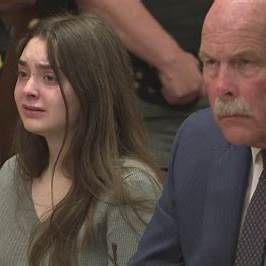
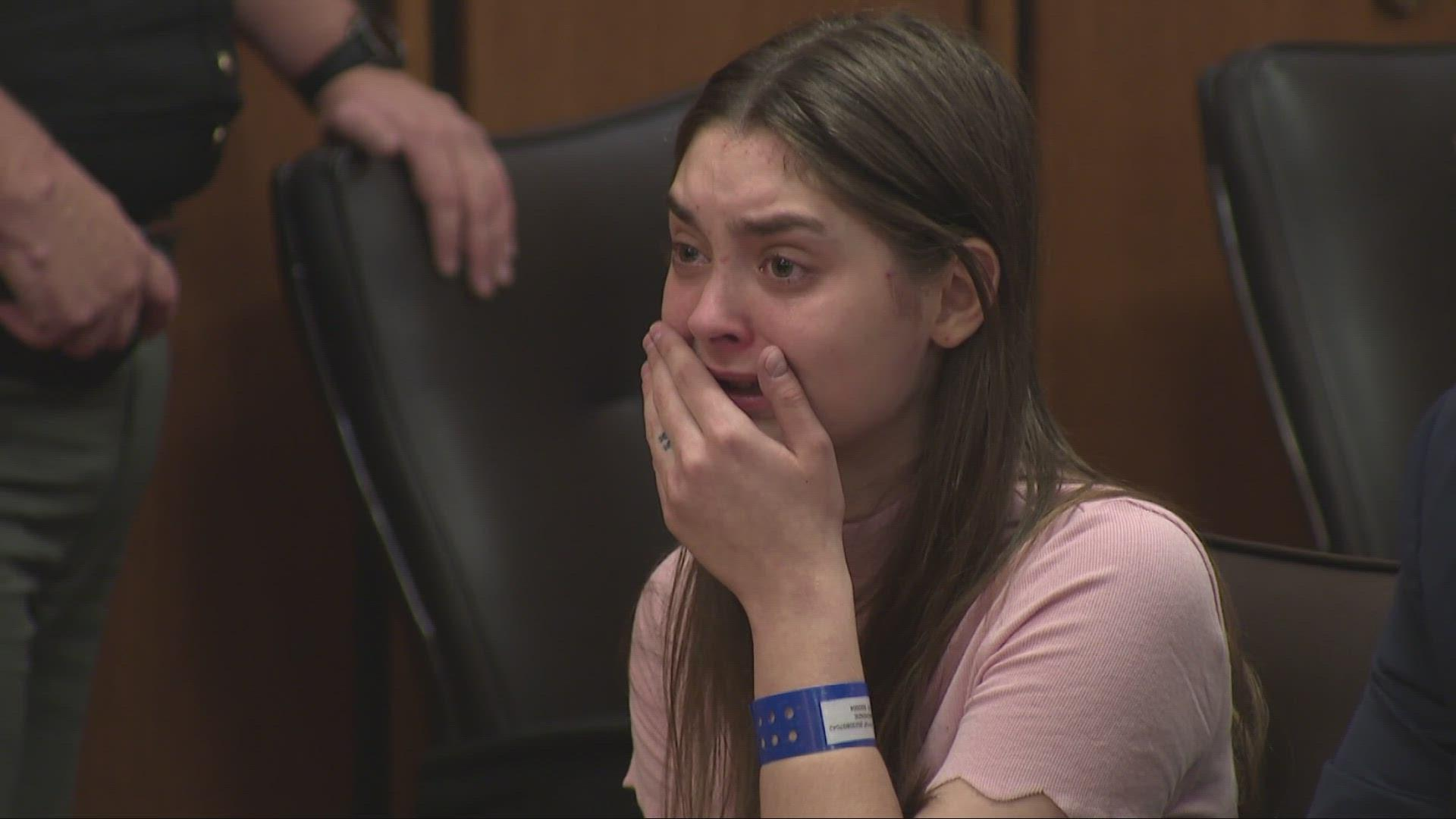
Shirilla was arrested in November 2022 and later faced multiple charges, including murder, aggravated vehicular homicide, felonious assault, drug possession and possessing criminal tools. After a bench trial without a jury, Cuyahoga County Common Pleas Judge Nancy Margaret Russo found her guilty on all counts.
Judge Russo made clear that she viewed the crash as intentional, saying: “This was not reckless driving. This was murder.”
In August 2023, Shirilla was sentenced to two concurrent 15-year-to-life terms. Her driver’s license was also permanently suspended.
At sentencing, Shirilla apologized, saying: “I am so deeply sorry. I hope one day you can see how I’d never let this happen or do it on purpose.”
Where Is Mackenzie Shirilla Now?
Mackenzie Shirilla is currently incarcerated at the Ohio Reformatory for Women in Marysville. She is now 21, and her first parole hearing is scheduled for September 2037.
In The Crash, Shirilla speaks from prison and continues to reject the idea that she intentionally killed Russo and Flanagan. She says she has no memory of the moments leading up to the crash and describes life behind bars as difficult.
“It’s really hard everyday in here,” she said in the documentary. “I try to wake up and be the best person I can be everyday, stay out of trial. There’s not a moment that doesn’t pass where I don’t think about [Russo and Flanagan].”
She also says: “I’m not going to lie just because people want to hear a story. I have no recollection of that morning.” Shirilla added: “I’m not saying I’m innocent — I was a driver of a tragedy. But I’m not a murderer.”
The Defense Argument: Memory Loss and POTS
Shirilla has maintained that she does not remember what happened immediately before the crash. Her side has raised the possibility of a medical emergency linked to postural orthostatic tachycardia syndrome, known as POTS, which she was reportedly diagnosed with in 2017.
Her defense argued that such a condition could have caused a blackout or medical episode. However, the source material notes that the defense did not call a medical professional to testify about or confirm the POTS diagnosis during trial.
That gap became part of the larger tension in the case: Shirilla and her family argue there is more to the story, while prosecutors and the court relied on vehicle data, crash reconstruction and relationship evidence to conclude the crash was deliberate.
Appeals, Legal Setbacks and the 2037 Parole Date
Shirilla’s legal team has tried to challenge the conviction. One appeal for postconviction relief was denied after being found untimely. A review stated: “Shirilla’s postconviction relief petition was filed on the 366th day following the filing of her trial transcript. Accordingly, we find that the trial court correctly determined it was without jurisdiction to consider the petition.”
Her lawyers also appealed to the Ohio Supreme Court, but the request for review was denied.
That leaves September 2037 as the key future date in the case. Shirilla’s sentence technically allows parole after 15 years, but parole eligibility is not the same as release. Families of the victims have already made clear that they want her to remain behind bars.
Russo’s sister said: “My brother’s life and Davion’s life was completely stolen. They don’t get out in 15 years. They don’t come back in 15 years. They don’t get any chance to live a life.”
Her Parents Still Say She Is Innocent
Natalie and Steve Shirilla have continued to support their daughter and maintain that she did not intentionally crash the car. They have mostly stayed out of the spotlight since the conviction, but The Crash brings their position back into focus.
Natalie Shirilla told Judge Russo on the stand that “this was a terrible, nightmare accident to have happened.” Both parents have denied that Mackenzie intentionally drove into the building.
They have also claimed that evidence supporting their daughter was not shown in court. Natalie told 3News: “We gave her attorney the text messages, we gave her attorney the medical records, we gave her attorney the car expert. He didn’t use any of it.”
According to the documentary, Shirilla and her family “continue to fight her conviction.”
Why the Case Still Draws Public Attention
The renewed attention around Mackenzie Shirilla is not only about where she is now. It is also about why the case continues to divide audiences.
For prosecutors and the court, the crash data, lack of braking, relationship evidence and surrounding circumstances supported a finding of murder. For Shirilla and her family, the case remains a miscarriage of interpretation: a tragedy, they argue, treated as intentional homicide.
Netflix’s The Crash has amplified that debate by placing viewers inside the competing narratives. The documentary includes Shirilla’s first prison interview, where she says: “I’ve never spoke before and I’ve never told my side of the story. I understand there’s many different sides to the story and different perspectives, but I just wanna say my truth. I just know myself, and I know I’m not a monster.”
The result is a case that sits at the intersection of true crime, youth justice, digital-age public judgment and the limits of courtroom certainty. Two young men died. A young woman is serving a life sentence. Their families are left with grief, anger and opposing versions of what the evidence means.
What Happens Next?
For now, the legal path appears narrow. Shirilla remains incarcerated, her appeals have suffered major setbacks, and her first parole opportunity is not scheduled until September 2037.
Public interest may continue because of The Crash, but public attention does not change the legal status of the case. Any meaningful shift would likely require a successful legal filing, new accepted evidence, or a future parole board decision.
Until then, “Mackenzie Shirilla now” has a clear answer: she is in prison in Ohio, serving two concurrent 15-years-to-life sentences for the deaths of Dominic Russo and Davion Flanagan. The broader question—whether the public sees her as a murderer, a reckless teenager, or someone wrongfully judged—remains the debate that keeps the case alive.


