

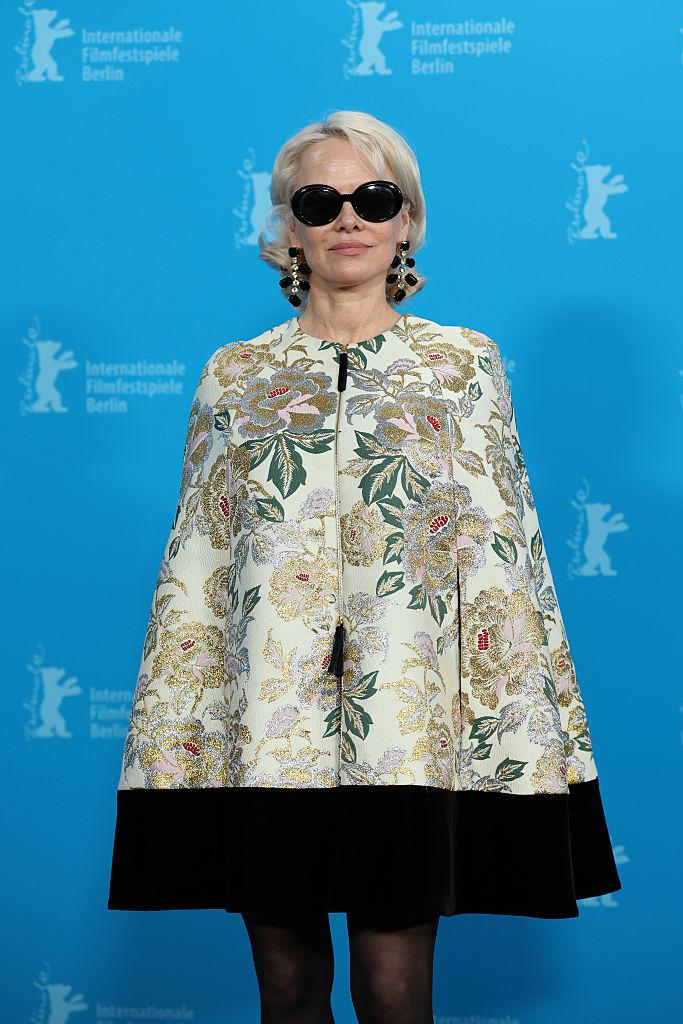
Pamela Anderson Movies and TV Shows: From Baywatch Icon to Serious Screen Comeback
Pamela Anderson’s film and television career is one of the most unexpected reinvention stories in modern entertainment. For years, she was publicly defined by a narrow image: the red swimsuit, the tabloid headlines, the glossy magazine covers, and the global fame of Baywatch. But a closer look at Pamela Anderson movies and TV shows reveals a much broader screen journey—one that moves from sitcoms and action dramas to comedy, reality television, documentaries, Broadway, prestige drama, and a renewed wave of critical attention.
Anderson’s career began in the late 1980s and early 1990s, but her public image has changed dramatically across decades. She first became widely known through Home Improvement and Baywatch, later led the action-comedy series V.I.P., appeared in films such as Barb Wire, Scary Movie 3, Borat, Baywatch, The Last Showgirl, and The Naked Gun, and expanded into unscripted television with shows such as Pam: Girl on the Loose, Pamela’s Garden of Eden, and Pamela’s Cooking with Love.
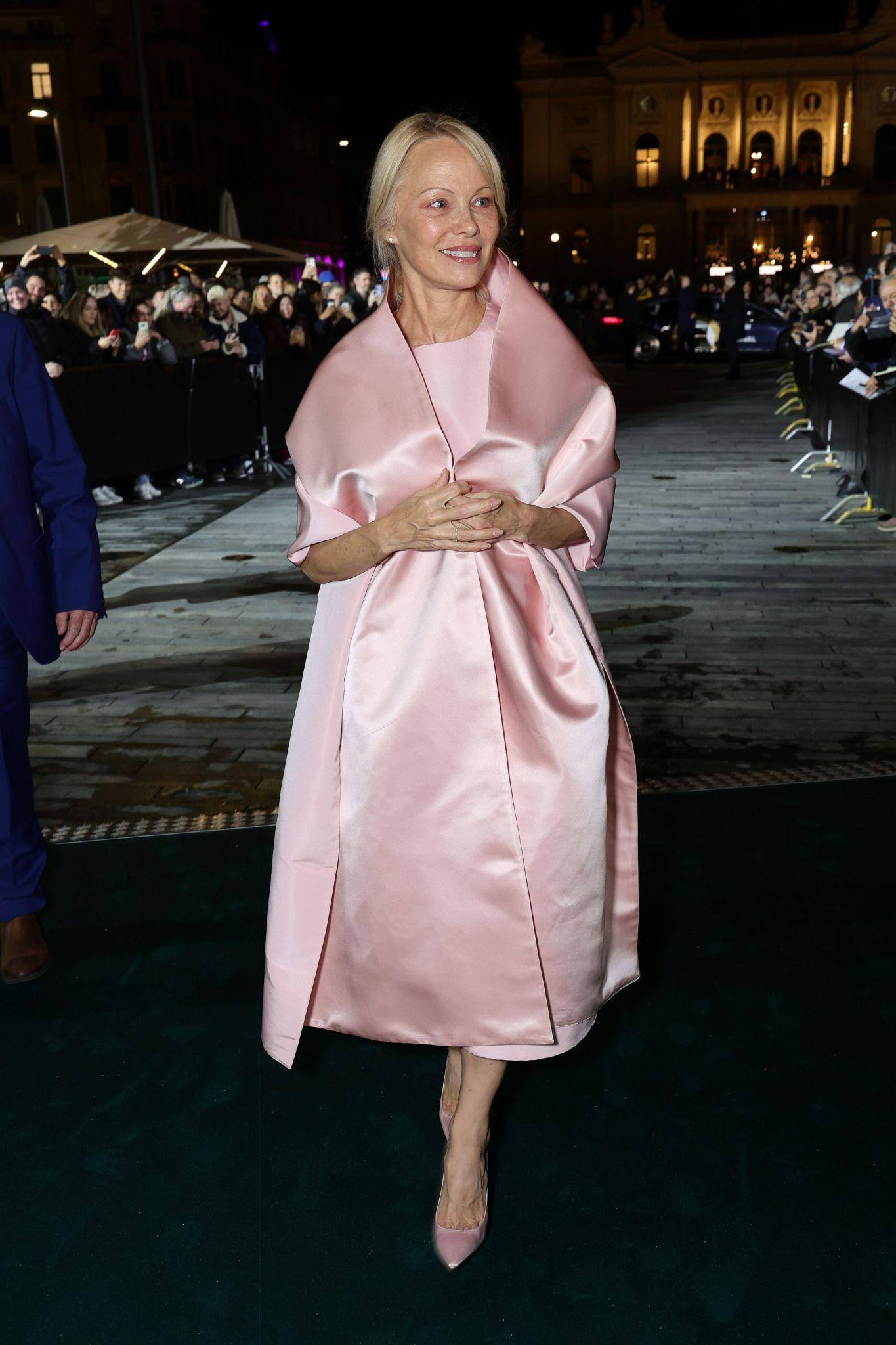
The Early TV Years: From Sitcom Side Role to Global Recognition
Pamela Anderson’s screen breakthrough did not begin with a major film role. It started on television. After rising to public attention through modeling, Anderson appeared as Lisa, the original “Tool Time Girl,” on the ABC sitcom Home Improvement. The role placed her in front of mainstream American television audiences at the start of the 1990s and helped introduce her as a screen personality beyond magazine fame.
That exposure led into the role that would define the first major phase of her career: C.J. Parker on Baywatch. Anderson played the character from 1992 to 1997, becoming one of the show’s most recognizable cast members. The series turned her into an international television figure and made C.J. Parker one of her best-known roles. According to the supplied source material, Anderson was paid US$1,500 per episode during her first season on the series.
Baywatch: The Role That Became a Pop-Culture Symbol
For many viewers, Baywatch remains the first title that comes to mind when they search for Pamela Anderson movies and TV shows. The series was built around lifeguards, rescue drama, beach culture, and high-gloss television spectacle, but Anderson’s role gave it a lasting pop-culture identity.
C.J. Parker became more than a character. She became an image of 1990s television fame—widely referenced, parodied, and remembered decades later. Anderson later reprised the role in Baywatch: Hawaiian Wedding in 2003 and also returned to the franchise with a cameo in the 2017 Baywatch film reboot.
The significance of Baywatch in Anderson’s career is not only that it made her famous. It also created a challenge: the show’s enormous visibility made it difficult for audiences and the industry to see her outside the limits of that image. Much of her later career can be understood as a long effort to move beyond the assumptions attached to that early success.
Film Ambitions: Raw Justice, Barb Wire, and the 1990s Screen Persona
Anderson’s film career expanded in the mid-1990s. In 1994, she appeared in her first starring film role in Raw Justice, also known as Good Cop, Bad Cop, alongside Stacy Keach, David Keith, and Robert Hays. The film gave her a chance to move into a more direct action-oriented screen space.
Her most talked-about early starring film role came in 1996 with Barb Wire, in which she played Barbara Rose Kopetski. The movie was described in the source information as a futuristic remake of Casablanca, but it was not a commercial success. Still, Barb Wire became a key part of Anderson’s filmography because it crystallized her 1990s screen image: stylized, provocative, action-driven, and built around a larger-than-life persona.
The movie did not turn Anderson into a conventional blockbuster star, but it remains one of the central titles in discussions of Pamela Anderson movies because it showed how Hollywood tried to translate her television fame into film spectacle.
V.I.P. and the Turn Toward Self-Aware Action Comedy
In 1998, Anderson took another major television lead role as Vallery Irons in V.I.P., a syndicated action/comedy-drama created by J. F. Lawton. The series ran for four years and became an important part of her late-1990s and early-2000s television career.
V.I.P. worked because it leaned into a self-aware version of Anderson’s public image. Rather than pretending she was not famous for glamour, charisma, and tabloid attention, the show used those qualities as part of its entertainment formula. It blended celebrity, action, comedy, and camp—allowing Anderson to play within the public perception of “Pamela Anderson” while still leading a scripted series.
That balance would become a recurring pattern in her career. Whether in comedy, reality TV, or later dramatic work, Anderson often performed in conversation with the image audiences thought they already knew.
Comedy Appearances: Scary Movie 3, Borat, and Playing Herself
Anderson’s filmography also includes several comedy titles where she either appeared as herself or played into public expectations with a wink. In 2003, she appeared in Scary Movie 3, part of the parody franchise known for exaggerating pop-culture references.
In 2006, she appeared in Borat: Cultural Learnings of America for Make Benefit Glorious Nation of Kazakhstan. In the film, the title character becomes obsessed with her and plans to abduct and marry her. Anderson appears as herself during a book-signing scene near the end of the film, where she is confronted by Borat in a staged botched abduction.
These appearances helped keep Anderson visible in mainstream film comedy. They also showed how her celebrity identity had become part of the material itself. She was not simply acting in these projects; she was also functioning as a cultural reference point.
Mid-2000s Television: Stacked and the Sitcom Return
In 2005, Anderson returned to scripted sitcom television with Stacked, a Fox comedy in which she played Skyler Dayton, a party girl who works at a bookstore. The show ran for two seasons before being cancelled in 2006.
The premise again used contrast as comedy: Anderson’s glamorous public image was placed inside a bookstore workplace setting. While Stacked did not become a long-running sitcom success, it remains notable because it showed the industry still viewed Anderson as a bankable television lead more than a decade after Baywatch began.
Reality TV and International Television: A Global Celebrity Becomes a Format Star
In the 2010s, Anderson’s screen presence shifted strongly toward reality television and international formats. She starred in Pam: Girl on the Loose in 2008, and later appeared across versions of major reality franchises around the world.
She appeared on Bigg Boss, the Indian version of Big Brother, in 2010, staying as a guest in the house for three days for a reported sum of Rs. 2.5 crores, approximately US$550,000. She also took part in the United Kingdom’s Big Brother franchise in 2011 and appeared as a special houseguest on Bulgaria’s VIP Brother.
Dance competition shows also became part of her television résumé. Anderson competed on Dancing with the Stars in the United States in 2010 and returned for the all-star edition in 2012. She also appeared on Bailando 2011 in Argentina, Dancing on Ice in Britain in 2013, and the French version of Dancing with the Stars in 2018.
This period matters because it shows how Anderson’s celebrity traveled internationally. Even when she was not leading scripted American television, she remained a recognizable global television personality.
Documentary, Memoir, and Reclaiming the Narrative
The 2020s marked a major shift in how Anderson’s career was discussed. Her Broadway debut as Roxie Hart in Chicago in 2022 helped reframe her as a performer capable of taking on demanding live work. That same period led into a new wave of personal storytelling.
In 2023, Netflix released Pamela, a Love Story, a documentary directed by Ryan White that traced her life from childhood to her appearance in Chicago. The documentary was produced by her son Brandon Thomas Lee, who received his first Primetime Emmy Award nomination as a producer in the Outstanding Documentary or Nonfiction Special category. The documentary’s release coincided with Anderson’s autobiography, Love, Pamela, which debuted at number two on The New York Times Best Seller list within its first week.
This was not simply another celebrity documentary cycle. It was a turning point in Anderson’s public narrative. After years of being interpreted through tabloids, parody, and unauthorized retellings, Anderson used documentary and memoir to speak for herself.
The Last Showgirl: The Role That Changed the Conversation
The most important recent development in Pamela Anderson’s acting career is The Last Showgirl. Directed by Gia Coppola, the 2024 drama cast Anderson as Shelly, an aging Las Vegas performer facing the end of a long-running show. The role directly engaged with themes that had followed Anderson throughout her career: performance, beauty, aging, spectacle, and being underestimated.
The source material notes that Coppola wanted to cast Anderson after watching Pamela, a Love Story. The script initially did not reach Anderson because her then-agent turned it down within the hour without telling her. Coppola later reached out to Anderson’s son Brandon through mutual friends, and he passed the script to his mother. Although Anderson had given up on acting by that point, she accepted the role.
The film premiered at the Toronto International Film Festival in September 2024. Anderson called it “the role I have been waiting for my entire career”. Critics responded strongly to her performance, and she received a Golden Globe nomination for Best Actress in a Motion Picture – Drama, marking her first Golden Globe nomination and her first major industry acting nomination. She was also nominated for the Screen Actors Guild Award for Outstanding Performance by a Female Actor in a Leading Role.
Anderson later reflected on not receiving an Academy Award nomination by saying: “I always say the win is in the work…I got to do something I really love, and I needed to do that for my soul.”
That quote captures the emotional center of this phase of her career. The Last Showgirl was not just another movie credit. It became evidence that Anderson could be seen differently when given the right material.
The Naked Gun and a Comic Full-Circle Moment
Anderson’s film comeback also includes The Naked Gun, the 2025 legacy sequel starring Liam Neeson as Lt. Frank Drebin Jr. Anderson co-starred as Beth Davenport. The source information notes that in the early 1990s, she had been offered the role of Tanya Peters in Naked Gun 33 1/3: The Final Insult, but turned it down because of scheduling conflicts. More than 30 years later, she joined the franchise through the 2025 sequel.
The role fits naturally into Anderson’s career because comedy has always been part of her screen language. From V.I.P. to Scary Movie 3 to Borat, she has often worked best when projects recognized her timing, self-awareness, and ability to play against public assumptions.
New Projects: Maitreya and the Continuing Pamela Anderson Renaissance
Anderson’s screen resurgence is continuing with Maitreya, a new comedy directed by Jonathan Krisel and scripted by Samuel D. Hunter. Anderson plays the titular Maitreya, described as a luminary in the new-age healing world who learns that her father is dying just as she is preparing for a trip to India. Instead of staying behind, Maitreya continues with the trip and brings her family along, including her mother, Barbara, played by Debbie Harry.
The project brings together two iconic blondes in a mother-daughter pairing and adds another layer to Anderson’s recent screen reinvention. The film is backed by Caviar, the independent production studio behind Sound of Metal and War Pony. Caviar managing director Michael Sagol said, “Having the chance to produce Jon’s first feature film—a soulful exploration of a dysfunctional family, perfectly suited to his absurdist and distinctive comedic voice—makes us giddy with excitement!”
That casting points toward the next stage of Anderson’s career: character-driven roles that use her history without trapping her inside it.
Cooking, Home, and Unscripted Reinvention
Anderson’s recent television work is not limited to acting. She also expanded into lifestyle and plant-based programming. Pamela’s Garden of Eden, which premiered in November 2022, followed her return to her family’s Vancouver Island property and the restoration of her grandmother’s legacy estate. The show returned for a second season in 2023, focusing not only on renovation but also on her sons Brandon and Dylan as they transformed a newly purchased home in Los Angeles.
In 2025, Anderson began hosting Pamela’s Cooking with Love, a plant-based cooking show on Canada’s Flavour Network. This followed the release of her 2024 plant-based cookbook I Love You: Recipes from the Heart, which was nominated for a 2025 James Beard Award in recognition of photographer Ditte Isager’s work in the “Media: Visuals” category.
These shows help explain why Anderson’s current career feels different. She is not only returning to acting; she is presenting a fuller version of her life, values, home, family, and creative interests.
Why Pamela Anderson’s Screen Career Matters Now
The story of Pamela Anderson movies and TV shows is not just a list of credits. It is a case study in how celebrity images are built, simplified, exploited, rejected, and eventually reinterpreted.
In the 1990s, Anderson became a global symbol through television. In the 2000s and 2010s, she moved through comedy, reality formats, and international television. In the 2020s, she began reclaiming her narrative through documentary, memoir, stage performance, prestige film, and personal lifestyle programming.
What makes her current screen comeback compelling is that it does not erase the past. Instead, it reframes it. Baywatch, V.I.P., Barb Wire, Borat, The Last Showgirl, The Naked Gun, and Maitreya all belong to the same career, but they reveal very different versions of Anderson: television star, action figure, comic presence, reality personality, documentary subject, dramatic actor, and cultural survivor.
Conclusion: A Filmography Built on Reinvention
Pamela Anderson’s movies and TV shows trace a career far more complex than the image that once defined her. She became famous through Baywatch, stayed visible through comedy and reality television, and has re-emerged in the 2020s as an actor receiving serious critical attention.
Her recent work suggests that the most interesting phase of her screen career may still be unfolding. The Last Showgirl gave her the kind of dramatic showcase she had long been denied. The Naked Gun returned her to broad comedy with a major franchise. Maitreya points toward more character-focused work. Together, these projects show an entertainer still reshaping her place in film and television after more than three decades in the public eye.


