


Amazon Probably Isn’t Working on a Phone After All
For years, the smartphone industry has been defined by a small group of dominant players. Apple, Samsung, Google, and a handful of Chinese manufacturers have spent the last decade battling for attention in a market that is increasingly difficult to disrupt. Every so often, rumors emerge suggesting another tech giant is preparing to challenge that order.
This year, Amazon briefly found itself back in the spotlight after reports surfaced in March claiming the company was developing a new AI-powered smartphone. The speculation reignited memories of Amazon’s ambitious — and ultimately disastrous — attempt to enter the phone business more than a decade ago.
Now, however, Amazon appears to be stepping back from those expectations.
According to Panos Panay, Amazon’s head of consumer electronics, the company is not actively pursuing a smartphone project “right now,” despite refusing to completely shut the door on the idea in the future.
The Return of an Old Rumor
The renewed interest in Amazon’s smartphone ambitions began after reports suggested the company was exploring an AI-focused device. In an era where nearly every major technology company is racing to integrate generative AI into consumer hardware, the rumor did not seem entirely unrealistic.
Amazon already has an extensive ecosystem that includes:
- Alexa-powered smart speakers
- Fire tablets
- Ring security devices
- Kindle e-readers
- Smart TVs and streaming products
Adding an AI-centric smartphone could have appeared to be the next logical step.
But Panos Panay’s recent comments suggest the company is far less committed to the idea than many expected.
Speaking about the rumors, Panay explained that Amazon does not currently see “a clear path that makes sense” for entering the smartphone market.
That statement alone significantly cooled speculation surrounding a potential Amazon handset.
A Painful Lesson From the Fire Phone
Amazon’s hesitation is understandable given the company’s history in the smartphone industry.
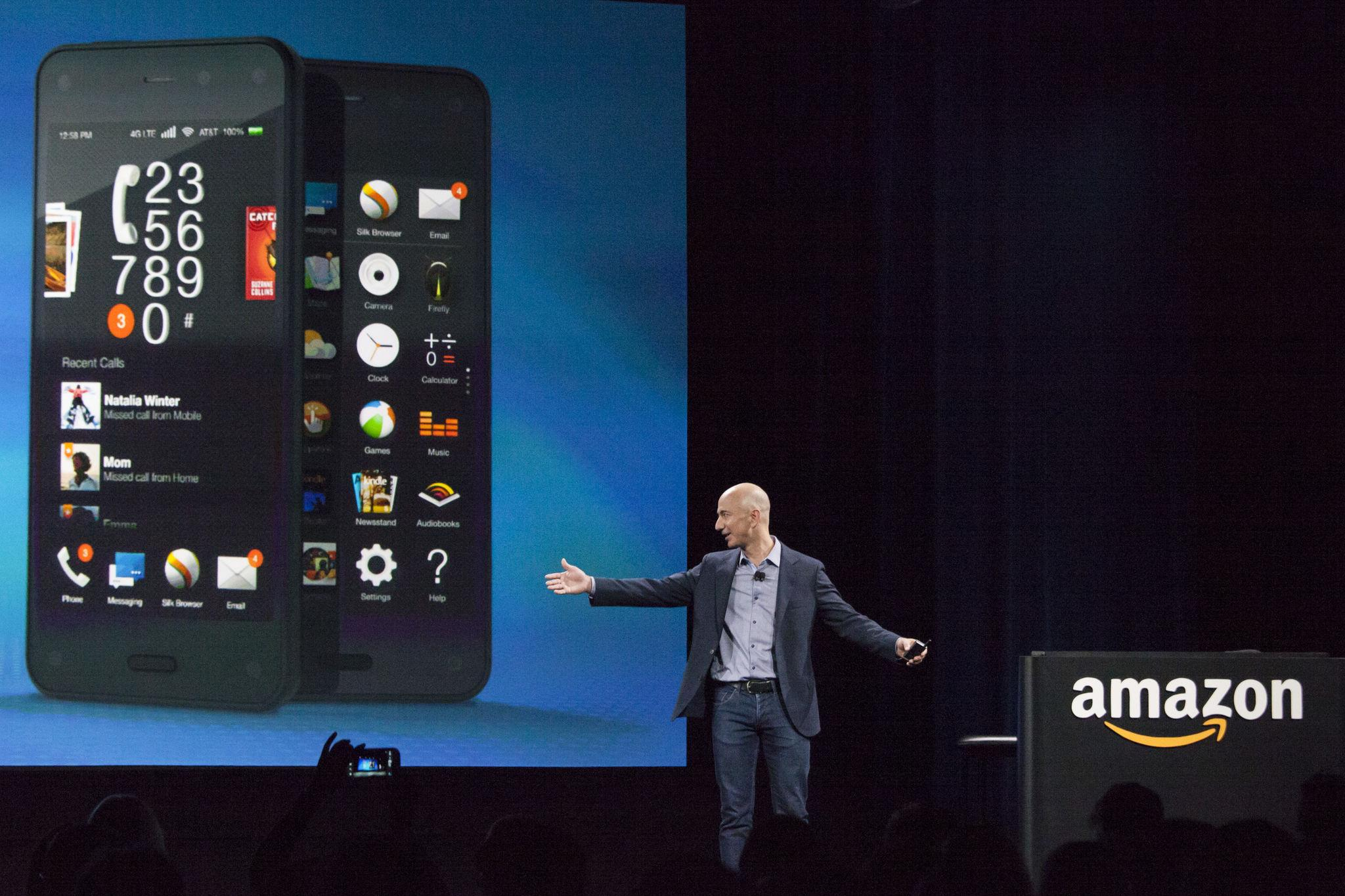
The Amazon Fire Phone launched in 2014 and quickly became one of the company’s most notable commercial failures. The device attempted to differentiate itself with features such as:
- A dynamic 3D interface
- Deep Amazon ecosystem integration
- Specialized shopping capabilities
- Fire OS, Amazon’s Android-based operating system
However, consumers never fully embraced the product.
Critics pointed to several problems:
- A lack of mainstream app support
- Limited appeal outside Amazon’s ecosystem
- Premium pricing
- Weak differentiation from established Android competitors
The result was disastrous. Amazon reportedly lost hundreds of millions of dollars on the project, and the company rapidly retreated from the smartphone business afterward.
Since then, Amazon has largely focused on areas where it has found greater success — smart home products, cloud computing, entertainment services, and voice assistants.
Panos Panay’s Carefully Worded Response
What makes the latest development interesting is not simply that Amazon may not be building a phone. It is how carefully Panay discussed the issue.
Rather than offering a direct denial, he delivered a lengthy and nuanced explanation that left room for interpretation.
Among his key remarks:
“The phone’s not going anywhere.”
He also emphasized that smartphones are likely to undergo major transformation over the next decade.
At the same time, he repeatedly stressed that Amazon is not actively “going after a phone” because there is currently “no clear path that makes sense.”
Perhaps the most revealing part of his statement came when he acknowledged Amazon’s willingness to make “a big bet” when necessary.
That comment suggests the company is not philosophically opposed to returning to smartphones someday. Instead, Amazon appears to be waiting for a moment when it believes it can offer something meaningfully different.
Why the Smartphone Market Is So Difficult
Amazon’s reluctance also reflects broader realities in the mobile industry.
The smartphone market has matured dramatically since the early 2010s. Today’s devices are highly refined, and consumer expectations are extremely high. Entering the market requires:
- Massive research and development investment
- Long-term software support
- Carrier partnerships
- Developer ecosystems
- Advanced semiconductor integration
- Global supply chain coordination
Even established technology brands have struggled.
Microsoft’s Windows Phone platform failed to compete against Android and iOS. LG exited the smartphone business entirely. Smaller brands have increasingly found themselves squeezed by intense competition and shrinking profit margins.
For Amazon, simply launching “another phone” would not be enough.
Panay essentially acknowledged this reality when he said:
“What I won’t ever do again is say here’s another phone. What do you think? There’s no point. We know what customers need right now.”
That statement indicates Amazon understands that success would require a genuinely transformative product — not merely another Android alternative.
The AI Factor
One reason the rumors gained traction in the first place is the growing intersection between AI and consumer hardware.
Companies across the tech industry are now attempting to redefine personal devices around artificial intelligence:
- Google is embedding Gemini across Android
- Apple is heavily investing in on-device AI experiences
- OpenAI has reportedly explored hardware partnerships
- Humane and Rabbit launched AI-focused wearable devices
In this environment, some analysts speculated Amazon might attempt a second smartphone push centered around Alexa and generative AI capabilities.
Yet Panay’s comments suggest Amazon may instead be focusing on other hardware categories where AI can play a role without directly competing in the crowded smartphone space.
He specifically mentioned that “so many new form factors” deserve attention right now.
That could hint at interest in:
- AI assistants
- Smart home interfaces
- Ambient computing devices
- Wearables
- New display technologies
Rather than trying to defeat Apple or Samsung head-on, Amazon may prefer to build complementary devices that strengthen its existing ecosystem.
Could Amazon Ever Return?
Despite the apparent rejection of current smartphone plans, Panay notably avoided giving a permanent “no.”
That ambiguity matters.
Amazon remains one of the world’s largest technology companies with enormous resources, global infrastructure, and expertise in consumer electronics. If the industry undergoes a major transition — perhaps driven by AI, augmented reality, or entirely new interaction models — Amazon could decide the timing is finally right.
The company’s culture has long been built around experimentation and high-risk bets. While the Fire Phone failed, Amazon has also transformed industries through products and services that initially seemed uncertain.
For now, however, the message appears relatively clear:
Amazon does not believe the current smartphone landscape offers enough opportunity to justify another attempt.
What This Means for Consumers
For consumers hoping Amazon would launch a low-cost AI-powered alternative to mainstream smartphones, Panay’s comments are likely disappointing.
Still, the broader takeaway is significant.
The smartphone market has become so competitive and mature that even companies with Amazon’s scale are cautious about entering it. Innovation is increasingly happening around the phone rather than through entirely new phone brands.
Instead of replacing smartphones, many technology firms are now trying to reinvent how people interact with them through AI-powered assistants, cloud services, and connected ecosystems.
Amazon appears to be betting that the future lies there — at least for now.


