Nottingham Forest 1–0 Porto: A Night That Carried Decades of Weight
A Historic Breakthrough at the City Ground
On a tense European night, Nottingham Forest delivered one of their most significant results in modern history, defeating FC Porto 1–0 to secure a 2–1 aggregate victory and book a place in the UEFA Europa League semi-finals.
- A Historic Breakthrough at the City Ground
- The Decisive Moment Came Early
- Tactical Control and Measured Execution
- Porto’s Resistance Keeps the Tie Alive
- Key Performers Who Defined the Night
- A Match That Tested Depth and Resilience
- From Struggle to European Momentum
- What Comes Next: A High-Stakes Semi-Final
- Final Assessment
The result at the City Ground marked Forest’s first appearance in a European semi-final in over four decades—a milestone that reconnects the club with its storied continental past. What unfolded was not simply a narrow win, but a performance defined by discipline, timing, and composure under pressure.
The Decisive Moment Came Early
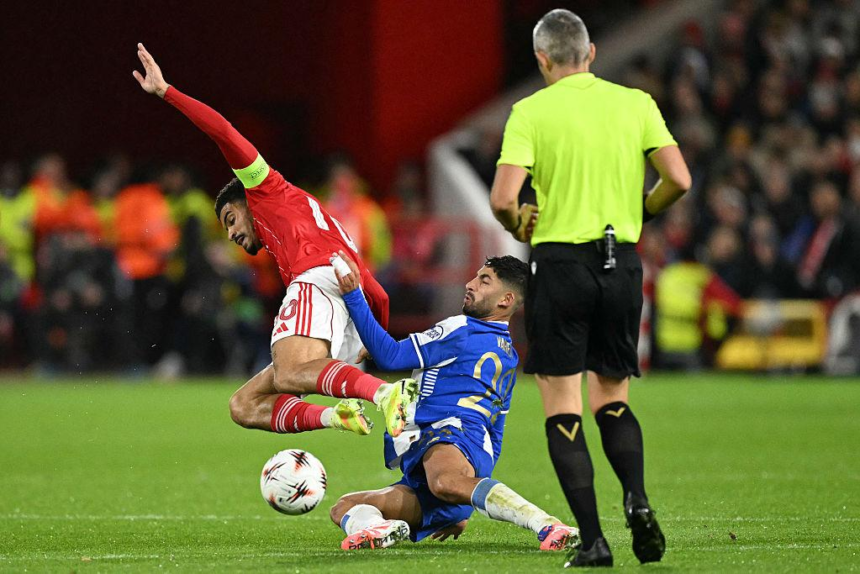
The match’s trajectory shifted almost immediately. Just eight minutes into the contest, Porto were reduced to ten men after Jan Bednarek was sent off following a high challenge. That moment fundamentally altered the balance of the tie, forcing the visitors into a defensive posture while giving Forest a numerical advantage.


Forest capitalized quickly.
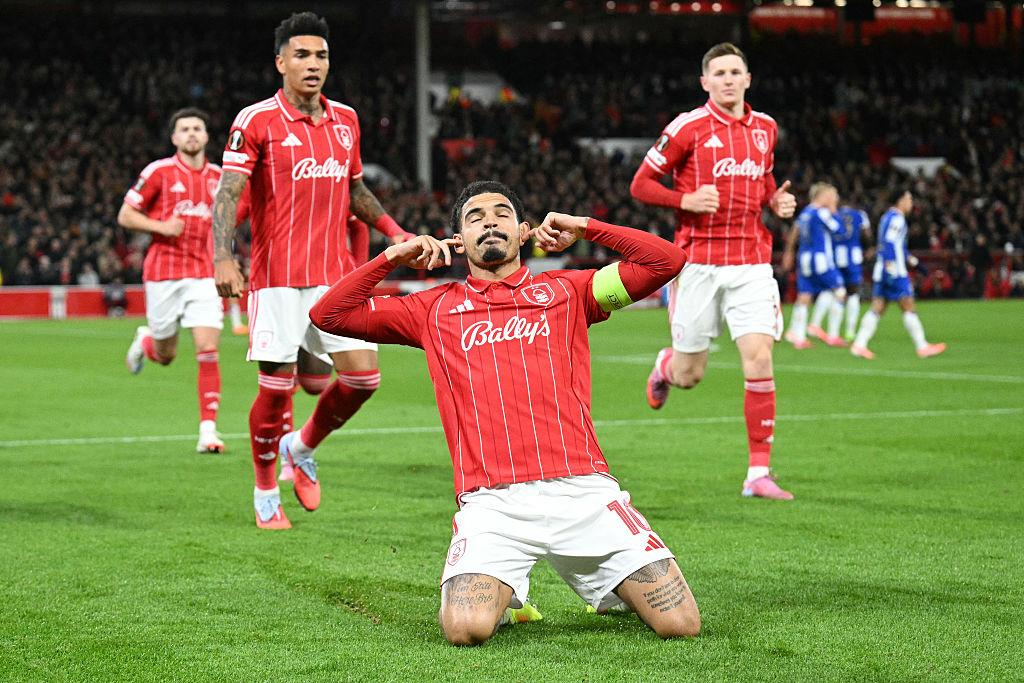
In the 12th minute, Morgan Gibbs-White scored what would prove to be the decisive goal. The finish, assisted by Neco Williams, came via a slight deflection but carried enough precision to beat Porto goalkeeper Diogo Costa.


That single goal was enough to swing the aggregate score in Forest’s favor—and ultimately, to send them into the final four.
Tactical Control and Measured Execution
With the advantage established early, Forest shifted into a controlled tactical approach. Operating in a structured setup, they dictated tempo and maintained possession, recording:
- 61% possession
- 20 total shots
- 5 shots on target
- 8 corners
Midfield control, anchored by Ibrahim Sangaré and Nicolás Domínguez, allowed Gibbs-White to operate between lines and orchestrate attacks.
Despite these advantages, Forest were unable to extend their lead, leaving the tie delicately balanced heading into the latter stages.


Porto’s Resistance Keeps the Tie Alive
To their credit, Porto did not collapse after going down to ten men. Instead, they regrouped and produced a far more aggressive second-half display.
Their response nearly changed the outcome:
- William Gomes struck the crossbar from close range
- A long-range effort from Alan Varela also hit the bar
These moments highlighted just how narrow the margin remained. A single successful attempt could have overturned the entire tie.
Forest, however, adapted by prioritizing defensive organization and slowing the game’s rhythm—classic knockout management under pressure.
Key Performers Who Defined the Night
Morgan Gibbs-White — The Match Winner
Beyond his goal, Gibbs-White’s influence extended across the attacking third. His movement, decision-making, and composure under pressure made him the central figure in Forest’s progression.
Neco Williams — Creativity from the Flank
Williams’ assist and attacking presence down the wing provided a consistent outlet, stretching Porto’s defensive shape and creating space centrally.
Ibrahim Sangaré — Midfield Stability
Sangaré’s ability to control tempo and maintain structure was critical, particularly as Porto increased pressure late in the game.
Diogo Costa — Keeping Porto Alive
Despite conceding, Costa produced multiple saves that prevented the tie from slipping further away from the Portuguese side.
A Match That Tested Depth and Resilience
Forest’s victory came with complications. Several injury concerns emerged:
- Chris Wood forced off early
- Callum Hudson-Odoi and Murillo also suffered knocks
These disruptions introduced uncertainty, particularly as the club balances its European ambitions with domestic pressures.
From Struggle to European Momentum
The significance of this result is amplified by context.
Domestically, Nottingham Forest have faced inconsistency and pressure in the Premier League. Yet in Europe, they have demonstrated a different identity—disciplined, resilient, and capable of competing against established continental sides.
Their Europa League run now includes:
- Eliminating a major European opponent
- Reaching a semi-final for the first time in 42 years
- Maintaining strong form in knockout matches
This contrast underscores the unpredictable nature of football, where form in one competition does not always dictate performance in another.
What Comes Next: A High-Stakes Semi-Final
Forest’s reward is an all-English semi-final clash against Aston Villa.
- First leg: April 30
- Second leg: May 7
This matchup represents a major opportunity. With momentum building and confidence growing, Forest now find themselves just two matches away from a European final—an outcome few anticipated at the start of the season.
Final Assessment
The Nottingham Forest vs Porto Europa League result will be remembered for its simplicity on paper and complexity on the pitch.
Forest did not dominate in a conventional sense. Instead, they:
- Exploited a key moment
- Managed the game intelligently
- Withstood sustained late pressure
In knockout football, those qualities often outweigh spectacle.
This victory is more than progression—it is a statement of intent and a reminder of Nottingham Forest’s enduring European pedigree.