Mackenzie Shirilla Now: Inside the Case, the Netflix Documentary, and the Debate That Has Not Gone Away
Mackenzie Shirilla is now serving a prison sentence at the Ohio Reformatory for Women after being convicted over a deadly 2022 crash in Strongsville, Ohio, that killed Dominic Russo and Davion Flanagan. The case has returned to public attention through Netflix’s The Crash, a true-crime documentary that revisits the collision, the murder trial, and Shirilla’s first prison-recorded interview.
- Where Is Mackenzie Shirilla Now?
- The Crash That Changed Three Families Forever
- The Court’s View: Accident or Murder?
- Why Her Family Still Says She Is Innocent
- What Netflix’s The Crash Adds to the Story
- The Victims at the Center of the Case
- Why the Case Still Divides the Public
- What Happens Next?
- Conclusion: Why “Mackenzie Shirilla Now” Still Matters
The question “Mackenzie Shirilla now” has become more than a search for her current location. It reflects a wider public debate over intent, evidence, grief, youth, toxic relationships, and how true-crime storytelling can reopen wounds long after a verdict has been delivered.
Where Is Mackenzie Shirilla Now?
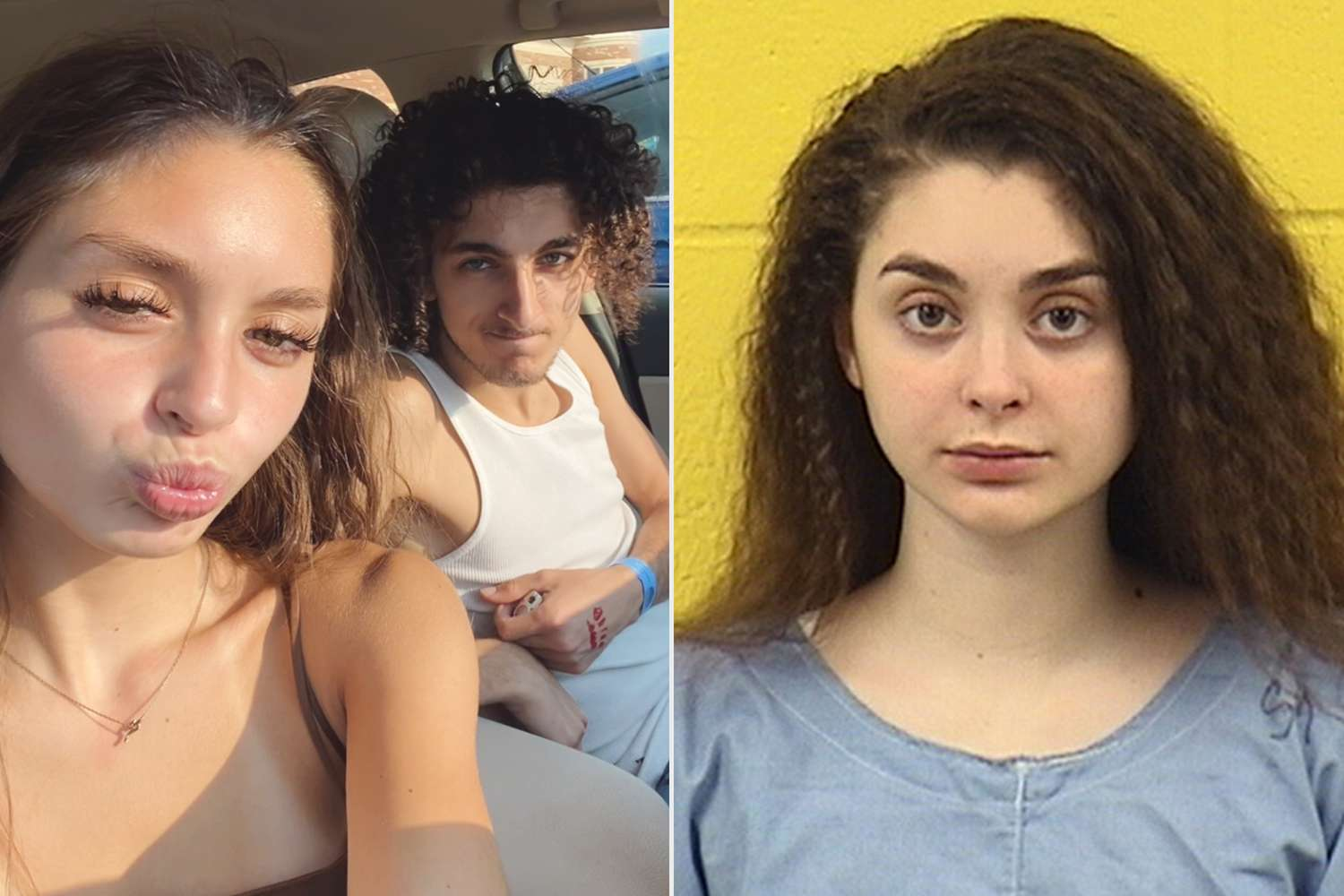
Mackenzie Shirilla, now 21, is incarcerated at the Ohio Reformatory for Women. She was sentenced to 15 years to life after a bench trial found her guilty on multiple charges, including murder and aggravated vehicular homicide. Her parole eligibility has been reported as set for 2037, meaning she faces more than a decade in prison before her first opportunity for release.


Inside prison, reports included in the documentary coverage say Shirilla spends time journaling and painting while continuing to pursue legal options. A 2026 petition for a new trial was denied, largely on procedural grounds, adding another setback to her post-conviction efforts.
Her first prison interview in The Crash has become one of the documentary’s most discussed elements. In it, Shirilla says, “I’ve never spoke before and I’ve never told my side of the story. I understand there’s many different sides to the story and different perspectives, but I just wanna say my truth. I just know myself, and I know I’m not a monster.”


She also says, “I just want to make sure I’m big on the no intent,” adding, “There was no intent whatsoever. I have excessive amounts of remorse for Dominic, Davion, both of their families. This was not intentional and I will do everything I can to prove that to the world and the families.”
The Crash That Changed Three Families Forever
The case began in the early morning hours of July 31, 2022. Shirilla, then 17, was driving a 2018 Toyota Camry in Strongsville, Ohio, with her boyfriend Dominic Russo, 20, and Davion Flanagan, 19, as passengers. The group had reportedly left a gathering before the car struck a brick building at around 100 mph. Russo and Flanagan were pronounced dead at the scene, while Shirilla survived with serious injuries.
Investigators later focused heavily on the vehicle’s event data recorder, often described as the car’s “black box.” According to the provided reporting, the accelerator was fully pressed and there was no braking in the seconds before impact. A forensic review also found no mechanical or electrical defect that would explain a loss of control.
What initially appeared to be a catastrophic crash soon became a criminal case. Prosecutors argued that Shirilla intentionally drove into the building after a troubled relationship with Russo had deteriorated. The prosecution described the act not as reckless driving, but as a deliberate killing.


The Court’s View: Accident or Murder?
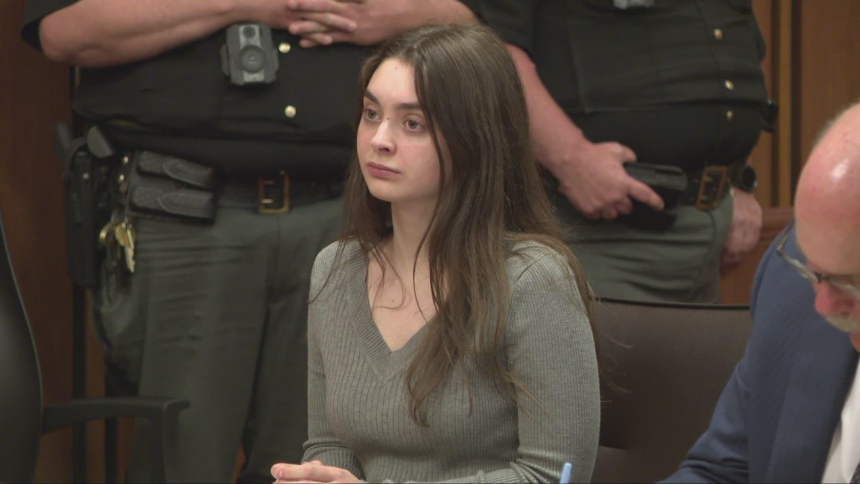
In August 2023, Cuyahoga County Common Pleas Judge Nancy Margaret Russo found Shirilla guilty on all 12 charges against her, including murder, aggravated vehicular homicide, felonious assault, drug possession, and possessing criminal tools. Shirilla had chosen a bench trial rather than a jury trial.
The judge’s words became central to how the case is remembered. “She had a mission and she executed it with precision,” the judge said before handing down the verdict. “The decision was death.”
Another line from the verdict has also followed the case: “This was not reckless driving. This was murder.”
At sentencing, Shirilla addressed the victims’ families directly: “To the families of Dom and Davion, I am so deeply sorry. I hope one day you can see how I’d never let this happen or do it on purpose. I wish I could remember what happened. I’m just so sorry. I’m heartbroken.”
Why Her Family Still Says She Is Innocent
Shirilla’s family has continued to dispute the court’s conclusion. Her father, Steve Shirilla, told NBC News, “we believe she’s been falsely accused of something.” He added, “We believe there’s no evidence,” and argued, “There’s no evidence that you can show me that says prior calculation, intent, there’s nothing. I don’t know how it left the juvenile court. There’s zero evidence. All the prosecution has that’s factual is five seconds of black box information.”
Her mother, Natalie Shirilla, also defended her daughter, saying: “Look at the evidence critically and objectively, and you will see there is no evidence of intent. She never threatened his life, his physical life.” She added, “I will never, ever, never stop. There is no expiration on truth. Mackenzie would never hurt them or anybody she loves. She stands up for people that are in trouble or struggling. That’s who she is.”
The family’s argument has focused partly on the idea that Shirilla may have suffered a medical episode before impact. Her defense raised postural orthostatic tachycardia syndrome, or POTS, a blood pressure disorder that can cause symptoms such as dizziness and faintness. The prosecution, however, maintained that the crash evidence supported intent rather than a sudden medical emergency.
What Netflix’s The Crash Adds to the Story
Netflix’s The Crash, which began streaming on May 15, revisits the case through body-cam footage, surveillance video, social media clips, interviews, and Shirilla’s own prison-recorded remarks. Director Gareth Johnson said he was drawn to the story after his own crash experience, calling it “sort of the worst thing that could happen to you as a parent.”
Johnson also said he “wanted to flip my experience on its head and understand the tragic event from the perspective of the family and friends around it.” That framing explains why the documentary does not simply replay the trial. It examines how a single event can leave different groups clinging to sharply different truths: the prosecution’s theory of murder, the defense’s argument of no intent, the families’ grief, and the public’s fascination with unresolved emotional questions.
For viewers, the documentary’s most powerful element may be its refusal to provide emotional closure. The court case produced a verdict, but the documentary presents a story still actively contested by Shirilla, her parents, and online audiences.
The Victims at the Center of the Case
Amid the renewed attention around Shirilla, the deaths of Dominic Russo and Davion Flanagan remain the heart of the case. Both young men were killed at the scene. Their families have had to live not only with the loss, but also with the continuing public debate over what happened in the car.
The pain of that loss was captured in comments from Russo’s sister, who told PEOPLE in August 2023: “My brother’s life and Davion’s life was completely stolen. They don’t get out in 15 years. They don’t come back in 15 years. They don’t get any chance to live a life.”
That statement underscores why the case remains so emotionally charged. For Shirilla’s supporters, the question is whether she was wrongly labeled a murderer. For the victims’ families, the sentence cannot restore two lives cut short.
Why the Case Still Divides the Public
The renewed attention around Mackenzie Shirilla now reflects a broader true-crime pattern: documentaries often revive cases by placing the audience in the uncomfortable space between legal certainty and emotional uncertainty.
In court, the ruling was clear. Shirilla was convicted and sentenced. But in public discussion, the debate has continued because the case involves questions that are difficult for audiences to separate: Was a teenager capable of deliberately causing such a crash? Did the evidence prove intent beyond a reasonable doubt? Was the relationship history properly understood? Did the defense fully present medical arguments? And how much weight should viewers give to a prison interview recorded years after the event?
The case also raises questions about how social media affects public perception. The Crash uses social media material to show how Shirilla presented herself before and after the crash. That has fueled debate over whether online behavior can reveal motive, hide pain, or mislead viewers entirely.
What Happens Next?
For now, Shirilla remains in prison, and her legal path has narrowed. Appeals and requests for a new trial have been denied, including a 2026 petition rejected largely on procedural grounds. Unless a future legal effort succeeds, her next major milestone is parole eligibility, reported for 2037.
The Netflix documentary may keep public interest alive, but it does not change the legal status of the case. Shirilla is still convicted. Russo and Flanagan are still gone. Their families are still living with the consequences. And the public remains split between those who view the crash as a calculated act and those who believe unanswered questions remain.
Conclusion: Why “Mackenzie Shirilla Now” Still Matters
“Mackenzie Shirilla now” is not just a question about where she is serving time. It is a question about how society processes tragedy when the facts are filtered through grief, courtroom evidence, family loyalty, documentary storytelling, and online debate.
Today, Shirilla is a convicted prisoner at the Ohio Reformatory for Women. Dominic Russo and Davion Flanagan are remembered as two young men whose lives ended in a devastating crash. Their families continue to carry the deepest loss. Netflix’s The Crash has brought the story back into public view, but it has not resolved the central tension.
The court answered the legal question. The documentary reopened the human one.