

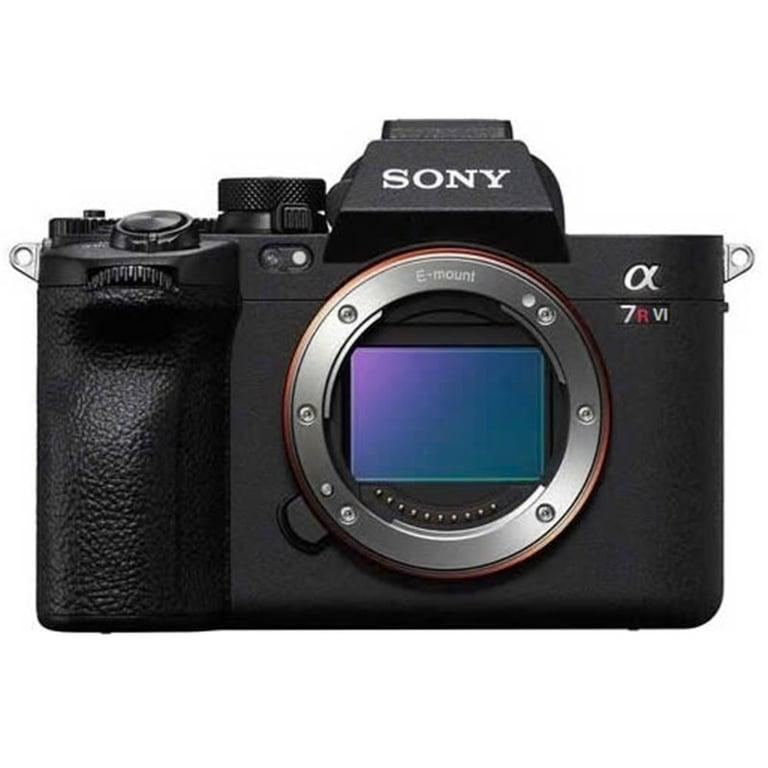
Sony A7R VI Specs: Sony’s High-Resolution Camera Enters a Faster Era
Sony’s A7R series has always carried a clear identity: maximum detail, high-end image quality, and professional-grade still photography. With the Sony A7R VI, that identity remains intact, but the camera is no longer just a slow, deliberate tool for landscapes, studios, portraits, and commercial work. It is now a much faster, more versatile hybrid camera built around a new 66.8-megapixel full-frame stacked sensor, improved AI-driven autofocus, stronger video capabilities, and a higher launch price.
The A7R VI marks a major shift in Sony’s high-resolution lineup. It adds only a modest resolution increase over the A7R V, but the bigger story is speed. The move to a fully stacked sensor and BIONZ XR2 processing gives the camera 30fps electronic-shutter shooting, improved readout, 8K video, stronger stabilization, and a feature set that pushes the A7R line closer to all-round flagship territory.
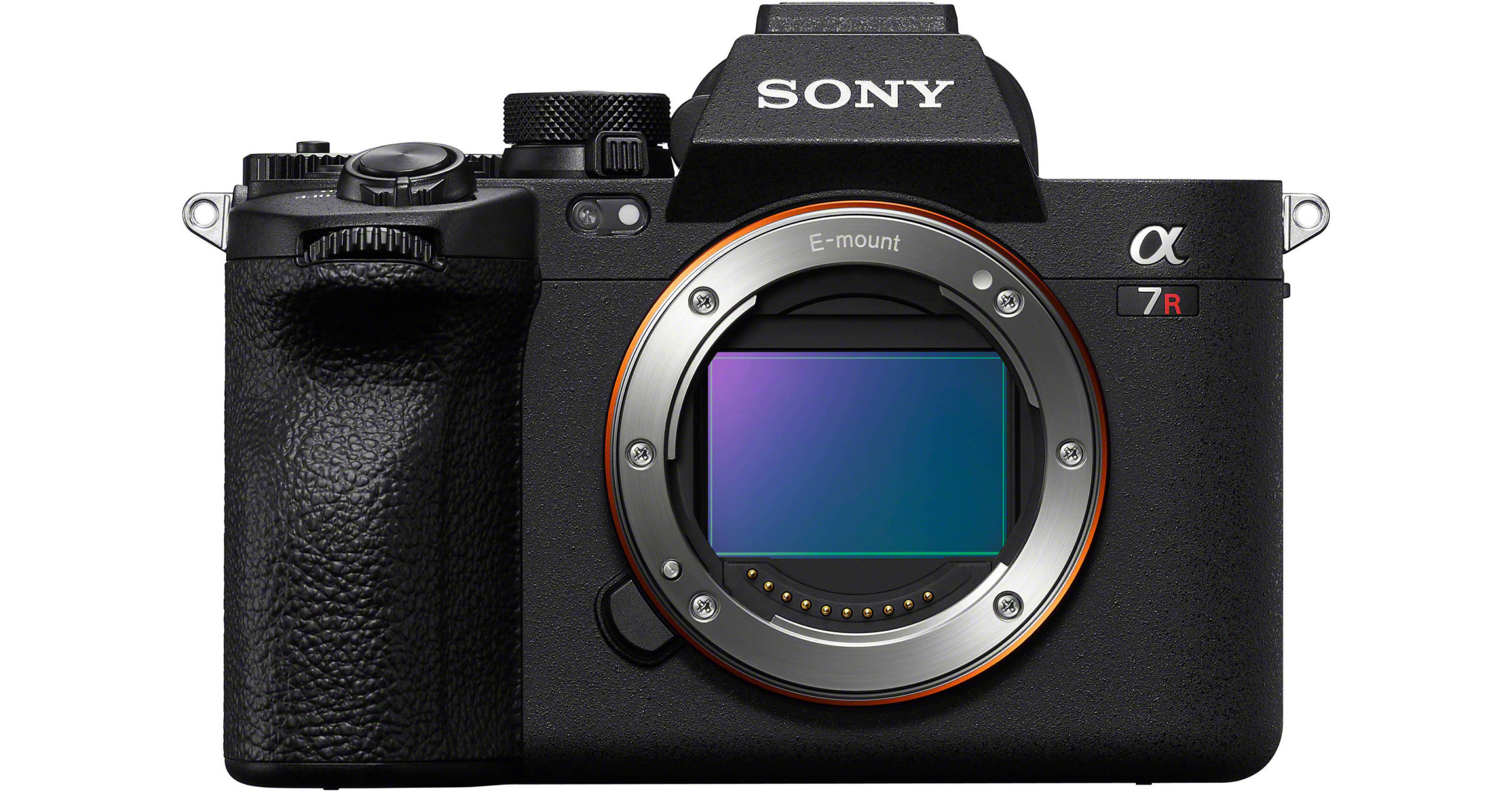
A High-Resolution Camera That No Longer Feels Slow
For years, the trade-off in high-resolution cameras was simple: photographers gained detail but sacrificed speed. The Sony A7R VI challenges that compromise.
At the heart of the camera is a 66.8MP full-frame stacked CMOS sensor. That figure is only around six megapixels higher than the A7R V, but the stacked design is far more important than the number itself. The new architecture allows faster readout, better electronic-shutter performance, higher burst rates, reduced rolling shutter compared with the previous generation, and improved video capture.
Sony says the camera can deliver up to 16 stops of dynamic range, positioning it as a serious tool for photographers who need flexible files for demanding lighting conditions. The camera also supports 30fps blackout-free continuous shooting with autofocus and auto exposure, a dramatic jump from the slower character traditionally associated with the A7R line.
Key Sony A7R VI Specs
The Sony A7R VI is built as a professional full-frame mirrorless camera, and its specification sheet reflects that ambition:
| Feature | Sony A7R VI Specification |
|---|---|
| Sensor | 66.8MP full-frame stacked CMOS |
| Processor | BIONZ XR2 with AI processing |
| Lens mount | Sony E-mount |
| Dynamic range | Up to 16 stops |
| Continuous shooting | Up to 30fps electronic shutter, 10fps mechanical shutter |
| Autofocus | Real-time Recognition AF+ with AI subject tracking |
| AF points | 759 phase-detection AF points |
| Stabilization | Up to 8.5 stops center, 7.0 stops periphery |
| Video | 8K up to 30p, 4K up to 120p |
| Viewfinder | 9.44-million-dot OLED EVF |
| Rear screen | 3.2-inch, 2.1-million-dot four-axis touchscreen LCD |
| Storage | Dual CFexpress Type A / SD UHS-II card slots |
| Battery | New NP-SA100 battery |
| Connectivity | Wi-Fi 6E, dual USB-C, HDMI, mic and headphone ports |
| Launch price | Around $4,499 / $4,498 |
The New 66.8MP Stacked Sensor Is the Main Event
The A7R VI’s sensor is its defining upgrade. While the A7R V already delivered enormous resolution, the A7R VI adds a fully stacked design that makes the camera much faster and more flexible.
This matters because high-resolution cameras process huge amounts of data. A 66.8MP file contains enough detail for aggressive cropping, large prints, commercial work, wildlife images, architecture, and studio production. But without fast readout and processing, that resolution can limit burst shooting and video performance.
The stacked sensor helps solve that problem. It allows 30fps shooting with the electronic shutter and supports blackout-free viewing, which is especially useful for wildlife, events, and action where tracking a moving subject is essential. It also gives the A7R VI a stronger case as a one-body solution for photographers who previously had to choose between a high-resolution camera and a faster action-focused model.
Autofocus Gets Smarter With Real-time Recognition AF+
Sony’s autofocus system was already one of the strongest parts of the A7R V, but the A7R VI pushes it further with Real-time Recognition AF+. The system uses AI-based subject recognition to improve tracking, human pose estimation, and focus reliability with smaller or more distant subjects.
That matters for practical shooting. A wildlife photographer tracking birds, a wedding photographer working in changing light, or a portrait photographer shooting moving subjects can benefit from a camera that recognizes and holds focus more intelligently.
The camera also makes around 60 autofocus and auto-exposure calculations per second, helping it keep pace with its 30fps shooting speed. Dedicated subject-recognition modes remain available, while auto subject recognition allows the camera to identify subjects without constant manual switching.
30fps Shooting Turns the A7R VI Into a Serious Action Tool
The headline performance upgrade is 30fps continuous shooting with the electronic shutter. For a 66.8MP camera, that is a major achievement.
The A7R VI can shoot full-resolution 14-bit RAW files at up to 30fps electronically, while the mechanical shutter remains at 10fps. This makes the camera suitable for wildlife, fast-moving portraits, events, and moments where resolution and timing both matter.
Sony also adds pre-capture support, allowing the camera to buffer images before the shutter is fully pressed. That can be valuable when photographing unpredictable action, such as birds taking flight or athletes moving suddenly. The feature can save up to one second of images before the decisive press, depending on settings.
The camera is still not a pure sports flagship in the same category as Sony’s fastest models, but it clearly moves the A7R series into territory that was previously difficult for high-resolution bodies.
Video: 8K, 4K120, and Dual Gain Shooting
The Sony A7R VI is still primarily a high-resolution stills camera, but its video capabilities are much stronger than before.
The camera supports 8K recording up to 30p and 4K recording up to 120p. Some sources describe 8K capture as using a 1.2x crop, while 4K modes offer much more practical flexibility, including high-frame-rate shooting. The camera also supports professional color workflows with features such as S-Log2, S-Log3, S-Cinetone, LUT import, and external RAW output over HDMI in some reporting.
One of the more technical additions is Dual Gain shooting for video. This mode reads the sensor in a way designed to reduce noise and preserve shadow detail, making it useful for controlled high-dynamic-range scenes. However, it comes with trade-offs, including limitations at higher frame rates and less suitability for fast movement.
The A7R VI therefore becomes a more credible hybrid camera than the A7R V, especially for creators who shoot both high-resolution stills and serious video. Still, it is not presented as a perfect cinema-first body. Review information points to limitations such as no open gate video and compromises in certain stabilization or video modes.
Better Stabilization, Brighter EVF, and More Practical Handling
Sony has also improved the physical shooting experience. The A7R VI includes in-body image stabilization rated up to 8.5 stops at the center and 7.0 stops toward the edges. That gives photographers more flexibility in low light, handheld shooting, and situations where carrying a tripod is impractical.
The electronic viewfinder is another major upgrade. The 9.44-million-dot OLED EVF is described as brighter than the A7R V’s and capable of a strong viewing experience for stills and HDR previewing. For photographers who spend long hours tracking subjects through the viewfinder, that improvement matters.
The body remains familiar, but Sony has made ergonomic tweaks. The grip is slightly chunkier, the rear buttons can illuminate for low-light shooting, and the rear LCD uses a flexible four-axis design. These are not headline-grabbing features, but they make the camera easier to use in real-world work, especially for event, wedding, night, and landscape photographers.
A New Battery Brings Power — and an Upgrade Cost
One of the most controversial practical changes is the move to a new battery. Sony’s Alpha cameras have used the NP-FZ100 battery for years, but the A7R VI introduces the NP-SA100.
The new battery offers higher capacity, with figures including 2,670mAh and up to 710 shots depending on viewfinder or LCD usage. It also supports longer sessions and improved power management. The downside is clear: older NP-FZ100 batteries are not backward-compatible with the A7R VI.
For photographers already invested in Sony bodies, that means spare batteries may need to be replaced. For professionals, this is a manageable but real cost, especially when the camera itself is already priced around $4,500.
Price: A Powerful Camera With a Serious Cost
The Sony A7R VI launches at around $4,499, making it the most expensive A7R camera yet. That is roughly $600 higher than the A7R V’s launch price.
The price places the camera in a difficult but interesting position. On one hand, it is cheaper than Sony’s top-tier bodies such as the A1 II and A9 III. On the other hand, it is expensive enough that many A7R V owners will need a strong reason to upgrade.
The value question depends heavily on the buyer. For a professional wildlife, wedding, event, commercial, or hybrid shooter who needs high resolution and speed in one body, the A7R VI makes a strong argument. For photographers who mostly shoot landscapes, studio portraits, products, or slow-paced subjects, the A7R V may still offer better value.
Who Should Buy the Sony A7R VI?
The Sony A7R VI is best suited for photographers who want maximum detail but no longer want to accept slow performance as the price of high resolution.
It makes particular sense for:
Professional wildlife photographers who want cropping flexibility and fast bursts.
Commercial and portrait photographers who need large, detailed files.
Wedding and event shooters who want resolution, autofocus, battery life, and low-light usability.
Hybrid creators who need strong stills first, but also want 8K and 4K120 video.
Landscape photographers who want high dynamic range and a more modern body.
It is less compelling for casual users, photographers who do not need 66.8MP files, or A7R V owners who rarely shoot action or video. It is also not the best choice for users whose top priority is extreme sports shooting, where Sony’s faster flagship models remain better suited.
The Bigger Meaning of the A7R VI
The Sony A7R VI represents a broader shift in camera technology. The old boundaries between high-resolution cameras, action cameras, and hybrid video bodies are becoming less rigid. Sony is showing that a camera can offer medium-format-like levels of detail in a full-frame body while still delivering high burst speeds, modern autofocus, and advanced video.
That does not mean the A7R VI replaces every other camera. It still has limits, including rolling-shutter considerations, storage demands, video omissions, and a high price. But it does redefine what photographers can expect from a high-resolution full-frame mirrorless body.
Conclusion: Sony’s A7R Line Becomes Faster, Smarter, and More Expensive
The Sony A7R VI is not just a routine megapixel upgrade. Its 66.8MP stacked sensor, 30fps shooting, Real-time Recognition AF+, improved stabilization, 8K video, brighter EVF, illuminated controls, and new battery system make it the most ambitious A7R camera Sony has produced.
Its appeal depends on need. For photographers who only want resolution, the A7R V remains a serious option. For professionals who need resolution, speed, autofocus, and hybrid capability in one camera, the A7R VI is a major step forward.
Sony has taken its high-resolution specialist and turned it into something much closer to a do-it-all professional body. The result is a camera that feels less like an incremental update and more like a turning point for the A7R series.


