

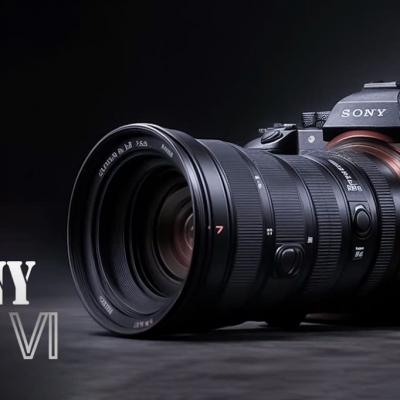
Sony a7R VI: The High-Resolution Camera Built for a Faster Era
Sony’s Alpha 7R line has always carried a clear identity: maximum detail in a compact full-frame mirrorless body. With the Sony a7R VI, that identity has changed. This is no longer simply Sony’s high-resolution camera for landscapes, studio work, commercial photography, and large prints. It is now a speed-focused, AI-assisted, video-capable hybrid machine aimed at creators who do not want to choose between resolution and performance.
Announced on May 13, 2026, the Alpha 7R VI arrives as the sixth generation of Sony’s celebrated high-resolution mirrorless series. At its center is an approximately 66.8MP full-frame fully stacked Exmor RS CMOS sensor, paired with the new BIONZ XR2 engine. Sony’s positioning is straightforward: this camera is meant to preserve the trusted image quality of the a7R family while adding the speed, intelligence, battery life, and professional reliability that modern photographers and filmmakers increasingly demand.
Sony Electronics’ Yang Cheng framed the launch around that exact promise: “The Alpha 7R series stands for image quality you can trust on screen, in print, and in the most demanding conditions. The Alpha 7R VI takes that further with the speed, intelligence, battery life, and viewfinder quality our creators have been asking for. Every decision strengthens what this series does best and makes it work harder for the people who rely on it.”
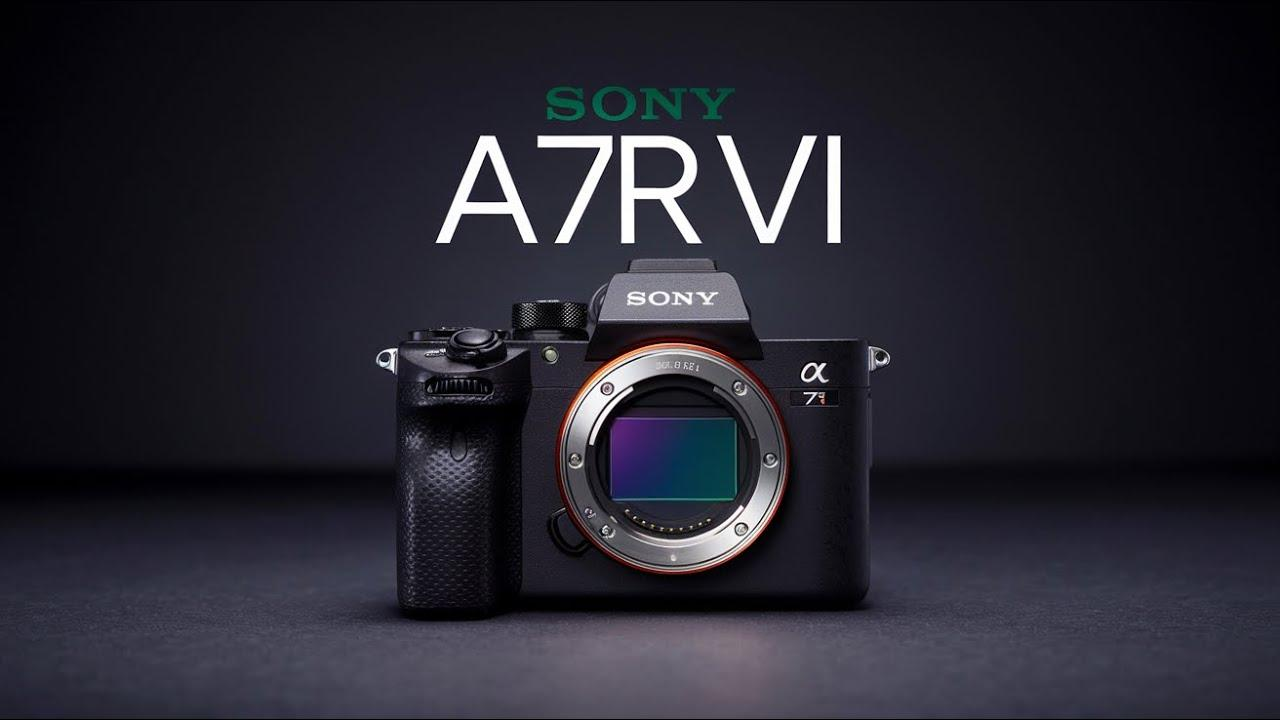
A Resolution Camera That No Longer Feels Slow
The defining change in the Sony a7R VI is not just that it increases resolution from the a7R V’s 61MP class to approximately 66.8MP. The bigger shift is that Sony has moved the series into a much faster performance class.
The new fully stacked full-frame sensor enables significantly faster readout than the previous model. Sony states that sensor readout is approximately 5.6x faster than the Alpha 7R V, helping the camera deliver blackout-free continuous shooting at up to approximately 30 frames per second with AF/AE tracking. That is a major leap for a camera line historically associated more with detail than action.
In practical terms, this turns the a7R VI into a more credible all-round professional body. Wildlife, sports, events, weddings, documentary work, and fast-moving environmental portraits all benefit from a camera that can produce high-resolution files while still reacting quickly to changing scenes.
The mechanical shutter remains at 10fps, while electronic shutter shooting reaches 30fps. One review noted that this effectively triples the predecessor’s burst ceiling, even though the resolution increase itself is relatively modest. The trade-off is endurance: the a7R VI can shoot up to 150 RAW frames at 30fps before slowing, while Sony’s A1 II can sustain 30fps for longer. Still, for an a7R-series body, this is a substantial performance jump.
The Sensor: Detail, Cropping Power, and Dynamic Range
The a7R VI’s 66.8MP stacked sensor gives photographers enormous flexibility. High pixel counts matter not only for large-format printing or commercial detail work, but also for cropping. In wildlife photography, sports, travel, and documentary shooting, the ability to crop heavily while retaining a usable file can be the difference between a missed image and a publishable frame.
The camera’s 1.5x APS-C crop still produces a 28MP image, which is more than enough for many editorial, web, print, and commercial uses. Paired with long telephoto lenses, that crop potential effectively gives photographers extra reach without sacrificing too much resolution.
Sony also claims up to 16 stops of dynamic range in still images at low sensitivities. That matters for landscapes, backlit portraits, high-contrast interiors, and scenes where both shadow and highlight detail need to survive post-production. The a7R line has always been built around image quality, but the a7R VI strengthens that reputation while adding the stacked-sensor speed usually associated with more action-oriented models.
Autofocus Gets Smarter, Not Just Faster
Speed alone would not be enough if autofocus could not keep pace. The a7R VI uses the BIONZ XR2 engine with an integrated AI processing unit, allowing the camera to perform approximately 60 AF/AE calculations per second. Sony has also introduced Real-time Recognition AF+ with skeletal-based human pose estimation and tracking.
For photographers, that means the camera is designed to understand subjects more intelligently. It can track people, athletes, wildlife, and dynamic scenes with more confidence. Reports from early testing highlight stronger recognition of smaller subjects, improved eye detection when subjects are farther away, and more stable tracking when a subject briefly passes behind an obstacle.
This is especially important for a high-resolution camera. At 66.8MP, small focus errors become more obvious. The more detail a sensor captures, the less forgiving it is of missed focus. Sony’s emphasis on AI-driven recognition is therefore not just a convenience feature; it is central to making the camera’s resolution usable in demanding real-world shooting.
Video: 8K, 4K 120p, and Dual Gain Shooting
The Sony a7R VI is also a serious hybrid camera. It records 8K 30p video with 8.2K oversampling, though 8K recording narrows the angle of view. It also supports full-frame 4K 60p and 4K 120p recording without crop when the 4K angle-of-view priority setting is enabled.
One of the most interesting additions is Dual Gain Shooting, described by Sony as a first in the Alpha series. Available when recording in 4K at 30p or lower, the mode is designed to optimize sensor performance, reduce noise, preserve shadow detail, and deliver smoother gradation with wider latitude.
Independent lab testing found the a7R VI especially notable in this area. In 4K Dual Gain mode, the camera reached up to 14 stops at SNR = 2 in lab measurements, described as the highest result measured so far in that testing context. However, the same testing also found that the camera’s internal 10-bit codecs limit exposure latitude compared with cameras offering internal 12-bit RAW. The result: the a7R VI can reach around 9 stops of exposure latitude, but 10 stops proved too far in that test.
That distinction matters. The a7R VI looks extremely capable for hybrid creators, commercial shooters, and documentary filmmakers, but it is not necessarily a cinema-first camera in every respect. Its video tools are strong, but its greatest appeal remains the combination of high-resolution stills, fast performance, and improved video flexibility in one compact body.
Better Stabilization, Brighter Viewfinder, Longer Battery Life
Sony has also improved the camera’s supporting systems. The a7R VI offers 5-axis optical image stabilization rated up to 8.5 stops at the center and 7.0 stops at the periphery. Sony says the redesigned stabilization expands roll-direction compensation by 2x, while Dynamic active Mode is designed to produce smoother handheld video.
The viewfinder also receives a serious upgrade. The approximately 9.44-million-dot OLED EVF includes a DCI-P3 equivalent color gamut and 10-bit HDR, with maximum brightness approximately three times higher than conventional models. For photographers working outdoors, in bright sun, or in rapidly changing light, a brighter and more color-accurate EVF is more than a luxury; it affects composition, exposure judgment, and confidence while shooting.
Battery life is another major development. The a7R VI introduces the new NP-SA100 battery, rated at 2670mAh. Sony says it supports up to 710 still images via the LCD monitor or 600 via the viewfinder under CIPA standards. This is the first major full-frame mirrorless battery update from Sony in years, and it brings more capacity, though it also means older NP-FZ100 batteries are not compatible with the new camera.
For professionals, that has two sides. Better endurance is welcome, especially for events, travel, wildlife, and video work. But anyone already invested heavily in Sony’s older battery ecosystem will need to budget for new batteries, chargers, and possibly a new vertical grip.
Design Changes for Working Photographers
The Sony a7R VI remains compact for a professional full-frame camera, but Sony has made several practical design changes. The grip has been redesigned, the body remains weather-sealed, and magnesium alloy is used across the top, front, rear cover, and internal frame. Early hands-on impressions describe it as one of Sony’s more comfortable designs.
The camera adds illuminated rear buttons for low-light operation, a useful feature for photographers working at concerts, weddings, astrophotography sessions, night landscapes, and dark event venues. The raised notch on the lens mount and raised Auto marking on the mode dial are also small but thoughtful usability improvements for working by feel.
The a7R VI includes dual USB Type-C ports for simultaneous charging and data transfer, a 4-axis multi-angle LCD monitor, and heat management designed to support uninterrupted 8K movie recording up to 120 minutes under Sony’s stated test conditions.
Storage, Accessories, and the Cost of Performance
The a7R VI is not an inexpensive camera. Sony lists the Alpha 7R VI body at $4,499.99 USD and $5,999.99 CAD, with availability set for June 2026. Other reported regional pricing includes £4,399 and AU$6,999.95.
That price places it above the launch price of the a7R V, but below Sony’s more expensive flagship A1 II. The value argument depends on what a buyer needs. For photographers who only need high-resolution landscapes or studio images, the a7R V may remain a better-value choice. For creators who need both resolution and faster subject tracking, the a7R VI is a much more compelling upgrade.
There are also accessory costs. The new NP-SA100 battery is priced at $119.99 USD, the VG-C6 vertical grip at $459.99 USD, the BC-SAD1 battery charger at $139.99 USD, and the DC-C2 coupler at $149.99 USD. Sony also continues to use CFexpress Type A cards for the fastest performance, and those cards remain more expensive per gigabyte than many alternatives.
Sony also introduced the XLR-A4 XLR adaptor alongside the camera. Priced at $779.99 USD and $1,089.99 CAD, it expands professional audio capabilities, including 32-bit float internal recording in compatible cameras. When paired with the a7R VI, it supports digital audio recording up to 96kHz 32-bit float 4-channel, helping reduce the need for precise gain adjustment on location.
What the a7R VI Means for the Camera Market
The Sony a7R VI reflects a broader shift in professional cameras. The old segmentation between “high resolution” and “high speed” is weakening. Photographers increasingly expect one body to handle landscapes, portraits, wildlife, video, commercial work, social content, and fast editorial assignments.
Sony is not alone in pursuing this hybrid future, but the a7R VI is a strong statement because it brings a stacked high-resolution sensor into a line traditionally associated with slower, more deliberate photography. By combining 66.8MP stills, 30fps blackout-free shooting, advanced subject recognition, 8K video, 4K 120p, stronger stabilization, longer battery life, and improved ergonomics, Sony is making the case that the specialist resolution camera can now behave like a broader professional workhorse.
For working photographers, the question is no longer whether the a7R VI is powerful. It clearly is. The more practical question is whether its specific blend of resolution, speed, and price matches the work they actually do.
A landscape photographer who rarely shoots action may find the a7R V still more sensible. A sports specialist may still prefer the A9 III or A1 II. But for hybrid professionals who move between portraits, wildlife, travel, commercial assignments, video, and editorial work, the a7R VI may be one of Sony’s most complete cameras yet.
Conclusion: Sony’s Resolution Flagship Grows Up
The Sony a7R VI is not a minor generational refresh. It marks a turning point for the a7R series, transforming Sony’s high-resolution body into a far faster and more intelligent hybrid camera.
Its 66.8MP fully stacked sensor, BIONZ XR2 processor, 30fps electronic shooting, advanced AI autofocus, 8K and 4K 120p video, Dual Gain Shooting, improved stabilization, brighter EVF, and new higher-capacity battery all point in the same direction: Sony wants the a7R VI to be more than a detail machine. It wants it to be a professional camera for nearly everything.
The cost of that ambition is real. New batteries, premium storage, and a high launch price will make some buyers hesitate. But the significance of the a7R VI is clear. It shows where high-end mirrorless cameras are heading: toward bodies that combine resolution, speed, intelligence, and hybrid production tools without forcing creators into narrow categories.
For Sony’s a7R line, the sixth generation is not just sharper. It is faster, smarter, and far more versatile.


