Arcadia Mayor Eileen Wang Resigns After Federal China Agent Charges Shake California Politics
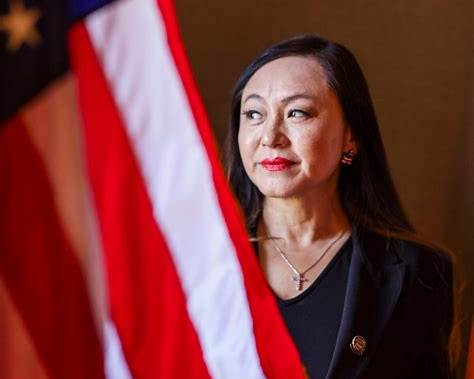
The resignation of Arcadia Mayor Eileen Wang has triggered a political storm across California after federal prosecutors accused her of secretly acting on behalf of the Chinese government while operating a media platform in the United States.
The case has rapidly become one of the most closely watched local political scandals in recent California history because it combines allegations of foreign influence, propaganda distribution, local government connections, and federal counterintelligence concerns. Wang, who served as mayor of the San Gabriel Valley city of Arcadia, agreed to plead guilty to acting as an illegal agent for the People’s Republic of China, according to court filings and Justice Department announcements.
Federal authorities allege that Wang worked alongside her former fiancé, Yaoning “Mike” Sun, to promote pro-China messaging in the United States between 2020 and 2022 through a website known as U.S. News Center. Prosecutors say the content was directed by Chinese government officials and distributed without disclosure to American authorities.


A Political Career Suddenly Derailed
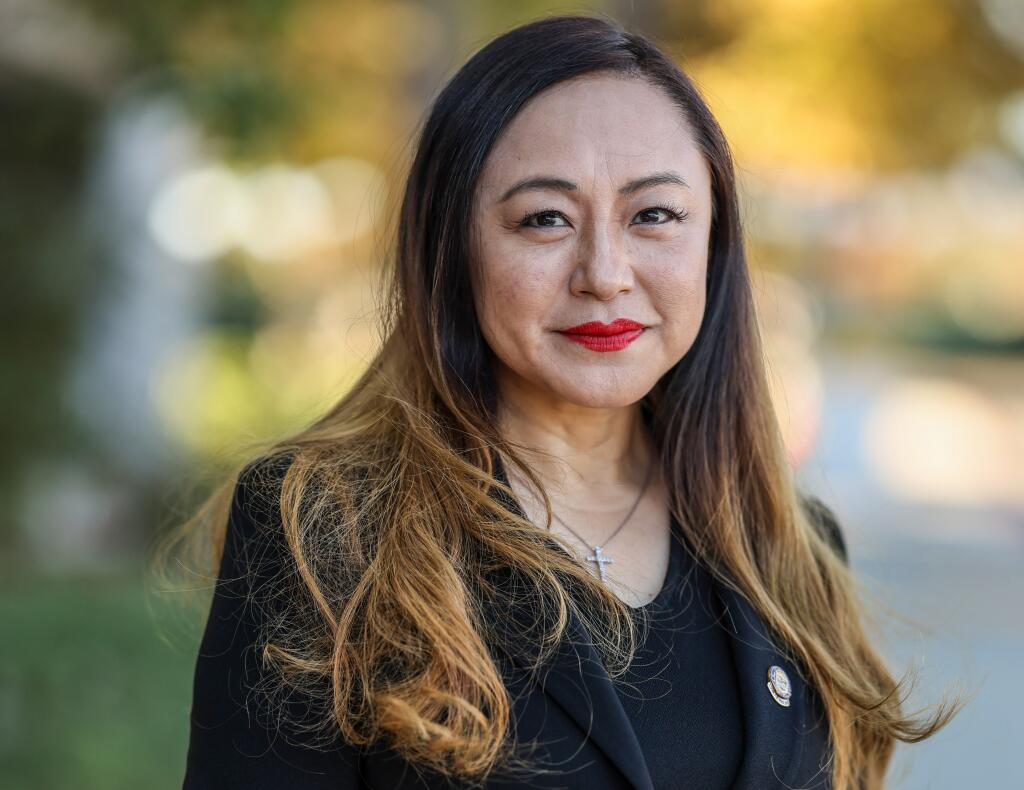
Eileen Wang had become a recognizable figure in Arcadia politics after winning a seat on the City Council in November 2022. Arcadia, located northeast of Los Angeles, is home to approximately 54,000 residents and has a large Chinese American population.
Before entering politics, Wang was known locally for operating an educational program called Little Stanford Academy. She had lived in Southern California for decades after immigrating from China roughly 30 years ago. According to previous interviews, her mother practiced Chinese medicine and acupuncture while her father worked as a physician before later joining the University of Southern California.


Her rise in local politics appeared steady until federal investigators unveiled allegations linking her to a covert Chinese influence campaign.
On May 12, 2026, Wang resigned from her position as mayor shortly after federal prosecutors announced that she had entered into a plea agreement. The agreement states that Wang is expected to formally plead guilty in federal court in the coming weeks. The charge carries a statutory maximum sentence of 10 years in federal prison.
The Allegations at the Center of the Case
According to the Department of Justice, Wang and Sun operated U.S. News Center, a website marketed as a news source for Chinese Americans in Southern California. Prosecutors allege the platform actually served as a vehicle for distributing messaging requested or approved by officials connected to the Chinese government.
Court filings describe multiple incidents in which Chinese officials allegedly communicated directly with Wang through WeChat, an encrypted messaging platform widely used in China.


One notable example involved messaging related to Xinjiang in June 2021. Federal prosecutors claim a Chinese official sent Wang a pre-written article disputing allegations of forced labor and human rights abuses against Uyghurs in Xinjiang. Minutes later, Wang allegedly published the material on her website and then shared proof of publication with the official.
According to the plea agreement, the official responded:
“So fast, thank you everyone.”
Federal prosecutors also allege Wang regularly provided screenshots showing audience traffic and article views to Chinese officials. In another exchange, prosecutors say Wang responded to praise from a Chinese official by writing:
“Thank you leader.”
Authorities contend Wang never registered as a foreign agent with the U.S. Attorney General, a legal requirement under federal law for individuals acting on behalf of foreign governments inside the United States.
The Connection to Yaoning “Mike” Sun
The scandal has drawn even more attention because Wang’s former fiancé, Yaoning “Mike” Sun, had already been convicted in a related federal case.
Sun, a political strategist from Chino Hills, pleaded guilty in 2025 to acting as an illegal foreign agent for China and was sentenced to four years in federal prison in early 2026.
Federal prosecutors said Sun worked directly under the direction of Chinese government officials and attempted to promote Beijing’s interests inside American political systems. Authorities accused him of helping cultivate local political relationships, monitoring critics of the Chinese government, and assisting propaganda operations tied to Beijing.
Investigators also alleged Sun played a major role in Wang’s political campaign and hoped her rise in California politics would strengthen Chinese influence locally.
Court records further linked Sun to another convicted Chinese agent, John Chen, who prosecutors said had direct ties to senior Chinese Communist Party officials.
The network allegedly viewed Wang as a rising political figure capable of influencing future California political discussions, particularly regarding issues involving Taiwan and China.
FBI and DOJ Respond Forcefully
Federal law enforcement agencies framed the case as part of a broader effort to combat foreign influence operations in the United States.
Roman Rozhavsky, Assistant Director of the FBI’s Counterintelligence and Espionage Division, stated that Wang admitted she had “secretly served the interests of the Chinese government.”
FBI Director Kash Patel also commented publicly, writing that federal authorities would continue working aggressively to uncover foreign influence efforts embedded within American institutions.
First Assistant U.S. Attorney Bill Essayli described the case as another example of attempts by Beijing to influence American democratic systems. He said:
“Individuals in our country who covertly do the bidding of foreign governments undermine our democracy.”
The Justice Department has increasingly emphasized concerns over Chinese influence campaigns in recent years, particularly efforts involving propaganda, surveillance, technology theft, and political influence operations.
Arcadia Officials Attempt Damage Control
Arcadia city officials moved quickly to reassure residents after Wang’s resignation.
City Manager Dominic Lazzaretto stated that the alleged conduct occurred before Wang officially joined the City Council and that an internal review found no evidence that city finances, employees, or municipal decision-making processes were compromised.
Lazzaretto said:
“The allegations at the center of this case, that a foreign government sought to exert influence over a local elected official, are deeply troubling.”
The Arcadia City Council is expected to appoint a replacement mayor while discussions continue regarding representation for Wang’s district until the next election cycle.
A Growing National Debate Over Foreign Influence
The Wang case arrives during heightened national concern regarding Chinese espionage and political influence efforts inside the United States.
Federal agencies and lawmakers have repeatedly warned about efforts by Beijing to shape public opinion, influence policymakers, and monitor dissidents abroad. According to congressional reports cited in recent coverage, dozens of Chinese espionage and repression cases have emerged in the United States since 2021.
These cases have included allegations involving intellectual property theft, surveillance operations, covert police stations, and attempts to manipulate local political discussions. China has repeatedly denied accusations of espionage and interference.
The Arcadia scandal is particularly significant because it involves local elected office rather than federal agencies or national political campaigns. Experts say the case demonstrates how foreign governments may attempt to build influence through municipal politics and community media organizations.
Public Reaction and Political Fallout
Reaction inside Arcadia and across California has been intense.
Residents expressed shock that a local mayor could allegedly become involved in a foreign influence operation. Some neighbors interviewed by local media described unusual activity around Wang’s residence, while others defended her years of community involvement.
Wang’s attorneys insisted that her actions were related to her “personal life” rather than her role as an elected official. They also said she remains devoted to the Arcadia community despite the charges.
Still, political analysts expect the case to influence future debates about foreign influence, campaign oversight, and transparency requirements for public officials across California.
What Happens Next?
Wang is expected to formally enter her guilty plea in federal court in the coming weeks. She currently faces one felony count of acting as an illegal foreign agent. The charge carries a maximum penalty of 10 years in prison and substantial financial penalties, though sentencing outcomes often depend on cooperation agreements and judicial discretion.
Meanwhile, federal investigators continue examining broader networks connected to Chinese influence operations in Southern California.
The Arcadia scandal may ultimately become a landmark case in how local American politics intersects with global geopolitical tensions. What began as a small-city political controversy has quickly evolved into a national security story with implications far beyond a single California suburb.