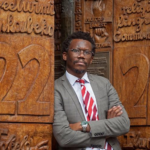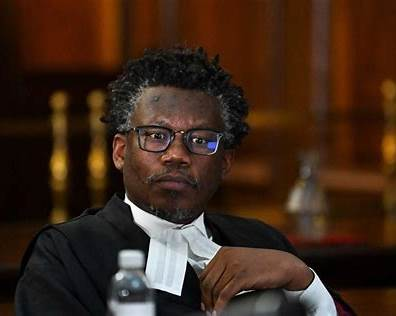
Tembeka Ngcukaitobi at the Center of South Africa’s High-Stakes Legal Transformation Debate
Advocate Tembeka Ngcukaitobi has once again found himself at the center of one of South Africa’s most politically and economically sensitive legal battles — this time involving the future of the country’s biggest law firms and the contested Legal Sector Code tied to Black Economic Empowerment (B-BBEE).
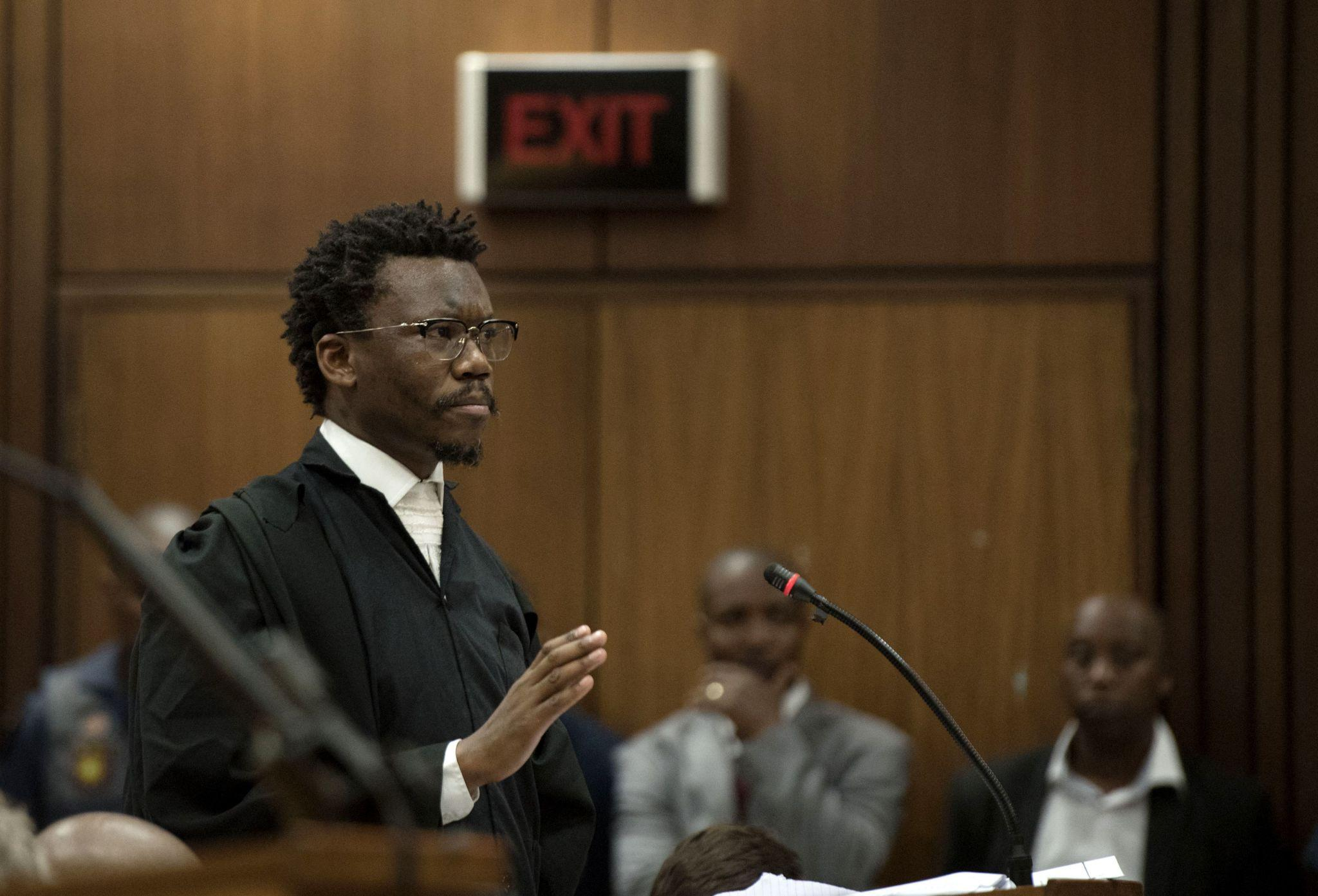
The senior advocate, widely regarded as one of South Africa’s leading constitutional lawyers, appeared before the North Gauteng High Court to argue that the newly introduced legal sector code could have devastating consequences for some of the country’s most prominent legal firms. His warning has intensified an already heated national conversation around transformation, economic participation, and the future structure of the legal profession.
The case has become far more than a technical dispute over compliance rules. It now sits at the intersection of constitutional law, transformation policy, corporate governance, and South Africa’s broader post-apartheid struggle over economic inequality.


Why the Legal Sector Code Is Being Challenged
At the center of the dispute is the B-BBEE Legal Sector Code, a framework designed to accelerate transformation within the legal profession by setting ownership and participation targets for black South Africans.
Major firms including Deneys (formerly Norton Rose Fulbright), Webber Wentzel, Werksmans, and Bowmans have approached the High Court arguing that the code is fundamentally flawed.


According to the applicants, the code:
- excludes most law practices,
- imposes unjustified transformation targets,
- and was developed through an improper process.
Representing the firms, Ngcukaitobi argued that the implications could be severe enough to threaten the existence of some major legal practices.
“It is common cause that an adverse effect and that’s it becomes existential for my clients and they corporate citizens of this country,” Ngcukaitobi told the court.
The case has drawn attention because it pits major commercial legal institutions against transformation policies aimed at reshaping an industry long criticized for racial inequality and limited black ownership.
Ngcukaitobi’s Core Argument in Court
One of Ngcukaitobi’s strongest arguments centered on what he described as a failure by opposing parties to directly address the applicants’ concerns.


He told the court that none of the ten respondents — including various black lawyers’ organizations — had meaningfully responded to the core legal issues raised by the firms.
The advocate also sharply criticized the process followed by Trade, Industry and Competition Minister Parks Tau in determining ownership targets under the code.
According to Ngcukaitobi, the minister “irrationally doubled” the black ownership target from 5% to 10% despite evidence supporting the lower figure.
He argued that such a decision lacked rational legal grounding.
“A decision cannot be rational if it is not based on a correct funding of fact and a correct application of the law on the no one addressed that issue. No, no one. That’s why I say, my lady, when I say after 10 speakers, no one has addressed our case, I’m not exaggerating,” he said.
The court acknowledged that this particular question had not been sufficiently answered by respondents during proceedings.
Judgment in the matter has since been reserved.
A Lawyer Known for Major Constitutional Battles
The latest courtroom clash adds to a long list of politically charged and nationally significant cases associated with Ngcukaitobi.
Born in Cala in the former Transkei in 1976, Tembeka Nicholas Ngcukaitobi has built a reputation as one of South Africa’s foremost constitutional and public law advocates.
He studied law at the University of Transkei before completing advanced legal studies at Rhodes University and the London School of Economics.
Ngcukaitobi later clerked for former Constitutional Court Chief Justice Arthur Chaskalson and eventually joined the Johannesburg Bar in 2010. He was awarded senior counsel status in 2020 after a remarkably fast rise through the legal profession.
Over the years, he has become associated with several landmark legal matters, including:
- representing the Economic Freedom Fighters in constitutional litigation,
- appearing in proceedings linked to the Zondo Commission,
- advocating for families affected by the Marikana massacre,
- arguing major land reform matters,
- and serving on South Africa’s legal team at the International Court of Justice in the genocide case against Israel.
His legal work has often focused on constitutional accountability, transformation, and land reform — issues deeply connected to South Africa’s democratic transition.
Transformation Versus Economic Stability
The current legal sector code dispute highlights a difficult national balancing act.
Supporters of stronger transformation targets argue that South Africa’s legal profession remains disproportionately dominated by historically advantaged firms and demographics more than three decades after apartheid ended.
Critics, however, argue that transformation policies must still comply with constitutional principles, economic realities, and administrative fairness.
The challenge brought by the major firms reflects fears that aggressive ownership requirements could disrupt the operational structures of large commercial practices that rely on international partnerships, complex equity arrangements, and multinational client relationships.
At the same time, transformation advocates insist that without meaningful structural change, the profession risks reproducing historical exclusion indefinitely.
The dispute therefore raises broader national questions:
- How quickly should transformation occur?
- What constitutes fair and reasonable ownership targets?
- Can transformation policies survive judicial scrutiny if their implementation process is flawed?
- And how should South Africa balance constitutional legality with social justice objectives?
Public Debate Extends Beyond the Courtroom
The case has already sparked extensive public commentary.
Political analysts and legal commentators have described the High Court challenge as a defining moment in South Africa’s ongoing empowerment debate.
An opinion analysis published alongside coverage of the case described the dispute as “the sharp end of the transformation struggle,” arguing that the courtroom fight reflects deeper unresolved inequalities across South African society.
The debate has become especially sensitive because Ngcukaitobi himself is widely associated with transformation and progressive constitutional advocacy. Some commentators have questioned whether his appearance for large commercial firms conflicts with his broader public positions on equality and reform.
Others have defended his role, pointing to the legal profession’s “cab-rank rule,” which generally requires advocates to accept cases within their field regardless of political sentiment.
A Major Moment in Ngcukaitobi’s Career
The legal challenge comes at a significant moment in Ngcukaitobi’s professional trajectory.
Just days before the High Court arguments drew national attention, President Cyril Ramaphosa appointed him as an Acting Justice of the Constitutional Court for a six-month term beginning in June 2026.
The appointment was widely welcomed by legal analysts and judicial watchdogs, with some reports describing him as potentially the first black advocate appointed directly from the Bar to the Constitutional Court in an acting capacity.
Observers say the appointment reflects his growing influence within South African constitutional law and the judiciary.
Judicial advocacy organization Judges Matter praised the appointment, saying his expertise in constitutional, labour, public, and land law would add significant value to the apex court.
What Happens Next?
With judgment reserved, the High Court’s eventual ruling could carry major implications for:
- the future of B-BBEE implementation in professional services,
- transformation targets across the legal industry,
- government policymaking processes,
- and the operational structure of South Africa’s largest law firms.
If the court finds flaws in the code’s development process or ownership targets, it could force government to revisit how sector transformation codes are designed and implemented.
Conversely, if the code survives the challenge, it may strengthen government authority to impose more aggressive transformation requirements across professional sectors.
Either outcome is likely to influence not only the legal profession but also broader debates around empowerment policy in South Africa’s economy.
Conclusion
Tembeka Ngcukaitobi’s appearance in the Legal Sector Code challenge has become one of the most closely watched legal developments in South Africa this year.
The case encapsulates the country’s enduring struggle to reconcile economic transformation with constitutional legality and commercial sustainability.
For supporters of the code, the dispute is about correcting historic exclusion and ensuring meaningful participation in one of the country’s most influential professions.
For opponents, it raises concerns about rational policymaking, fairness, and the viability of major institutions operating under increasingly demanding ownership rules.
As South Africa awaits the High Court’s judgment, the case is expected to shape national discussions on transformation, empowerment, and the future of the legal profession for years to come.