


Apple’s Chip Strategy Enters a New Era as Intel and Samsung Emerge as Possible TSMC Alternatives
Apple’s reported talks with Intel and Samsung mark more than a routine supplier review. They point to a strategic reassessment of one of the most important relationships in consumer technology: Apple’s dependence on Taiwan Semiconductor Manufacturing Co. for the processors that power the iPhone, iPad and Mac.
For more than a decade, Apple has designed its own systems-on-a-chip while relying on TSMC to manufacture them at the most advanced production nodes. That arrangement has helped Apple build some of the most efficient and powerful consumer chips in the market. But it has also left the company exposed to a difficult reality: when one supplier becomes essential to nearly every flagship product, even a small disruption can become a business-wide risk.
Now Apple is reportedly exploring early-stage discussions with Intel and Samsung about manufacturing key device processors in the United States. No orders have been placed, and there is no guarantee that either company will become an Apple chip supplier. Still, the talks reveal how urgently Apple is thinking about supply chain flexibility, geopolitical risk, AI-driven chip demand, and the future of advanced semiconductor manufacturing.
Why Apple Is Reconsidering Its Dependence on TSMC
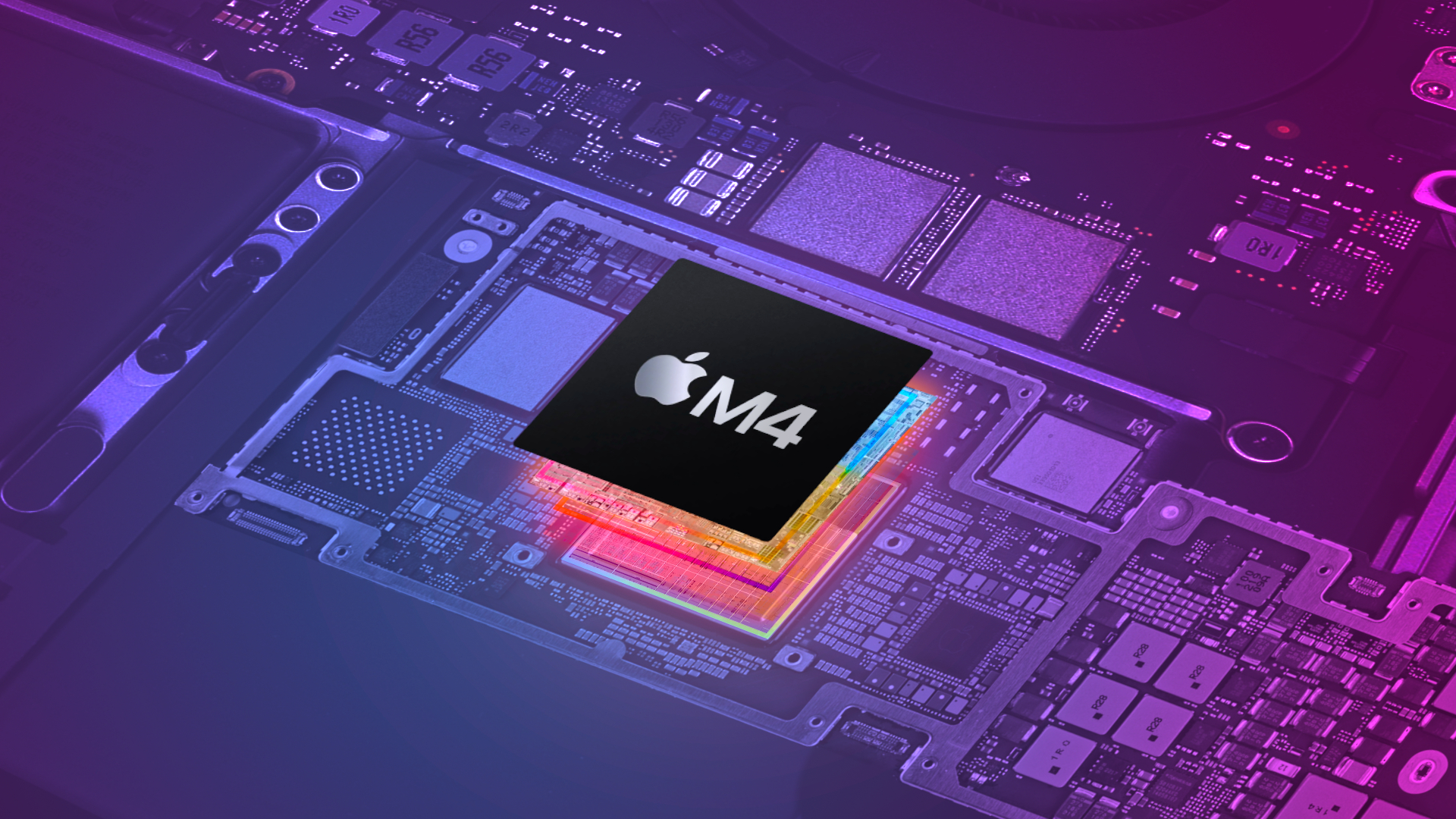
Apple’s modern chip strategy has been built around two pillars: in-house design and external manufacturing. The company designs the A-series chips used in iPhones and the M-series chips used in Macs and iPads, while TSMC manufactures them.
The partnership began in 2014, when TSMC shipped the Apple A8 chip. Since then, TSMC has become Apple’s sole supplier for its most important processors. That exclusivity has delivered clear advantages, especially as Apple moved away from Intel processors in the Mac and built an increasingly unified silicon platform across its products.
But the same arrangement also concentrates risk.
Recent supply chain pressures have made that risk harder to ignore. Advanced chip capacity is being strained by the rapid build-out of AI data centers, rising demand for high-performance processors, and stronger-than-expected interest in Macs capable of running AI models locally. During Apple’s most recent earnings call, CEO Tim Cook acknowledged the constraint directly: “We have less flexibility in the supply chain than we normally would.” He also said: “I believe it will take several months to reach supply-demand balance.”
The bottleneck centers on advanced processors used in iPhones and Macs — the system-on-chip, or SoC, that acts as the brain of each device.
Intel and Samsung Offer Apple a Possible Second Path
Apple is reportedly in the early stages of negotiations with Intel and Samsung. Senior Apple personnel have already visited a Samsung fabrication plant in Texas, which is expected to begin producing advanced chips relatively soon.
For Apple, the appeal is not simply adding more suppliers. The company needs suppliers capable of producing advanced chips at enormous scale, with consistent yields and reliability. That is precisely why TSMC has remained so difficult to replace.
Intel and Samsung each bring different strengths and risks.
Samsung has a long history with Apple. It manufactured chips for early iPhone generations, including devices from the original iPhone through the iPhone 5s. Apple also split A9 production for the iPhone 6s between Samsung and TSMC before later giving TSMC full control from the A10 generation onward.
Intel, meanwhile, has a deeper historical relationship with Apple through the Mac. Apple relied on Intel processors for years before transitioning to Apple Silicon. A new partnership would not mean Apple returning to Intel-designed chips. Instead, Intel would be acting as a foundry — manufacturing Apple-designed processors.
That distinction is critical. Apple’s chip advantage lies in its own designs. The question now is whether anyone besides TSMC can manufacture those designs at the quality, volume and efficiency Apple requires.
The Scale Problem: TSMC’s Biggest Advantage
The main hurdle for Apple is not finding a chipmaker willing to take its business. It is finding one capable of meeting Apple’s standards.
TSMC’s advantage is built on process leadership, manufacturing consistency and scale. Apple needs hundreds of millions of high-quality chips across iPhones, Macs and iPads. A supplier that cannot produce at scale or maintain strong yields could create costly delays, product shortages or performance inconsistencies.
That is why reports suggest Apple remains cautious about moving outside TSMC’s ecosystem. Intel and Samsung both have ambitions in advanced manufacturing, but neither has yet matched TSMC’s combination of capacity, execution and customer confidence in the most advanced made-to-order chip production.
Samsung trails TSMC in the contract manufacturing business, and Intel is still rebuilding its foundry strategy under CEO Lip-Bu Tan. For Intel, winning Apple would be a major validation of its turnaround plan. For Samsung, an Apple order would strengthen its position in advanced chip manufacturing and signal renewed trust from one of the world’s most demanding technology customers.
Why the AI Boom Has Made the Issue More Urgent
Apple’s diversification push reportedly began before the latest component crunch, but AI demand has made the issue more pressing.
The global AI race has created extraordinary demand for advanced semiconductors. Data centers need powerful processors, GPUs and accelerators to train and run AI systems. That demand puts pressure on the same supply chains that consumer electronics companies depend on.
Apple is also investing heavily in on-device AI. Macs capable of running AI models locally have seen higher-than-expected demand, adding another layer of pressure to chip supply.
This creates a strategic problem: Apple cannot afford to let AI infrastructure demand squeeze the chip supply needed for iPhones and Macs. A second or third manufacturing partner could give Apple more flexibility, even if TSMC remains its primary supplier.
The U.S. Manufacturing Angle
The potential Intel and Samsung discussions also fit into a broader shift toward U.S.-based semiconductor production.
Samsung is building advanced chip manufacturing capacity in Texas, while Intel is attempting to position its foundry business as a pillar of American semiconductor manufacturing. Apple has also supported TSMC’s expansion in Arizona, with that campus expected to deliver 100 million chips to Apple this year — still only a small share of the company’s total chip requirements.
The U.S. angle carries both business and political significance. Apple has long faced questions about its manufacturing concentration in Asia. TSMC’s dominance gives Apple unmatched chip performance, but Taiwan’s geopolitical position adds another layer of risk.
Apple’s vulnerability to a single manufacturing geography has reportedly been a concern inside the company for years. At an internal all-hands meeting in 2022, Tim Cook warned that routing 60% of production through any single location “is probably not a strategic position.”
That concern now extends directly to the iPhone’s most important component.
A Reorganization That Signals Strategic Focus
The shift in chip strategy comes shortly after Apple reorganized its hardware leadership. The company merged its hardware engineering and hardware technologies teams under Johny Srouji, Apple’s Chief Hardware Officer.
That restructuring matters because Apple Silicon is no longer just a component strategy. It is central to Apple’s entire product roadmap. The iPhone, Mac, iPad, Apple Watch and future AI features all depend on custom silicon.
By placing hardware engineering and hardware technologies under tighter leadership, Apple appears to be aligning design, production planning and supply chain strategy more closely. In a world where manufacturing capacity can shape product availability, that alignment is increasingly important.
What Intel Would Gain From an Apple Deal
For Intel, the opportunity is enormous.
The company is trying to build a competitive foundry business after years of setbacks. A deal to manufacture Apple-designed chips would be a breakthrough, giving Intel credibility with one of the most selective semiconductor customers in the world.
It would also mark a symbolic reversal. Apple left Intel processors behind because of performance-per-watt limitations and roadmap delays. If Intel returned to Apple’s supply chain as a manufacturer rather than a chip designer, it would show that the relationship can be rebuilt under a very different model.
Markets have already reacted strongly to the possibility. Intel’s stock reportedly rose sharply after news of Apple’s exploratory talks, reflecting investor belief that an Apple foundry order could validate Intel’s comeback strategy.
What Samsung Would Gain From Apple
Samsung also has much to gain.
Although Samsung remains one of the world’s most important semiconductor companies, it trails TSMC in advanced contract manufacturing. Apple’s return as a chip manufacturing customer would be a powerful endorsement.
Samsung already supplies various components for Apple products, but manufacturing Apple’s core processors would be a higher-stakes role. It would place Samsung back at the center of Apple’s most important hardware platform.
Still, the challenge is substantial. Apple would need confidence that Samsung can deliver advanced chips consistently and at scale. Past concerns about yields make this a difficult hurdle.
Why Apple May Still Stay With TSMC
Despite the talks, Apple may ultimately decide not to shift major processor production away from TSMC.
There are strong reasons for caution. TSMC has proven itself across multiple generations of Apple chips. It has supported Apple’s transition from Intel-based Macs to Apple Silicon. It has helped Apple scale advanced chip production across huge product volumes. And it remains ahead in advanced manufacturing capability.
Apple may also benefit from favorable manufacturing arrangements with TSMC. One reported advantage is a “Good Die Only” model, under which Apple pays only for chips that meet quality standards rather than absorbing the full risk of every wafer. At the scale Apple operates, such terms can be extremely valuable.
That makes diversification complicated. Apple wants more flexibility, but it cannot easily sacrifice performance, cost control or production reliability.
The Bigger Industry Message
Apple’s talks with Intel and Samsung are part of a larger semiconductor realignment.
The world’s biggest technology companies are no longer treating chip supply as a back-office procurement issue. Semiconductors now sit at the center of product strategy, AI infrastructure, national industrial policy and geopolitical risk management.
For Apple, the challenge is especially acute because its products depend on a tight integration of hardware, software and silicon. A processor shortage can affect iPhone availability. A manufacturing delay can shift Mac timelines. A node disadvantage can weaken battery life, performance or AI capability.
That is why Apple’s interest in Intel and Samsung matters even if no deal is signed soon. It shows that the company is preparing for a world where relying on one dominant supplier, however excellent, may no longer be enough.
What Happens Next
The next phase will depend on whether Intel or Samsung can prove they can meet Apple’s standards.
Apple will likely evaluate process technology, production yields, cost structure, capacity, U.S. manufacturing timelines and compatibility with its chip designs. The company may begin with lower-volume or less performance-sensitive chips before considering flagship iPhone or Mac processors.
A full transition, if it ever happens, would take time. Chip manufacturing decisions are made years in advance, and Apple cannot afford instability in its core product lines.
For now, TSMC remains Apple’s most important chip manufacturing partner. But the direction of travel is clear: Apple wants optionality.
Conclusion: Apple Is Preparing for a Less Predictable Chip World
Apple’s reported exploration of Intel and Samsung as chip manufacturing partners is not a rejection of TSMC. It is a recognition that the semiconductor world has changed.
AI demand is tightening advanced chip supply. Taiwan’s geopolitical position remains a long-term risk. U.S. manufacturing has become strategically important. And Apple’s own products increasingly depend on custom processors that must be available in massive quantities.
The question is not whether Apple still values TSMC. It clearly does. The question is whether the company can afford to depend on TSMC alone.
If Intel or Samsung can meet Apple’s demanding requirements, the move could reshape the foundry market, strengthen U.S.-based chip production, and give Apple a more resilient foundation for future iPhones, Macs and AI-powered devices. If they cannot, Apple may remain with TSMC — but the search for alternatives will continue.


