


iPhone 17 Becomes the World’s Best-Selling Smartphone as Apple Tightens Its Grip on the Global Market
The iPhone 17 has become the best-selling smartphone globally in the first quarter of 2026, marking a major commercial win for Apple and a revealing moment for the wider smartphone industry. According to the provided Counterpoint Research data, Apple’s standard iPhone 17 captured 6% of global smartphone unit sales in Q1 2026, placing it ahead of every other device worldwide.
What makes the result especially significant is not only that the iPhone 17 led the market, but that Apple’s latest lineup dominated the very top of the ranking. The iPhone 17 Pro Max and iPhone 17 Pro followed in second and third place, giving Apple the entire top three. The previous-generation iPhone 16 also remained in the top 10, holding sixth place in one version of the ranking provided.
This was not simply a story about one popular phone. It was a story about how the smartphone market is becoming more concentrated around a smaller number of highly successful models, with premium devices and value-driven budget phones taking the most visible positions.
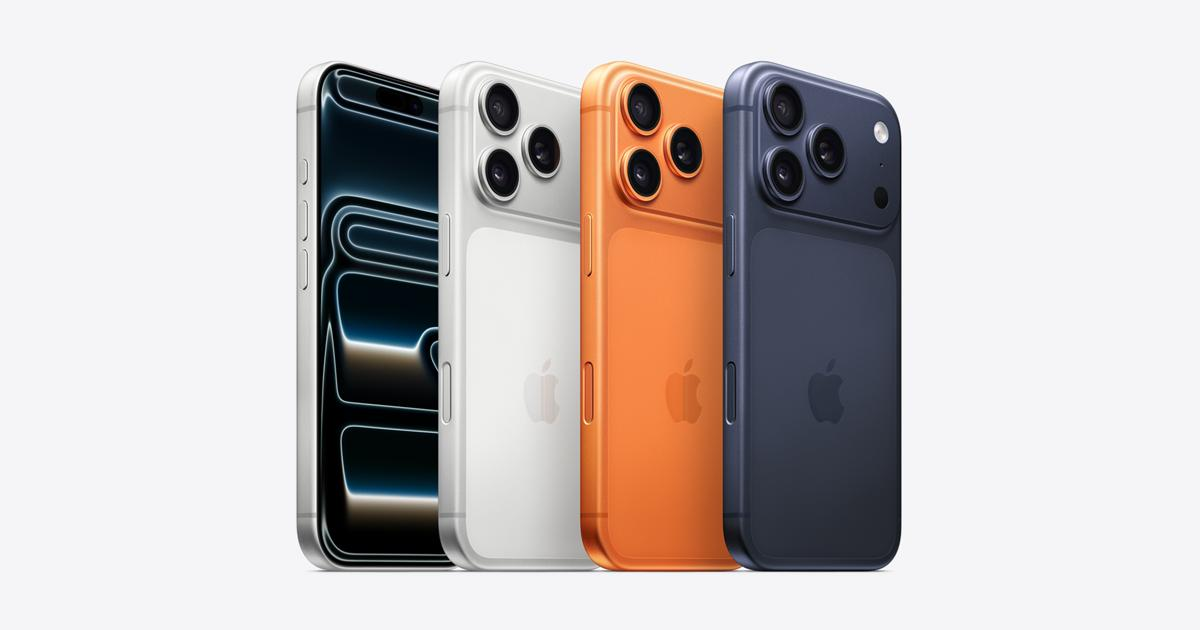
Apple’s Standard iPhone Finally Takes Center Stage
For years, the Pro and Pro Max iPhones have often commanded the most attention, particularly among early adopters, camera-focused buyers, and users willing to pay more for Apple’s most advanced hardware. But Q1 2026 showed a different pattern: the regular iPhone 17 outpaced its Pro siblings.
The result suggests that Apple found a stronger balance between price, features, and perceived value. The iPhone 17 was not positioned as the most advanced iPhone in the lineup, but it appears to have been advanced enough for a large share of consumers who wanted a premium experience without stepping up to the Pro tier.
Counterpoint Senior Analyst Harshit Rastogi directly linked the iPhone 17’s momentum to upgrades that made the base model more competitive:
“iPhone 17 continues to outperform its predecessor owing to key upgrades like higher base storage, camera resolution, display refresh rate bringing the smartphone closer to the Pro variants and providing overall value for larger market. The smartphone registered double digit YoY growth in key markets like China, the US and 3x in South Korea for the quarter. Apple iPhone 17 Pro Max and Pro captured the following two spots, offering even more advanced capabilities across camera, battery and new colour, material and finish.”
That quote explains the heart of the iPhone 17’s success: Apple narrowed the perceived gap between the standard and Pro models while preserving enough differentiation for the higher-end versions to remain strong sellers.
Why the iPhone 17 Resonated With Buyers
The iPhone 17’s performance appears to reflect a practical consumer calculation. Many buyers want a phone that feels modern, durable, fast, and future-ready, but they may not need the most advanced camera system or the largest battery available.
The provided data points to several upgrades that helped the iPhone 17 stand out: higher base storage, improved camera resolution, and a faster display refresh rate. These are not niche improvements. They affect everyday use, from saving more photos and apps to smoother scrolling and stronger image quality.
That matters in mature smartphone markets where annual upgrades can feel incremental. When a standard model gets closer to the Pro experience, it gives mainstream buyers a clearer reason to upgrade.
The performance was especially strong in key markets. The iPhone 17 recorded double-digit year-over-year growth in China and the United States, while sales in South Korea were reported to be three times higher for the quarter.
The Top 10 Shows a Split Market
The Q1 2026 global smartphone ranking also reveals a wider divide in consumer behavior. At the top, Apple dominated the premium segment. Elsewhere in the list, Samsung’s Galaxy A series and Xiaomi’s Redmi A5 showed the enduring strength of affordable Android devices.
The top 10 included:
- iPhone 17
- iPhone 17 Pro Max
- iPhone 17 Pro
- Samsung Galaxy A07 4G
- Samsung Galaxy A17 5G
- iPhone 16
- Samsung Galaxy A56
- Samsung Galaxy A36
- Samsung Galaxy A17 4G
- Xiaomi Redmi A5
Samsung’s Galaxy A07 4G was the best-selling Android phone of the quarter, supported by demand in emerging regions including the Middle East, Africa, and Latin America. The device’s affordability and long software support helped make it attractive to buyers prioritizing usability over flagship specifications.
Xiaomi’s Redmi A5 also secured a place in the top 10 as the most affordable smartphone on the list, with demand sustained across emerging regions.
The message is clear: the global smartphone market is not moving in one direction. High-end iPhones are winning among premium buyers, while low-cost Android models remain essential in price-sensitive markets.
A Historic Level of Market Concentration
One of the most important details in the report is that the top 10 smartphones accounted for 25% of global unit sales, described as the highest Q1 concentration ever.
That matters because it suggests consumers are increasingly clustering around fewer successful models. For major manufacturers, the implication is powerful: winning devices can now capture enormous global share, while weaker or less differentiated models may struggle for visibility.
Counterpoint connected this concentration to sustained demand for the iPhone 17 series and pressure on Android manufacturers in mass-market segments, partly because memory shortages have pushed up component costs.
For smartphone brands, this creates a difficult strategic environment. Premium models can lift revenue and brand perception, but affordable models still carry huge volume potential in emerging markets. Companies that fail to compete effectively at either end risk being squeezed.
Samsung’s Mixed Quarter: Strong A Series, Missing Flagship
Samsung had a strong presence in the ranking, but not through its premium Galaxy S26 Ultra. Instead, the company’s Galaxy A series captured five positions in the top 10, led by the Galaxy A07 4G.
That result underlines the importance of Samsung’s midrange and entry-level strategy. The Galaxy A lineup remains one of the company’s strongest weapons in global volume sales, especially in markets where affordability, battery life, reliability, and long software support can matter more than cutting-edge flagship features.
Still, the absence of the Galaxy S26 Ultra from the top 10 is notable. The device narrowly missed the ranking, but the provided information says it registered stronger initial sales than its predecessor. Its privacy display and AI feature upgrades were highlighted as key selling points.
That means Samsung’s flagship performance should not be dismissed. Its timing may have limited its Q1 ranking position, but the stronger early sales suggest continued appetite for high-end Android devices.
The iPhone Air’s Absence Raises Questions
Another notable absence was the iPhone Air, which did not appear in the Q1 2026 top 10. It was also missing from the Q4 2025 ranking in the provided material.
Without additional sales data, it would be risky to draw firm conclusions about the model’s broader performance. But its absence from consecutive top-10 lists suggests that Apple’s mainstream and Pro iPhones may have carried more global sales momentum than the Air model during this period.
For consumers, this may reflect a preference for familiar iPhone categories: the standard model for value, the Pro models for advanced performance, and older models for lower-cost entry into the Apple ecosystem.
What This Means for Apple
The iPhone 17’s rise to the top of the global ranking strengthens Apple’s position in several ways.
First, it validates the standard iPhone as a powerful growth driver. If Apple can make the base model feel meaningfully upgraded without undermining the Pro lineup, it can appeal to both mainstream buyers and premium customers.
Second, the result reinforces Apple’s global reach. Strong growth in China, the United States, and South Korea shows that the iPhone 17 did not rely on one market alone.
Third, the continued presence of the iPhone 16 demonstrates the durability of Apple’s older models. Even after the iPhone 17 series arrived, the previous generation remained competitive enough to hold a top-10 position.
This combination gives Apple a broad sales ladder: older iPhones for value-conscious buyers, the iPhone 17 for mainstream premium demand, and the Pro models for consumers seeking the most advanced features.
What Comes Next for the Smartphone Market
The outlook points toward even more concentration among leading models. Counterpoint Senior Analyst Karn Chauhan said:
“Looking ahead to 2026, the top 10 smartphone models are expected to expand their share of global unit sales. The anticipated market decline is likely to impact mass-market segments more significantly, while high-end smartphones continue to gain share. In response, OEMs are shifting focus toward premium portfolios, prioritizing value over volume.”
That forecast captures the central tension facing the industry. Smartphone makers are dealing with slower market growth, rising component costs, and tougher competition. In that environment, companies may increasingly prioritize fewer models with stronger margins rather than chasing volume across crowded product ranges.
Apple appears well positioned for that shift because its iPhone lineup already operates as a tightly controlled portfolio. Samsung, meanwhile, continues to show strength through its Galaxy A series, while Xiaomi’s Redmi A5 proves that ultra-affordable phones still have a major role in global sales.
Conclusion: The iPhone 17’s Win Is Bigger Than One Quarter
The iPhone 17 becoming the world’s best-selling smartphone in Q1 2026 is a major milestone for Apple, but it is also a signal about where the smartphone market is heading.
Consumers are rewarding phones that offer clear value, whether that value comes through premium features in a mainstream iPhone or affordability in an Android device built for emerging markets. The iPhone 17 succeeded because it gave many buyers enough of the Pro experience without requiring them to buy the most expensive model.
With the top 10 devices now accounting for a record share of global sales, the industry is entering a period where fewer models may matter more than ever. For Apple, Q1 2026 showed that the standard iPhone is not just a supporting product in the lineup. It is the phone capable of leading the world.


