


Vodafone Moves to Full Control of VodafoneThree in £4.3 Billion UK Telecoms Bet
A decisive move in Britain’s mobile market
Vodafone is taking full ownership of VodafoneThree, the UK’s largest mobile operator by customer numbers, in a £4.3 billion deal that marks the next major step in one of Britain’s most significant telecoms shake-ups in years.
The agreement will see Vodafone buy out CK Hutchison’s 49% stake in VodafoneThree through a share cancellation, leaving Vodafone as the sole owner of the business. Vodafone currently owns 51% of VodafoneThree, while CK Hutchison Group Telecom Holding Limited holds the remaining 49%. The transaction is expected to complete in the second half of 2026, subject to approvals under the UK National Security and Investment Act.
The move comes less than a year after VodafoneThree officially began operations on 31 May 2025, following the merger of Vodafone UK and Three UK. The deal is notable not only because of its size, but because Vodafone is taking full control sooner than many expected. Under the original merger terms, Vodafone had an option to take full ownership three years after completion, but the company has now chosen to accelerate that timeline.
From merger to full ownership
Vodafone and Three first announced plans to merge their UK businesses in 2023. The proposal was cleared by regulators in December 2024, paving the way for VodafoneThree to launch the following year with Vodafone holding 51% and CK Hutchison holding 49%.
The merger created a new heavyweight in the British mobile sector, combining two former rivals into a single operator with more than 27 million subscribers. It also reduced the UK’s main mobile network operators from four to three, placing VodafoneThree alongside BT-owned EE and Virgin Media O2.
Now, Vodafone is moving from majority partner to sole owner. The company says the transaction will allow it to act more quickly on network upgrades, customer improvements and cost efficiencies.
“Now is the right time to take full ownership of VodafoneThree, enabling us to move at an even faster pace to transform the UK’s digital infrastructure,” Vodafone said in its statement.
Why Vodafone is acting now
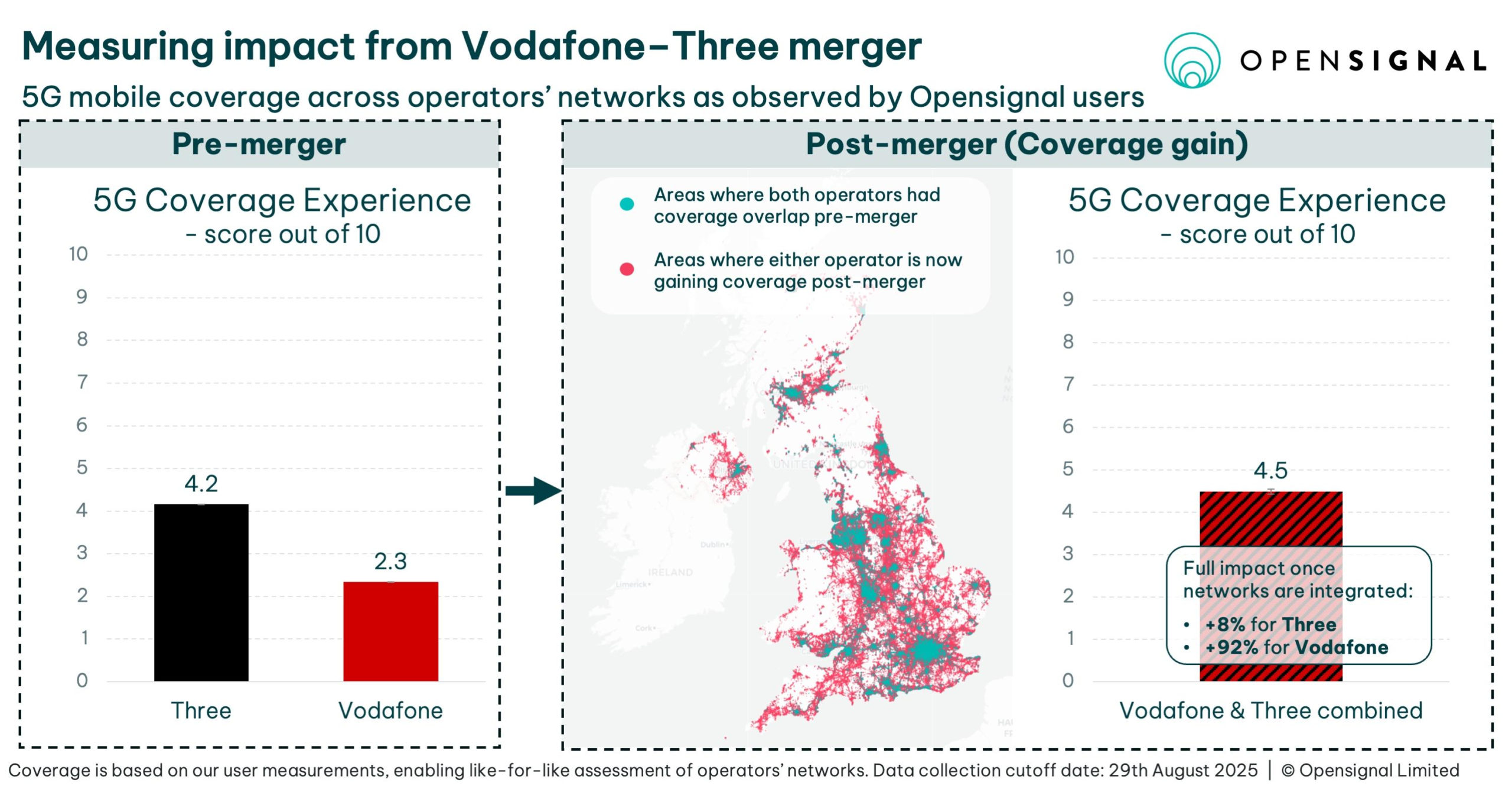
Vodafone says the integration of Vodafone UK and Three UK has already delivered meaningful progress. According to the company, network quality improvements have arrived ahead of schedule as VodafoneThree works toward building what it describes as the UK’s best 5G network. It also says consumers and businesses are already seeing better coverage, speeds and reliability.
The company has also pointed to stronger customer experience and loyalty across its brands, with Three recording improved customer retention. Vodafone says it is already cross-selling services such as home broadband and Fixed Wireless Access to the UK’s largest mobile customer base.
For Vodafone, full ownership means fewer complications in decision-making. Joint ventures can slow execution when two shareholders must align on strategy, investment priorities and operational changes. By taking 100% control, Vodafone gains a tighter grip on the business at a moment when telecoms operators are under pressure to improve network performance while managing debt, competition and infrastructure costs.
Margherita Della Valle, Chief Executive of Vodafone Group, said: “A year on from the merger, the team has made remarkable progress, as we maximise the full potential of VodafoneThree and capture the significant synergies.
I’m delighted that we will now have full ownership of VodafoneThree as we roll out one of Europe’s most advanced 5G networks, provide the UK’s best customer experience and drive long-term value for our shareholders.”
The financial logic behind the deal
Vodafone will fund the £4.3 billion share cancellation in cash from existing resources. The transaction implies an enterprise value for VodafoneThree of £13.85 billion. As of 31 March 2026, VodafoneThree had net debt of £5.08 billion, while the equity value was listed at £8.78 billion. Vodafone also expects the transaction to increase Vodafone Group’s pro forma net leverage by 0.4x.
A key target is synergy. Vodafone expects VodafoneThree to deliver £700 million in annual cost and capital expenditure synergies by FY30. The company has also cited consensus EBITDAaL of £1.81 billion for the 12 months to 31 March 2027.
That financial picture explains why the company is prepared to move early. Full ownership gives Vodafone the opportunity to capture more of the upside if the integration continues to improve operating performance, network quality and customer retention.
What changes for customers?
For now, Vodafone says customers should not expect a sudden brand shake-up. Both Vodafone and Three will continue to operate under VodafoneThree’s multi-brand strategy. Max Taylor will remain Chief Executive Officer of VodafoneThree, supported by the existing leadership team.
That continuity matters. Telecom mergers can create anxiety for customers who worry about price changes, contract terms, coverage changes or the future of familiar brands. Vodafone’s message is that the ownership structure is changing, but the customer-facing brands are not being abruptly dismantled.
The bigger potential impact lies in infrastructure. VodafoneThree’s promise is that a combined network can deliver broader coverage, improved 5G performance and better service reliability than either Vodafone UK or Three UK could achieve independently. If Vodafone executes well, customers may see the benefits in faster rollout, fewer coverage gaps and stronger broadband bundling.
A wider restructuring strategy under Margherita Della Valle
The VodafoneThree buyout fits into a broader reshaping of Vodafone under Margherita Della Valle, who has been pushing the group to focus more sharply on its biggest and most strategic markets.
During her tenure, Vodafone has exited Spain and Italy and is selling its stake in a Dutch joint venture. The company has also undergone a sweeping restructuring that has included thousands of job cuts. The strategic direction is clear: Vodafone is simplifying its portfolio and concentrating resources where it believes it can build stronger market positions, particularly in the UK and Germany.
That makes VodafoneThree more than a UK transaction. It is a signal about the company Vodafone wants to become: leaner, more focused and more willing to make large bets in markets where scale can translate into network strength and financial returns.
CK Hutchison’s exit
For CK Hutchison, the sale represents an opportunity to realise value from its long-running investment in the UK telecoms market. The Hong Kong-based conglomerate had owned Three UK before agreeing to combine it with Vodafone’s British operations.
Canning Fok, deputy chair of CK Hutchison and executive chair of its telecoms division, said: “Our group was one of the first in the world to invest in 3G mobile telecommunications with the establishment of 3UK in 2000 and introduce groundbreaking mobile broadband telephony to consumers.
“The company has grown from a startup mobile operator, and through merging and forming the present VodafoneThree, has become the number one operator in the UK by subscriber numbers and a market leader in the delivery of telecommunications products and services to UK consumers.”
CK Hutchison’s decision also comes as the group reshapes its wider portfolio, including efforts to offload major assets and improve shareholder returns.
The regulatory hurdle still ahead
The deal is not complete yet. Vodafone’s move to 100% ownership requires approval under the UK National Security and Investment Act, and completion is expected in the second half of 2026.
That review matters because telecoms networks are critical national infrastructure. Mobile networks support consumers, businesses, emergency communications, government services and the wider digital economy. Any change in control of a major operator is therefore likely to receive close scrutiny.
Still, Vodafone is not seeking to merge two separate UK operators this time; that step has already happened. The current deal changes ownership of an existing combined operator from a joint venture to full Vodafone control.
Why the deal matters for the UK telecoms industry
VodafoneThree’s formation already changed the competitive map of UK telecoms. Full Vodafone ownership could now accelerate the next phase: network integration, 5G expansion, cost reduction and bundled service growth.
The stakes are high. Britain’s mobile operators face heavy infrastructure costs, rising data demand and pressure to deliver better coverage outside major urban centres. At the same time, customers expect faster service, more reliable connectivity and competitive prices.
If VodafoneThree succeeds, the company could become a stronger challenger to EE and Virgin Media O2, especially in 5G and converged mobile-broadband offers. If it struggles, critics of consolidation may argue that reducing the number of major mobile operators has not delivered enough benefit to customers.
For Vodafone, the transaction is a calculated bet that scale, control and faster execution will outweigh the cost of buying out CK Hutchison.
A defining moment for VodafoneThree
Vodafone’s £4.3 billion move to take full ownership of VodafoneThree is more than a corporate ownership change. It is a statement of confidence in the UK market, in the original merger, and in the belief that telecoms competition increasingly depends on scale, capital discipline and network quality.
The immediate customer-facing message is continuity: Vodafone and Three brands will remain in place. The strategic message is more ambitious: Vodafone wants full command of the UK’s largest mobile operator as it pushes to build one of Europe’s most advanced 5G networks.
The deal still needs regulatory clearance, but if completed in the second half of 2026, it will mark the next chapter in the transformation of Britain’s mobile industry — and one of the clearest signs yet that Vodafone sees the UK as central to its future.


