
Bob Myers and the Sixers’ Search for a New Basketball Vision
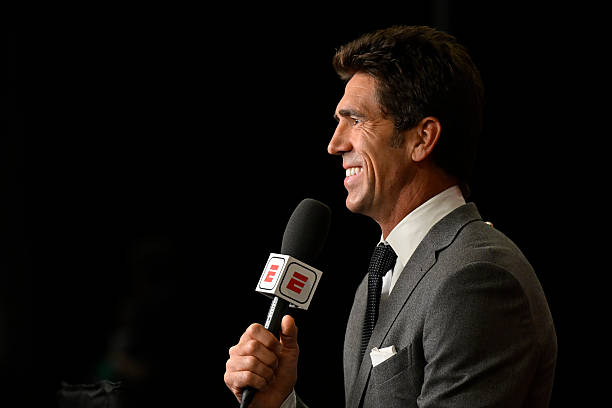
The Philadelphia 76ers have entered another defining organizational reset, and this one carries a familiar mix of urgency, ambition and unease. After parting ways with president of basketball operations Daryl Morey, the franchise has turned to Bob Myers, the former Golden State Warriors general manager and current president of sports for Harris Blitzer Sports & Entertainment, to oversee basketball operations on an interim basis and lead the search for Morey’s replacement.
The move immediately places one of the NBA’s most respected front-office architects at the center of Philadelphia’s next chapter. Myers’ résumé is not ordinary. During his tenure with Golden State from 2012 to 2023, he helped shape one of the league’s modern dynasties, making major personnel decisions that included the additions of Andre Iguodala and Kevin Durant. While he did not draft Stephen Curry, Klay Thompson or Draymond Green, Myers became the executive most closely associated with turning the Warriors’ core into a championship machine.
Now, the Sixers are asking him to help find the person who can finally build a roster capable of pushing Philadelphia beyond its long-standing postseason ceiling.
Why Philadelphia Moved on From Daryl Morey
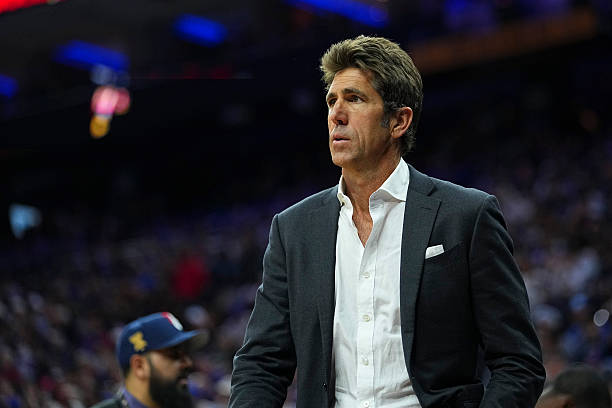
Daryl Morey’s Sixers era was productive but incomplete. He joined the organization in November 2020 and oversaw a six-season stretch that produced a 270–212 regular-season record and five playoff berths. Yet the defining failure remained unchanged: Philadelphia never advanced past the Eastern Conference Semifinals under his leadership, extending a Conference Finals drought that dates back to 2001.
Managing partner Josh Harris framed the move as a necessary reset.
“I have a tremendous amount of respect for Daryl personally and professionally, and I’m grateful for his contributions over the last six seasons,” Harris said. “After speaking with Daryl, we determined that it was time for a fresh start.”
That phrase — “fresh start” — matters. The Sixers are not simply replacing an executive. They are reconsidering the structure, direction and competitive timeline of a franchise built around expensive stars, limited flexibility and impatient expectations.
Bob Myers’ Immediate Role
Myers will “lead the process of identifying a new leader of basketball operations and oversee the department in the interim,” according to the Sixers’ announcement cited in the provided reporting.
His own statement made clear that the search will begin at once.
“I know how much the 76ers mean to the City of Philadelphia, and it’s important we find the right leader to shape the future of this team,” Myers said. “The process will start immediately, and we will be thorough and deliberate in our evaluations. I believe this is a destination for top talent across the league and look forward to solidifying our infrastructure moving forward.”
That wording suggests two priorities: speed and discipline. Philadelphia cannot afford a casual search. The NBA Draft is scheduled for June 23 and June 24, with free agency beginning the following week. The next basketball operations leader will inherit decisions that could shape the franchise for years, including roster construction, luxury-tax strategy, free-agent retention and the future balance between win-now urgency and long-term planning.
The Myers Question: Search Leader or Candidate?
Officially, Myers is leading the search, not becoming the permanent president of basketball operations. But his presence naturally creates speculation.
He has the championship credibility Philadelphia craves. He also has trust from Josh Harris, and his role inside Harris Blitzer Sports & Entertainment has grown since he joined the group full time. PhillyVoice noted that Myers has “considerable trust from Harris” and that his presence in Philadelphia grew during the season.
Still, the current framing is careful: Myers is the interim basketball operations overseer and the person managing the search. The assumption, for now, is that the Sixers will hire someone else. But in a league where top executives can be as valuable as star players, it is easy to understand why many fans would prefer Myers to take the job himself.
Why the Timing Is Complicated
The Sixers’ next executive will not inherit a blank canvas. They will inherit a high-pressure roster with both star power and structural risk.
Joel Embiid, Paul George and Tyrese Maxey are owed $153 million next season. The problem is not simply the money; it is the availability and fit. ESPN reported that George, Embiid and Maxey played only 43 games together over the past two seasons, including the playoffs, with a 21–22 record in those games.
That is the heart of the dilemma. Philadelphia has elite names on paper, but paper does not win playoff rounds. The next executive must decide whether the current core can still justify aggressive investment or whether a more flexible reset is required.
There are positives. Maxey is described as a 25-year-old superstar lead guard, and VJ Edgecombe had a strong rookie season alongside him. Embiid and George were also part of the Sixers’ comeback from a 3–1 deficit against the Boston Celtics in the first round of the 2026 playoffs.
But there are obvious concerns. Embiid’s injury history remains central to any roster projection. George turned 36 during the playoffs. The supporting cast has questions, with Kelly Oubre Jr. and Quentin Grimes entering unrestricted free agency after being two of the few non-star rotation pieces to log significant postseason minutes.
Nick Nurse Survives the Reset
While Morey is gone, head coach Nick Nurse is expected to remain in place. That makes the situation more complex for the incoming executive.
Nurse was hired during Morey’s tenure, but the franchise is not making a simultaneous coaching change. ESPN reported that Nurse is 116–130 across three seasons, a record affected heavily by a 24–58 campaign the previous year. He has twice led the Sixers to the playoffs, including the 2026 run in which Philadelphia overcame a 3–1 first-round deficit against Boston before being swept by the New York Knicks.
This creates a familiar NBA power dynamic: a new front-office leader entering with an established coach already in place. PhillyVoice described it as the second straight instance in which the Sixers have hired a lead executive with a coach already entrenched.
For Nurse, the immediate result is stability. For the next executive, it may be an early test of alignment.
The Roster Problems Waiting for the Next Executive
The Sixers’ issues are not abstract. They are visible in roster balance, shooting, depth and financial flexibility.
NBC Sports Philadelphia noted that the Sixers finished the 2025–26 season ranked 23rd in both three-point frequency and three-point accuracy, according to Cleaning the Glass. Defensive rebounding also stood out as a major weakness.
Those deficiencies became more glaring in the playoffs. Philadelphia did not make dramatic upgrades at the trade deadline, and the Knicks exposed the roster’s limitations in a second-round sweep.
The next basketball operations leader will therefore face several immediate questions:
Can the Sixers build a deeper, more balanced rotation around Maxey, Embiid, George and Edgecombe?
Should Philadelphia remain aggressive despite luxury-tax and apron concerns?
Can the team add shooting and rebounding without sacrificing future flexibility?
How much patience should the organization have with an expensive veteran core?
These are not merely technical roster questions. They are philosophical ones.
Possible Candidates Beyond Myers
The search could move in several directions. PhillyVoice identified a range of potential candidates, including internal and external names.
Elton Brand remains a logical figure because of his history with the franchise. He ran the front office before Morey arrived and stayed as Morey’s top lieutenant throughout Morey’s tenure.
Vince Rozman is another intriguing name. A former Sixers front-office executive, he later joined the Oklahoma City Thunder and became Vice President of Identification & Intelligence. He is viewed as a strong evaluator of young talent and has been tied to successful draft and development outcomes.
Dennis Lindsey brings extensive experience from his time leading the Utah Jazz, where his tenure included five consecutive playoff appearances. His notable moves included drafting Rudy Gobert, hiring Quin Snyder and trading up for Donovan Mitchell.
Other names mentioned include Matt Lloyd, Dave Telep, Dave Lewin, Austin Brown and Alex Saratsis. Each would represent a different kind of hire: traditional scouting executive, experienced operator, rising front-office mind or agent crossing into team management.
The wide range of possibilities underscores the uncertainty around what Philadelphia wants to become.
Why This Search Matters More Than a Normal Hire
The Sixers are not a rebuilding team in the conventional sense. They also are not a clean contender. They exist in the uncomfortable middle ground of modern NBA team-building: expensive enough to expect winning, flawed enough to require redesign.
That is why Myers’ role is so important. He is not only helping select an executive. He is helping define what kind of executive the Sixers believe they need.
A dealmaker could prioritize immediate upgrades around Embiid and George. A scouting-first hire could focus on younger, cost-controlled talent. A cap strategist could attempt to preserve flexibility while navigating the financial weight of the current roster. A culture-builder could try to stabilize a franchise that has repeatedly cycled through major eras without reaching the conference finals.
Philadelphia’s fans have heard promises before. They have lived through “The Process,” the Ben Simmons-Joel Embiid era, the James Harden chapter, the Morey years and now another restart. That history raises the stakes for every decision that follows.
The Stakes for Josh Harris and Ownership
This search also reflects directly on ownership. Harris acknowledged the frustration surrounding the franchise.
“To our fans, your frustration and disappointment are understandable and warranted,” Harris said. “We have fallen well short of our own expectations and failed to deliver in the way this city deserves. That bothers me deeply and I have confidence in Bob to establish a path forward for our franchise.”
That is a striking admission. It recognizes not only disappointment but underachievement. The Sixers have had MVP-level talent, big-name executives, high-profile trades and repeated postseason opportunities. Yet the result has remained the same: no trip beyond the second round.
For ownership, this hire is an opportunity to reset credibility.
Conclusion: Bob Myers Gives the Sixers a Serious Starting Point
Bob Myers does not guarantee the Sixers will get this right. No executive search does. But his involvement gives Philadelphia something it badly needs: credibility, experience and a proven understanding of what championship infrastructure looks like.
The next leader of basketball operations will inherit a difficult but attractive job. The franchise has star talent, a major market, a passionate fan base and a coach who remains in place. It also has financial pressure, injury risk, roster holes and a fan base tired of explanations.
The significance of the Myers-led search is not just that Daryl Morey is gone. It is that Philadelphia has reached another crossroads where the next front-office decision could determine whether the Sixers finally move closer to contention — or extend one of the NBA’s most frustrating cycles of promise without payoff.


