
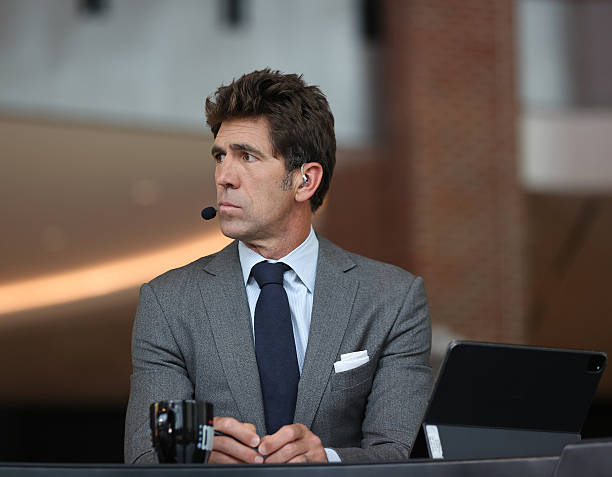
Bob Myers Biography: The Championship Architect Now Steering Harris Blitzer Sports & Entertainment
Bob Myers has built one of the most respected modern résumés in American sports leadership: NCAA champion, high-level sports agent, four-time NBA champion executive, two-time NBA Executive of the Year, national media analyst, Washington Commanders adviser, and now President of HBSE Sports at Harris Blitzer Sports & Entertainment. His career is unusually broad, but its defining theme is clear: Myers has repeatedly entered high-pressure environments and become the stabilizing, relationship-driven figure trusted to make difficult decisions.
For many fans, the Bob Myers career story begins with the Golden State Warriors dynasty. As general manager and later president of basketball operations, he helped build and preserve the Stephen Curry–Klay Thompson–Draymond Green core, hired Steve Kerr, landed Kevin Durant, navigated championship expectations, and presided over titles in 2015, 2017, 2018, and 2022. Today, searches for Bob Myers Sixers, Bob Myers Commanders, Bob Myers Bulls, Bob Myers Warriors, Bob Myers salary, and Bob Myers net worth all point to the same question: how much influence will one of basketball’s most successful executives have across the next era of major professional sports?
Bob Myers Quick Facts Snapshot: Age, Career, Family, Net Worth and Current Status
| Category | Details |
|---|---|
| Full Name | Robert Michael Myers |
| Date of Birth / Age | March 31, 1975; 51 years old as of May 2026 |
| Place of Birth | Danville, California, United States |
| Nationality | American |
| Profession | Sports executive, former basketball executive, former sports agent, former ESPN analyst |
| Current Status | President, HBSE Sports at Harris Blitzer Sports & Entertainment |
| Height | 6 ft 7 in |
| Net Worth | Common public estimates place Bob Myers net worth around $5 million; exact private wealth is not publicly confirmed |
| Income Sources | Executive compensation, media work, advisory roles, past sports-agent career, speaking and leadership roles |
| Relationship Status | Married |
| Spouse / Partner | Kristen Myers |
| Children | Three daughters |
| Major Achievements | Four NBA championships as Warriors executive; two NBA Executive of the Year awards; 1995 NCAA champion at UCLA |
| Key Teams / Organizations | Golden State Warriors, Philadelphia 76ers/HBSE, Washington Commanders, UCLA, ESPN |
Bob Myers age, height, family background, and career achievements all contribute to why his profile remains a major search topic years after he stepped away from the Warriors. His 6 ft 7 in frame reflects his playing background at UCLA, but his lasting identity is executive rather than athlete. He became a championship operator by combining player empathy, agent-level negotiation experience, and a front-office style built around relationships rather than cold transaction management.
The current Bob Myers biography is no longer only a Warriors story. Since leaving Golden State in 2023, he has expanded into television, NFL advisory work, university governance, and multi-team sports leadership. His appointment as President of HBSE Sports in October 2025 placed him at the center of a portfolio connected to the Philadelphia 76ers, New Jersey Devils, Crystal Palace, Joe Gibbs Racing interests, and Josh Harris’s broader sports network.
From Danville to UCLA: The Unlikely Beginning of Bob Myers’ Basketball Life
Bob Myers was born on March 31, 1975, and grew up in Danville, California, in the Bay Area. He attended Monte Vista High School, where he lettered in basketball, but his path into major college basketball was anything but conventional. He was not treated as a blue-chip recruit, and his early athletic future appeared uncertain enough that rowing was once a realistic possibility.
His life changed at UCLA. Myers entered the Bruins program as a walk-on under coach Jim Harrick, studying business and economics while attempting to survive in one of college basketball’s most competitive environments. What began as a low-profile role eventually became part of a national-title story. During the 1994–95 season, Myers was a member of the UCLA team that won the NCAA championship, a formative experience that exposed him to elite coaching, team chemistry, and the emotional demands of championship-level basketball.
The UCLA Chapter That Shaped Bob Myers’ Leadership Style
Myers’ UCLA playing career was not defined by huge statistics, but it was central to his later executive identity. He played forward for the Bruins from 1993 to 1997, appearing in 76 career games with four starts. His playing time increased over his college career, and his senior season included 29 appearances and four starts.
That walk-on-to-scholarship journey became part of the Myers mythology. He was close enough to star players and championship moments to understand elite performance, yet humble enough to understand the margins of a roster. That combination later became one of his executive strengths. He could communicate with superstars, role players, coaches, owners, and agents without sounding detached from any of them.
From Sports Agent to NBA Front-Office Power Broker
After UCLA, Bob Myers moved into the business side of sports. He worked as a basketball radio commentator for UCLA and then entered the agent world under Arn Tellem. His legal training and agency experience proved crucial: representation taught him how players think, how families process career decisions, and how leverage works when contracts, egos, timelines, and pressure collide.
That agent background made Myers a natural fit for the modern NBA front office. Instead of being only a talent evaluator, he became a relationship manager, negotiator, and culture builder. Before becoming known as the Bob Myers Warriors architect, he was learning the language of player trust—an asset that later helped Golden State manage one of the most scrutinized locker rooms in league history.
Bob Myers Warriors Era: Building and Managing a Modern NBA Dynasty
The defining chapter of the Bob Myers career remains his run with the Golden State Warriors. He became general manager in 2012 and later added the title of president of basketball operations. Under his leadership, Golden State became the NBA’s model franchise, winning championships in 2015, 2017, 2018, and 2022.
Myers’ value was not limited to headline moves. He inherited and supported the rise of Stephen Curry, Klay Thompson, and Draymond Green; helped assemble depth around them; and made one of the most consequential coaching decisions of the decade when Golden State moved from Mark Jackson to Steve Kerr. The Kerr hire changed the Warriors’ offensive identity, unlocked a historic style of play, and helped transform a promising team into a dynasty.
The Executive of the Year Standard and the Durant Turning Point
Bob Myers won NBA Executive of the Year for the 2014–15 season after Golden State produced a 67–15 regular-season record, won the Pacific Division, earned the West’s No. 1 seed, and began its championship breakthrough. That award reflected not only the roster’s talent but the organizational leap the Warriors had made under his stewardship.
His second Executive of the Year honor followed the 2016–17 season, when Golden State added Kevin Durant and built one of the most dominant teams in basketball history. The Durant move required more than cap mechanics; it required credibility, timing, star management, and a culture persuasive enough to attract an MVP into an already championship-proven group. That era produced titles in 2017 and 2018 and cemented Myers as one of the defining executives of the NBA’s player-empowerment age.
Why Bob Myers Left the Warriors and What Came Next
Myers stepped down from his Warriors president and general manager role in May 2023, closing a 12-year run that had delivered four titles and changed the organization’s place in NBA history. His departure was widely interpreted as the end of an emotional and exhausting chapter. Golden State had transitioned from underdog to dynasty to aging contender, and the job had become as much about managing relationships, finances, and expectations as building rosters.
After leaving Golden State, Myers joined ESPN as an NBA analyst and game commentator. The move allowed him to remain close to the sport while stepping away from the daily pressure of front-office decision-making. His media role also strengthened his public profile, giving fans a clearer sense of his communication style: measured, candid, reflective, and unusually comfortable discussing both basketball strategy and human dynamics.
Bob Myers Commanders Role: A Basketball Executive Crosses Into the NFL
The Bob Myers Commanders connection began when he worked with Josh Harris in an advisory capacity after Harris became managing partner of the Washington Commanders. Myers assisted during the organizational reset that included the hiring of general manager Adam Peters and head coach Dan Quinn in 2024.
His NFL role was not about calling plays or evaluating quarterbacks in the traditional scout sense. It was about leadership structure, hiring process, culture, and character evaluation. That made the Commanders job a revealing bridge between his Warriors past and HBSE future: Myers was being valued not merely as a basketball mind, but as an executive who could help reshape organizations across sports.
Bob Myers and Harris Blitzer Sports & Entertainment: The New Power Role
In October 2025, Bob Myers became President of HBSE Sports at Harris Blitzer Sports & Entertainment. The position moved him from team-specific leadership into portfolio-level strategy, working with Josh Harris and David Blitzer across a global sports platform. HBSE’s sports interests include major franchises and assets connected to the NBA, NHL, Premier League, NASCAR, and other properties.
This role gives Myers a broader canvas than he had in Golden State. Instead of focusing exclusively on one NBA roster, he can influence leadership, organizational design, hiring standards, performance culture, and long-term competitive planning across multiple teams. For anyone tracking Bob Myers news, this appointment is the clearest sign that his post-Warriors career is not a retreat from sports power—it is an expansion of it.
Bob Myers Sixers: Why Philadelphia Is Now Central to His Story
The Bob Myers Sixers storyline has become especially important because HBSE owns the Philadelphia 76ers. Myers’ arrival placed a championship-tested executive above one of the NBA’s most scrutinized franchises, a team built around elite talent but repeatedly frustrated by injuries, roster instability, and postseason disappointment.
Recent reporting has intensified that connection. Daryl Morey is out as Philadelphia’s president of basketball operations, and Myers is expected to lead the search for the Sixers’ next basketball operations head while maintaining his broader HBSE role. That places Myers at the center of Philadelphia’s next major basketball decision, even if he does not become the day-to-day general manager himself.
Bob Myers Bulls Rumors and the Executive Market Around Him
The Bob Myers Bulls search trend reflects his continued status as a dream candidate for teams seeking front-office credibility. Chicago has been linked to Myers in speculation around possible leadership changes, with his Warriors résumé making him an obvious name whenever a major NBA franchise considers a reset.
However, Myers’ HBSE appointment changes the context of those rumors. He is no longer simply a former executive available for a single-team job. Any team interested in him would be competing against a portfolio-level role with influence across several major sports assets. That makes a direct Bulls move less straightforward, though his name will likely continue to surface whenever high-profile NBA front-office jobs open.
Bob Myers Net Worth, Salary, Income Sources and Lifestyle
Bob Myers net worth is commonly estimated around $5 million, though exact private financial details are not publicly confirmed. His wealth has been built through multiple professional lanes: sports agency work, Golden State Warriors executive compensation, ESPN media income, advisory roles, and now his leadership role with HBSE Sports.
Bob Myers salary is more difficult to define with precision. Older public estimates placed his Warriors-era annual salary around $8 million, but his current HBSE compensation has not been publicly disclosed. His financial profile is best understood less through celebrity-style lifestyle markers and more through executive-market value: championship front-office operators with cross-sport credibility are rare, and Myers belongs to that small group.
Bob Myers Family, Relationships and Personal Life
Bob Myers is married to Kristen Myers, and the couple has three daughters. He has generally kept his family life private, which is consistent with his public image: visible in professional settings, guarded in personal ones, and careful about separating celebrity attention from home life.
Searches for Bob Myers relationships usually lead back to the same stable picture: a long-term marriage, a family-centered private life, and no major public dating history outside his marriage. His leadership persona often reflects that grounded personal profile. He speaks frequently in the language of trust, loyalty, pressure, and people—qualities that shaped both his Warriors tenure and his appeal to ownership groups seeking organizational stability.
Current Relevance: Why Bob Myers News Keeps Trending
Bob Myers remains highly relevant because he sits at the intersection of multiple sports storylines. In the NBA, his Sixers influence could shape Philadelphia’s next front-office era. In the NFL, his Commanders advisory role connected him to one of the league’s most important ownership transitions. In broader sports business, his HBSE role positions him as a rare executive whose influence can cross basketball, football, hockey, soccer, and motorsports.
He has also taken on civic and educational leadership roles. Myers was appointed to the University of California Board of Regents in November 2024 for a term expiring in March 2036. That appointment reflects the expansion of his public profile beyond professional sports and into institutional governance.
Interesting Facts and Lesser-Known Details About Bob Myers
One of the most compelling Bob Myers facts is that his UCLA career began almost accidentally. He was not a heavily recruited star, and his rise from walk-on to national champion became a defining story of timing, persistence, and opportunity. His teammates reportedly associated him with unusually fortunate moments, but his later career proved that his success was not luck alone.
Another lesser-known detail is how much his agent background shaped his executive success. Myers represented and worked around NBA players before he managed them from the team side. That gave him an intuitive understanding of contract tension, player identity, and locker-room emotion—skills that became essential when managing the Warriors through the Durant era, Draymond Green controversies, luxury-tax pressure, and championship-or-bust expectations.
Bob Myers’ Influence, Impact and Legacy in Modern Sports
Bob Myers’ legacy in basketball is already secure. Four championships and two Executive of the Year awards place him among the most accomplished NBA executives of the 21st century. But his deeper legacy may be stylistic. He helped define the modern executive as someone who must be part strategist, part negotiator, part therapist, part public communicator, and part culture architect.
His current HBSE role could broaden that legacy beyond the NBA. If Myers helps elevate the Sixers, strengthen the Devils, advise ownership structures, or improve competitive standards across HBSE’s portfolio, his second act may become as influential as his Warriors run. The question is no longer whether Bob Myers can build one championship organization. The question is whether he can help build a championship operating system across several.
Additional Relevant Insights: Why Teams Still Chase the Bob Myers Model
The strongest part of the Bob Myers career model is credibility. Players know he understands locker rooms. Coaches know he understands pressure. Owners know he has made championship-level decisions. Media audiences know he can explain the game without reducing it to clichés. That combination makes him unusually portable across roles.
His career also illustrates a major shift in sports business. Teams no longer search only for technical roster managers; they search for executives who can align ownership, front office, coaching staff, athletes, media pressure, and fan expectations. Myers’ rise from UCLA walk-on to HBSE president is a case study in how emotional intelligence became a competitive advantage in elite sports management.
Conclusion: Bob Myers’ Significance Beyond the Warriors Dynasty
Bob Myers is best known as the architect and steward of the Golden State Warriors dynasty, but his career has grown far beyond one franchise. His biography now spans college basketball, player representation, NBA front-office leadership, national broadcasting, NFL advisory work, university governance, and global sports portfolio management. Few executives have traveled so many layers of the sports ecosystem while maintaining such strong credibility.
The next phase of the Bob Myers story may define how he is remembered outside the Bay Area. If his HBSE tenure helps reshape the Philadelphia 76ers, strengthen the Commanders’ cultural foundation, or raise standards across a multi-team portfolio, he will stand not only as a Warriors legend but as one of the most influential sports executives of his generation.


