


Luis Enrique vs Arsenal: Why PSG’s Champions League Final With Mikel Arteta Carries More Than a Trophy
Paris Saint-Germain against Arsenal in a Champions League final is already a headline fixture. But the presence of Luis Enrique and Mikel Arteta on opposite touchlines gives the match a deeper narrative: two Spanish coaches, once connected through Barcelona, now leading two of Europe’s most ambitious projects into a defining night in Budapest.
PSG reached the final after surviving a dramatic semi-final against Bayern Munich, progressing 6-5 on aggregate after a 1-1 draw at the Allianz Arena. Arsenal booked their place by beating Atletico Madrid 2-1 on aggregate, with Bukayo Saka’s first-half goal in the second leg proving decisive. The final is scheduled for May 30 at the Puskas Arena, where PSG will try to retain the Champions League and Arsenal will chase the trophy for the first time.
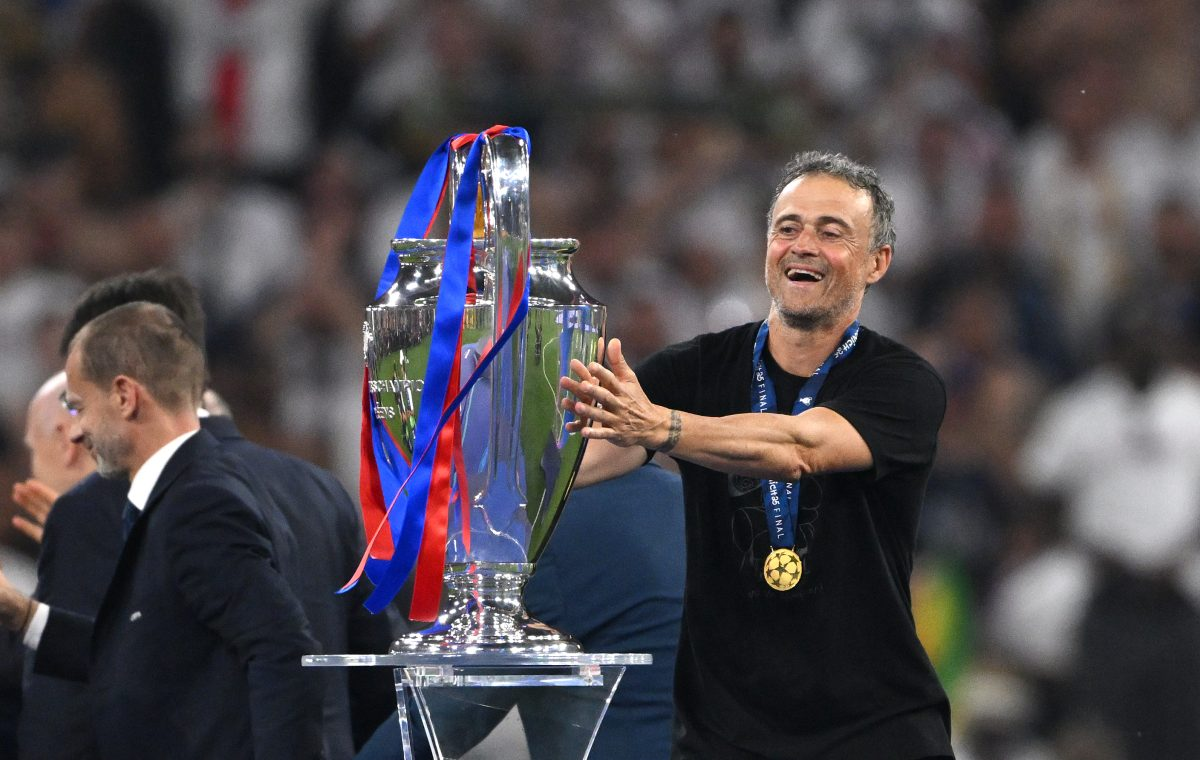
A Final Shaped by Respect, Rivalry and Shared History
Luis Enrique’s first message about Arsenal was not hostility. It was respect.
After PSG overcame Bayern, the Spaniard spoke warmly about Arteta, using an affectionate nickname that immediately became part of the build-up.
“I appreciate Mikelito Arteta!” Enrique said. “We used to be team-mates when we were kids, he did a great job at Arsenal.
“It will be a difficult, hard game but we believe in our football style.”
That line captures the emotional texture of this final. Enrique and Arteta’s connection dates back to their time at Barcelona in the late 1990s, when Arteta was still developing and Enrique was already an established figure. Their relationship has endured through different coaching paths, different clubs and now a meeting at the highest level of European football.
Arteta has previously returned that respect, describing Enrique as “one of the best coaches in the world” and “someone who helped me a huge amount.” He added: “I have the utmost respect both for how he is as a person and his way of working.”
PSG Arrive as Champions, Not Just Contenders
The challenge facing Arsenal is enormous because this is not simply a talented PSG side. It is a team that has already climbed the mountain.
PSG are the defending Champions League winners, having claimed their first European crown last season with a 5-0 victory over Inter Milan in Munich. They are now back in the final for a second straight year and are attempting to become the first team since Real Madrid to retain the trophy. Real Madrid last achieved that feat during their three-title run between 2016 and 2018 under Zinedine Zidane.
Their semi-final against Bayern was chaotic, tense and revealing. PSG carried a 5-4 first-leg lead from Paris into the Allianz Arena. Ousmane Dembele scored after just three minutes in the second leg, with Khvicha Kvaratskhelia providing the assist. Harry Kane equalised in stoppage time, but Bayern’s late goal was not enough to stop PSG advancing 6-5 on aggregate.
Enrique was satisfied not only by the result but by the character of his team.
“Good memories. We could leave the match with a lot of intensity,” he said.
“The defence were better than the attack. The character we showed against a team like Bayern is so positive. We’re so happy to reach a second Champions League final in a row.
“It was very intense. Very difficult. They play football at the highest level. Both teams are similar, we love to press higher. We are very happy.
“In two days I’m going to celebrate my birthday. I’m very happy. We’re in the next phase of the competition, the final of the Champions League. We want to give our supporters that kind of gift.”
Arsenal’s Return to the Biggest Stage
For Arsenal, this final represents a historic opportunity. It is their first Champions League final since 2006, when they lost 2-1 to Barcelona. They have never won the competition, making the Budapest final one of the most significant matches in the club’s modern history.
Arteta’s side reached this stage through control rather than chaos. Their semi-final against Atletico Madrid was low-scoring and tense, but Arsenal found a way through. Saka’s goal shortly before half-time in the second leg gave them a 1-0 win on the night and a 2-1 aggregate victory.
The contrast with PSG is striking. Enrique’s side have been prolific, explosive and relentless. Arsenal have reached the final with defensive authority. One of the sharpest statistical storylines is that PSG are the top scorers in this season’s Champions League with 44 goals, while Arsenal have the competition’s meanest defence, conceding only six goals in 14 games.
That makes the final feel like a tactical argument: PSG’s attacking system against Arsenal’s defensive structure.
Luis Enrique’s PSG: From Superstars to System
One of the strongest themes around PSG is transformation. Luis Enrique has rebuilt the club’s footballing identity from a side once associated with superstar imbalance into a collective machine built on work-rate, pressing, defensive discipline and attacking fluency.
The change is not only about personnel. It is about culture. PSG’s current structure relies on players who combine technical quality with intensity: Dembele, Kvaratskhelia, Desire Doue, Vitinha, Fabian Ruiz, Joao Neves, Marquinhos and Willian Pacho all form part of a side that can dazzle in possession and survive under pressure.
That duality was evident against Bayern. PSG’s first leg showed their attacking threat. The second leg showed their defensive resilience. BeIN’s report noted that PSG allowed Bayern more than 65% possession in Munich, prioritising defensive control after Dembele’s early goal.
This is why Enrique’s confidence matters. When he says PSG “believe in our football style,” it is not an empty phrase. It is the foundation of a team that has already won the competition and returned to the final.
Kvaratskhelia, Dembele and the Threat Arsenal Must Solve
Arsenal’s defensive record will be tested by a PSG attack full of one-v-one danger.
Kvaratskhelia’s assist for Dembele against Bayern was one of the defining moments of the semi-final. The Georgian winger became the first player to either score or assist a goal in seven knockout-stage games within the same Champions League campaign. Since his PSG debut in February last year, only Harry Kane has been involved in more Champions League goals than Kvaratskhelia, who has 21 goal involvements: 13 goals and eight assists.
Kvaratskhelia was respectful but clear about the final.
“We respect all of the teams. For us, it’s important to play our game,” he said.
“We don’t really think about who is going to be our opponent, we just prepare our game and give everything on the pitch.
“It will be difficult – it’s the Champions League final – and we just have to go and enjoy it.”
He also said: “Very happy we’re in the final. We know it will be difficult against Arsenal.
“Bayern are one of the best teams right now. It was very difficult. The hardest one this season. We showed we can play against these teams. I will give everything for this badge.”
For Arsenal, stopping PSG will require more than sitting deep. PSG can hurt teams through wide combinations, central rotations and individual dribbling. The danger is that defending too passively invites pressure; pressing too aggressively can open spaces behind.
The Arteta-Enrique Tactical Duel
The final will carry emotional weight, but it will likely be decided by tactical precision.
Enrique and Arteta share certain footballing principles. Both value pressing, structure and positional control. Enrique noted after the Bayern tie that PSG and Bayern were “similar” because “we love to press higher.” Arsenal under Arteta also depend heavily on coordinated pressure, compactness and control of territory.
The key difference may be risk profile. PSG’s attacking output suggests a team comfortable turning matches into high-tempo exchanges. Arsenal’s route to the final suggests a side capable of slowing games, managing margins and trusting defensive organisation.
The final could therefore hinge on which team imposes its rhythm. If PSG stretch the game, Arsenal’s back line will face repeated tests from Dembele, Kvaratskhelia and Doue. If Arsenal compress the pitch and control transitions, Arteta’s side can make the match more uncomfortable for PSG.
Last Season’s Warning for Arsenal
There is also recent history between the clubs. PSG beat Arsenal in last season’s Champions League semi-finals, winning 1-0 in north London before a 2-1 victory in Paris completed a 3-1 aggregate success. PSG then went on to win the competition.
That context matters. Arsenal know the scale of the opponent. PSG know they have already beaten Arsenal in a knockout setting. But finals have their own psychology. Arsenal will not only be trying to win a trophy; they will be trying to show that Arteta’s project has moved beyond near-misses and into the era of European conquest.
What Victory Would Mean
For PSG, winning would confirm the club’s transformation under Luis Enrique. Retaining the Champions League would elevate this team from impressive champions to a side with dynasty credentials. It would also reinforce the idea that PSG became stronger after moving away from the imbalance of the superstar era.
For Arsenal, victory would be historic. A first Champions League title would redefine the Arteta era and give the club the European achievement that has long eluded it. It would also mark one of the most important nights in Arsenal’s history, especially after nearly two decades away from the final.
Conclusion: A Final With Personal History and European Stakes
Luis Enrique versus Arsenal is more than a match preview phrase. It is a story about respect, memory, tactical identity and the pressure of legacy.
Enrique enters the final as the coach of Europe’s most dangerous team, a defending champion built on collective intensity and attacking brilliance. Arteta arrives with an Arsenal side that has grown into a serious European force, disciplined enough to reach the final and ambitious enough to believe it can win.
On May 30 in Budapest, friendship will pause for football. “Mikelito” will stand in the opposite technical area. PSG will trust their style. Arsenal will trust their structure. And one Spanish coach will leave the Puskas Arena with the Champions League trophy.


