

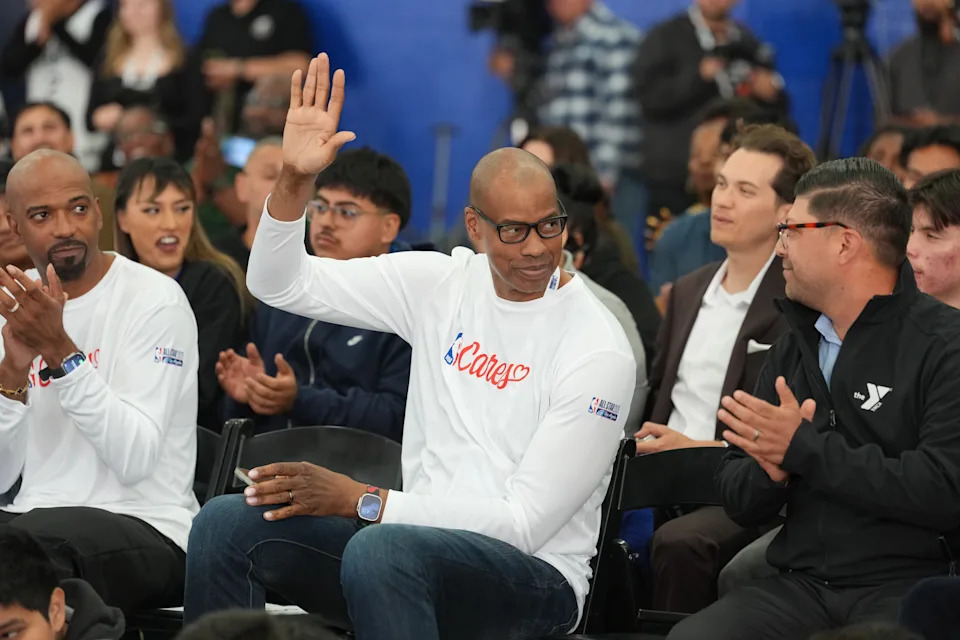
Jason Collins and the NBA: The Player Whose Courage Changed More Than Basketball
Jason Collins’ NBA story cannot be measured only in rebounds, screens, defensive possessions, or seasons played. His legacy sits at the intersection of professional sport, identity, courage, and cultural change. A 7-foot center who spent more than a decade in the NBA, Collins became one of basketball’s most historically significant figures when he came out publicly as gay in 2013 and later returned to the court with the Brooklyn Nets.
Collins, who has died aged 47 after revealing he had stage four glioblastoma, an aggressive form of brain cancer, leaves behind a legacy that extends far beyond the box score. His family said they were “heartbroken” to announce his death, adding: “Jason changed lives in unexpected ways and was an inspiration to all who knew him and to those who admired him from afar. Our family will miss him dearly.”
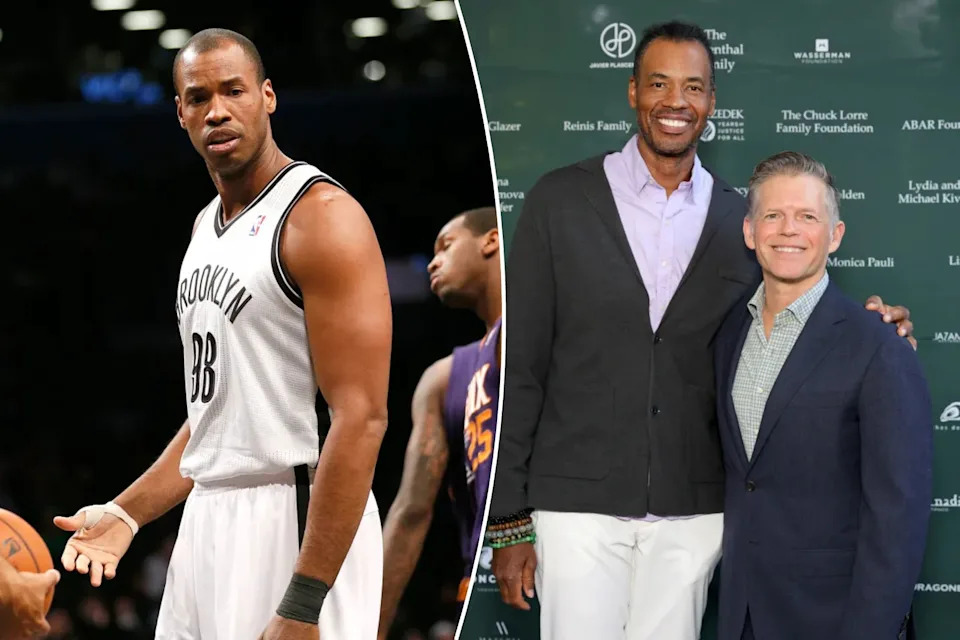
A Historic Figure in American Professional Sports
Collins made history in 2014 when he played for the Brooklyn Nets after publicly coming out as gay. That appearance made him the first openly gay male athlete to play in one of America’s top professional sports leagues.
The moment mattered because of what the NBA represented. Basketball was not a fringe platform. It was one of the world’s most visible sports, followed by millions, shaped by celebrity, competition, locker-room culture, and commercial pressure. For an active player to stand publicly in that space and say who he was carried symbolic weight far beyond one franchise or one season.
His 2013 declaration in Sports Illustrated became one of the most memorable athlete statements of the modern era: “I’m a 34-year-old N.B.A. center. I’m Black and I’m gay.”
That sentence was direct, personal, and impossible to ignore. It did not frame identity as a distraction from sport. It framed it as truth.
The NBA Career Behind the Milestone
Before Collins became a cultural landmark, he had already built a long NBA career. He was a 12-year veteran when he came out publicly and played across the league for teams including the Houston Rockets, Memphis Grizzlies, Minnesota Timberwolves, Atlanta Hawks, Boston Celtics, Washington Wizards, and Brooklyn Nets.
Collins was not known as a high-scoring star. His value came from size, defensive discipline, professionalism, and the kind of interior work that often matters more to coaches than highlight reels. He was the sort of veteran center teams trusted to compete physically, absorb difficult assignments, and help stabilize lineups.
That context is important. Collins’ legacy did not emerge from celebrity alone. It emerged from credibility. He had already belonged in NBA locker rooms, already handled the demands of a long professional career, and already earned respect as a teammate before his public announcement transformed the meaning of his presence on the court.
The 2013 Announcement That Shifted the Conversation
When Collins came out in 2013, he did so at a moment when American society was changing but major men’s professional sports still lagged behind. Public support for LGBT equality was growing, but the culture of elite men’s athletics remained complicated. Many athletes stayed silent about sexuality because they feared losing contracts, endorsement opportunities, locker-room acceptance, or public support.
Collins’ announcement challenged that silence.
He received widespread backing from public figures, sports leaders, and fans. Then US president Barack Obama described him as a “terrific young man.” Speaking at the White House after Collins came out, Obama said: “One of the extraordinary measures of progress we’ve seen in this country has been the LGBT community deserves full equality, not just partial equality. Not just tolerance, but recognition that they’re fully part of the American family.
“Given the importance of sport in our society, for an individual who has excelled at the highest levels in one of the major sports to go out and say, ‘This is who I am,’ I’m proud of it.”
The statement captured why Collins’ announcement resonated. Sport is not separate from society. It often reflects society’s tensions before institutions fully resolve them. Collins brought a private truth into a public arena and forced the sports world to respond.
Returning to the Court With the Brooklyn Nets
The full significance of Collins’ announcement became clearer when he returned to the NBA with the Brooklyn Nets. Coming out was one act of courage. Playing afterward, in front of crowds, cameras, opponents, and teammates, was another.
In 2014, Collins made his debut for Brooklyn, becoming a visible symbol of inclusion in a league that had never seen an openly gay active male player take the floor at that level. His appearance was not merely a personal achievement; it was a test of whether professional sports could make room for an athlete who had publicly claimed his identity.
The answer, though not perfect, was meaningful. Collins’ return showed that an openly gay player could compete in the NBA, be part of a team, and be judged by the same professional standards as everyone else.
A Public Life Beyond Basketball
Collins’ influence grew after his playing career. He attended the 2014 State of the Union address as a guest of first lady Michelle Obama. He also spoke at the United Nations, using his platform to advocate for inclusion, dignity, and equality.
That transition from athlete to public voice was a natural extension of the role he had already taken on. Collins did not simply become a symbol because he came out. He became a figure of lasting consequence because he continued to speak, appear, and represent something larger than himself.
His former agent Arn Tellem described his legacy as one of “tolerance, dignity, respect, inclusion, compassion, and understanding,” adding: “He left this world better than he found it.”
Why Jason Collins’ Story Still Matters
Collins’ death invites reflection not only on his life but also on what his career changed. In professional sports, representation is never abstract. It affects young athletes wondering whether they can belong. It affects locker rooms where language, assumptions, and silence shape culture. It affects fans who see themselves either included or erased by the games they love.
Collins’ decision gave future athletes a reference point. He demonstrated that coming out did not erase athletic achievement, professionalism, toughness, or competitiveness. It did not make him less of a teammate. It made him more fully visible.
His courage also helped broaden the public imagination of what an NBA player could be. For decades, elite male athletes were often expected to fit narrow ideas of masculinity. Collins complicated that image in a way that was both simple and profound: he was an NBA center, he was Black, he was gay, and all of those truths belonged in the same sentence.
A Legacy Larger Than One Season
Jason Collins’ NBA career will always be connected to the Brooklyn Nets and his landmark return to the court in 2014. But his legacy is not limited to one game, one announcement, or one symbolic first.
He was part of a generation that pushed professional sports toward greater honesty. He helped create space for athletes to speak more openly about identity, mental health, equality, and belonging. His story showed that visibility can be powerful precisely because it reaches people who may never meet the person who made that visibility possible.
For the NBA, Collins remains a historic figure. For American sports, he remains a trailblazer. For many beyond basketball, he remains a reminder that personal courage can change public culture.
His family’s words capture the emotional truth of his life’s impact: “Jason changed lives in unexpected ways.” In the end, that may be the clearest measure of what he gave to basketball and to the world beyond it.


