


David Attenborough Wasp: The Tiny “Body-Snatcher” Birthday Gift With a Big Scientific Story
For a man who has spent a century helping the world see wonder in the living planet, the birthday tribute could hardly be more fitting: not a statue, not a gala alone, but a newly described creature from the hidden archives of nature.
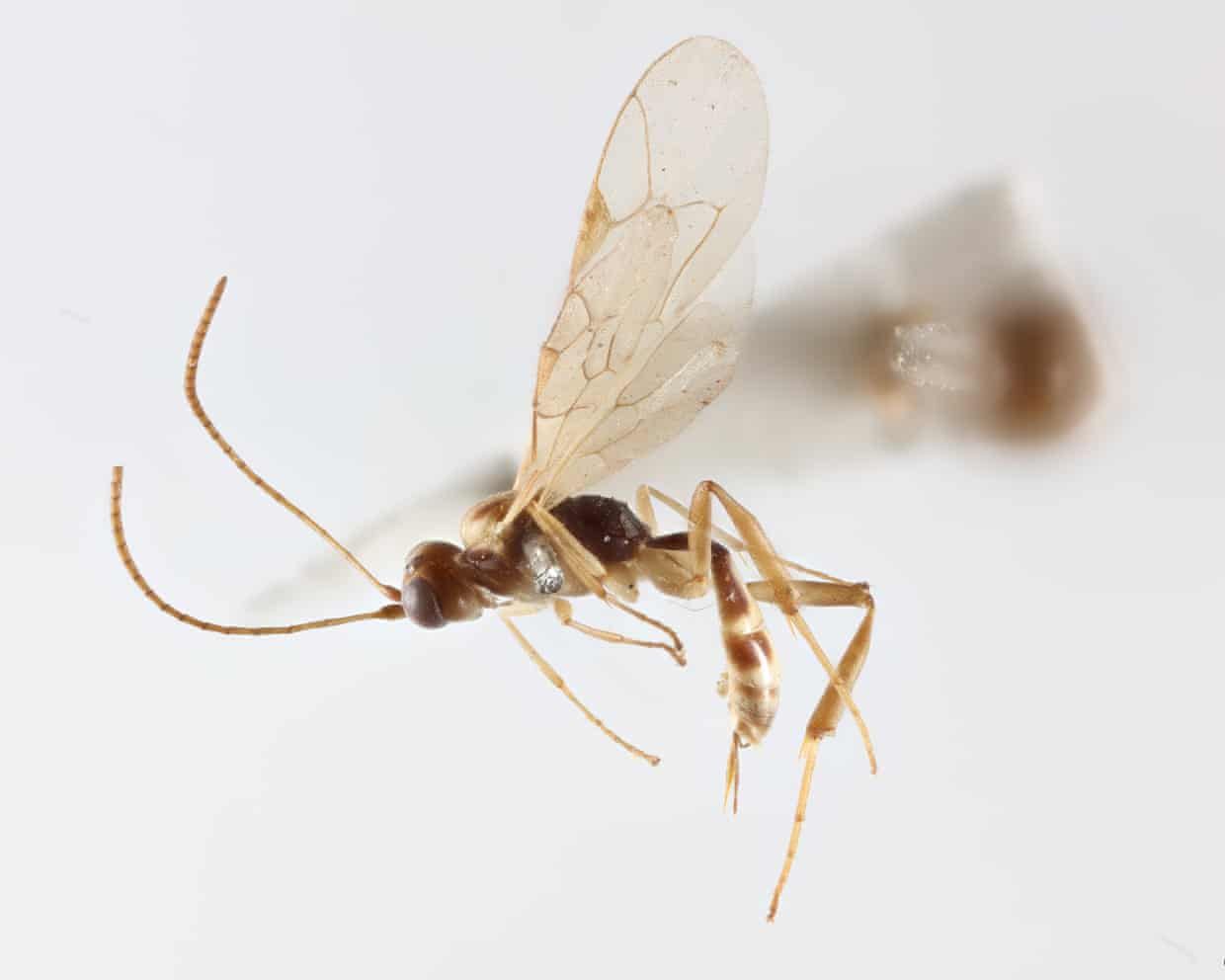
Sir David Attenborough’s 100th birthday has been marked by the naming of a tiny parasitic wasp, Attenboroughnculus tau, a newly identified genus and species native to Chile. At just 3.5 millimeters long, the insect is nearly invisible to casual human attention, yet scientifically significant enough to carry the name of one of the most influential natural historians of modern times.
The wasp was formally described by researchers at London’s Natural History Museum and published in the Journal of Natural History ahead of Attenborough’s milestone birthday on May 8, 2026. Its discovery is not only a tribute to Attenborough’s legacy, but also a reminder of how much biodiversity may still be waiting quietly in museum drawers.
A Birthday Present From the Unseen World
The new species’ name carries two layers of meaning. Attenboroughnculus honors Sir David Attenborough, while tau refers to a striking T-shaped marking on the wasp’s abdomen. The insect also has toothlike structures on its egg-laying organ and a distinctive polished groove on its hind legs, features that helped researchers determine it did not fit into any known genus.
That classification matters. In taxonomy, naming a new species is significant; naming a new genus is even more so. It means the organism is not simply another member of an existing branch of life, but distinct enough to require a new taxonomic home.
The wasp belongs to the ichneumonids, a large and often underappreciated group of parasitic wasps. These insects are sometimes known as Darwin wasps and are found across the world. The Chilean wasp is linked to a small subfamily called Pedunculinae, a group whose evolutionary history may trace back to ancient southern continents.
The Wasp That Waited Four Decades
The most intriguing part of the story may be how long the specimen remained unnoticed.
The wasp was originally collected in Chile’s Valdivia Province in 1983 and later became part of the Natural History Museum’s collections. For more than 40 years, it sat unexamined before volunteer Augustijn De Ketelaere noticed that it looked different from other ichneumonid specimens.
That observation led the specimen to Dr. Gavin Broad, the museum’s principal curator of wasps. Once examined in detail, it became clear that the tiny insect represented both a new species and a new genus.
Museum collections are often imagined as static archives, but this discovery shows they can function as living scientific resources. Shelves, drawers and specimen cabinets can hold evidence of species that have never been formally described, including organisms that may be rare, poorly understood, or perhaps no longer easily found in the wild.
Why a Parasitic Wasp Is a Fitting Tribute
At first glance, naming a flesh-eating parasitic wasp after a beloved broadcaster might seem unusual. But in Attenborough’s case, it is deeply appropriate.
Attenborough has long brought attention to overlooked and misunderstood creatures, including parasitoid wasps. In The Trials of Life, he memorably described them as “body-snatcher wasps” — a phrase that captures their startling life strategy. Parasitoid wasps lay eggs in or on other organisms; their young then develop by feeding on the host.
That life cycle can appear brutal, but it is also part of the complexity Attenborough has spent his career explaining: nature is not simply beautiful in a sentimental sense. It is intricate, competitive, strange, violent, adaptive and endlessly inventive.
The new wasp, then, reflects the kind of natural history Attenborough has always championed — the small, the hidden, the difficult to love, and the scientifically revealing.
The Scientist Inspired by Attenborough
For Dr. Gavin Broad, the naming was personal. He credited Attenborough with shaping his own path into taxonomy.
“When I was young, 5 or 6 maybe, I was given the Life on Earth book. In it, he mentions taxonomists and what they do, and I was hooked,” Broad said. “I decided from a far too early age I was going to be a taxonomist, thanks to David Attenborough, and weirdly I’ve ended up as a taxonomist. So I’ll pay something back.”
That quote captures the broader cultural power of Attenborough’s work. His documentaries and books did not merely entertain audiences; they recruited generations of scientists, conservationists, educators and nature enthusiasts into closer attention to the living world.
More Than 50 Species Already Carry His Name
Attenboroughnculus tau joins a long list of species named in Attenborough’s honor. More than 50 species have reportedly been named after him, including an echidna, a semi-slug, a tiny Peruvian frog, a wildflower, a butterfly, a grasshopper, a dinosaur and a ghost shrimp.
This particular honor stands out because it marks his centenary and because the insect is not only a new species but a new genus. It places Attenborough’s name into the scientific record in a way that reflects the breadth of his influence: not merely as a presenter of nature, but as someone who helped make taxonomy, biodiversity and conservation meaningful to the public.
A Small Wasp With a Large Conservation Message
The naming also arrives at a time when scientists are urging renewed attention to biodiversity. The wasp’s story reveals a quiet truth: many species are still unknown, even to science. Some may already be stored in collections. Others may exist in fragile habitats that are changing before researchers can fully document them.
Jennifer Pullar, science communications manager at the Natural History Museum and co-author of the study, framed the discovery as a call to action:
“We hope to inspire global scientists to take another look in their collections to see if there is something small that could contribute to our collective understanding and therefore the future of our natural world.”
That message is especially resonant in the context of Attenborough’s career. His later work has increasingly emphasized that wonder alone is not enough; understanding nature must lead to protecting it.
A Centenary Celebrated in Science and Culture
Attenborough’s 100th birthday has been marked by public tributes, programming and events, including a live celebration at the Royal Albert Hall featuring music from his programs, stories and reflections from public figures and advocates for the natural world.
Attenborough himself said he had hoped to celebrate the milestone “quietly,” but was moved by the response.
“I had rather thought that I would celebrate my 100th birthday quietly but it seems that many of you have had other ideas.”
“I’ve been completely overwhelmed by birthday greetings from pre-school groups to care home residents and countless individuals and families of all ages.”
“I simply can’t reply to each of you all separately but I would like to thank you all most sincerely for your kind messages.”
The wasp naming sits within that wider wave of recognition, but it may be one of the most enduring tributes. Events pass; species names remain in the scientific record.
The Bigger Lesson Hidden in a Museum Drawer
The story of Attenboroughnculus tau is about more than a wasp. It is about the unfinished work of discovering life on Earth.
A specimen collected in Chile in 1983 waited more than four decades to be recognized. Its discovery depended on the patience of museum work, the trained eye of a volunteer, the expertise of a curator and the taxonomic discipline that Attenborough himself helped popularize for millions.
In that sense, the wasp is a perfect birthday present. It honors the man by continuing the work he made famous: looking closely, asking what lives beside us, and reminding the world that even the smallest organism can carry a vast story.
As Sir David Attenborough turns 100, Attenboroughnculus tau stands as a tiny but powerful symbol of his legacy — a creature almost too small to notice, now carrying the name of the man who taught generations to notice the natural world more deeply.


