

David Attenborough News: A Century of Wonder, Science and Urgent Environmental Warning
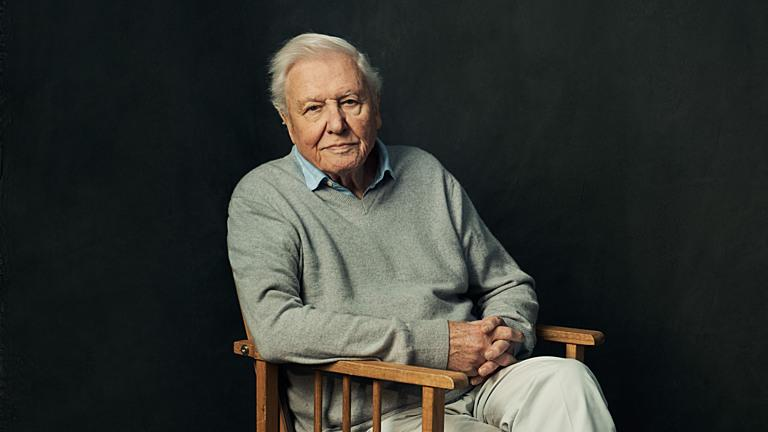
Sir David Attenborough’s 100th birthday has become more than a personal milestone. It has turned into a global moment of reflection on the power of storytelling, the fragility of the natural world and the rare public trust built by one broadcaster over more than 70 years.
The latest David Attenborough news centers on a wave of tributes marking his centenary, including celebrations by broadcasters, museums, scientists and conservationists. Among the most striking honors is the naming of a newly discovered parasitic wasp from Chile after him, a scientific tribute recognizing his lifelong influence on natural history, conservation and environmental awareness.
It is a fitting gesture. Few public figures have had their names so closely associated with life on Earth itself: animals, plants, fossils, landscapes, endangered habitats and the moral question of how humanity should live on a changing planet.
A Birthday the World Refused to Keep Quiet
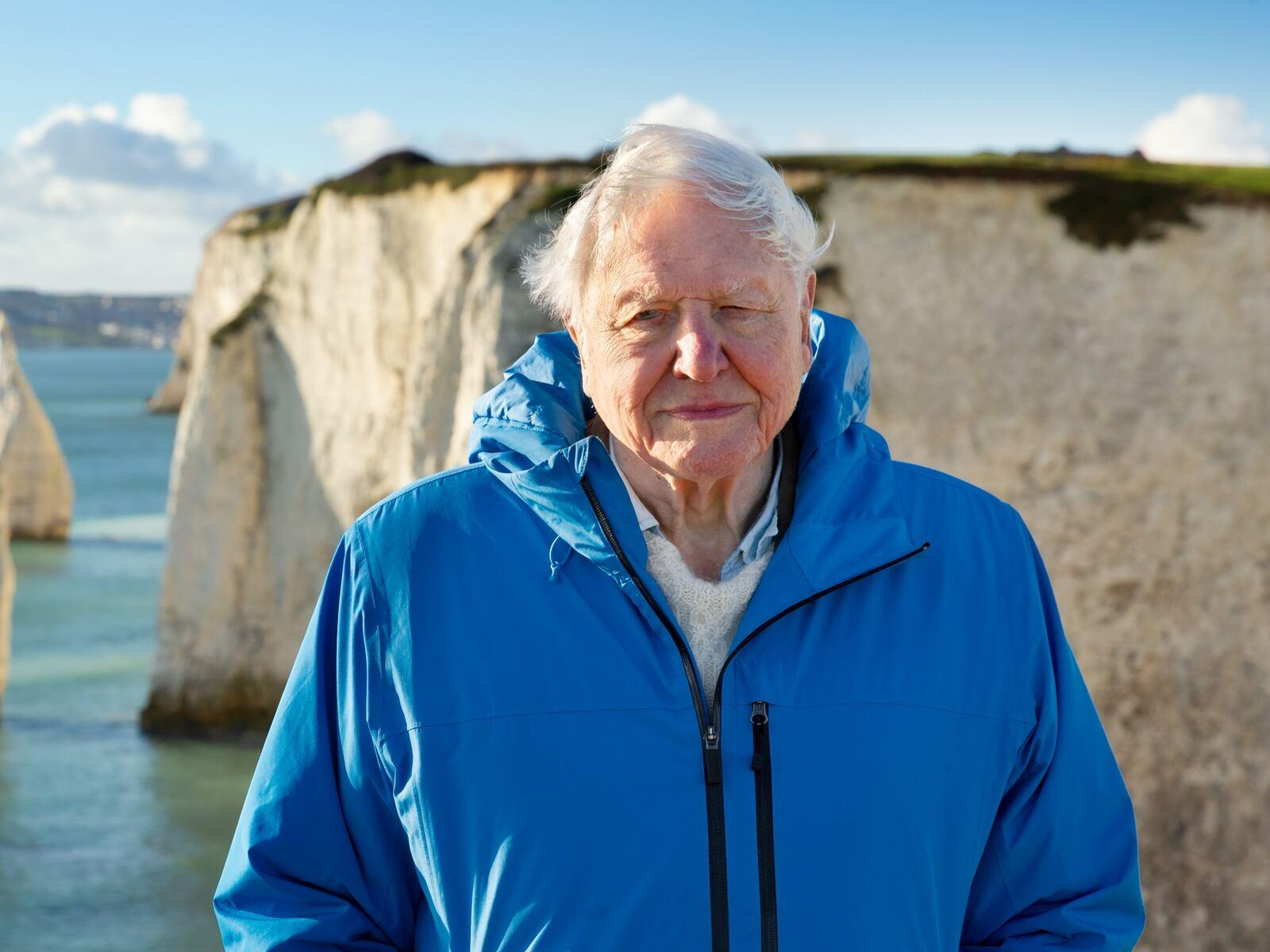
Attenborough reportedly expected a quieter birthday. Instead, the celebrations have become international.
The BBC is hosting a party for him at the Royal Albert Hall, cinemas are showing his nature films, and colleagues have spent days praising the man whose voice has accompanied generations through forests, oceans, deserts and polar ice. Producer Alastair Fothergill, who worked on some of Attenborough’s most famous documentaries, said the broadcaster would likely be uneasy with so much attention because he has always insisted: “Remember, the animals are the stars, I’m not.”
That sentence captures the paradox of Attenborough’s fame. He is one of the most recognizable figures in broadcasting, yet his public persona has always been built on deflection. He does not ask viewers to admire him. He asks them to look more closely at a frog, a whale, a gorilla, a plant root, a coral reef or a bird’s wing.
Why a Wasp Named After Him Matters
The naming of a newly discovered parasitic wasp from Chile after Attenborough is more than a ceremonial birthday present. Scientific naming is a way of placing a person’s legacy into the permanent language of biology.
For Attenborough, whose career has helped make biodiversity understandable to mass audiences, the honor is especially meaningful. His name has long been associated with species, fossils and conservation projects, but the timing of this latest discovery underlines how deeply his work has shaped public respect for the living world.
The wasp tribute also reflects a broader truth: Attenborough’s influence is not confined to television. Scientists, museum curators, conservation campaigners and educators have used his work as a bridge between specialist knowledge and public concern.
From Fossils to Global Television
Attenborough was born in London on May 8, 1926, and grew up on the grounds of what is now the University of Leicester, where his father held a senior position. His love of nature began early. As a boy, he collected abandoned birds’ nests, snake skin and fossils, later studying geology and zoology at the University of Cambridge.
He joined the BBC in 1952, initially working behind the scenes. A major turning point came when the capture of a coelacanth, a so-called “living fossil,” off the coast of East Africa created international interest. Attenborough helped produce a studio segment on the fish, but quickly realized television could do far more than show specimens indoors.
By 1954, he had persuaded the BBC to let him travel with a London Zoo team to West Africa, launching “Zoo Quest” and beginning a field career that would reshape wildlife broadcasting.
The Storyteller Who Made Science Feel Alive
Attenborough’s greatest contribution may be that he made scientific accuracy emotionally compelling. His landmark programs, including Life on Earth, The Private Life of Plants and The Blue Planet, introduced viewers to evolution, animal behavior and biodiversity without making those subjects feel remote or academic.
Colleagues describe his role as far more than narration. BBC producers say his involvement in major series can stretch across years, with his writing, commentary and scientific discipline shaping the final work. Elizabeth White, who worked with him on Blue Planet II, called him a “phenomenal writer and narrator,” while executive producer Mike Gunton described his intellectual and physical energy as his “secret superpower.”
That energy has mattered because wildlife television is not just about beautiful images. Attenborough’s work has traditionally given nature a narrative structure: small stories building into larger stories, individual species revealing entire ecosystems.
Chris Packham, writing about Attenborough’s legacy, argued that his greatest strength has been storytelling. “My generation was brought up on David telling us stories,” he wrote, contrasting that depth with modern wildlife programming that can sometimes become a sequence of spectacular images without emotional or scientific connection.
The Gorilla Moment That Became Television History
One of the defining images of Attenborough’s career came during the 1979 series Life on Earth, when he encountered mountain gorillas in a forest on the border of Rwanda and what was then Zaire, now Congo.
During the scene, young gorillas climbed over him and tried to remove his shoes. Attenborough later recalled: “I honestly don’t know how long it was. I suspect it was about 10 minutes, or even a quarter of an hour. I was simply transported.” He called it “one of the most privileged moments of my life.”
The moment endured because it showed what made him different. He was not performing dominance over nature. He was surrendering to it.
The Human Side Behind the Voice
The centenary tributes have also brought renewed attention to Attenborough’s private life, including his grief after the death of his wife, Jane Oriel, in 1997.
The couple married in 1950 after meeting at Cambridge University and had two children, Robert and Susan. Jane died after suffering a brain haemorrhage at the age of 70 while Attenborough was filming in New Zealand. He returned to the UK and later recalled holding her hand while she was unconscious: “She gave my hand a squeeze.”
In his memoir, he wrote: “The focus of my life, the anchor had gone…now I was lost.” He later said work helped him cope, but added, “an empty house is not what I enjoy.”
Those reflections add emotional depth to his public work. Attenborough has often described the natural world not only as a subject of study, but as a source of consolation. “In moments of grief – deep grief – the only consolation you can find is in the natural world,” he said.
From Neutral Observer to Environmental Advocate
For much of his career, Attenborough appeared to stand slightly apart from politics, presenting nature with calm authority. But as evidence of climate change, biodiversity loss and plastic pollution mounted, his tone shifted.
He began warning more directly about human damage to the planet. His work helped millions understand that the destruction of oceans, forests, rivers and wildlife populations was not a distant problem but a shared crisis.
Ben Garrod, an evolutionary biologist and broadcaster, said Attenborough may have initially seen himself as a neutral observer but was compelled to speak out when political and business leaders failed to respond seriously. “He is showing you the majesty, the ferocity, the fragility of the natural world. He shouldn’t have ever had to have turned to policymaking and advocacy,” Garrod said.
His warnings about plastic pollution in the ocean, especially through Blue Planet II, sparked widespread public reaction. The phrase “Do It for David” became part of a wider social media response to ocean plastic awareness.
A Legacy Built on Trust
Attenborough’s authority comes from consistency. He has spent decades showing audiences the planet’s beauty before asking them to face its damage.
That may explain why his warnings carry such weight. He is not known for sensationalism. His style is restrained, observant and patient. When he sounds alarmed, the alarm feels earned.
Prince Harry, Duke of Sussex, described Attenborough as a figure whose “measured demeanor and lack of any conceivable agenda” make his warnings more urgent. He wrote that Attenborough has helped dismantle the idea that climate issues are happening “somewhere else,” showing instead that distant glaciers, forests and rivers are part of systems on which human communities depend.
That is the central cultural significance of Attenborough’s career. He has turned environmental concern into something intimate. The planet is no longer just scenery. It is home.
The Future of the Attenborough Effect
At 100, Attenborough remains a symbol of continuity in a fast-changing media world. His career began in an era of black-and-white studio television and now reaches audiences through streaming platforms, social media clips and high-definition global documentaries.
Yet the core of his appeal has not changed. Viewers continue to respond to curiosity, humility and credibility.
The question now is what happens after the centenary celebrations fade. The newly named wasp, the birthday programs, the cinema screenings and the tributes all point to one reality: Attenborough’s legacy will not be measured only in awards or television ratings. It will be measured in whether the audiences he inspired choose to protect the natural world he spent a lifetime revealing.
His life’s work has offered both wonder and warning. At 100, the message is clear: the world he taught millions to love is still extraordinary, but it is also under pressure. The next chapter belongs not only to broadcasters, scientists or politicians, but to everyone who has ever watched one of his programs and felt the planet become larger, stranger and more precious.


