


Ciara Miller, Glamour, and the Anatomy of a Public Breakpoint
A Cultural Moment Framed in Gloss and Reality
In April 2026, Ciara Miller found herself at the center of a layered cultural moment—one that fused reality television drama with editorial storytelling. Her appearance in Glamour was not simply another celebrity feature; it became a carefully controlled narrative intervention at a time when her personal life was unfolding in front of millions.
The timing was precise. The context was volatile. And the response was measured.
At 30, the Summer House star transitioned from passive subject of speculation to active narrator of her own story—choosing long-form editorial over fragmented social media reactions.
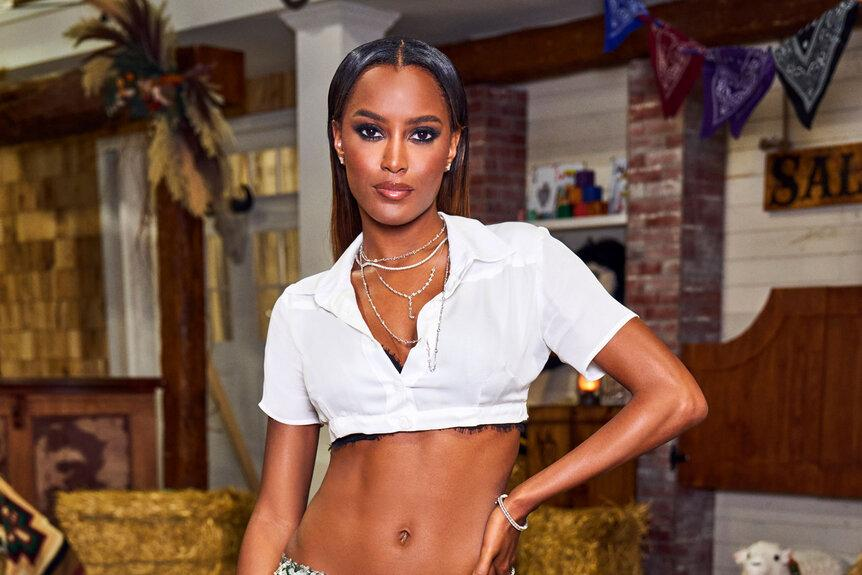
The Glamour Interview as Strategic Communication
Miller’s decision to speak through Glamour was deliberate. She framed it as an intentional alternative to impulsive commentary:
“I want to do it in my way… in a way that feels more intentional than just a podcast or a comment under a picture.”
This positioning matters. In contemporary celebrity culture, the medium often defines the message. By opting for a polished magazine platform, Miller effectively elevated her response from reactive to reflective.
The interview addressed the emotional fallout from a high-profile relationship shift involving her ex, West Wilson, and her close friend, Amanda Batula.
Their relationship, confirmed publicly on March 31, introduced a classic reality-TV tension—romantic overlap within a tight social ecosystem—but with unusually high emotional stakes.
When Private Hurt Becomes Public Narrative
The defining tension in Miller’s story is not simply betrayal—it is exposure.
“It’s one thing to experience hurt behind closed doors… To experience it so publicly is like another layer… It’s a major mindf—.”
This statement captures a broader phenomenon: the collapse of boundaries between private experience and public consumption. Reality television accelerates this collapse, but digital media amplifies it.
Miller’s experience illustrates three key dynamics:
- Temporal overlap: Events unfold in real life while simultaneously airing on television
- Audience participation: Fans interpret, judge, and amplify narratives in real time
- Narrative displacement: The subject loses control of timing and framing
Her acknowledgment of watching her own past play out onscreen while processing new emotional realities underscores the psychological complexity of this environment.
The Betrayal Hierarchy: Expectation vs. Shock
Miller’s reflections reveal a nuanced hierarchy of betrayal.
“At the end of the day, a guy’s a guy… But I just never would think that it would come from someone like Amanda.”
This distinction is analytically significant. It separates:
- Predictable behavior (romantic instability, boundary violations)
- Unexpected breach (violation within a trusted friendship network)
The emotional impact is not solely tied to the act itself, but to the violated expectation structure. In Miller’s case, the perceived safety of friendship intensified the rupture.
The Timeline Behind the Headlines
The current controversy is rooted in a sequence of events that unfolded over several years:
2023 – Initial Relationship
- Miller and Wilson began dating during Season 8 of Summer House
- The relationship ended later that year
Early 2026 – Structural Instability
- Batula separated from her husband, Kyle Cooke
- Social dynamics within the cast began shifting
March 2026 – Rumors and Confirmation
- Speculation about Batula and Wilson intensified
- A joint statement confirmed their relationship on March 31
April 2026 – Controlled Response
- Miller broke her silence through her Glamour cover interview
- Public discourse shifted from speculation to personal narrative
This progression illustrates how reality television narratives are constructed not only through episodes, but through off-screen developments and media amplification.
The Language of Restraint and Control
Despite the emotional intensity, Miller’s tone remains notably controlled. Rather than escalating conflict, she leans into philosophical framing:
“What’s done in the dark always comes to light… sometimes you really don’t even have to do anything except sit back and let the universe handle it all.”
This rhetorical strategy serves multiple functions:
- Maintains public composure
- Avoids reputational escalation
- Positions her as emotionally self-aware
In a media environment that rewards confrontation, restraint becomes a differentiator.
Identity Beyond the Narrative
While the relationship drama dominates headlines, Miller’s broader identity remains intact—and intentionally foregrounded.
She has:
- Maintained her career trajectory as a nurse-turned-influencer
- Continued public appearances and red carpet hosting
- Rejected opportunities that conflict with her personal boundaries
Her response to speculation about leading The Bachelorette is direct:
“I’m way too private.”
This statement reinforces a key tension: participation in reality television does not equate to unlimited public access.
The Role of Audience Perception
Audience reaction has been a stabilizing force in Miller’s public image. Fans consistently frame her appeal as extending beyond aesthetics:
- Emphasis on authenticity
- Perception of moral integrity
- Alignment with “good person” narratives
This aligns with commentary amplified within the Bravo ecosystem, including praise from Andy Cohen, who described her as possibly “the most beautiful person on Bravo.”
Importantly, the definition of “beauty” here extends beyond physical traits into perceived character—a critical distinction in reality TV branding.
What Comes Next: Reunion as Narrative Closure
Miller has explicitly deferred deeper confrontation to the Summer House reunion. This is not incidental; it reflects the structural mechanics of reality television.
The reunion functions as:
- Narrative resolution point
- Accountability forum
- Audience validation mechanism
By withholding full commentary until that stage, Miller preserves narrative tension while ensuring maximum impact.
Conclusion: A Case Study in Modern Celebrity Narrative Control
The intersection of Ciara Miller, Glamour, and the unfolding Bravo storyline represents more than celebrity gossip. It is a case study in how modern public figures manage visibility, vulnerability, and narrative authority.
Key takeaways include:
- Editorial platforms can reframe public perception more effectively than reactive channels
- Emotional restraint can function as strategic positioning
- Reality television narratives extend far beyond the screen
- Audience alignment increasingly hinges on perceived authenticity rather than spectacle
Miller’s approach—measured, intentional, and selective—demonstrates a calibrated response to a situation designed for chaos. Whether the upcoming reunion reinforces or reshapes this narrative remains the next critical phase.


