


Liudmila Samsonova: Power, Precision, and the Pursuit of Consistency on the WTA Tour
A Player Defined by Aggression and Opportunity
In the evolving landscape of women’s tennis, few players embody raw power and first-strike aggression as distinctly as Liudmila Samsonova. At 27 years old, the Russian stands firmly within the competitive middle tier of the WTA hierarchy—dangerous enough to challenge elite opponents, yet still searching for the sustained consistency required to break into the sport’s absolute elite.
Ranked No. 21 in the world with 1,845 points, Samsonova represents a profile familiar to modern tennis: physically imposing, tactically aggressive, and capable of producing high-level performances in bursts. Yet, her career narrative increasingly centers on a key question—can she convert flashes of brilliance into sustained dominance?
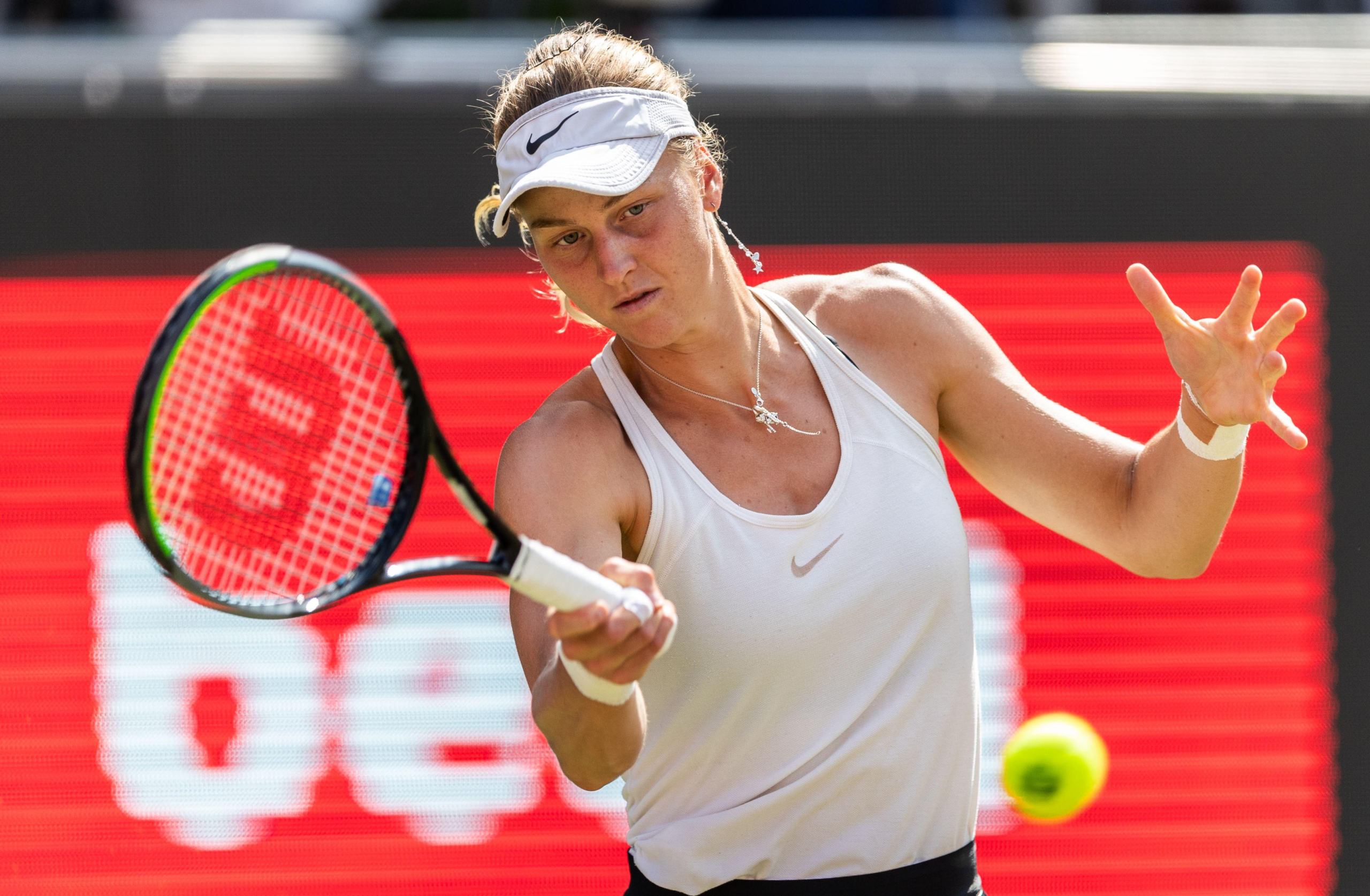
Stuttgart 2026: A Case Study in Momentum Swings
The 2026 Porsche Tennis Grand Prix in Stuttgart provided a revealing snapshot of Samsonova’s current trajectory. Facing world No. 3 Coco Gauff in the Round of 16, Samsonova demonstrated both her potential and her vulnerabilities.
The match began on her terms. Samsonova surged to a 3–0 lead in the opening set, dictating play with flat, penetrating groundstrokes. At one stage, she even served for the set—a position that should have allowed her to seize early control.
What followed, however, underscored a recurring theme in her career: difficulty closing out high-pressure moments.
Gauff, known for her composure and defensive resilience, reversed the momentum. The American captured the first set 7–5 and then dominated the second 6–1, completing a straight-sets victory in 1 hour and 36 minutes.
The shift was abrupt. Samsonova, after controlling early rallies, lost nine of the next ten games. The breakdown was not purely technical—it was psychological. As rallies extended and pressure mounted, Gauff’s consistency began to outweigh Samsonova’s aggression.
Head-to-Head Reality: A Growing Gap
The Stuttgart result reinforced an emerging pattern in their rivalry. Samsonova remains winless against Gauff, with the American holding a clear advantage in head-to-head encounters.
The disparity is not merely statistical—it reflects stylistic contrast:
- Samsonova thrives on quick points and aggressive shot-making
- Gauff excels in extended rallies, defensive transitions, and pressure situations
Against players who absorb pace and extend exchanges, Samsonova’s margin for error narrows significantly. This dynamic was evident again in Stuttgart, where her early dominance could not withstand prolonged pressure.
Playing Style: High-Risk, High-Reward Tennis
Samsonova’s game is built around first-strike tennis. Her approach is defined by:
- Flat groundstrokes that penetrate through the court
- Aggressive returns designed to seize control early in rallies
- Power-based serving patterns that aim to shorten points
This style is particularly effective in indoor environments, where conditions favor faster play. Stuttgart’s indoor clay—quicker than traditional outdoor clay—offered her opportunities to impose her game.
However, this same approach carries inherent risk. When timing falters or opponents neutralize her pace, Samsonova can struggle to adapt. Unlike more defensive or counterpunching players, she relies heavily on maintaining offensive control.
2026 Season: Mixed Signals
Samsonova entered Stuttgart with uneven momentum. While she secured a convincing opening-round win against Antonia Ruzic, her broader 2026 campaign has lacked consistency at the highest level.
In contrast to players like Gauff—who arrived with a 16–6 record and a recent deep run in Miami—Samsonova’s season has been characterized by fluctuations:
- Strong individual performances
- Difficulty sustaining form across tournaments
- Limited success against top-ranked opponents
This inconsistency has become the defining challenge of her career phase.
The Clay-Court Question
One of the more nuanced aspects of Samsonova’s profile is her relationship with clay courts.
Unlike natural clay specialists, her game is not built around heavy topspin or defensive endurance. Instead, she relies on:
- Flat hitting that can rush opponents
- Quick point construction
- Indoor conditions that reduce clay’s typical slow pace
While this approach can be effective in venues like Stuttgart, it becomes less reliable in traditional outdoor clay tournaments such as Rome or Roland Garros, where longer rallies and physical endurance dominate.
Psychological Dynamics: The Turning Point Factor
Perhaps the most critical dimension of Samsonova’s development lies in match psychology.
The Stuttgart match illustrated a familiar pattern:
- Strong start and early control
- Missed opportunity to close a set
- Rapid loss of momentum
- Difficulty recovering mentally
This sequence is not unique to a single match—it reflects a broader challenge faced by players transitioning from contenders to consistent elite performers.
Against top-tier opponents, matches are often decided in a handful of key moments. Samsonova’s ability to convert those moments remains an area for growth.
The Broader WTA Landscape
Samsonova’s position in the WTA ecosystem is strategically significant. Players ranked between No. 15 and No. 30 often act as disruptors—capable of upsetting higher seeds and influencing tournament outcomes.
Her aggressive style ensures that she remains a dangerous opponent, particularly in early rounds where top players are still adjusting to conditions.
However, breaking into the top 10 requires a different level of consistency:
- Winning close matches
- Maintaining composure under pressure
- Adapting tactically across surfaces
These are the benchmarks that will ultimately define her trajectory.
What Comes Next?
Looking ahead, Samsonova’s path forward hinges on refinement rather than reinvention.
Key areas of focus include:
- Closing efficiency: Converting leads into set victories
- Mental resilience: Maintaining composure after momentum shifts
- Tactical flexibility: Adjusting when primary strategies fail
If these elements align, her existing strengths—power, athleticism, and aggression—provide a solid foundation for further advancement.
Conclusion: A Career at a Crossroads
Liudmila Samsonova occupies a compelling position in modern tennis. She is neither an emerging prospect nor a fully established elite player. Instead, she stands at a transitional point—equipped with the tools to compete at the highest level, yet still refining the consistency required to stay there.
Her performance in Stuttgart against Coco Gauff encapsulates this duality: a player capable of dominating stretches of play, but not yet able to sustain that level across an entire match against top opposition.
The next phase of her career will likely be defined not by dramatic transformation, but by incremental improvement. In a sport where margins are thin and momentum shifts quickly, that may be enough to elevate her from a dangerous contender to a consistent presence among the game’s elite.


