

Daniel Craig Movies: How One Actor Redefined Bond and Built a Career Beyond 007
Daniel Craig movies occupy a rare place in modern cinema: they include one of the most influential James Bond runs in franchise history, a sharp comic reinvention through Knives Out, and a growing body of dramatic work that continues to reshape how audiences see him after 007.
For many viewers, Craig will always be associated with the tuxedo, the Aston Martin, and the cold precision of James Bond. Yet his career is not simply the story of an actor who played a famous spy. It is the story of a performer who turned a legacy character into something bruised, human, and emotionally volatile — then used that global visibility to pursue roles that moved in unexpected directions.
Now, with Amazon MGM Studios confirming that the search for the next James Bond is underway, Craig’s movie legacy has entered a new phase. His Bond era is complete, but the conversation around Daniel Craig movies is far from over.
The Bond Era That Changed the Modern Spy Movie
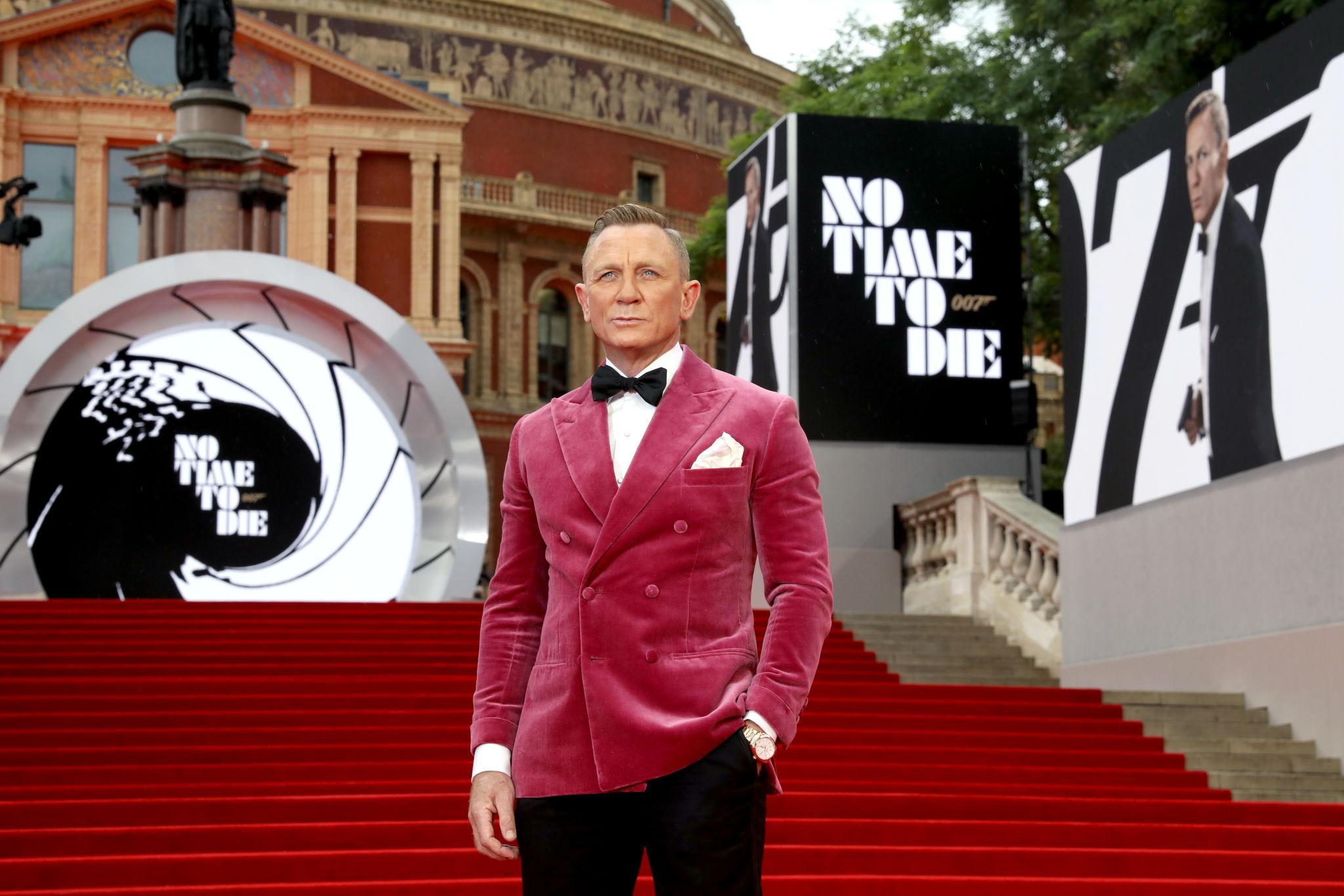
Daniel Craig’s tenure as James Bond began with Casino Royale in 2006 and ended with No Time to Die in 2021. Across 15 years, Craig became one of the defining faces of the franchise, bringing a harder, more emotionally exposed interpretation of 007 to global audiences.
The importance of his Bond films lies not only in their box office profile or franchise status, but in how they changed the tone of the character. Craig’s Bond was not just a smooth agent moving through glamorous danger. He was physical, wounded, stubborn, and increasingly haunted by the personal cost of espionage.
That darker direction reached its most dramatic endpoint in No Time to Die, which made the unprecedented decision to kill off Craig’s version of 007. The film closed his chapter in a way no previous Bond actor had experienced on screen, turning his exit into a narrative conclusion rather than a simple recasting.
Why Daniel Craig’s James Bond Still Shapes the Franchise
The next Bond film is now moving forward without Craig. Amazon MGM Studios announced in February 2025 that it would develop the next chapter of the franchise, the first since No Time to Die brought Craig’s tenure to a close in 2021.
On May 14, 2026, the studio confirmed that casting has begun, stating: “The search for the next James Bond is underway. While we don’t plan to comment on specific details during the casting process, we’re excited to share more news with 007 fans as soon as the time is right.”
That statement signals a major transition. The creative team for the next film has also been taking shape: Denis Villeneuve is directing, Amy Pascal and David Heyman are producing through Pascal Pictures and Heyday Films, Tanya Lapointe will executive produce, and Steven Knight is writing the script.
Even without Craig, the next Bond film will inevitably be measured against the era he helped define. His run made Bond more psychologically complex, more serialized, and more emotionally vulnerable. Whether the franchise moves lighter, darker, younger, or more traditional, it will be reacting in some way to the Craig template.
The Question of a Replacement
The search for a new James Bond has generated intense speculation because Craig’s version of the character left such a strong imprint. The discussion has included younger actors such as Harris Dickinson, Callum Turner, Tom Holland, Jacob Elordi, and Jonathan Bailey, while former fan-favorite possibilities such as Michael Fassbender and Tom Hardy are now seen as less likely because of age and the long-term commitment expected from the role.
Historically, Bond actors have entered the franchise at different ages. Sean Connery was 32 in his first Bond movie and 41 in his final one. George Lazenby was 29. Roger Moore began at 45 and finished at 57. Timothy Dalton was 41 when he started and 43 when he ended. Pierce Brosnan began at 42 and finished at 49. Craig was 38 in his first Bond film and 51 in his final one.
That history shows the role has never belonged to one age bracket. But Craig’s 15-year tenure from 2006 to 2021 also highlights why the next actor may need to be young enough to carry the franchise across multiple films.
Beyond Bond: Daniel Craig’s Comic Reinvention in Knives Out
One of the most important Daniel Craig movies outside the Bond franchise is Knives Out. In the 2019 mystery film, Craig plays Benoit Blanc, a Southern detective whose theatrical manner and sharp investigative instincts allowed the actor to show a very different side of his screen persona.
After years of being associated with Bond’s severity, Craig’s performance as Blanc revealed his comic timing, eccentricity, and ability to anchor an ensemble without relying on action-star intensity. The film follows Blanc as he investigates the death of a bestselling crime author, with the mystery unfolding around the author’s family and nurse Marta.
The cast includes Christopher Plummer, Ana de Armas, Jamie Lee Curtis, Michael Shannon, Toni Collette, Don Johnson, LaKeith Stanfield, and Katherine Langford. Craig’s performance became central to the film’s identity, turning Blanc into one of his most recognizable non-Bond characters.
The role also helped Craig escape the gravitational pull of 007. Instead of trying to outdo Bond with another action hero, he moved into mystery-comedy territory and found a character broad enough to become iconic in his own right.
Queer and the Mature Phase of Craig’s Career
Craig’s post-Bond work has also included more intimate and dramatic material. In Queer, the acclaimed 2024 drama based on the novella by William S. Burroughs, Craig plays an American expatriate in 1950s Mexico City who becomes infatuated with a younger man, played by Drew Starkey, and tries to establish an intimate connection.
The film comes from Luca Guadagnino, the director of Call Me by Your Name and Challengers. It has been described as a “beautiful, filthy, extraordinary take” on the source material.
For Craig, Queer represents a significant move away from franchise spectacle. It positions him in a more vulnerable, literary, and psychologically charged space, reinforcing that his post-Bond choices are not designed simply to preserve his action-star image. They are designed to complicate it.
The Streaming Era Keeps Craig’s Filmography in Circulation
Daniel Craig movies continue to find new audiences through streaming. Recent viewing guides have highlighted Queer on BBC iPlayer and Knives Out on Channel 4, showing how Craig’s work remains highly visible beyond theatrical release windows.
That matters because Craig’s filmography now functions across multiple viewing habits. Some audiences return to his Bond movies as franchise landmarks. Others discover his comic side through Knives Out. Others may encounter his more adventurous dramatic work through Queer. Together, these roles show how Craig’s career has become broader than the single character that made him a global name.
Why Spy Stories Thrived After Craig’s Bond Exit
Craig’s departure from Bond came at a time when spy stories were thriving on television and streaming platforms. While there has been no new James Bond movie since No Time to Die, espionage narratives have continued through projects such as The Terminal List, Mr. and Mrs. Smith, The Night Agent, Citadel, and Special Ops: Lioness.
This matters because Craig’s Bond helped normalize a more emotionally burdened version of spy storytelling. The modern spy is often conflicted, damaged, and morally compromised — qualities that Craig’s Bond era placed at the center of blockbuster cinema.
The rise of shows such as The Agency, starring Michael Fassbender as CIA agent “Martian,” also reflects the appetite for espionage stories that explore the toll of undercover work. Based on the French series The Bureau, The Agency follows Martian after six years undercover in Africa as he returns to take on a new mission. Its supporting cast includes Jeffrey Wright, Katherine Waterston, and Jodie Turner-Smith.
Although Fassbender is unlikely to replace Craig as Bond, his work in the genre shows how Craig’s era helped expand audience expectations for spy characters. The genre now has room for action, psychology, trauma, romance, and moral uncertainty.
Bond Beyond the Movies
The future of Bond is no longer limited to cinema. The uploaded source material also points to the success of 007 First Light, a video game that has been described as one of the strongest Bond stories in years. The game presents an original story independent of the films and follows a younger, pre-00 James Bond before his full MI6 identity is established.
The game’s success matters in the wider conversation about Daniel Craig movies because it shows the franchise is already expanding beyond the shadow of his film era. Bond can continue through new actors, new media, and new interpretations. But the Craig era remains the most recent cinematic benchmark.
If the next Bond film wants to feel fresh, it must solve a difficult problem: how to honor what Craig achieved without simply repeating it.
The Lasting Appeal of Daniel Craig Movies
Daniel Craig’s best movies work because they rarely treat him as a simple hero. His Bond is capable but damaged. His Benoit Blanc is brilliant but theatrical. His role in Queer leans into longing, intimacy, and emotional risk. Across these performances, Craig has built a screen identity around tension: restraint versus vulnerability, toughness versus fragility, control versus collapse.
That is why his filmography remains compelling. He can carry blockbuster spectacle, but he is often most interesting when a role exposes the cost beneath the surface.
For audiences searching for Daniel Craig movies, the essential journey begins with Bond but does not end there. Casino Royale, Skyfall, Spectre, and No Time to Die define the franchise years. Knives Out and its Benoit Blanc role show his comic reinvention. Queer reflects his willingness to take more intimate dramatic risks.
Conclusion: Daniel Craig’s Career After 007 Is Still Expanding
Daniel Craig’s movie career is now entering its most interesting legacy period. His James Bond run is complete, the next 007 is being prepared, and Amazon MGM Studios is building a new creative team for the franchise’s future. But Craig’s work continues to shape the conversation.
He did not merely play Bond; he modernized him. He did not simply leave the franchise; he followed it with roles that challenged audience expectations. That combination makes Daniel Craig movies a strong subject not just for Bond fans, but for anyone interested in how major stars survive — and evolve beyond — the characters that define them.
As the search for the next James Bond continues, Craig’s legacy remains the standard against which the next era will be judged.


