

Delta Goodrem’s Eurovision Semi-Final Triumph Sends Australia Into Grand Final Spotlight
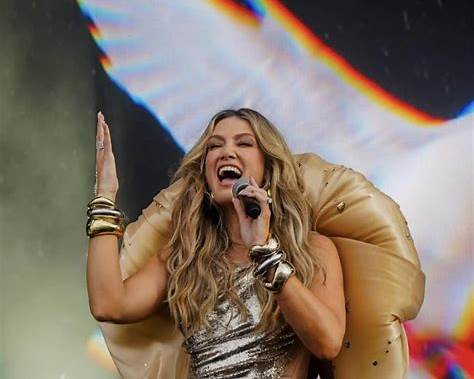
Australian pop superstar Delta Goodrem has surged into the Eurovision Song Contest 2026 grand final after delivering a dramatic semi-final performance in Vienna that immediately transformed Australia into one of the competition’s strongest contenders.
What began as a highly anticipated Eurovision appearance quickly evolved into one of the defining moments of the 2026 contest, with bookmakers dramatically shortening Australia’s odds after Goodrem’s soaring rendition of her power ballad Eclipse. The performance combined cinematic staging, emotional vocals, and a glittering visual spectacle that captured both arena audiences and viewers across the globe.
As Eurovision continues to wrestle with controversy, political tensions, and shifting audience expectations, Goodrem’s semi-final appearance has become more than just another performance. It now stands as one of the central narratives heading into the grand final.
Australia’s Eurovision Momentum Reaches New Heights
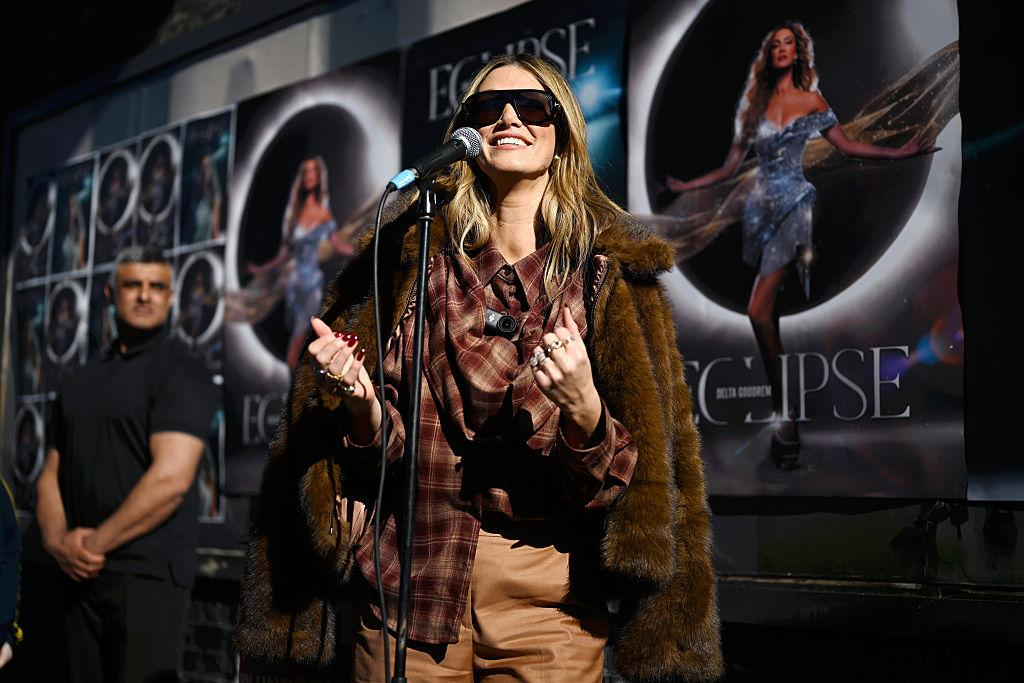
Australia has participated in Eurovision since 2015 after initially entering as a special guest nation. What started as a one-off invitation eventually turned into permanent participation due to the country’s passionate Eurovision fanbase and consistently strong ratings.
Yet despite Australia’s enthusiasm for the contest, recent years have been challenging. The country had not reached the grand final since 2023, making Goodrem’s qualification especially significant.
The 41-year-old singer arrived in Vienna already carrying enormous expectations. Known internationally for her early-2000s chart success and her role in Neighbours, Goodrem entered Eurovision as one of Australia’s most recognizable musical exports. She has achieved four number-one albums in Australia and built a long-standing reputation as both a singer-songwriter and television personality.
But Eurovision presents a unique challenge. Success depends not only on vocal ability, but also on creating an unforgettable visual and emotional moment within three minutes.
Goodrem delivered exactly that.
The Performance That Changed the Betting Odds
Performing Eclipse during the second semi-final in Vienna’s Wiener Stadthalle, Goodrem embraced a celestial concept built around themes of light, shadow, and cosmic alignment.
The staging immediately stood out from many of the contest’s more gimmick-heavy entries.
She began atop a glittering golden piano beneath celestial lighting effects while dressed in a custom gold gown hand-embellished with thousands of Swarovski crystals. The dramatic visuals culminated in one of the night’s most talked-about moments when Goodrem rose high above the stage on a mechanical riser as sparks rained from the ceiling.
According to reports, the gown alone required more than 500 hours of work and featured over 7,000 Swarovski crystals. A crystal “eclipse” centerpiece designed by House of Emmanuele served as both a decorative and symbolic element.
The staging created immediate reactions inside the arena.
BBC coverage described the audience response as a “tsunami” of awe, while France 24 noted that Goodrem’s performance was among the evening’s standout moments.
After the semi-final, Goodrem admitted the height of the lift initially startled her.
“When we were first testing it, I was definitely like, ‘Woah, it’s a bit higher than I realised’,” she said.
She later added:
“I can see the whole room. I definitely get a great vantage point up there.”
The gamble paid off immediately.
Before the semi-final, Eurovision betting aggregators ranked Australia behind Finland, Greece, and Denmark. Following the performance, Goodrem surged into second place behind Finland in many prediction markets.
The Song “Eclipse” and Its Emotional Appeal
Unlike some Eurovision entries built around novelty or irony, Eclipse leans heavily into emotional grandeur.
The ballad evokes romantic imagery of planetary alignment and emotional connection, using orchestral crescendos and dramatic vocal climbs to create a cinematic atmosphere.
Goodrem explained that she wanted the performance to reflect “the universe itself,” balancing “light and shade, softness and strength.”
This approach appears to have resonated strongly with Eurovision audiences, who often reward songs that combine emotional sincerity with striking staging.
Several commentators also noted that Goodrem’s performance avoided excessive choreography or distracting props, allowing the vocal performance itself to remain central.
Eurovision 2026: A Contest Shaped by Controversy
While Goodrem’s performance dominated headlines, Eurovision 2026 has also been overshadowed by geopolitical tensions surrounding Israel’s participation.
This year’s contest saw multiple countries withdraw in protest, including Spain, Ireland, Iceland, Slovenia, and the Netherlands.
The controversy stems from the ongoing war in Gaza following the Hamas-led attacks of October 7, 2023, and Israel’s military response. Eurovision organizers have maintained that the competition is “strictly non-political,” but criticism has intensified because Russia was previously excluded following its 2022 invasion of Ukraine.
When asked about the boycott issue, Goodrem deliberately avoided entering the political debate.
Instead, she emphasized music’s ability to unite people.
“When you come to my shows, I tell you to leave everything outside the door — come in here and we’re singing the same song,” she said.
She continued:
“From the day I got into music, I have always believed in the power of music and its healing qualities.”
Her response aligned closely with Eurovision organizers’ long-standing messaging that the event should remain focused on cultural exchange and entertainment rather than political activism.
A Grand Final Packed With Heavyweights
The Eurovision 2026 grand final will feature 25 competing countries.
Among the strongest challengers are Finland, Greece, Denmark, and several semi-final standouts including Romania’s controversial rock act Alexandra Căpitănescu and Bulgaria’s energetic pop performer Dara.
Australia’s qualification came alongside Albania, Bulgaria, Cyprus, Czechia, Denmark, Malta, Norway, Romania, and Ukraine.
Eurovision remains the world’s largest live televised music event, regularly attracting audiences exceeding 150 million viewers worldwide. Vienna 2026 also marks the contest’s 70th anniversary edition.
That scale means even a strong semi-final performance can dramatically reshape an artist’s international visibility.
Olivia Newton-John’s Presence Looms Large
Goodrem also revealed that she has felt emotionally connected to late Australian icon Olivia Newton-John throughout the Eurovision journey.
Newton-John herself competed in Eurovision in 1974 while representing the United Kingdom, creating a symbolic connection between generations of Australian performers.
Goodrem reflected on the feeling during interviews in Vienna:
“I feel like she might’ve had something to do with it. I hope she’s watching over us and is proud of what we’re doing.”
The comparison adds another layer of emotional resonance to Australia’s 2026 campaign, especially given Newton-John’s enduring cultural influence in both Australia and Europe.
Could Australia Actually Host Eurovision?
One of the more intriguing discussions surrounding Goodrem’s success is what would happen if Australia actually wins the competition.
Traditionally, the winning country hosts the following year’s contest. But Australia’s geographical distance from Europe has always complicated that possibility.
Goodrem, however, has already embraced the idea enthusiastically.
“Australia!” she said when asked where Eurovision should be held if she wins.
She joked about welcoming international visitors with barbecues and insisted the country would make a strong host nation.
Although logistical questions remain unresolved, the discussion alone highlights how seriously Australia is now being viewed within the Eurovision ecosystem.
Why Delta Goodrem’s Eurovision Run Matters
Eurovision has evolved far beyond a niche European music competition. It is now a massive global entertainment event that shapes music careers, streaming numbers, online trends, and cultural conversations.
Goodrem’s rise in the competition reflects several broader trends:
- Eurovision audiences increasingly reward polished mainstream performers.
- Australia has become a fully integrated part of the Eurovision landscape.
- High-concept staging and emotional storytelling remain crucial to success.
- The contest continues balancing entertainment with mounting political pressures.
For Australia specifically, Goodrem’s qualification represents a renewed sense of momentum after several difficult Eurovision years.
And for Delta Goodrem herself, Eurovision may become one of the defining moments of her international career.
With bookmakers now placing her among the leading contenders, the grand final could mark Australia’s closest brush yet with Eurovision victory.
Conclusion
Delta Goodrem entered Eurovision 2026 carrying the hopes of Australian fans eager for a return to the grand final. She leaves the semi-finals as one of the competition’s defining stars.
Her performance of Eclipse combined technical precision, emotional sincerity, and visually stunning staging to produce one of the contest’s most memorable moments so far. As betting odds tighten and anticipation builds, Australia suddenly finds itself within reach of an unprecedented Eurovision triumph.
Whether Goodrem ultimately claims the trophy or not, her semi-final performance has already secured its place among the standout Eurovision moments of 2026.


