


Drake Turns ICEMAN Into a Three-Album Spectacle as Fans React to Emotional Family Revelation
Drake has once again shifted the center of gravity in hip-hop — this time not with a single album, but with an ambitious three-project release that blends blockbuster rollout tactics, deeply personal storytelling, and the kind of cultural spectacle only a handful of artists in modern music can generate.
After months of teasing ICEMAN, the Toronto superstar stunned fans by unveiling not one, but three albums at midnight: ICEMAN, Habibti, and Maid Of Honour. The release delivered 43 new songs across the trilogy and instantly became one of the most discussed moments in music this year.
But amid the excitement surrounding the music, another moment quickly took over social media: Drake’s revelation that his father, Dennis Graham, is currently battling cancer.
A Surprise Release That Expanded Into a Full Trilogy
For much of 2025 and early 2026, fans believed Drake was preparing for a conventional solo album rollout centered around ICEMAN. Instead, the rapper transformed the campaign into a sprawling multimedia event that stretched across Toronto and dominated online conversation for weeks.
The surprise was revealed during the closing moments of Drake’s “ICEMAN Episode 4” livestream. As the stream ended, viewers saw a message flash on screen:
“All 3 albums dropping at midnight from the biggest sound.”
Moments later, fans discovered that ICEMAN, Habibti, and Maid Of Honour had all arrived simultaneously.
The projects were released through OVO Sound under an exclusive license to Republic Records, an imprint of Universal Music Group. The combined rollout immediately became one of the largest album events in recent hip-hop memory.
Drake packed the trilogy with major collaborators including Future, 21 Savage, Sexyy Red, Central Cee, Popcaan, and PARTYNEXTDOOR, reinforcing the global and commercially expansive approach that has defined much of his career.
The Emotional Moment That Changed the Conversation
While fans expected aggressive bars, competitive energy, and possible subliminal disses, one lyric from ICEMAN unexpectedly became the emotional centerpiece of the release.
On the track “Make Them Cry,” Drake revealed that his father is fighting cancer:
“My dad got cancer right now, we battlin’ stages /
Trust me when I say there’s plenty things that I’d rather be facin’ /
For real /
And this time, ask me to dig deeper, I’ll gladly explain it.”
The revelation immediately spread across social media, with fans flooding timelines with messages of support for Dennis Graham and the Graham family.
For longtime Drake listeners, the moment carried particular weight because Dennis Graham has been a recurring figure throughout the rapper’s music and public life. Drake has referenced his relationship with his father across multiple albums and interviews over the years, often exploring themes of family, distance, reconciliation, and emotional vulnerability.
Dennis Graham himself became a recognizable personality among fans through concert appearances, interviews, and public events alongside his son.
The candid disclosure added an unusually personal layer to an album cycle already loaded with public scrutiny and expectation.
Toronto Became the Stage for the Entire Rollout
The ICEMAN campaign was never limited to streaming platforms or social media teasers. Drake effectively transformed Toronto into a living promotional installation.
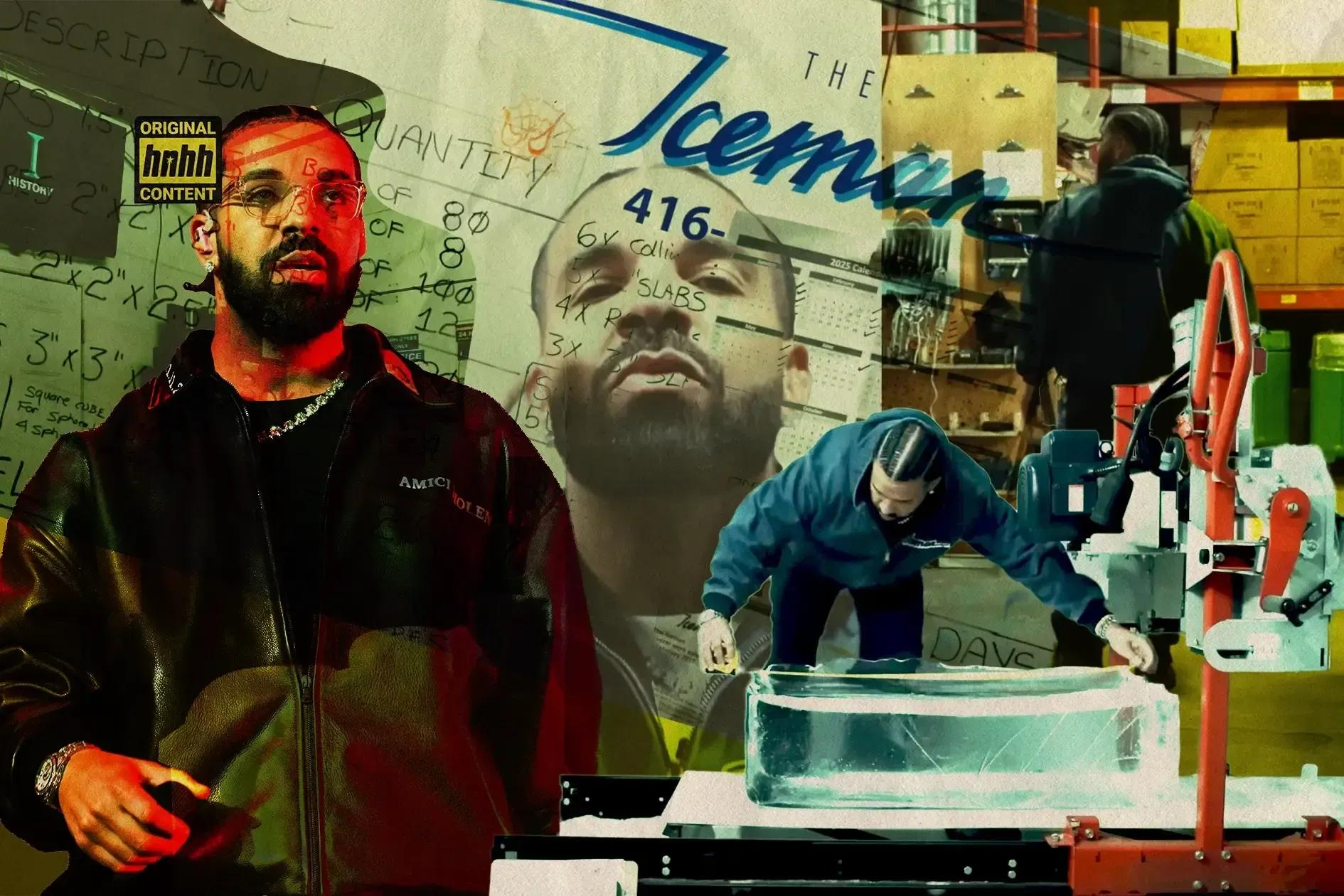
Weeks before release, giant blocks of ice appeared in downtown Toronto concealing the album’s release date. Fans reportedly arrived with pickaxes, blowtorches, and hammers attempting to uncover the hidden information inside the structure. Police eventually intervened for crowd control and safety concerns.
The rollout escalated further with reports of Drake filming around iconic Toronto locations, including the CN Tower. The city’s skyline became central to the visual identity of the campaign.
On release night, the CN Tower itself was illuminated in icy blue visuals connected to the ICEMAN branding, turning one of Canada’s most recognizable landmarks into part of the album experience.
The strategy reflected Drake’s long-standing habit of using Toronto not simply as a hometown reference, but as an active character in his music and branding.
The Return of Drake the Event-Maker
Music industry observers have long argued that Drake’s greatest strength is not simply making hits — it is his ability to dominate cultural conversation.
The ICEMAN era reinforced that reputation.
Rather than relying on a traditional album announcement, Drake built anticipation through livestream episodes, cryptic visuals, citywide stunts, and viral fan participation. Songs like “What Did I Miss?,” “Which One,” and “Dog House” were previewed strategically over several months, keeping fan speculation alive.
The rollout also arrived at a crucial moment in Drake’s career.
The rapper spent much of the past two years navigating fallout from his highly publicized feud with Kendrick Lamar. Critics and fans alike viewed ICEMAN as a pivotal project that could shape the next phase of his artistic reputation.
Some analysts suggested Drake needed more than commercial success this time — he needed a project with emotional depth and cultural resonance.
By combining deeply personal storytelling with large-scale spectacle, Drake appears to be attempting exactly that.
Rumors of Diss Tracks and Industry Tension
Even before the albums dropped, speculation swirled around potential lyrical targets.
Charlamagne Tha God publicly warned that figures including DJ Khaled and ASAP Rocky might receive “strays” on the upcoming release. Other names floated in fan discussions included Kendrick Lamar, LeBron James, Rick Ross, and Joe Budden.
That speculation only intensified after listeners began dissecting the trilogy track by track.
While many songs reportedly contain confrontational or competitive bars, “Make Them Cry” emerged as the most emotionally resonant record because it shifted focus away from rap rivalries and toward family and personal hardship.
The contrast between aggressive lyrical energy and vulnerable confession gave the project a more layered emotional tone than many fans anticipated.
Why the Triple Release Matters
Releasing multiple albums simultaneously is a high-risk strategy even for superstar artists.
The sheer volume of music can overwhelm listeners, fragment streaming attention, and complicate critical reception. But for Drake, scale itself has become part of the brand.
The three-project structure allowed him to present different moods, collaborations, and sonic directions while maximizing cultural impact in a streaming era driven by constant conversation.
The move also reinforces Drake’s understanding of modern fan engagement. In today’s digital music ecosystem, attention often matters as much as chart performance. By dropping 43 songs across three albums, Drake guaranteed days — if not weeks — of online debate, lyric analysis, playlist discussion, and social media trends.
A Defining Moment in Drake’s Current Era
Whether ICEMAN, Habibti, and Maid Of Honour ultimately become career-defining classics remains to be seen. But the launch itself has already become one of the year’s biggest entertainment moments.
The rollout fused spectacle, mystery marketing, emotional vulnerability, and blockbuster collaboration into a release strategy that only an artist of Drake’s scale could realistically execute.
At the center of it all, however, was a far more human moment: a son publicly sharing his father’s cancer battle with millions of listeners around the world.
For an artist often associated with dominance, competition, and internet-breaking releases, that emotional honesty may end up becoming the most memorable part of the entire ICEMAN era.


