Mackenzie Shirilla Car: The Deadly Strongsville Crash That Became a Murder Case
In the early hours of July 31, 2022, what first appeared to be a devastating car crash in Strongsville, Ohio, became one of the most closely watched criminal cases involving a teenage driver in recent years. At the center was Mackenzie Shirilla, then 17, who was behind the wheel of a 2018 Toyota Camry when it slammed into a brick building, killing her boyfriend, Dominic Russo, 20, and their friend, Davion Flanagan, 19.
- A Quiet Road, a Sudden Acceleration, and a Fatal Impact
- From Accident Theory to Murder Investigation
- The Relationship at the Center of the Case
- Davion Flanagan: The Passenger Caught in the Middle
- Bodycam Footage and the Human Shockwave
- The Arrest and Questions About Shirilla’s Behavior
- The Defense: Memory Loss and a Medical Explanation
- The Verdict and Sentence
- Why the Car Became the Central Evidence
- The Netflix Documentary and Renewed Public Attention
- Appeals and the Case’s Continuing Legacy
- Conclusion: More Than a Fatal Crash
The phrase “Mackenzie Shirilla car” has since become shorthand for a case that moved far beyond questions of speed, reckless driving, or teenage poor judgment. Prosecutors argued that the crash was deliberate. A judge agreed. Shirilla was convicted of murder and sentenced to life in prison with the possibility of parole after 15 years.
A Quiet Road, a Sudden Acceleration, and a Fatal Impact
The crash happened after Shirilla, Russo, and Flanagan left a gathering or party in the early morning. According to the case details, Shirilla turned onto Progress Drive in Strongsville with Russo in the passenger seat and Flanagan in the back. The car then accelerated dramatically, reaching nearly 100 miles per hour before crashing head-on into a brick structure.


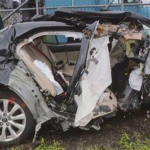
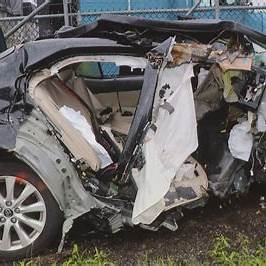
Emergency responders arrived to a scene that officers later described in bodycam footage as among the worst they had seen. The Toyota Camry was mangled. First responders initially worked to remove Shirilla and one other occupant, not realizing there was a third person inside the wreckage. One officer was heard saying, “Oh my God — times three, guys … This is bad, guys.”
Shirilla was trapped beneath the dashboard and had to be removed using extraction equipment commonly referred to as the jaws of life. She was then airlifted to a hospital in critical condition. Russo and Flanagan were dead at the scene.


From Accident Theory to Murder Investigation
At first, the crash was considered a possible tragic accident. Investigators examined whether substances, a medical episode, or vehicle malfunction could have caused the car to leave the roadway at such extreme speed.
But the case shifted as investigators reviewed surveillance footage, vehicle data, and the condition of the Camry. The car’s systems were examined, and the defense theory that something mechanical may have gone wrong did not persuade the court. Prosecutors presented evidence that the accelerator was pressed for an extended period and that there was no meaningful braking before impact.
The prosecution’s case was built around intent. They argued Shirilla did not merely lose control of the vehicle; she intentionally drove into the building. During trial, the judge described her actions as “controlled, methodical, deliberate, intentional and purposeful.”
That distinction mattered. It transformed the case from a fatal traffic crash into a double-murder prosecution.


The Relationship at the Center of the Case
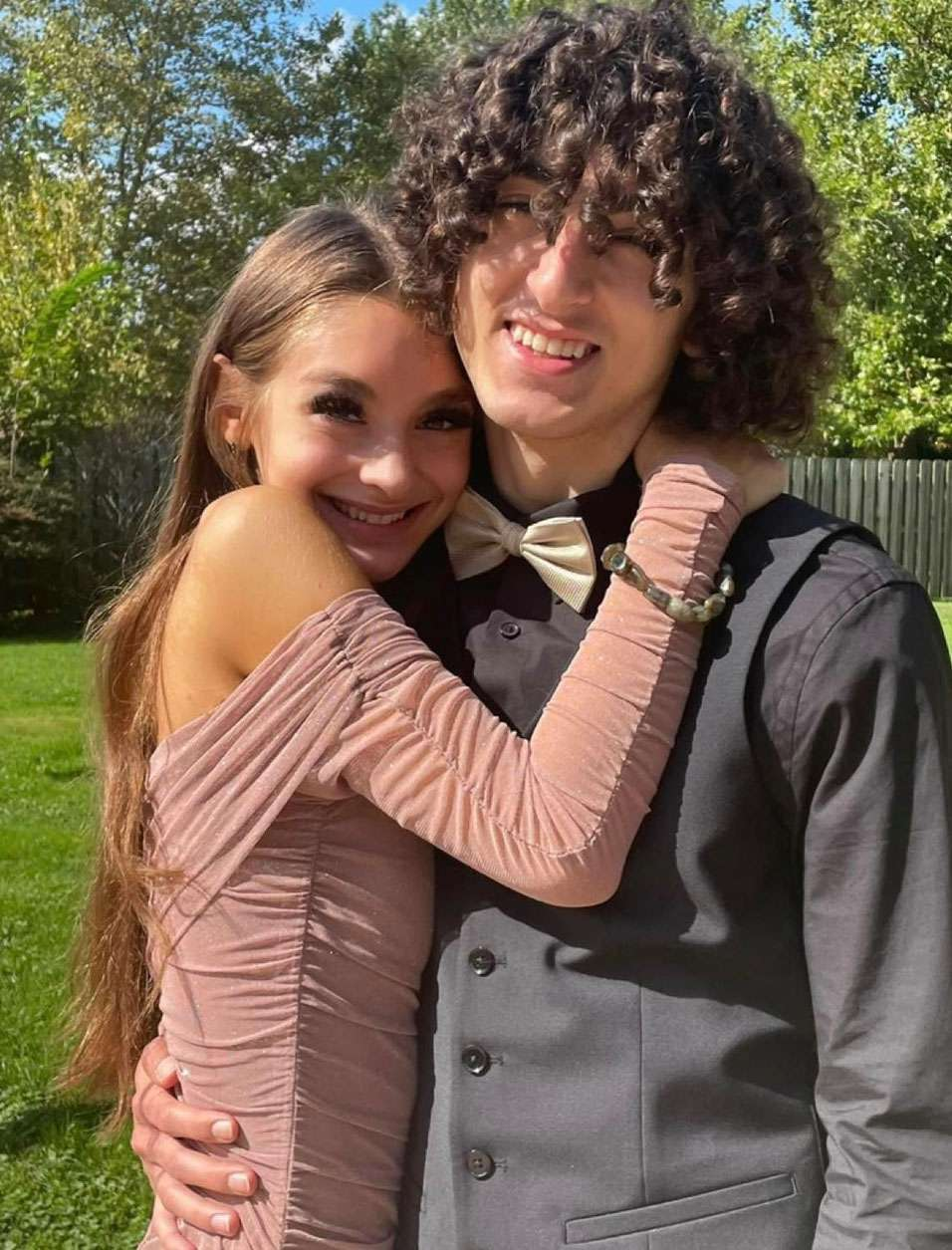
The emotional core of the case was Shirilla’s relationship with Dominic Russo. The two had dated for several years and, according to the documentary account, had once planned a future together. Their relationship, however, was also described as troubled in the months before the crash.
Prosecutors pointed to allegations of tension, controlling behavior, and prior threats as part of their argument that the crash was not random. One important account involved an incident in July 2022 when Russo reportedly called his mother, Christine Russo, and asked for help while he was in Shirilla’s car. A family friend allegedly heard Shirilla screaming that she would “crash this car.”
That alleged statement became a key piece of context at trial because it suggested that the idea of using the car as a threat had surfaced before the fatal crash.
Davion Flanagan: The Passenger Caught in the Middle
Davion Flanagan, 19, was not merely a background figure in the tragedy. He was a young man with his own story, friends, family, and future. He had been a promising football player before injuries affected his athletic path. He was also part of the social circle that included Russo and Shirilla.
After the crash, Flanagan’s friends gave investigators information from the Life360 app, which tracked his location. According to the account provided, the app showed that Flanagan was on his phone at 5:35 a.m., about one minute before the Camry struck the wall. The data also indicated that the vehicle did not stop until impact.
One detail stood out: “There’s no hard braking until — like, it will show you when they hard brake, and that was when they hit the wall,” Flanagan’s friends told police.
That information supported the prosecution’s view that the car was not simply out of control in the ordinary sense.
Bodycam Footage and the Human Shockwave
The release of bodycam footage years later added another disturbing layer to public understanding of the case. It showed not just the aftermath of the wreck, but the emotional devastation that spread through two families and a community.
One officer, looking into the vehicle at the bodies of Russo and Flanagan, said, “Rest in peace, buddy … This is gonna just be a nightmare of a day for this whole department.”
Footage also captured the moment Russo’s mother, Christine, was informed that her son had died. She initially remained calm when told there had been an accident, then became visibly alarmed before officers delivered the news that Russo and Flanagan were dead. Her reaction was immediate and overwhelming.
Another scene showed an officer preparing to tell Shirilla’s parents, Steve and Natalie, that two passengers had died. As he approached, he muttered, “God, help me.” At that moment, Shirilla’s parents reportedly knew only that their daughter had been in a serious crash; they did not know others had been in the car.
The Arrest and Questions About Shirilla’s Behavior
Shirilla was arrested on Nov. 7, 2022. When told she was being charged with two counts of aggravated murder, she reportedly showed a blank expression. The bodycam footage also captured a moment that later drew attention: as police changed her handcuffs, Shirilla asked, “Could you please be careful taking this one off so it doesn’t break the bracelet?”
At booking, she cried when told to remove her jewelry, much of which was described as gifts from Russo. The footage became part of the broader public discussion over remorse, shock, trauma, and how people behave under extraordinary circumstances.
Another unusual detail emerged from her first hospital interview with police. Assistant Prosecutor Tim Troup described Shirilla as speaking in a “unique language,” similar to pig latin. In that interview, Detective Zaki Hazou informed Shirilla and her mother that police were investigating her for two counts of aggravated vehicular homicide. Shirilla then asked whether they could tell police she had suffered a seizure before the crash, and later asked, “Can’t you just take my license away for like, 10 years?”
The Defense: Memory Loss and a Medical Explanation
Shirilla did not testify at trial. Her defense argued that she had no memory of the crash and that a medical condition may have played a role. Her lawyer pointed to POTS, a blood pressure disorder that can cause dizziness or brief blackouts.
That argument raised a central question: if Shirilla could not remember the crucial final moments, could prosecutors prove intent beyond a reasonable doubt?
The court found that they could. The judge emphasized the evidence showing acceleration, the road path, the lack of braking, and the controlled nature of the vehicle’s movement before impact. In court, the judge concluded, “This was not reckless driving. This was murder.”
The Verdict and Sentence
Shirilla was convicted in a bench trial, meaning a judge, rather than a jury, decided the case. She was found guilty on multiple counts, including murder-related charges, after the court accepted the prosecution’s argument that she intentionally caused the fatal collision.
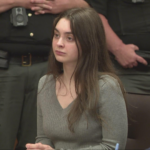
At sentencing, Shirilla addressed the families of the victims. She said: “To the families of Dom and Davion, I am so deeply sorry. I hope one day you can see how I’d never let this happen or do it on purpose. I wish I could remember what happened.”
The judge sentenced her to two concurrent 15-years-to-life terms, meaning she has the possibility of parole after serving 15 years.
Why the Car Became the Central Evidence
In many fatal crashes, the vehicle is treated as a damaged object — evidence of impact, speed, and mechanical condition. In the Mackenzie Shirilla case, the car became something more: the central instrument through which prosecutors argued intent.
The 2018 Toyota Camry’s event data, the surveillance footage, the absence of hard braking before impact, and the testimony about the accelerator all shaped the legal narrative. The prosecution did not need to prove only that Shirilla drove dangerously. It needed to prove that the crash was intentional. The vehicle evidence became the bridge between tragedy and murder conviction.
That is why public interest in “Mackenzie Shirilla car” remains high. People are not only searching for the make and model of the car. They are trying to understand how a traffic collision became a homicide case — and how investigators determined that the final seconds behind the wheel were deliberate.
The Netflix Documentary and Renewed Public Attention
The case received renewed attention through the documentary The Crash, which revisited the events using archival bodycam footage, surveillance video, social media clips, interviews with relatives and investigators, and an interview with Shirilla. The documentary also explored the wider social context around teenagers, online personas, relationships, parenting, and public judgment.
Director Gareth Johnson said the story carried personal resonance because he had survived a serious crash as a teenager that killed another person. His stated aim was to understand the emotional ripple effects of such an event from the perspective of families and friends.
The documentary did not erase the central mystery Shirilla has maintained: she says she cannot remember the crash itself. But the court’s judgment, the vehicle data, and the witness accounts have already shaped the legal outcome.
Appeals and the Case’s Continuing Legacy
After her conviction, Shirilla’s family continued to challenge the outcome. An appeal for a new trial was denied in 2024. A second appeal was later denied on the grounds that it had been filed late. In response, the Cuyahoga County prosecutor’s office stated: “We are pleased with the Ohio Supreme Court’s decision to decline jurisdiction to hear Mackenzie Shirilla’s appeal.”
For the families of Dominic Russo and Davion Flanagan, however, the legal process is only one part of the aftermath. The crash took two young lives and left a community divided, grieving, and still trying to understand how a teenage relationship and an early-morning drive ended in murder.
Conclusion: More Than a Fatal Crash
The Mackenzie Shirilla car case is significant because it sits at the intersection of youth, violence, technology, relationships, and criminal intent. It began as a horrific crash involving a teenage driver and two young passengers. It became a murder case because investigators and the court concluded that the car was not merely moving too fast — it was being used deliberately.
The tragedy continues to draw attention because it resists simple explanations. It is a story about a vehicle, but also about the people inside it. It is a story about data, but also about grief. It is a story about legal proof, but also about the unknowable final seconds before impact.
For Dominic Russo and Davion Flanagan’s families, the most important fact remains painfully clear: two young men never came home.