Mourinho Madrid: Why José Mourinho’s Reported Real Madrid Return Feels Like Football’s Most Dramatic Reset
José Mourinho and Real Madrid were never a quiet partnership. They were combustible, ambitious, confrontational and, at their peak, brutally effective. Thirteen years after his first spell at the Santiago Bernabéu ended, the Portuguese coach is now reportedly set for a dramatic return to the Spanish giants on a two-year contract, with Benfica said to have approved his departure.
- A Return Built on Crisis, Memory and Expectation
- The Benfica Chapter That Ended in Frustration
- Why Real Madrid Would Turn Back to Mourinho
- The Old Mourinho Question: Genius, Conflict or Both?
- A Two-Year Deal, but a Short Window to Convince
- What This Means for LaLiga
- The Stakes for Mourinho Himself
- Conclusion: Mourinho Madrid Is More Than a Comeback Story
The move, if completed as reported, would not simply be another managerial appointment. It would be a statement of intent from Real Madrid: a club seeking order, authority and a renewed competitive edge after a period marked by disappointment, pressure and reported dressing-room tension.
A Return Built on Crisis, Memory and Expectation
Mourinho’s planned return comes at a moment when Real Madrid’s need for a reset has become central to the story. Reports indicate that he is expected to travel to Madrid after Real Madrid’s match against Athletic de Bilbao on Saturday to sign the contract. The agreement is described as a two-year deal, with journalist Fabrizio Romano cited in the provided information as reporting Benfica’s approval of his departure.


This is why the phrase “Mourinho Madrid” carries such weight. It is not just about a coach and a club. It is about a previous era returning to confront a new set of problems.
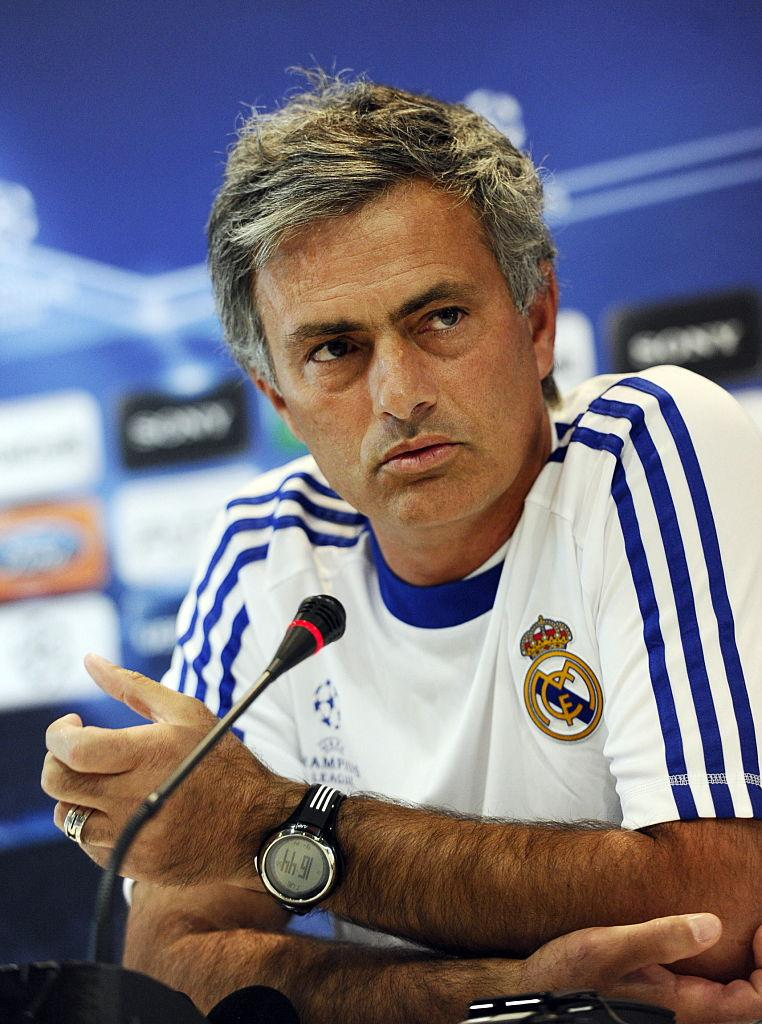
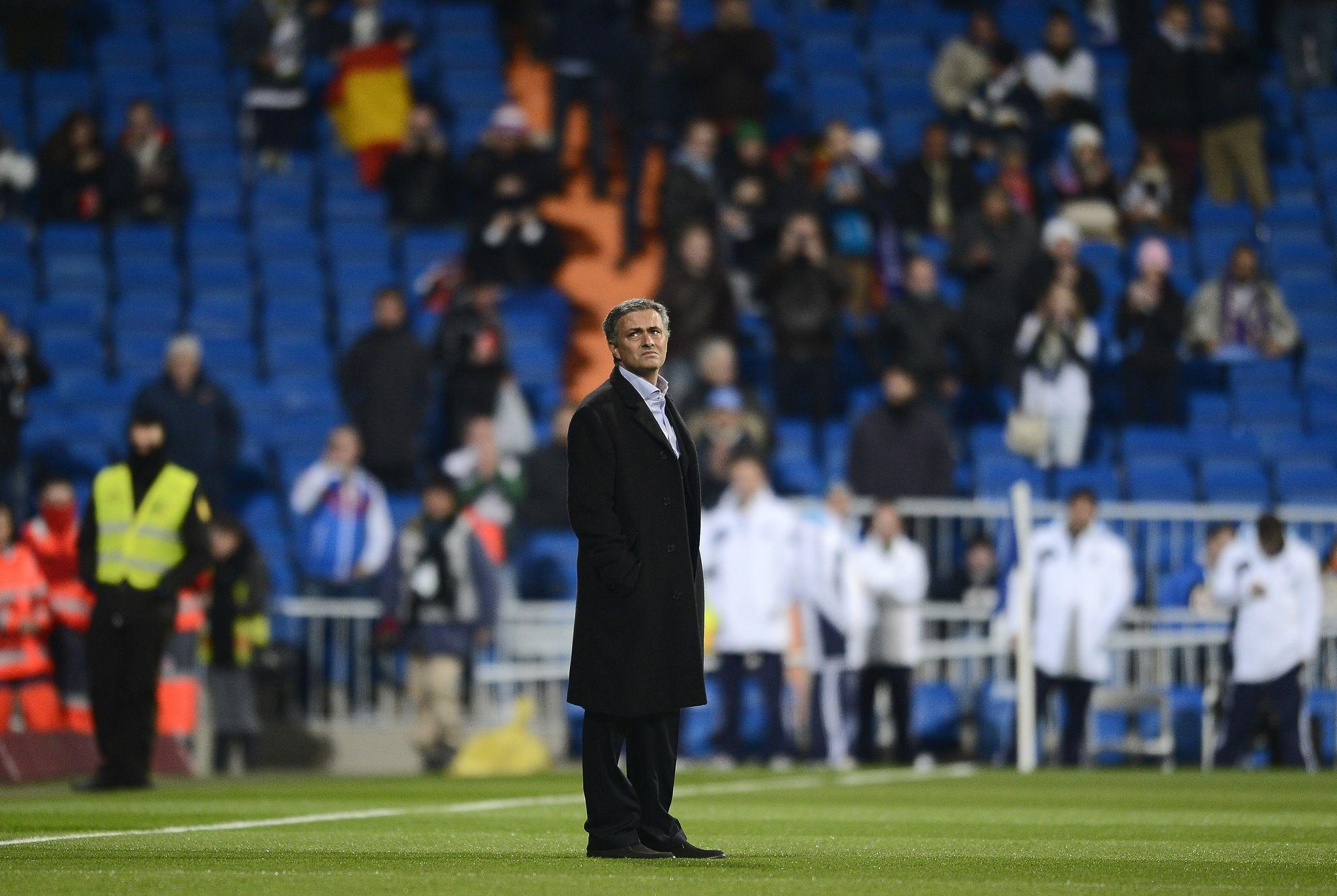
Between 2010 and 2013, Mourinho managed Real Madrid through one of the most intense periods in modern Spanish football. He arrived after conquering Europe with Inter Milan and was tasked with challenging Pep Guardiola’s Barcelona, then widely considered one of the greatest club sides ever assembled. During his first spell in Madrid, Mourinho won LaLiga in the 2011-12 season and guided the club to three consecutive Champions League semifinals.


Other reporting in the supplied material adds that his Madrid side also won the Copa del Rey and the Supercopa de España, while the 2011-12 league title was achieved with a 100-point campaign.
The Benfica Chapter That Ended in Frustration
Mourinho’s road back to Madrid has reportedly passed through Benfica, where his spell produced an unusual contradiction: an unbeaten league season that still ended in disappointment.
According to the provided material, Mourinho joined Benfica in the summer of 2025 with the mission of restoring the Lisbon club to the summit of Portuguese football. Benfica went through the Primeira Liga season without a defeat, but too many draws left the club third and outside Champions League qualification for the first time in 17 years.
That contradiction is important. Mourinho’s teams are still difficult to beat, still structured, still capable of producing the kind of defensive resilience that has defined much of his career. But Real Madrid will not be hiring him merely to avoid defeat. Madrid demands trophies, dominance and control of the biggest nights.


In March, Mourinho was reportedly still suggesting he wanted to stay at Benfica, saying he wished to honour his contract and even extend it by two years without discussion. Later, however, his tone shifted: he wanted time to analyse, reflect and decide for himself.
That shift opened the door to Madrid.
Why Real Madrid Would Turn Back to Mourinho
Real Madrid’s logic appears clear: when a dressing room becomes difficult, when results fall below expectations, and when elite players need a powerful figure above them, Mourinho remains one of football’s most forceful personalities.
The supplied information points to reported dressing-room tensions involving Kylian Mbappé, Vinicius Jr. and Jude Bellingham. Spanish media reports have also described tensions among players, while another supplied report refers to strained relationships, insults, physical confrontations and claims of “une taupe” damaging the club environment.
This is precisely the type of environment in which Mourinho’s name becomes attractive to decision-makers. His reputation was built not only on tactics, but on control: control of narratives, control of dressing rooms, control of pressure.
At Chelsea, Inter Milan and Real Madrid, Mourinho managed elite squads filled with powerful personalities. His methods have often divided opinion, but they have rarely gone unnoticed. In Madrid’s current context, the attraction is not subtle. The club appears to want a manager who can impose structure immediately.
The Old Mourinho Question: Genius, Conflict or Both?
Mourinho’s first Real Madrid spell remains one of the most debated chapters in the club’s recent history. He did not deliver the long-awaited Champions League title, but he did change Madrid’s competitive posture against Barcelona. He made them more aggressive, more direct, more confrontational and harder to bully.
The problem is that Mourinho’s success has often arrived with tension attached. His teams can become emotionally charged environments. His media strategy can dominate the club’s public image. His authority can galvanize players, but it can also create fractures.
That is why this reported comeback carries risk. Real Madrid is not the same club Mourinho left in 2013. The squad is different, the tactical landscape has evolved, and the expectations around stars such as Mbappé, Vinicius Jr. and Bellingham are enormous.
Mourinho’s challenge would be to prove that his leadership style can still work at the very highest level of European football — not as nostalgia, but as a modern competitive solution.
A Two-Year Deal, but a Short Window to Convince
The reported contract length matters. A two-year agreement suggests urgency rather than patience. This would not be a long-term philosophical rebuild. It would be a high-pressure intervention.
Real Madrid would expect immediate improvement: a more disciplined dressing room, a clearer tactical identity and a direct challenge to Barcelona’s domestic momentum. Reports also suggest Mourinho wants influence over sporting policy, including having a say in the club’s direction.
That demand fits the Mourinho profile. He rarely enters a major job simply to coach the players handed to him. He wants authority, clarity and guarantees. At Real Madrid, that can be both powerful and complicated, especially under a president and club structure known for strong institutional control.
What This Means for LaLiga
A Mourinho return would instantly reshape the emotional temperature of Spanish football.
Real Madrid versus Barcelona would become more than a title race. It would once again become a theatre of personalities, tactical arguments and psychological warfare. Mourinho’s first Madrid era was defined by its rivalry with Barcelona. His second would begin in a different landscape, but with the same fundamental demand: restore Madrid’s supremacy.
For LaLiga, the commercial and cultural impact would be obvious. Mourinho remains one of football’s most recognizable figures. His press conferences travel globally. His rivalries create headlines. His presence turns routine fixtures into storylines.
For Real Madrid supporters, however, the question is simpler: can he still win?
The Stakes for Mourinho Himself
Mourinho’s legacy is already secure. He has won across countries, clubs and competitions. But returning to Real Madrid would be a rare chance to rewrite the ending of one of his most famous jobs.
His first Madrid spell was successful, but incomplete. It delivered domestic glory and European consistency, but not the Champions League crown that Madrid supporters crave above everything else. A second spell would give Mourinho a chance to return not as the disruptor of Barcelona’s golden era, but as the restorer of Madrid’s internal order.
It would also expose him to intense scrutiny. If he succeeds, the comeback will be framed as proof that the “Special One” still belongs at the summit. If he fails, critics will argue that football has moved beyond his methods.
Conclusion: Mourinho Madrid Is More Than a Comeback Story
José Mourinho’s reported return to Real Madrid after 13 years is compelling because it sits at the intersection of nostalgia and necessity. Real Madrid remembers what he brought: discipline, defiance, intensity and silverware. The club also understands the risks: conflict, scrutiny and the possibility that yesterday’s solution may not fit tomorrow’s game.
But at moments of instability, football clubs often return to figures who represent certainty. Mourinho represents that for Madrid — not calm certainty, but forceful certainty.
If the contract is signed as reported, the Santiago Bernabéu will not simply welcome back a former manager. It will reopen one of modern football’s most dramatic relationships, with all the ambition, pressure and volatility that made it unforgettable the first time.