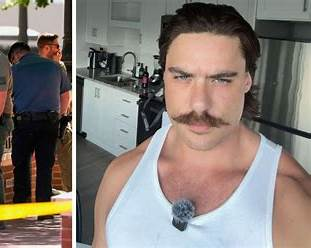
“Chud the Builder” Shooting Case Sparks Debate Over Self-Defense and Online Extremism
The arrest of controversial livestreamer Dalton Eatherly — better known online as “Chud the Builder” — has ignited national attention after a courthouse confrontation in Tennessee escalated into gunfire, leaving one man critically wounded and raising broader questions about hate-driven online personalities, public safety, and the limits of Tennessee’s self-defense laws.
Eatherly, 28, now faces multiple felony charges, including attempted murder, after authorities say he shot another man outside the Montgomery County Court Complex in Clarksville on May 13, 2026. The incident occurred just days after Eatherly was arrested in Nashville over a separate disturbance involving racial comments, livestreaming, and an unpaid restaurant bill.
The case has quickly evolved beyond a local crime story. It has become a flashpoint in conversations surrounding inflammatory internet personalities, racial provocation content, and Tennessee’s controversial “stand your ground” statute.
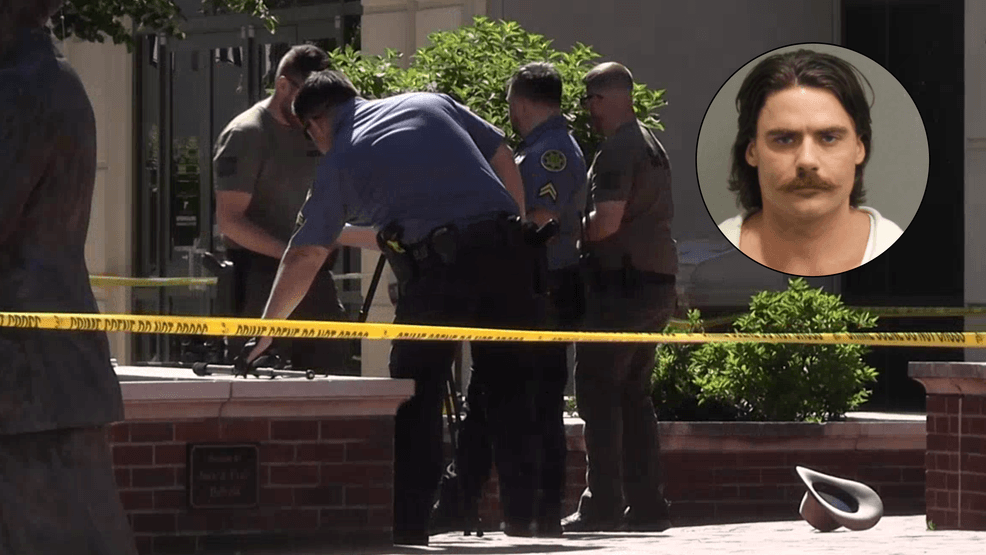


Courthouse Altercation Ends in Gunfire
According to investigators, the shooting took place near Millennium Plaza outside the Montgomery County courthouse complex in Clarksville, Tennessee. Authorities say Eatherly became involved in a confrontation with another man shortly after arriving at the courthouse for a civil hearing connected to an alleged debt owed to Midland Credit Management.
Witnesses reported hearing multiple gunshots. District Attorney General Robert J. Nash later confirmed that Eatherly fired the weapon and also appeared to accidentally shoot himself in the arm during the incident.


The unidentified victim suffered a gunshot wound to the stomach and was airlifted to Vanderbilt University Medical Center in Nashville. Officials said both men were hospitalized in stable condition following the shooting.
Eatherly was later discharged from the hospital and booked into the Montgomery County Jail.
Authorities charged him with:
- Attempted murder
- Employing a firearm during a dangerous felony
- Aggravated assault
- Reckless endangerment with a deadly weapon
Sheriff John Fuson condemned the violence, stating:


“This kind of violence won’t be tolerated, and our office will work to make sure those responsible are held accountable to the fullest extent of the law.”
A Livestreamer Known for Racial Provocation
Long before the courthouse shooting, Eatherly had developed an online reputation built around confrontation and racial provocation.
Using the alias “Chud the Builder,” he livestreamed encounters in public places where he repeatedly directed racist slurs at Black individuals while recording their reactions for social media audiences. Several reports described him as “well known in Clarksville for antagonizing people.”
In multiple videos circulated online, Eatherly referred to Black people using dehumanizing language and racial stereotypes. One widely discussed clip showed him confronting Black shoppers in a market while repeatedly using the N-word.
Local residents said his behavior appeared designed to provoke violent responses while documenting the encounters online.
Clarksville resident Larry Quillen told reporters:
“I was just kind of like it’s a matter of time. I mean, because what he’s doing is hate.”
Another resident, Claire Martin, described Eatherly as someone who “yells racial slurs” at people while filming them.
Even controversial political personalities distanced themselves from Eatherly’s tactics. White nationalist commentator Nick Fuentes criticized the livestreamer publicly, calling the approach “wrong” and “unethical.”
The Shooter’s Version of Events
In livestream footage recorded after the shooting, Eatherly claimed he acted in self-defense.
According to his own account, he approached a group of people whom he believed were mocking him. He alleged that one man warned him not to use racist language before punching him during the confrontation. Eatherly then pulled out a handgun and fired.
During the livestream, Eatherly could be heard asking paramedics:
“Did I shoot myself or did it graze it?”
Authorities have not publicly identified the shooting victim or released additional information regarding the victim’s account of events.
Tennessee’s “Stand Your Ground” Law Under Scrutiny
The case has prompted widespread discussion about whether Eatherly could attempt to invoke Tennessee’s “stand your ground” law as part of his defense.
Under Tennessee law, individuals may legally use deadly force without retreating if they reasonably believe they face imminent danger of death, serious bodily injury, or grave sexual abuse.
The law states that:
- The person must reasonably believe there is imminent danger
- The danger must be real or honestly believed to be real
- The belief must be based on reasonable grounds
However, Tennessee law also limits the use of deadly force when the individual using force provoked the confrontation.
Legal observers say that detail could become central to the prosecution’s argument.
Because Eatherly’s online history allegedly involved intentionally provoking people with racist insults, prosecutors may argue that he initiated or escalated the conflict, potentially weakening any self-defense claim.
The ambiguity surrounding what legally constitutes “provocation” in public settings may become one of the defining legal issues of the case.
Previous Arrests Added to Public Attention
The courthouse shooting occurred less than a week after Eatherly was arrested in Nashville during another highly publicized confrontation.
Police reports allege Eatherly refused to pay a $371 restaurant bill at Bob’s Steak and Chop House inside Nashville’s Omni Hotel after employees asked him to stop livestreaming. According to the affidavit, he became disruptive, shouted racial comments, and resisted arrest.
He was charged with:
- Theft of services
- Disorderly conduct
- Resisting arrest
Court records show that hearing is scheduled for July 17 in Davidson County.
Eatherly had also previously faced a harassment case in Clarksville tied to earlier confrontations.
The Rise of “Rage Streaming” Culture
The “Chud the Builder” case reflects a broader phenomenon in internet culture where livestreamers generate attention through confrontation, outrage, and increasingly extreme behavior.
Social media algorithms often reward controversial content with higher visibility, encouraging creators to push boundaries to maintain audience engagement. Analysts say that in some corners of livestream culture, provoking emotional reactions has become a monetizable strategy.
Experts on online extremism have long warned that racial harassment content can normalize hateful rhetoric while increasing the risk of real-world violence.
The courthouse shooting now stands as one of the most dramatic examples of how internet-fueled antagonism can spill into dangerous offline consequences.
Community Reaction in Clarksville
The incident shocked residents in Clarksville, a city located roughly 50 miles northwest of Nashville.
Authorities temporarily locked down the courthouse complex after the shooting, and county officials later announced closures for several nearby government buildings due to the ongoing investigation.
Many residents expressed frustration that repeated public confrontations had escalated over time without stronger intervention.
At the same time, the case has intensified debate about where protected speech ends and public endangerment begins.
What Happens Next
Eatherly remains at the center of multiple legal proceedings, and prosecutors are expected to closely examine both the physical confrontation and his documented history of racial provocation.
Investigators have not yet released surveillance footage, witness testimony details, or forensic findings connected to the shooting. The condition of the unidentified victim has also not been publicly updated beyond initial reports that he survived emergency surgery.
Legal experts expect the defense and prosecution to battle intensely over whether the shooting constituted lawful self-defense or criminal escalation.
Whatever the eventual verdict, the “Chud the Builder” case has already become a defining example of how digital extremism, inflammatory livestream culture, and America’s gun laws can collide in unpredictable and violent ways.